
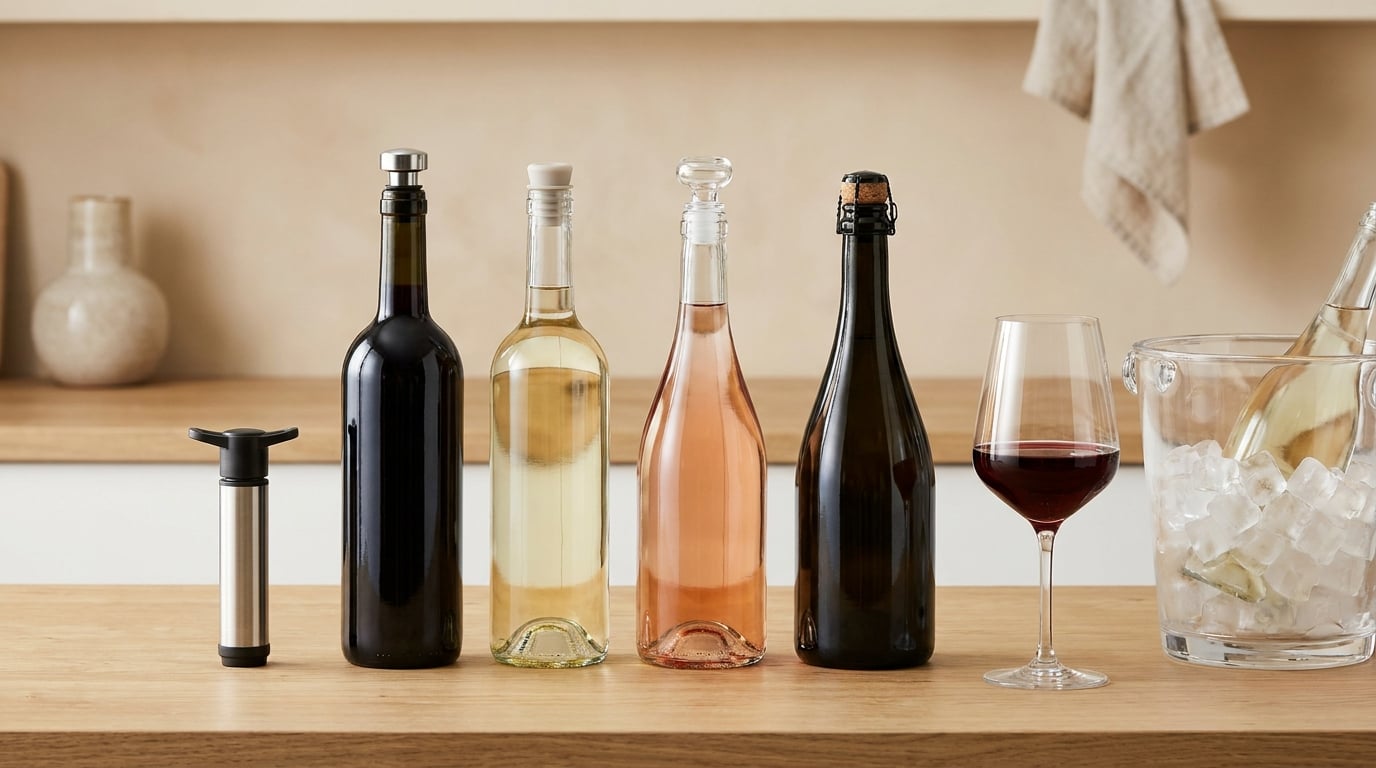
Most opened wine stays good for 3 to 5 days when you seal it again and put it in the fridge. Sparkling wine keeps its bubbles for 1 to 3 days, and fortified wines such as port and sherry hold on for weeks. The single biggest factor in how long does opened wine last is not the wine at all. It is whether air got back in the bottle.
Below is the short version, followed by the reasoning, the storage methods and a checklist for deciding whether a bottle is still worth drinking. I updated the guidance for 2026 because a lot of what circulates about “the 3-day rule” is either exaggerated or aimed at a different style of wine than the one in your fridge.
How Long Does Opened Wine Last?
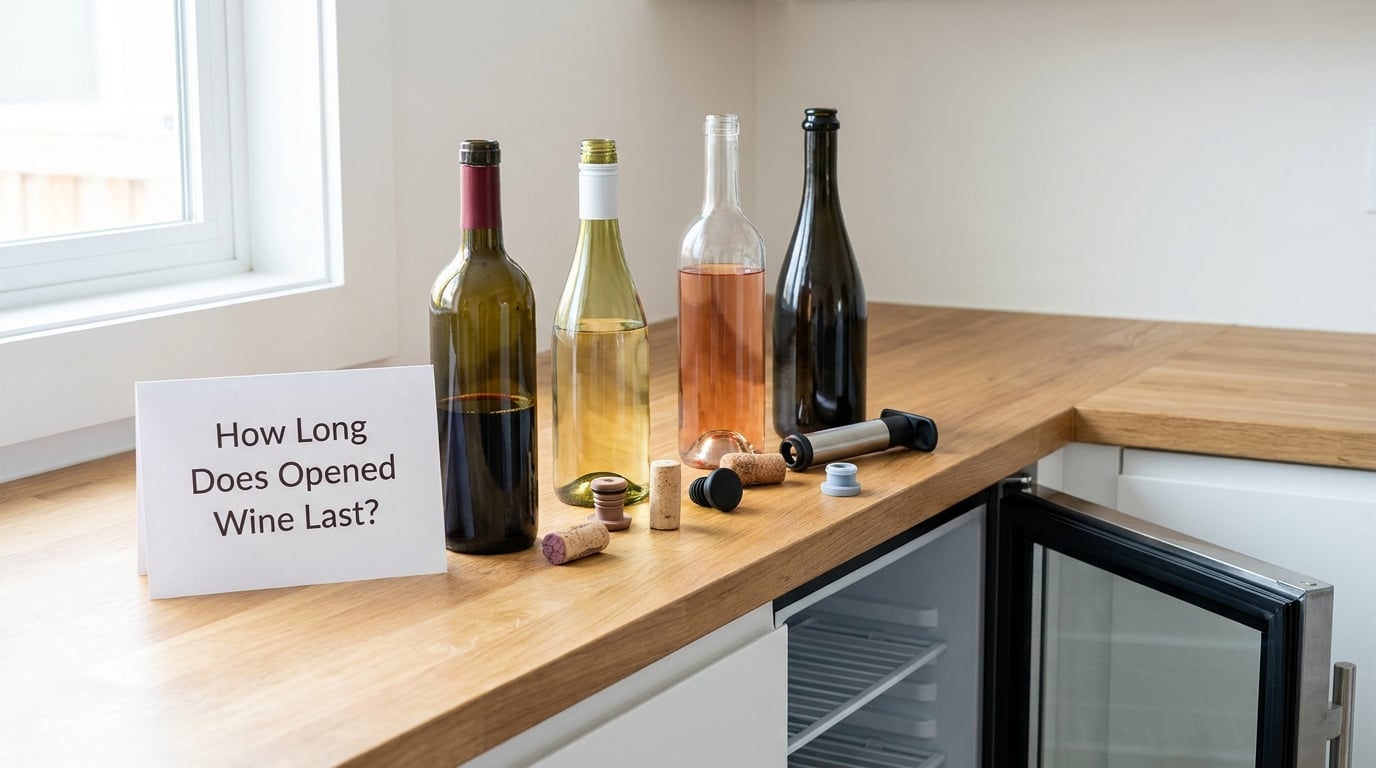
Here are the practical windows for a home kitchen. Every figure assumes a tight reseal and refrigerator storage at roughly 35 to 40°F.
| Wine type | Opened shelf life in the fridge | Seal to use | Best served at |
|---|---|---|---|
| Light reds (Pinot Noir, Gamay, Lambrusco) | 1 to 3 days | Vacuum pump or preservation stopper | 55 to 60°F |
| Full-bodied reds (Cabernet, Merlot, Syrah, Malbec) | 3 to 5 days, sometimes 7 | Original cork or screwcap, pressed firm | 60 to 65°F |
| Crisp whites and rosé (Sauvignon Blanc, Pinot Grigio, Provence rosé) | 3 to 5 days | Original closure, screwed tight | 45 to 50°F |
| Oaked or fuller whites (Chardonnay, Viognier) | 3 to 7 days | Original closure, screwed tight | 50 to 55°F |
| Natural and orange wines | 1 to 2 days, occasionally less | Vacuum pump, refrigerate immediately | Chilled, 45 to 50°F |
| Sparkling wine (Champagne, Prosecco, Cava) | 1 to 3 days | Sparkling-specific stopper rated for pressure | 40 to 45°F |
| Fortified wine (port, sherry, vermouth) | 3 to 4 weeks after opening | Original cork, or a stopper | 55 to 65°F |
| Boxed wine in an opened bag | 4 to 6 weeks | Twist spout cap closed, bag kept flat or upright per box | 45 to 60°F |
These are quality guidelines rather than a spoilage deadline. A bottle at day four of its window is not dangerous, it just tastes less like itself. The flip side matters too: plenty of people report drinking reds that were opened five to seven days ago and served perfectly well, especially heavier bottles that were resealed and kept cold.
Storage Times by Wine Type
Light-bodied reds are the ones that punish you. Pinot Noir and Gamay have less tannin and thinner structure, so the first thing to go is the fruit, and the aroma reads as bruised apple or flat berries within a day or two. If you opened a Burgundy or a chilled Gamay and only drank one glass, plan on finishing it tomorrow.
Full-bodied reds behave much better. Cabernet Sauvignon, Syrah and Malbec carry enough tannin and alcohol to shrug off a few days, and screwcaps hold pressure better than a cork pushed back in by hand. Many drinkers regularly keep a red for close to a week, and heavier bottles sometimes go further.
Delicate whites and rosé are the ones most often left out on the counter by mistake. They are also the wines that suffer fastest from warmth, because their aroma compounds are volatile. Screw the cap on and refrigerate them the same evening and you usually get the full 3 to 5 days. A screwcap also loses less than a cork reinserted by hand, since it makes a reliable seal on the threads.
Sparkling wine is a different problem entirely. The bubbles are carbon dioxide under pressure, so the clock is set by how well you hold that pressure, not by oxidation. A dedicated sparkling stopper with a silicone gasket is worth having. A standard wine stopper will let the fizz go flat overnight, and no amount of chilling brings it back.
Fortified wines get their extra time from the spirit added during production. Port, sherry and vermouth resist oxidation far longer than any still wine, so a few weeks in the fridge is routine rather than risky. Dessert wines behave similarly, though very sweet bottles with residual sugar can develop odd aromas if you keep them for months.
Boxed wine is a separate category, and not a worse one. The bag is sealed with a layer of plastic that limits oxygen exchange, and the air that enters stays in the headspace of the rigid box rather than the wine. Drinkers of bag-in-box routinely get 4 to 6 weeks, sometimes longer, when they close the spout and chill the box.
What Changes After a Bottle Is Opened
Sealing a bottle protects the wine from the two things that hurt it most: oxygen and time. Once you pull the cork, empty air occupies the headspace above the wine, and that air is now a reservoir of oxygen feeding straight into the liquid.
The chemical chain is short and worth understanding, because it explains the smells you will run into. Oxygen reacts with the alcohol in wine and converts it into acetaldehyde, which smells like bruised apples, sherry nuts or nail polish remover. Acetaldehyde then oxidises again into acetic acid, which is the same acid that makes vinegar. That is the moment a wine stops being an unpleasant wine and becomes a spoiled one.
Volatile acidity, the measurable level of that acetic acid, is one of the most useful quality signals on a tasting sheet. At low levels it adds a pleasant tang to a fortified wine. Above a certain threshold it just tastes sour, and no amount of chilling hides it.
Refrigeration helps because the reaction slows down in the cold. It does not stop oxidation, and it does not reverse it, but it stretches the window from a day or two to three to five. That is the whole argument for putting reds in the fridge, which surprises people who assume red wine belongs at room temperature.
Aroma fades faster than flavour. The esters that give a young white its citrus and floral notes break down within hours, so the first thing you will notice is a bottle that smells quieter than it did yesterday. Tannins and acidity hold up far longer, which is why an oxidized red often still tastes structurally sound while an oxidized white simply goes mute.
How to Store Opened Wine
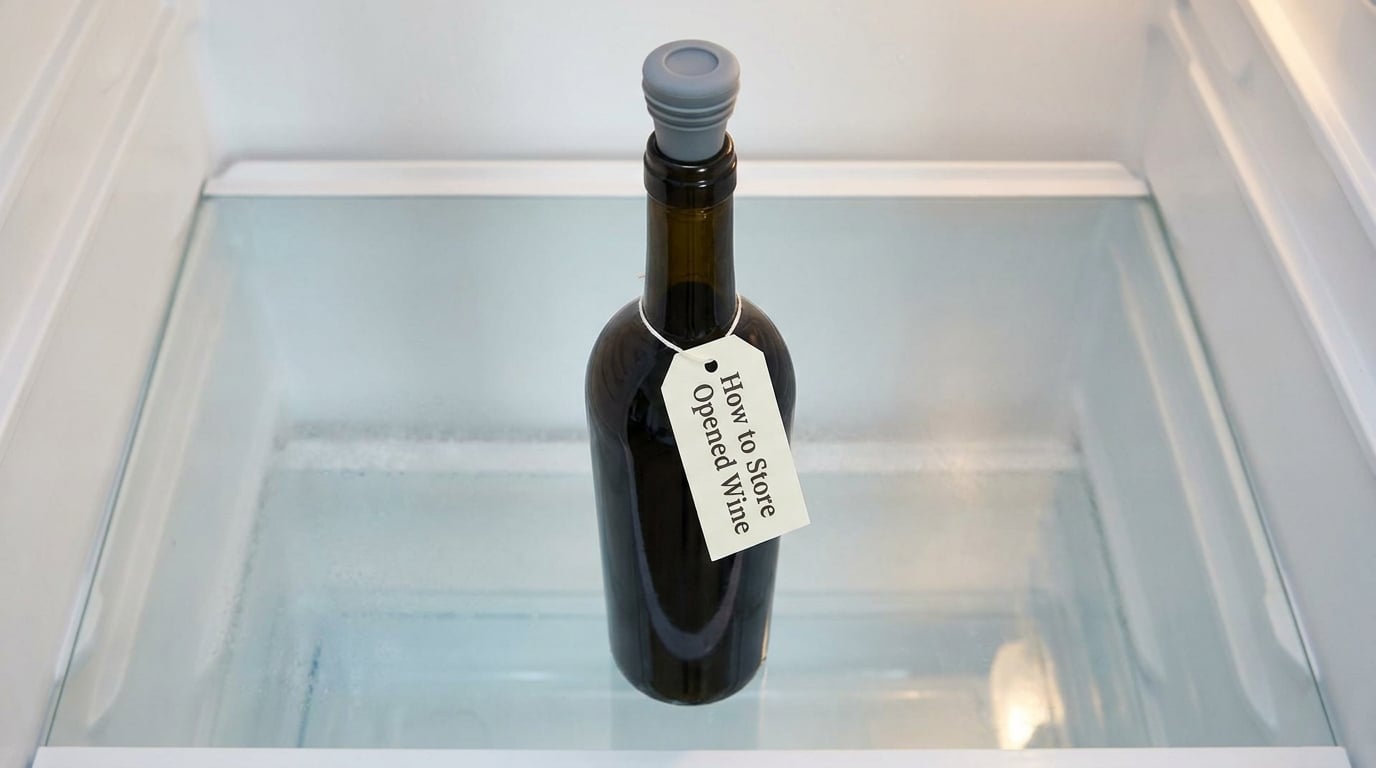
Push the original cork back in and use it. A cork is made for the exact neck it came from, and a cork reinserted by hand is far better than a plastic stopper pushed into a bottle whose cork has been lost. For screwcap bottles, screw the cap back on until it stops. Do not overtighten a synthetic or natural cork, since a slowly creeping seal is worse than a snug one.
Refrigerate nearly everything. Room temperature is fine for a fortified wine for a day or two, but for still red, white and rosé, cold storage is the single most effective thing you can do. Take the bottle out 20 to 30 minutes before you pour it, and a chilled red that has sat for three days will open up properly.
Stand the bottle upright unless you have a reason not to. Wine does not seep under a cork, but a horizontal bottle keeps the cork in permanent contact with the wetted neck, which can dry and shrink it and let more air through. Upright also saves you from a dyed-red fridge shelf.
Shrink the headspace if you can. Pouring a 750ml bottle into a 375ml half bottle roughly halves the amount of air sitting above the wine, and experienced drinkers treat it as the second best trick after refrigeration. A vacuum pump that pulls air out before you seal achieves something similar, though some drinkers find it strips aromatics along with the oxygen.
Use a bucket of ice and water during service, not a bucket of ice alone. Ice and water holds a stable cold around 55°F for reds and 45°F for whites, and it also catches spills so they do not run down the label. Refill with fresh water rather than more ice, since a bucket of ice alone warms unevenly and leaves diluted meltwater around the base.
How Long Does Opened Wine Last by Type?
Timing is only useful when you know what moves the number. A heavy red that was decanted into a full glass, pressed closed and stored cold has more room than a half-empty bottle whose headspace doubled the moment you set it down. A natural wine with no added sulphur dioxide loses its protective layer on day one, which is why that category gets the shortest window on any list.
Pour size, not bottle size, is the practical variable. A 750ml bottle poured into six glasses is gone in one evening. The same bottle in a restaurant can sit under an inert gas blank for a week. Nothing about the wine changed. The amount of air above it did.
Whites served from a screwcap with a thin headspace and a fridge often hit five days without tasting oxidised. Reds handled the way most home kitchens handle them, meaning a re-corked bottle in the door of the fridge, tend to land at three to four. Sparkling is the one to prioritise: buy the stopper first, because the alternative is a flat bottle of expensive wine the following day.
Fortified wine is where people waste money unnecessarily. Four weeks is conservative for most ports and sherries, and an unfortified dessert wine is a different story. Treat anything you cannot finish in a month as a bottle you are choosing to open smaller next time.
Does Wine Go Bad After Opening?
Wine that has turned is usually not a food-safety problem. The alcohol and acidity that make it inhospitable to bacteria mean that an ordinary opened bottle, handled normally, will spoil well before it becomes dangerous. Think of it as quality decay rather than a hazard.
That said, there is a real spoilage path, and it comes from bacteria rather than oxygen. Acetobacter can turn the ethanol into acetic acid and push volatile acidity to levels that taste like vinegar. Once a wine smells like a bottle of salad dressing, no amount of chilling or filtering brings it back.
Another path is contamination from the glass or the bottle neck. If a cork crumbles and fragments of it drop into the wine, those pieces can carry bacteria. Dumping them out is the fix. A clean pour through a fine strainer after every pour also keeps the neck from dripping old wine back into the bottle, which is a quiet way to shorten the window by days.
Cooked wine is a separate question. Wine you simmer in a sauce is safe for as long as the finished dish is kept properly, and a bottle that has been open for a month is fine for deglazing a pan as long as it has been refrigerated the whole time. The off smells largely disappear with heat, and the alcohol cooks off entirely.
How to Tell If Opened Wine Is Still Good
Work through this in order: look, smell, then taste. You will know more in thirty seconds than from any list of rules.
Look at the colour. A young white that has been open too long shifts from pale straw toward deep gold or amber, and a young red moves from ruby toward brick orange at the rim. Darker colour on its own is not proof of spoilage, since mature and dessert wines are naturally deep, but a young bottle that aged into its twenty-year-old colour overnight is oxidised.
Smell the open bottle, then the glass. Pour a small amount, swirl, and smell. Bruised apple, wet cardboard, bruised pear and a flat nail-polish note all point to oxidation. A distinctly vinegary or sherry-vinegar smell is the acetic acid stage. Dump the glass, rinse it, and try again from a clean pour, since a dirty glass can imitate all of these smells.
Watch the bubbles. For sparkling wine, fizz is the fastest and clearest signal. If the pour has no sustained mousse and the wine tastes fizzy-thin rather than creamy and sharp, the pressure is gone and refrigeration will not restore it.
Taste it last. Flat, dull, watery flavours with a sour or vinegary finish mean the window has closed. A slightly dull red with intact tannin and no sourness is usually still perfectly drinkable, just not the wine you bought.
One thing that is not oxidation but gets mistaken for it is cork taint. TCA gives a musty basement, wet dog or damp cardboard note that appears the moment a bottle is opened and never fades. Cork taint is a flaw from the cork, not from the opening, and it will not improve with resealing.
Common Storage Mistakes to Avoid
Pushing the cork back in loosely. The most common error, and the easiest to fix. Press the cork in until the bottle neck is flush, or use a rubber or silicone stopper sized for the opening. Fix: check the seal by tipping the bottle and watching for seepage at the neck.
Leaving wine on the counter. A warm kitchen roughly triples the oxidation rate compared with a refrigerator. Fix: put it away the same evening you open it, no matter how much is in the bottle.
Refrigerating red wine and then serving it cold from the fridge. The wine survives perfectly well. It just tastes muted and tight straight from 38°F. Fix: take it out 20 to 30 minutes before pouring.
Reopening the same bottle for a few sips over several days. Each cycle pulls in fresh air and agitates what is left. Fix: pour what you are going to drink into a smaller bottle or a proper glass stopper, and close the original once.
Storing wine beside strong-smelling foods. Wine picks up surrounding aromas more readily than most people expect, and a cork is not hermetic. Fix: keep bottles away from onions, garlic, raw fish and cleaning products.
Using a standard stopper on sparkling wine. A flat bottle is not oxidation damage, it is pressure loss, and it happens overnight. Fix: use a stopper sold for sparkling wine, and refrigerate the bottle upright.
Buying a large bottle for one person. Oxidation is a fixed daily process, and a 1.5 litre bottle takes twice as long to finish as a 750ml one, with more air above the wine for part of that time. Fix: pour the leftover into two 750ml bottles while the wine is still fresh, filling them as high as you can.
Forgetting that age changes the calculation. A mature red has less fruit to lose and is often already past the stage where refrigeration mattered. Once it is open, a 20-year-old bottle is on a countdown regardless of temperature, and a week is a serious fraction of what remains.
Frequently Asked Questions
Can I drink wine that has been open for two weeks?
For a still red, white or rosé, two weeks is past any reasonable quality window. It will not normally be unsafe, but expect a flat aroma, dull fruit and a short, sometimes sour finish. Fortified wine such as port and sherry is the exception, since it regularly stays drinkable for a month after opening. Smell it before you decide. If the aroma is vinegary, nutty-sherry in a way you did not buy, or simply empty, pour it out.
Should I refrigerate red wine after opening it?
Yes. Cold storage is the most effective single thing you can do to slow oxidation, and the old advice about reds needing room temperature applies to serving, not to keeping an opened bottle. Seal it, put it in the fridge, and take it out 20 to 30 minutes before you pour. Drinkers regularly get five to seven good days out of a heavy red this way.
How do I make an opened bottle last longer?
Reseal it properly first, then refrigerate. Beyond that, reduce the air above the wine: pour the remainder into a smaller bottle, fill a half bottle as high as you can, or draw a vacuum before sealing. A preservation stopper or a sparkling-rated stopper is worth having on hand. Keep the bottle upright, away from strong kitchen smells, and limit the number of times you reopen it.
Is it safe to drink wine that smells or tastes different after opening?
Different usually means oxidised rather than dangerous. A wine that tastes flat, smells of bruised apple or has a short finish has simply declined, and is safe to drink if you do not enjoy it. A distinctly vinegary smell, or visible film and fizz on an otherwise still wine, points to bacterial spoilage. When in doubt, pour a small amount, smell it, and skip the bottle if it reads as vinegar.
Can I reuse an opened wine bottle for cooking?
Yes, provided it was refrigerated or otherwise kept cool and has no spoilage smell. Cooking wine does not need to taste perfect, and heat drives off the aldehydes and the alcohol, which removes the off notes that would bother you in a glass. A month-old red is perfectly usable for a pan sauce, a risotto or a stew. A wine that smells of vinegar will only make the dish taste of vinegar, so smell it first.
Once you know the windows, it is easier to plan the bottle rather than the dinner. When a red is young and aromatic, how to pair wine with steak for beginners is a good excuse to open it with friends and finish it in one sitting. If you are cooking through a bottle, white wine pairing basics for home cooks will help you open bottles you will actually finish.
Conclusion
Do one thing tonight: seal the bottle and put it in the fridge. Push the original cork back in until it sits flush, or screw the cap down tight, and keep most still wines for 3 to 5 days from that moment. Sparkling wine needs a pressure-rated stopper and 1 to 3 days. Fortified wine is the easy one, good for several weeks.
After that, judge the bottle by smell rather than by the calendar. Most wines that turn are dull, not dangerous, so the worst outcome is a flat glass, not a bad evening.