
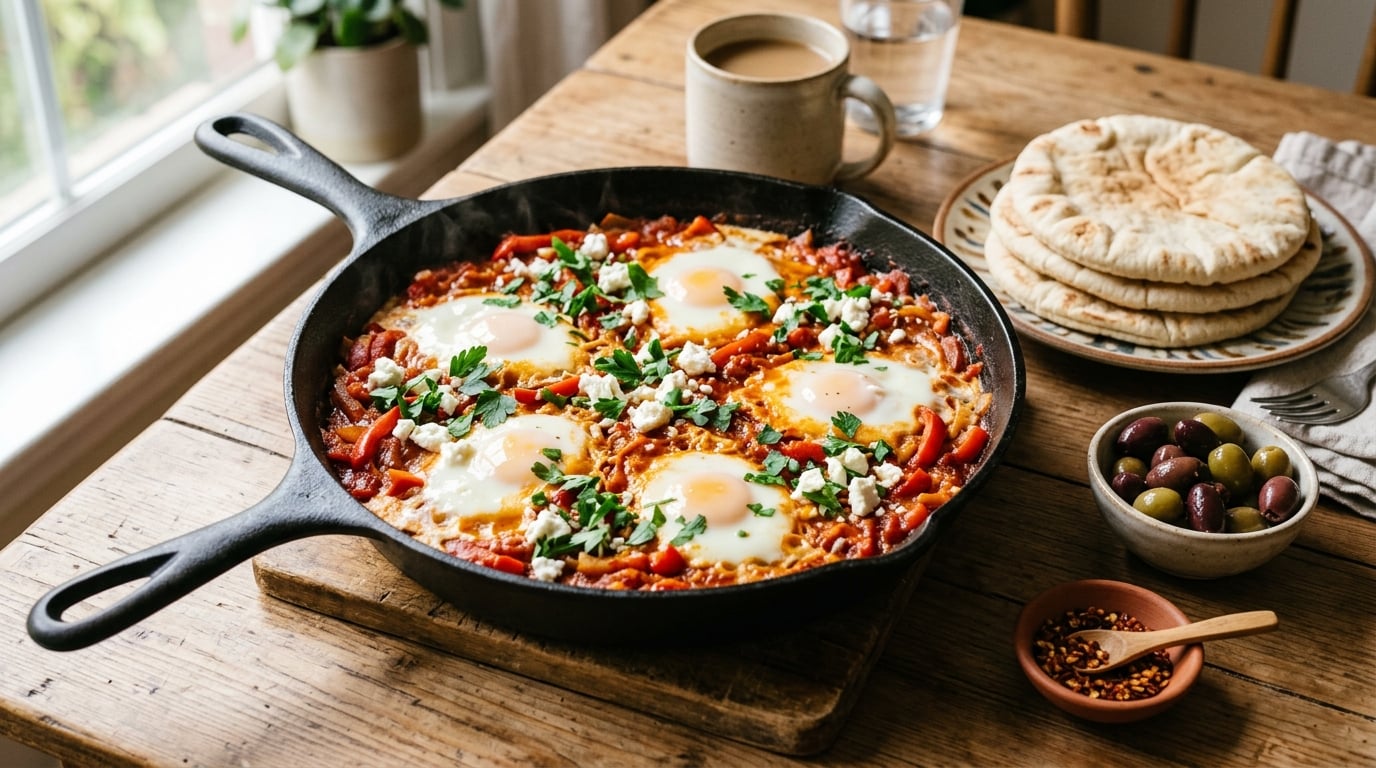
Shakshuka is a North African and Middle Eastern dish of eggs gently poached in a spiced tomato and bell pepper sauce, and for brunch it is the rare centerpiece that is one pan, mostly made ahead, and still looks impressive the moment it hits the table. Plan on two eggs per guest, so eight eggs feeds four hungry people, and give yourself about 40 minutes from chopping board to table.
The trick nobody bothers to explain is that the sauce gets cooked and reduced before a single egg goes in. Get that wrong and you end up with a watery soup that leaves raw whites floating in it, or a dry mix so thick the eggs scorch. Learn how to make shakshuka for brunch the way a cook does it, and the rest is just timing.
Table of Contents
What You Need
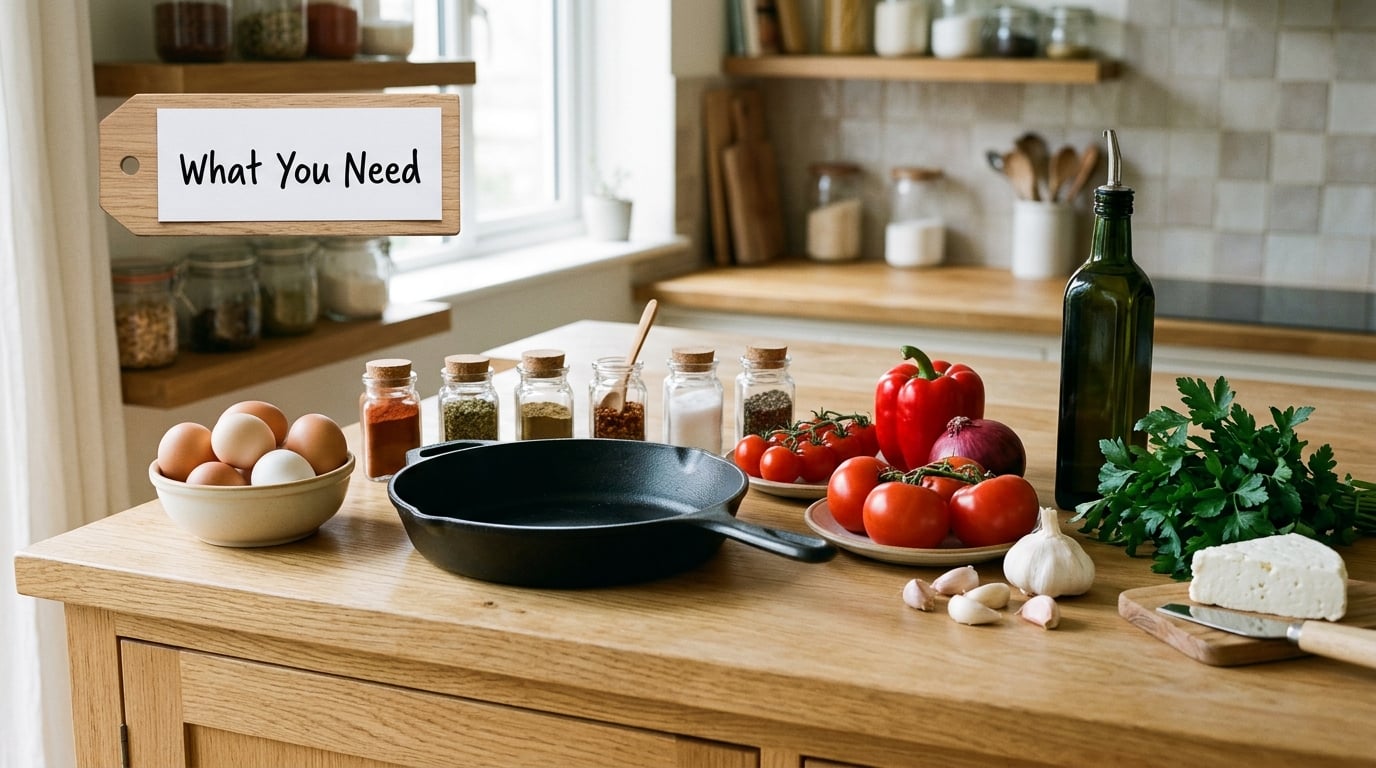
This base serves four as a main dish. Halve everything for two, or double it and use two skillets, which matters once you are cooking for more than six.
- 2 tablespoons extra virgin olive oil, plus more for the table
- 1 large red onion, diced
- 1 red bell pepper, diced (green works too)
- 3 garlic cloves, thinly sliced
- 1 teaspoon ground cumin
- 1 teaspoon sweet or smoked paprika
- 1/2 teaspoon ground coriander
- 1/2 teaspoon chili powder, plus chili flakes to taste
- 2 tablespoons tomato paste
- 1 28-ounce (800 g) can whole peeled tomatoes, crushed by hand
- 8 large eggs
- Salt and black pepper
For finishing: crumbled feta, a handful of flat-leaf parsley, a few cilantro leaves if you like them, a squeeze of lemon, and warm pita or crusty sourdough for dunking. The dish is vegetarian as written and gluten-free if you skip the bread, so it also suits a guest who is eating that way.
Tools matter more than people expect. You need a wide skillet, ideally 12 inch (30 cm), a lid that fits it, a big spoon for making wells, and a ladle. That last one is a real shortcut: crack each egg into the ladle while it rests on the sauce, then tip it into the well so nothing splashes.
On make-ahead: dice the onion and pepper, mix the spices, and crumble the cheese the night before, and keep them in separate containers. The sauce base itself keeps three to four days in the fridge and freezes for up to three months, and it genuinely does taste better on day two.
Step-by-Step
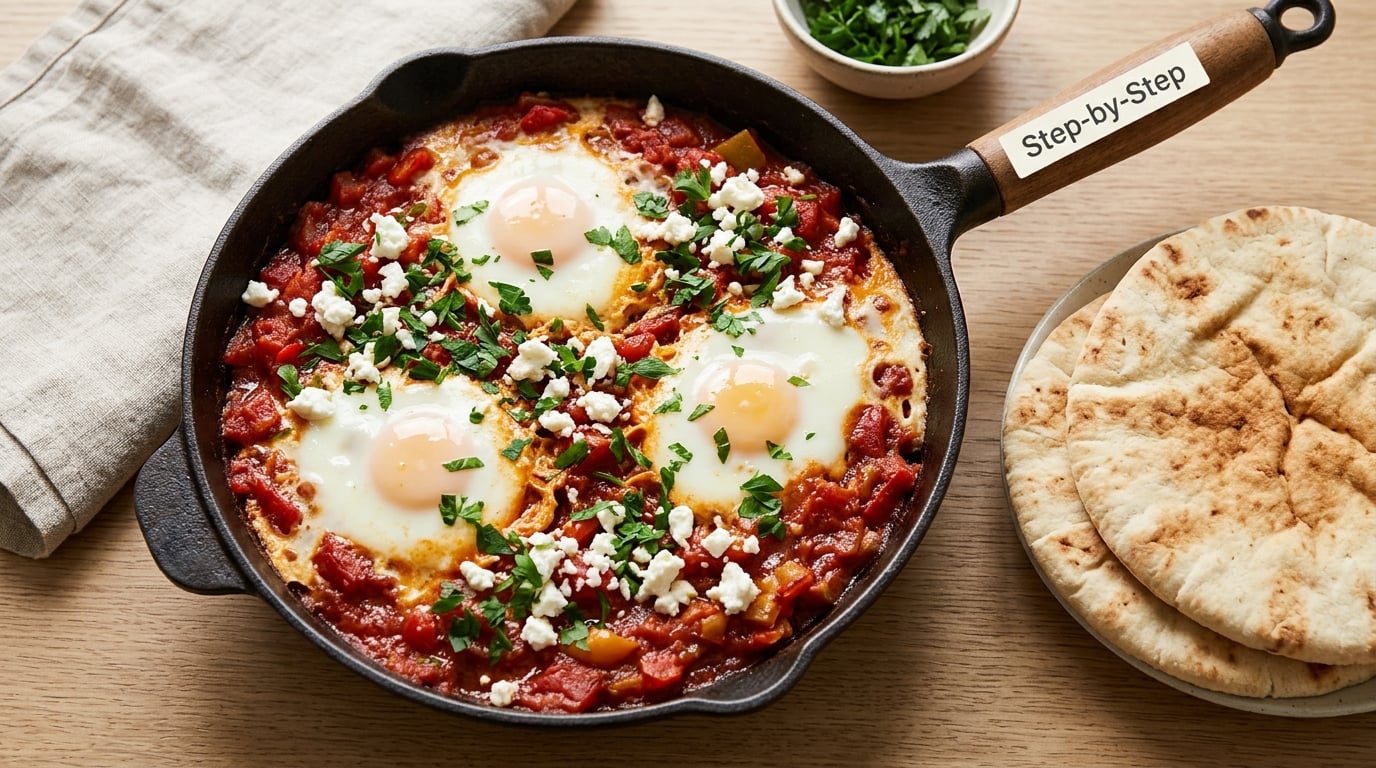
Read the whole method once before you light the stove. The order is fixed: aromatics, then spices, then tomatoes, then reduction, and only then eggs. Once the eggs are in you are on a clock.
How to Make Shakshuka for Brunch: Cook the Tomato-Pepper Sauce
Heat the oil in the wide skillet over medium. Add the onion and bell pepper with a pinch of salt and cook 6 to 8 minutes, stirring every couple of minutes, until the pieces are soft and the edges have started to turn translucent rather than brown.
Push everything to one side, lower the heat a little, and add the garlic, cumin, paprika, coriander, and chili powder to the bare side of the pan. Stir them around for about 30 seconds until they smell toasted and the garlic stops looking raw. That scent is your cue. If you burn the spices here, no amount of simmering fixes it.
Stir in the tomato paste and let it cook for a minute, then add the crushed tomatoes with a good pinch of salt. Bring it to a bare simmer, drop the heat to medium-low, and let it cook 12 to 15 minutes, stirring now and then. You are looking for a sauce that holds a spoon upright when you drag it across the pan, and leaves a clean line that slowly closes. If it still looks like thin soup, give it another 5 minutes.
How to Make Shakshuka for Brunch: Add the Eggs
Use the back of the spoon to make six shallow wells across the surface, spaced out so they do not run into each other. Crack an egg into each one. If a yolk breaks, fish it out with a corner of the spoon rather than trying to scoop it whole.
Cover the pan and cook over medium-low for 5 to 8 minutes. Five minutes gives you whites that are just set with a jammy, barely cooked yolk; six to seven is the sweet spot most people want; past eight you are into firm territory. Lift the lid and check the whites near the edge, which set first. The sauce should be bubbling gently, not roaring, and if it looks dry at the edges, add a splash of water.
If you have a hot oven and more than one pan going, you can finish under the broiler instead: move the skillet to a 450 F (230 C) broiler for 2 to 4 minutes, watching it the whole time. It is fast and very forgiving on the whites, but it will not forgive a moment of inattention.
How to Make Shakshuka for Brunch: Finish and Serve
Take the pan off the heat and scatter over the feta, parsley, and cilantro. Add a squeeze of lemon and a thread of olive oil, then taste the sauce. This is the only chance to adjust the salt, and it usually needs a pinch more than you think.
Serve it in the pan on a trivet, with warm pita and extra olive oil for the bread. A small plate of olives, a bowl of yogurt with herbs, or a simple salad of cucumber, tomato, and mint keeps the plate from being all richness, and how to make a cheese board for beginners is a good way to round out a spread where shakshuka is the main event.
For drinks, strong black coffee and fresh mint tea both sit well with the spices, and a simple simple syrup for drinks gives you the base for an easy mimosa or a lemon-mint cooler without any fuss.
If you are hosting, hold the sauce warm on the back of the stove, covered loosely, and poach the eggs in batches of four to six. Eggs sitting cooked in a hot pan keep cooking from residual heat, so a skillet that sits out for ten minutes will serve you firm yolks. Cooking to order takes 8 minutes and keeps everything on the table runnable.
Common Mistakes
Nearly every disappointing shakshuka I have eaten came down to one of these.
- The sauce was not reduced enough. If you can still see a thin film of liquid pooling at the edges, it needs another 5 minutes before eggs go in. The heat has to be stable for the whites to set evenly.
- Too much heat. A hard simmer makes the whites rubbery and the sauce sticks to the base of the pan. Drop to medium-low as soon as you add the eggs and do not rush the final few minutes.
- Cracking eggs badly. Crack each one into the ladle first, or let it slide from a few inches up. Sauce spatter means you either hit the edge of the well or cracked too hard, and both make a mess of the surface.
- Holding finished eggs. This is the big brunch mistake. Cook eggs in batches and send them straight out, or move the skillet to a warm oven for no more than 2 to 3 minutes.
- Over-spicing. Chili powder is for warmth, not burn. Start with 1/2 teaspoon, taste the sauce, and add chili flakes at the table where each guest can control it.
- Crowd math confusion. Six eggs is three generous servings, not six. Plan two eggs per guest, three for children or big eaters, and count skillets: one 12 inch skillet holds eight eggs comfortably, so a dozen guests means two pans and a head start on the sauce.
- Acid in cast iron. Tomatoes are acidic and long simmers strip the seasoning from cast iron and can leave a metallic edge on the sauce. A stainless steel skillet is the better choice here, and our brunch for a crowd without stress guide covers the rest of the timing once the sauce is done.
On leftovers, refrigerate the sauce within two hours and eat it within three to four days, reheating to 165 F (74 C). Reheat the sauce without the eggs, then poach fresh ones, since microwaved yolks turn rubbery.
Frequently Asked Questions
Can I make shakshuka ahead of time for brunch?
Yes, and this is the version I cook for guests. Make the tomato-pepper sauce base up to two days ahead and refrigerate it, or freeze it for up to three months. Reheat it to a gentle simmer on the day, then crack the eggs in fresh. Cooking eggs early and reheating them is what turns yolks rubbery, so always poach to order. The sauce also freezes well and tends to taste a little more rounded the next day.
How spicy should shakshuka be?
Shakshuka is meant to be warmly spiced, not hot. Cumin, paprika and coriander should be the dominant flavors, with chili powder adding a low background warmth rather than heat. Start with 1/2 teaspoon of chili powder for four servings, taste the sauce, and serve chili flakes or harissa separately at the table. That way anyone who wants real heat adds it themselves, and nobody has to eat around a fiery pan at brunch.
What can I serve with shakshuka at brunch?
Bread is the important one: warm pita, crusty sourdough, or naan for scooping sauce from the bottom of the skillet. Alongside, add something fresh and something cool. A cucumber, tomato and mint salad works, as do olives, a plate of mezze, or a bowl of yogurt with herbs. For a spread where shakshuka is the main dish, I would add a cheese board and coffee, mint tea, or a simple mimosa.
Can I use a regular frying pan instead of a cast-iron skillet?
Yes, and for tomatoes I would choose stainless steel over cast iron. Long simmering in an acidic sauce strips cast iron seasoning and can leave a metallic taste in the finished dish. A heavy stainless steel or enameled pan holds heat evenly and cleans up easily. If your only pan is cast iron, it will still work for a 30 minute cook, but do not let it sit with the sauce and use soap sparingly when washing.
How do I keep the eggs from becoming overcooked?
Keep the heat at medium-low once the eggs go in, cover the pan, and start checking at 5 minutes. Six to seven minutes gives set whites with a soft, jammy yolk. Pull the skillet off the heat the moment they look right, because the pan keeps cooking them. For a brunch crowd, poach in batches of four to six and send each batch straight to the table instead of holding a finished pan.
Can I make shakshuka without eggs?
Yes, and the sauce is the better half of the dish anyway. Skip the wells and serve the spiced tomato-pepper base as a dip for warm bread, spoon it over grilled bread, or bulk it up with chickpeas, spinach or zucchini and call it a vegetable tagine-style plate. A spoonful of harissa stirred into a meat-free version also makes a hearty dinner that is entirely egg-free.
Start with the sauce and treat it as the real recipe; the eggs are the last eight minutes. If you make shakshuka for brunch even once, build the base ahead, poach in batches, and put the chili flakes on the table. That is the whole difference between a stressful pan of eggs and a dish people ask about afterward.