
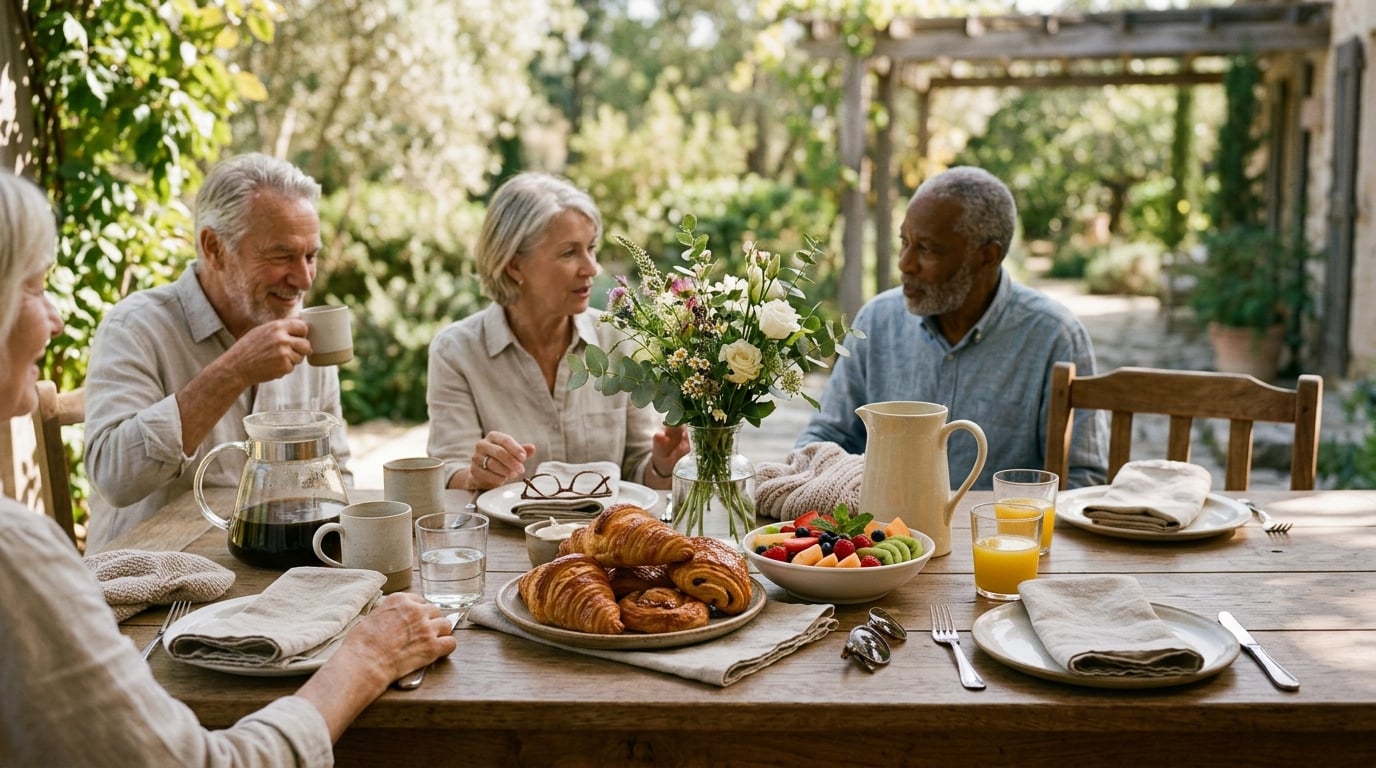
What time should brunch start for guests? Aim for 11:00 a.m., with 10:30 a.m. as the earliest sensible start for most at-home gatherings, and give yourself a firm end around 1:30 to 2:00 p.m. Ten o’clock reads as breakfast, noon reads as lunch, and the hour in between lands everyone at roughly the same level of hunger.
Getting that hour wrong is the single most common hosting mistake, and it is a scheduling problem more than a cooking one. Pick the time first, then work backward. I refreshed this guide for 2026 because the same ten rules keep coming up in the restaurant dining rooms and at the houses we cook for, and none of them have changed.
What You Need
Before you choose an hour, gather five things. Each one narrows the options, and skipping them is how hosts end up with a 10:00 a.m. invitation and a menu that takes three hours to plate.
- Your guest count. Six people fit one table and one oven. Twenty-five need a buffet line, two coffee pots and a bigger parking situation.
- How much is made to order. Omelets and eggs benedict are made when a guest sits down. Casseroles, frittatas and pastry trays are not.
- Your service style. Buffet, family style at the table, or seated. Each one changes your prep window.
- Guest schedules. Children who nap, guests who work Sundays, people catching flights, anyone who needs to be somewhere at one.
- Your realistic prep and cleanup window. Most home kitchens lose the last hour to dishes no matter how well the plan went.
What Time Should Brunch Start for Guests?
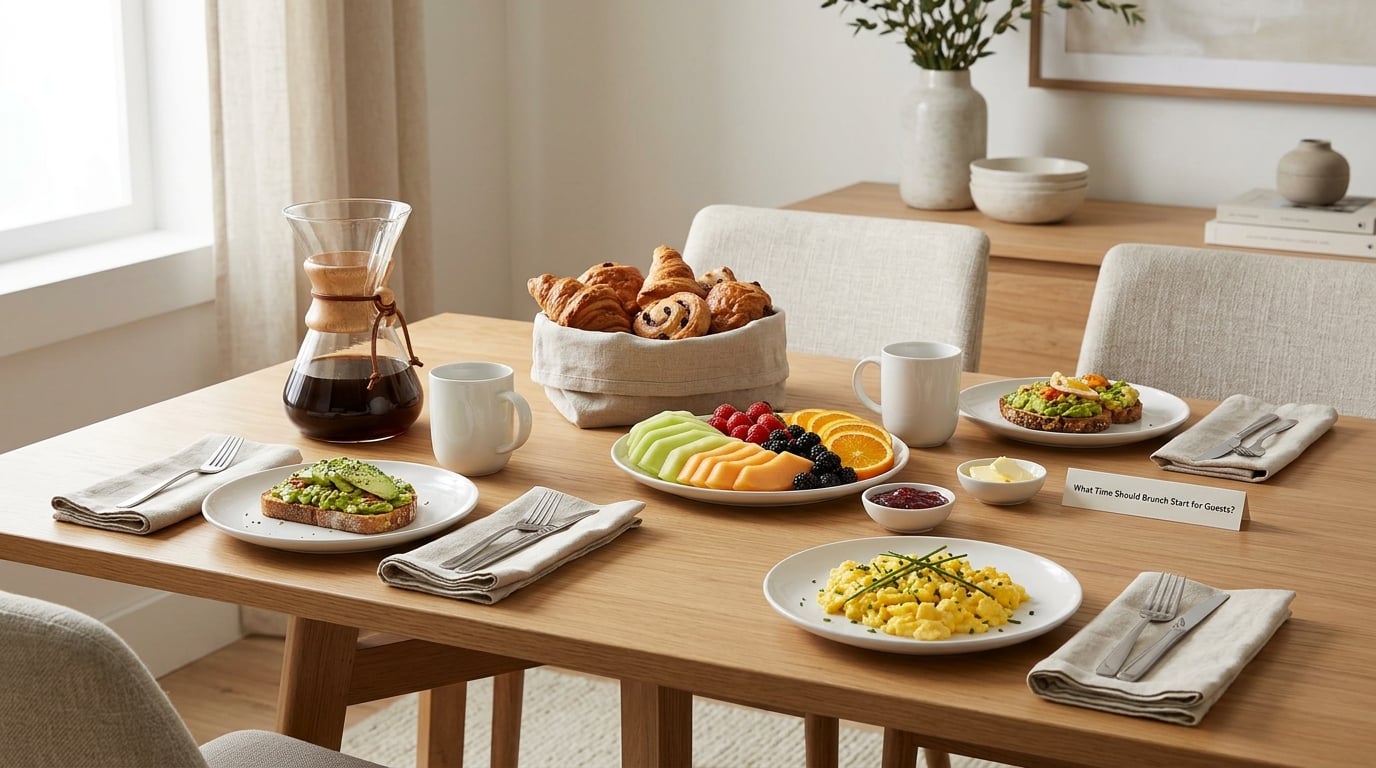
Eleven is the safest start. It is late enough that nobody has already eaten a full breakfast, early enough that guests arrive hungry, and it leaves the whole afternoon free. Ten works for a lighter, earlier crowd, mostly people who skipped breakfast or have somewhere to be by early afternoon. Noon and later suits an al fresco afternoon or a holiday gathering where the meal replaces lunch.
The brunch window runs roughly from 10:00 a.m. to 2:00 p.m. Any earlier and you are hosting breakfast. Any later and you are hosting a very slow lunch, which is a lovely thing but a different invitation.
What each start time tells your guests
| Start time | What guests assume | How hungry they arrive | Best for |
|---|---|---|---|
| 9:00 a.m. | Breakfast or a very early shower | Moderate, many will have eaten already | Half marathon finishes, church groups, pre-flight days |
| 10:00 a.m. | Breakfast | Light to moderate | Guests eating before a long drive or an early flight |
| 10:30 a.m. | Early brunch | Moderate | Families with young children, travelers with early departures |
| 11:00 a.m. | Brunch | Hungry but not desperate | Most weekend gatherings, showers, holiday brunches |
| Noon | Late breakfast or lunch | Hungry | Al fresco afternoons, birthdays, guests eating late the night before |
| 1:00 p.m. | Lunch | Very hungry, and the room has gone quiet | Long lunches that run into the evening |
Guests read the time on the invitation as an instruction about their own stomach, which is why the same food lands differently at different hours. The rule most restaurant kitchens use is simple: the later the brunch, the hardier the menu.
Some guests lose out at the extremes. A 9:00 a.m. start excludes parents with toddlers and anyone who needs a slower morning. A 1:00 p.m. start excludes guests who planned an afternoon appointment or a workout. Holding at 10:30 or 11:00 keeps more of your list able to say yes.
Step-by-Step
Step 1: Choose a Brunch Start Time
Match the hour to the kind of gathering you are running. Casual brunch with friends can flex toward 11:30 with no harm done. A family gathering with three generations in the room does better at 10:30, so the youngest cousins are still awake. A holiday brunch needs the earliest realistic start because the day is already full.
A seated meal takes more time than a buffet, so give it a later start. Nobody enjoys eggs benedict at 10:00 while two other plates go cold beside it.
Step 2: Work Backward from the Main Course
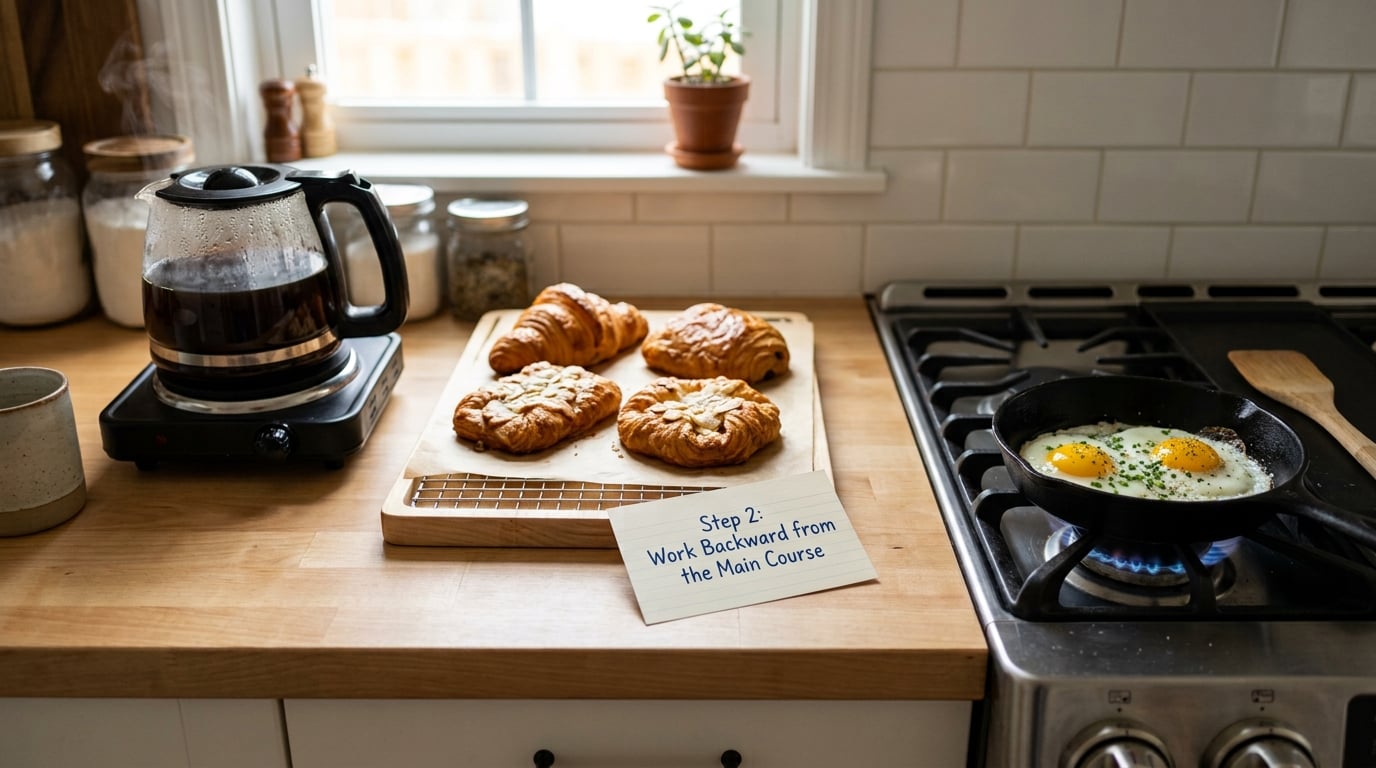
Decide when the main dish hits the table, then count backward. If brunch starts at 11:00 and you plan to serve the main course at 11:20, the schedule looks like this:
- T-90 minutes (9:30 a.m.): Oven dishes go in. Pastries and any tray that must reach room temperature come out of cold storage.
- T-60 minutes (10:00 a.m.): Coffee goes on. Cut fruit and arrange the cold items so the buffet or table looks finished, not assembled.
- T-30 minutes (10:30 a.m.): Finish anything that reheats well. Set out the drink station, including coffee, water, juice and at least one non-alcoholic option that is not juice.
- T-15 minutes (10:45 a.m.): Turn the pan heat on for eggs. Guests start arriving now.
- T-0 (11:00 a.m.): Greet, take coats, offer coffee and juice. Nothing needs plating yet.
- T+20 (11:20 a.m.): Serve the main dishes. This is the moment the whole plan was built around.
- T+90 (12:30 p.m.): Refill the coffee and clear the first used plates before the stack gets awkward.
Write the times on an index card and tape it inside a cabinet. It sounds excessive until the morning you have six things happening at once.
The buying matters as much as the clock. Picking up fruit and pastries the day before frees your morning kitchen entirely, and our guide to shopping a farmers market for the first time covers how to choose produce that will still look good twelve hours later.
Step 3: Set the Table and Drinks Before Arrival
Anything that can be done the night before should be. Set the table, chill the drinks, put the coffee filters in the machine and decide where the coats go. Guests who walk into a finished room settle in. Guests who walk into an active kitchen hover by the sink asking if they can help.
Both those behaviors cost you the first fifteen minutes, which are the minutes you wanted for welcome drinks and small talk.
Step 4: Serve in a Relaxed Order
Sequencing matters more than quantity. Coffee, water and juice come first, while people are still arriving and nobody has committed to a plate. Fruit, cheese and pastries follow. Then the savory dishes. Seconds come only if you have something left worth bringing out, usually pasta, a frittata or a second tray of the same thing, not an entirely new recipe.
Buffet beats plated service whenever arrivals are spread out. Guests help themselves when they are hungry instead of waiting for a course, and nothing goes cold on a waiting plate. Holding everything until everyone sits down is the most common reason a home brunch stalls.
If the guest list is long enough that a single table no longer works, how to make brunch for a crowd without stress walks through the buffet setup in more detail, including how much food to plan per head.
Step 5: Leave Room for Conversation
After the main dishes go out, resist the urge to clear and reset. The last 45 minutes of a brunch is where people actually talk. If you need a reason to stay off your feet, refill the coffee pot and sit down for one round.
Build in slack for latecomers, dietary needs and guests who linger past the end time. More on that below.
Common Mistakes
Picking the time before the menu. Fix: write the menu first, find out when the last dish is ready, then set the start time about 20 minutes earlier.
Planning too many made-to-order dishes. Omelets for eight need a hot pan, a low flame and your full attention at exactly the moment you should be welcoming someone. Fix: make one to-order item and put the rest out on the table.
Leaving drinks to the last minute. A coffee line forms faster than a food line, and cold brew in a hot carafe is a bad experience. Fix: set up the whole drink station an hour early, including ice.
Serving everything at once. Twelve dishes on the table at 11:00 looks impressive and eats badly. Fix: fruit and pastries out early, savory at service, seconds later.
Failing to account for late arrivals. A guest who shows up at 12:00 is not late so much as early for lunch. Fix: keep the cold items, coffee and one tray available, and hold the hot main until 20 minutes after the start before you call it a wrap.
Forgetting the end time. Guests who do not know when brunch finishes often leave early or stay too late. Fix: put both the start and the end on the invitation.
Frequently Asked Questions
What is the most common time to start brunch for guests?
Most hosted brunches start at 11:00 a.m., and that is the safest default for a weekend gathering. Ten o’clock reads as breakfast, noon reads as lunch, and 11:00 catches everyone at a similar level of hunger. Guests travelling from out of town or heading home early can do well with a 10:30 start. Whatever you choose, name an end time on the invitation too.
Should I invite guests to arrive before brunch starts?
Give people a small window rather than a hard hour. If brunch officially starts at 11:00, ask guests to arrive between 10:45 and 11:00 so coffee and juice are ready but the main dishes are not yet out. A 30-minute window makes the first stretch forgiving and means nobody sits waiting alone. Avoid telling people to arrive at 10:15 unless you genuinely want help setting up.
How early should I prepare food before guests arrive?
Most of the prep happens the night before, and only the last hour happens on the day. Oven dishes go in about 90 minutes before the start, coffee goes on 60 minutes before, and the fruit and table layout are finished 30 minutes before. Food that is reheated, such as a frittata or a casserole, actually tastes better made ahead. Only eggs and similar quick dishes should be saved for the service itself.
What if some guests arrive late for brunch?
Plan for a 30-minute spread and stop treating anyone as late. Keep the coffee, juice and cold items available, and hold the main dishes until about 20 minutes after the stated start before serving seconds. Refill the coffee pot rather than announcing that food is ready. If your guest list includes travelers, a slightly earlier start and a firm end time prevent the whole room from eating around them.
How long should a brunch gathering last?
Plan for two to three hours, and two is the minimum worth hosting. An 11:00 start with a 1:30 to 2:00 end gives people time to arrive, eat, talk and leave without it feeling rushed. Shorter than ninety minutes and guests feel they should not have come. Longer than three and you lose the rest of the weekend, unless the weather is good and the gathering is deliberately al fresco.
Is 10 a.m. a good time to serve brunch?
It works for specific situations. Ten o’clock suits guests who are travelling that morning, families with young children, and anyone eating before an early afternoon commitment. What it does not suit is a general invitation, because many guests will have already eaten breakfast and arrive expecting coffee and pastries rather than a full meal. Pair it with an earlier end time, around 12:30, and keep the menu light.
Conclusion
Pick 10:30 or 11:00 a.m., end at 1:30 or 2:00 p.m., and write both times on the invitation. Then write your menu, work backward from when the main dish should land, and let the first hour stay slow. The timing decision takes five minutes and it decides how the whole morning feels.