
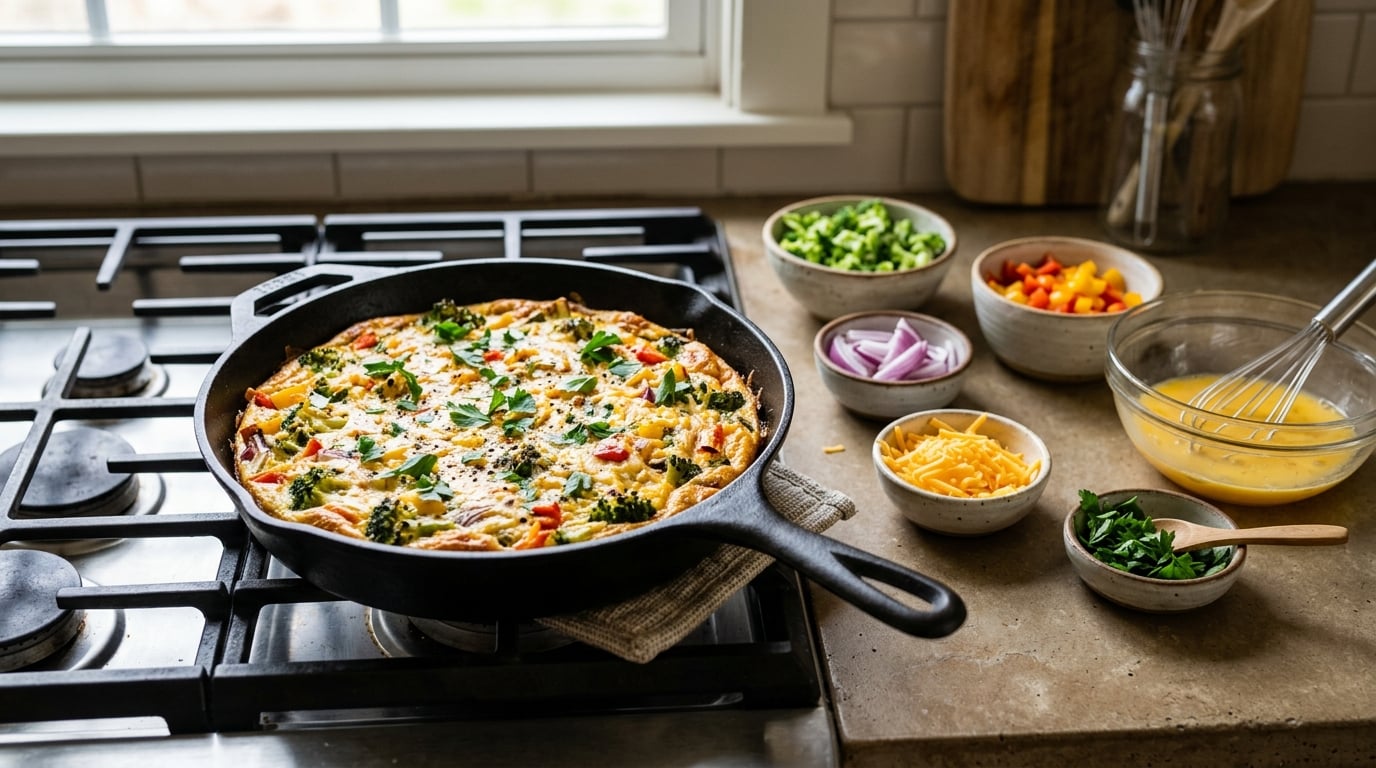
To make a frittata with leftover vegetables, cook or drain about 2 cups of chopped vegetables, whisk 6 eggs with 2 tablespoons of milk and a pinch of salt, pour the mixture into an oven-safe skillet over the veg, cook it on the stove for 4 to 5 minutes, then bake at 350°F until the eggs are just set. Prep is roughly 10 minutes and the whole thing lands in the oven about 15 minutes later.
A frittata is a quiche without the crust, which is exactly what you want when the vegetables in your fridge are already cooked and you do not want to make pastry. It works at any hour, slices cold into a lunchbox, and reheats without drying out. The only real trap is water, and water is a vegetable problem, not an egg problem.
For the same reason, if you like the egg technique but prefer a folded shape, our guide to omelets that do not stick covers the pan control that makes both dishes work.
Table of Contents
- What You Need
- Step-by-Step: How to Make a Frittata with Leftover Vegetables
- Common Mistakes
- Frequently Asked Questions
- Which leftover vegetables work best in a frittata?
- Do I need to cook raw or frozen vegetables before adding them to the eggs?
- Can I make a frittata without cheese or dairy?
- How do I know when the frittata is fully cooked?
- How long can a leftover-vegetable frittata be stored?
- Can I add cooked sausage, bacon, or chicken to a frittata?
- Short Conclusion
What You Need
The base recipe is built around six eggs and two cups of vegetables, and it comes out of a 10-inch oven-safe skillet in about four servings. Here is what goes in.
- 6 large eggs, at room temperature if you have the time
- 2 cups chopped leftover vegetables, roughly a quarter-inch dice
- 2 tablespoons milk, half-and-half, or cream
- 1/3 cup grated cheese, optional but it helps the top brown
- 1 tablespoon olive oil or butter for the pan
- Salt and black pepper, plus anything else you like: garlic powder, red pepper flakes, smoked paprika
- A handful of fresh herbs such as parsley, chives, basil, or thyme, chopped
One 10-inch skillet holds about 2 cups of vegetables with 6 eggs and serves 4. Scale both numbers together if your pan is a different size, otherwise the ratio drifts and you end up with either a thin egg layer or a frittata too thick to set through:
- 1 cup vegetables: 3 eggs, an 8-inch skillet, 2 servings
- 2 cups vegetables: 6 eggs, a 10-inch skillet, 4 servings
- 3 cups vegetables: 8 eggs, a 12-inch skillet, 6 servings
- 4 to 5 cups vegetables: 10 to 12 eggs, a 12-inch skillet plus a baking dish, 8 servings
The distinction that decides whether your frittata works is whether the vegetables are already cooked. Vegetables that have been roasted, boiled, or sautéed only need reheating through. Raw or frozen vegetables need several minutes in the skillet before the eggs go anywhere near them, because they release water as they cook and that water is what makes a frittata soggy.
For equipment, a 10-inch oven-safe skillet is the one piece that matters. Cast iron, stainless steel with an oven-safe handle, and enameled cast iron all take broiler heat. Non-stick pans are fine on the stove but many are not rated for the oven, so check the base before you commit to finishing it under the broiler.
Step-by-Step: How to Make a Frittata with Leftover Vegetables
1. Prepare and Season the Leftover Vegetables
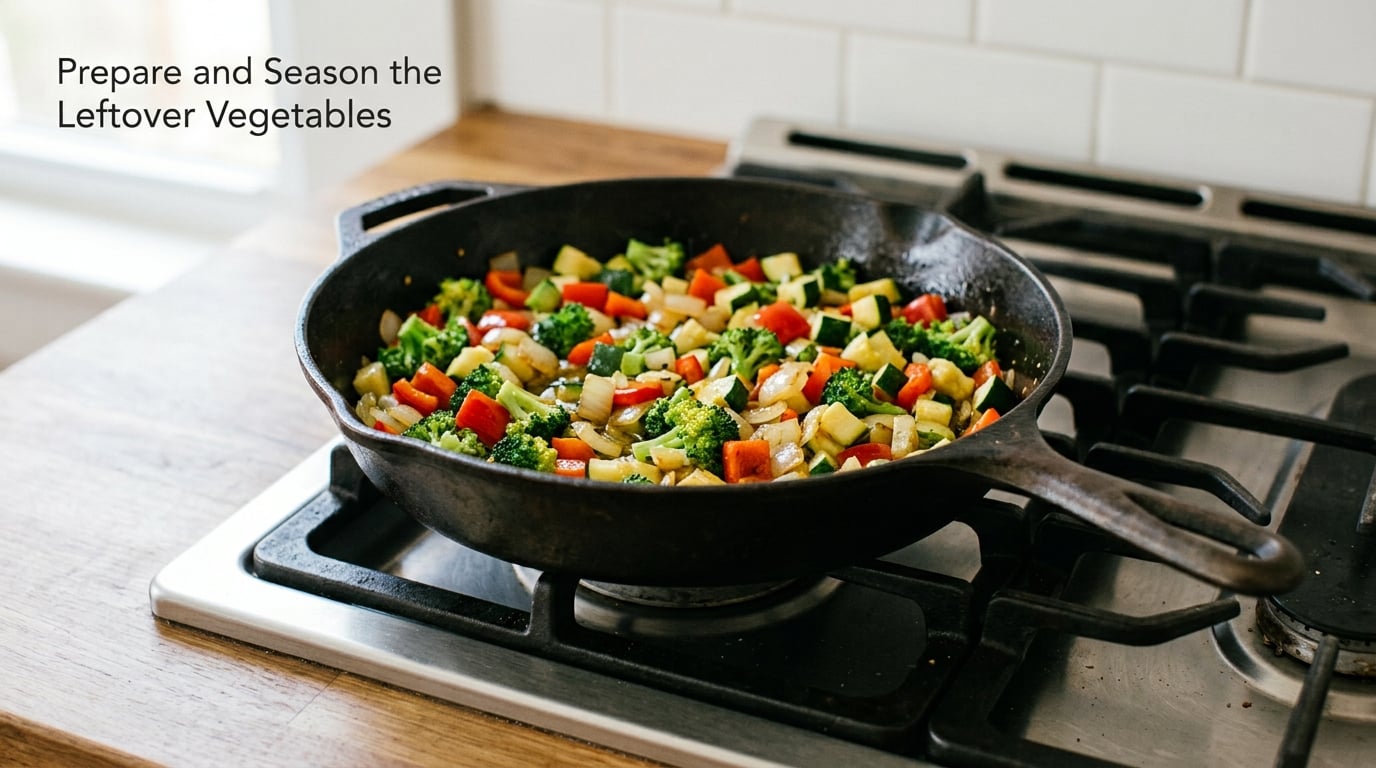
Chop everything to a similar size, about a quarter-inch. When you mix a dice of carrot with whole peas, the carrot stays hard while the eggs finish setting, and you get an uneven bite.
Pat wet produce dry with a clean towel. Zucchini, eggplant, mushrooms, and thawed frozen vegetables hold a surprising amount of surface water, and that water ends up in the finished dish unless you take it off first.
Warm the vegetables in 1 tablespoon of olive oil over medium heat for 3 to 5 minutes, season them with a pinch of salt, and set them aside. Extra-thick vegetables like potato or sweet potato chunks need longer, closer to 8 to 10 minutes, and they should be nearly fork-tender before the eggs are added.
2. Whisk the Eggs Until Smooth
Whisk 6 eggs with 2 tablespoons of milk or cream until the mixture is uniform and lightly foamy, about 30 seconds of steady whisking. You want no streaks of white left and no big bubbles on the surface. Season with salt, pepper, and any spice you like.
The dairy is not there for flavor. A little liquid makes the cooked egg softer and lighter, and the foam from whisking is what keeps the frittata from setting into a rubbery, uneven slab.
3. Start the Frittata in the Skillet
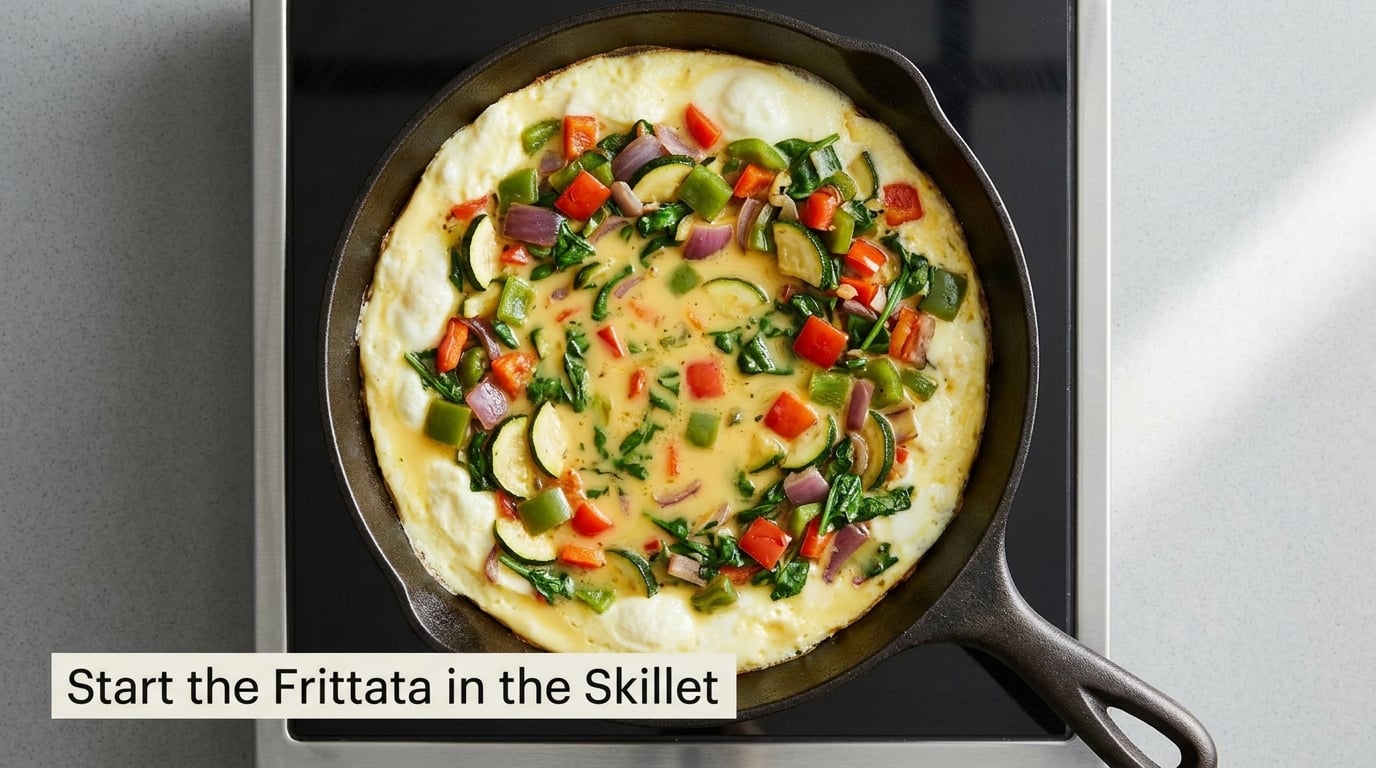
Heat the oven-safe skillet over medium-low heat with a thin layer of oil, then pour in the egg mixture and give the pan a gentle shake so it spreads to the edges. Scatter the vegetables over the top and let them sink in on their own.
Cook on the stove for 4 to 5 minutes without stirring. Stirring breaks the setting egg into scrambled curds, and what you want instead is a single cohesive layer that holds together when you slice it. The eggs at the edge will start to look softly set and pull slightly away from the pan, which means the bottom is ready for the oven.
4. Finish the Frittata in the Oven
Bake at 350°F for 8 to 12 minutes, until the top no longer looks liquid and the center has a slight wobble when you shake the pan. If the eggs are set at the edges but still glossy and moving in the middle, give it 3 more minutes and check again. Carryover heat keeps setting the frittata after it leaves the oven, so pulling it a minute early usually lands better than pulling it late.
For a browned, restaurant-style top, run the skillet under the broiler for 2 to 3 minutes at the end, watching it the whole time. The cheese added at the end of step 3 is what browns.
The doneness test to trust is a firm set with no liquid movement in the center and an internal temperature of 160°F for the egg mixture, checked in the thickest part.
5. Rest, Slice, and Serve
Let the frittata sit in the pan for 5 minutes. The residual heat finishes setting the middle, and the rest is what keeps the slices from falling apart when you cut them.
Run a knife around the edge, lift a serving onto a board, and cut with a serrated knife in firm downward strokes rather than sawing back and forth. A single clean cut keeps the layers together.
Move it to the refrigerator within two hours of cooking and use it within three to four days. To reheat, put slices in a dry skillet over medium-low heat for 2 to 3 minutes per side, or microwave at half power for 45 to 60 seconds so the edges do not turn rubbery. Slices also freeze well, laid flat on a tray first and then bagged once firm, for up to two months.
For a bigger table, our brunch for a crowd plan covers timing so the frittata is hot when people sit down rather than sitting out.
Common Mistakes
Watery vegetables. Raw zucchini, eggplant, mushrooms, and thawed frozen spinach all release liquid as they cook. Drain them in a colander and pat them dry, and precook them so they are already tender before the eggs go in.
Cold vegetables straight from the fridge. This is the most common cause of an undercooked center. Chilled vegetables pull heat out of the egg mixture faster than the stove and oven can replace it, so the outside sets while the middle stays wet. Warm them in the skillet first, and let them steam off for a couple of minutes.
Overcooked eggs. High heat and a long oven stay dry the frittata out until it turns rubbery. Medium-low on the stove, 350°F in the oven, and a short rest do the work that fierce heat ruins.
Under-set, liquid middle. Either the pan was too full or the oven was cooler than you thought. Check with an instant-read thermometer in the center; eggs need to reach 160°F. If your pan is oven-safe but browned slowly, finish under the broiler rather than raising the oven temperature.
Vegetables clumped in one spot. Pouring the eggs and then dumping the vegetables on top leaves them all in the middle. Spread the vegetables over the surface and press them down gently with the back of a spoon so they distribute through the whole thickness.
A skillet that is not oven-safe. Glass handles, non-stick coatings, and thin steel pans can warp or split under broiler heat or a 350°F oven. If your pan is not rated, finish the frittata on the stove alone, or pour it into a buttered baking dish for the oven stage.
A few adjustments once you have the method down: swap cheddar for feta or goat cheese with roasted peppers and herbs; add a spoonful of grated parmesan and nutritional yeast for a cheese-free version that still browns; fold in cooked sausage, bacon, or smoked salmon along with the vegetables; or use a muffin tin for mini frittatas that freeze individually for lunchboxes.
Frequently Asked Questions
Which leftover vegetables work best in a frittata?
Roasted and sautéed vegetables are the best candidates: peppers, zucchini, broccoli, cauliflower, onions, mushrooms, asparagus, and green beans all hold their shape and their flavor. Root vegetables such as potato and sweet potato work well but need longer pre-cooking, closer to 8 to 10 minutes, so they are tender before the eggs arrive. Tomato and cucumber are the two to use sparingly, since both release a lot of water as they cook.
Do I need to cook raw or frozen vegetables before adding them to the eggs?
Yes, raw and frozen vegetables should always be cooked first. Warming them in the skillet for 3 to 5 minutes drives off the water they release and softens them enough that they will be tender in the same time the eggs need. Frozen vegetables should be thawed and squeezed dry if possible, and any extra liquid discarded before they go in. Cooked leftovers only need reheating through.
Can I make a frittata without cheese or dairy?
Yes. Leave out the milk or cream entirely and the frittata still sets, though the texture will be slightly firmer and more egg-like than a creamy custard. It also helps to add a tablespoon of water to the eggs, which softens the result without adding dairy. Without cheese the top will not brown under the broiler, so rely on herbs and spices such as garlic powder, smoked paprika, and fresh parsley for flavor.
How do I know when the frittata is fully cooked?
Three cues together tell you it is done. The top should no longer look wet or glossy, the center should have only a slight wobble when you shake the pan, and an instant-read thermometer in the thickest part should hit 160°F. A liquid center at 350°F usually means the pan was overfilled rather than undercooked, and a rubbery texture means it sat in the oven too long.
How long can a leftover-vegetable frittata be stored?
Refrigerate it within two hours of cooking and eat it within three to four days, keeping it covered in the pan or a sealed container. Reheat slices in a dry skillet over medium-low heat for 2 to 3 minutes per side, which keeps the texture better than a microwave. For longer storage, freeze slices flat on a tray until firm, then bag them for up to two months and thaw in the refrigerator overnight.
Can I add cooked sausage, bacon, or chicken to a frittata?
Yes, and cooked meat is the easiest protein to fold into a leftover vegetable frittata. Add it with the vegetables so it heats through during the 4 to 5 minutes on the stove and the oven finish. Any poultry added to eggs must reach 165°F internally, and ground meat such as sausage needs 160°F. Leftover roast beef, ham, and bacon are already safe to eat once reheated to a steaming hot temperature.
Short Conclusion
Start with the vegetables, not the eggs. Cook anything raw or frozen until tender, drain and dry anything wet, warm the leftovers so they are not fridge-cold, and only then pour over six whisked eggs seasoned well. From there it is a low stove for 4 to 5 minutes, 350°F for 8 to 12, and a five-minute rest.
Trust the cues rather than the clock: a center that no longer moves, edges that pull from the pan, and 160°F in the thickest part. Every oven runs a little different, and the vegetables you are clearing out of the fridge change the timing every time.