
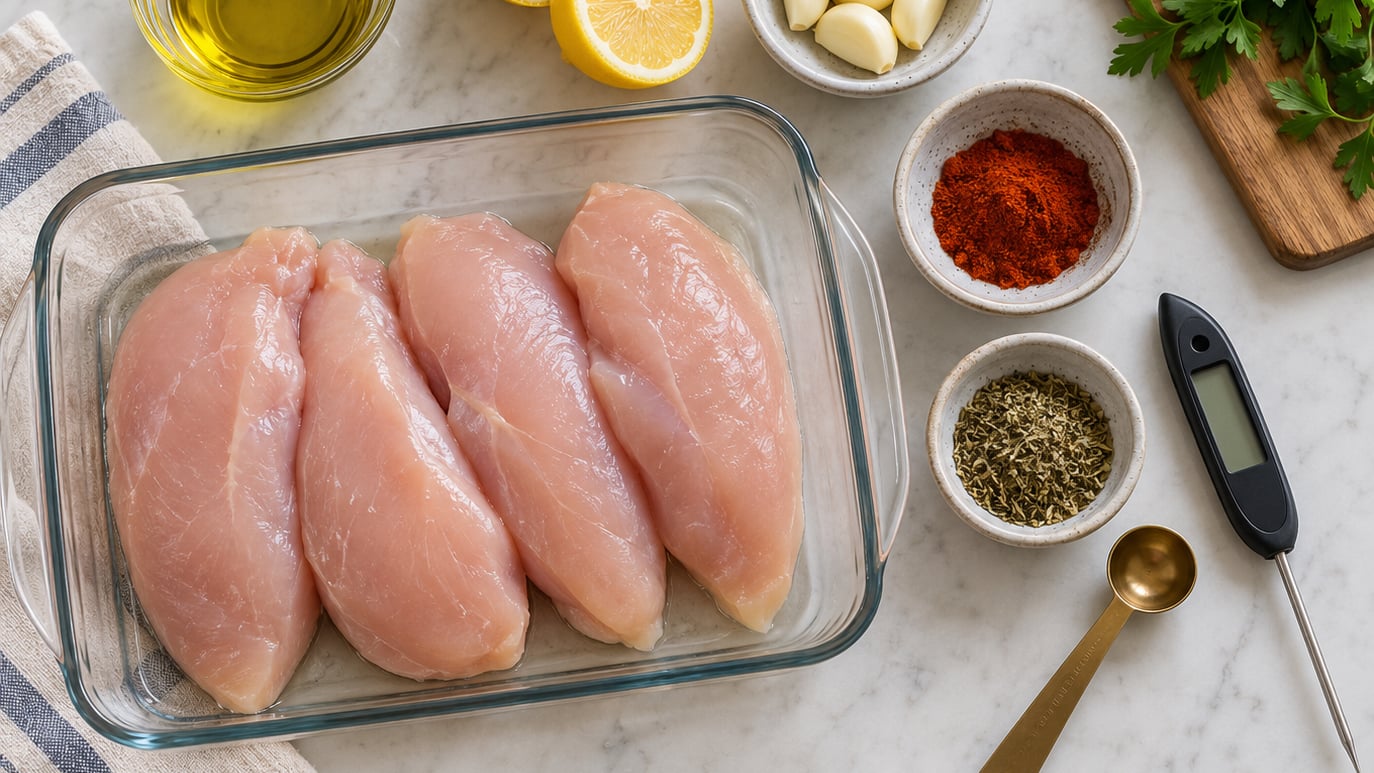
To marinate chicken for grilling you need three things: oil, acid, and salt-based seasoning. Whisk them together, coat the raw chicken, refrigerate it for 30 minutes to 12 hours depending on the cut, then grill over moderate heat until the thickest part reads 165°F. The hands-on work is about ten minutes.
That is the whole method. Most of the flavor comes from the balance of those three components and from matching the marinating time to how thick the meat is. Get the acid wrong and the surface turns chalky. Get the sugar wrong and the chicken burns long before it cooks through. The rest is just good heat control and a thermometer.
Table of Contents
- What You Need
- Step-by-Step: How to Marinate Chicken for Grilling
- Common Mistakes
- Frequently Asked Questions
- How long should chicken marinate before grilling?
- Can I marinate chicken overnight?
- Does a lemon or vinegar marinade make chicken mushy?
- Can I marinate frozen chicken without thawing it first?
- Can I use leftover marinade to baste chicken while it grills?
- How do I know when marinated chicken is fully cooked?
- Conclusion
What You Need
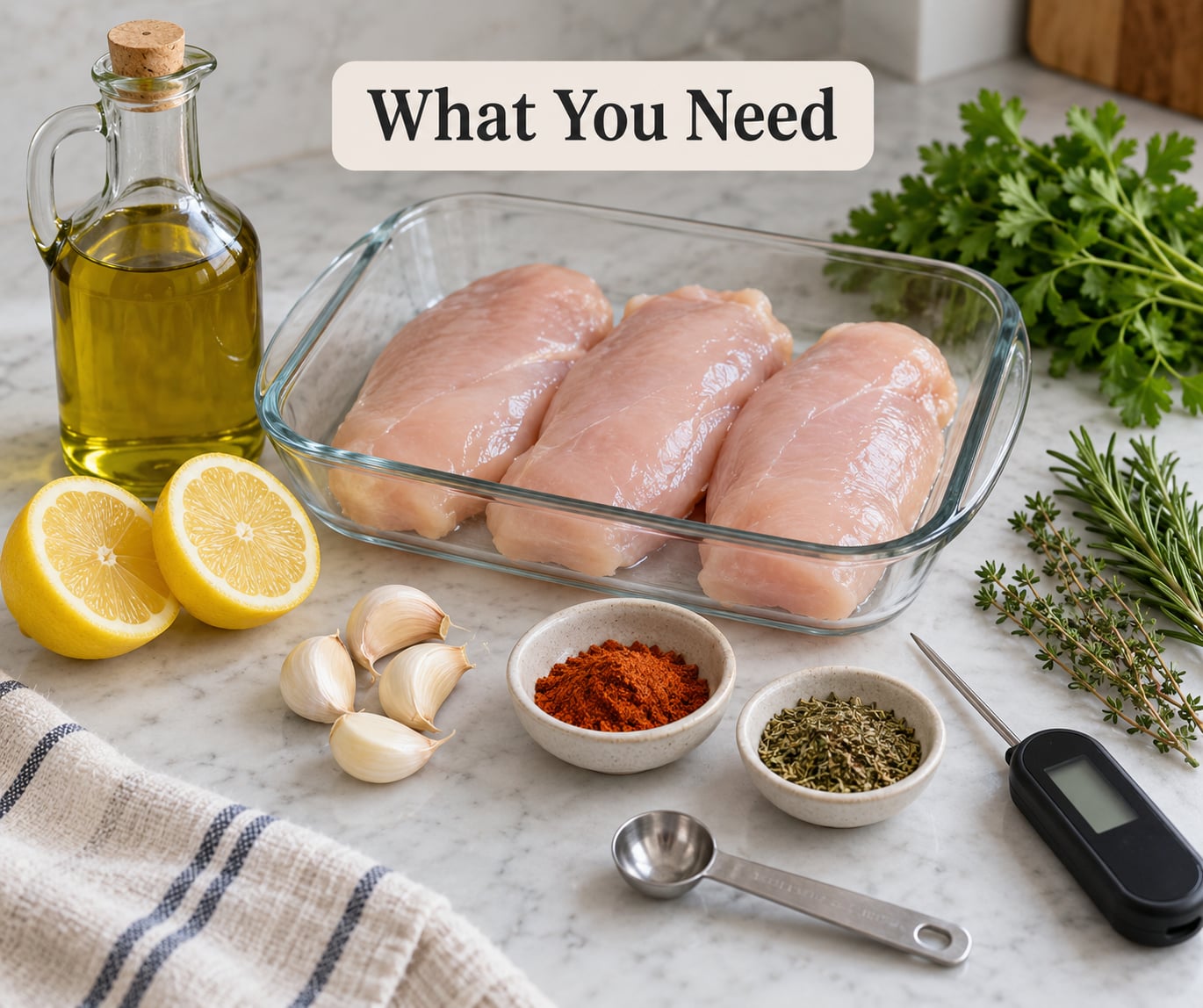
The ingredient list for a basic chicken marinade for grilling is short: 2 tablespoons of oil, 1 to 2 tablespoons of acid, 1 to 1.5 teaspoons of salt, and aromatics like garlic, paprika, and herbs. Everything past that is a variation.
For a pound of chicken, you need about a quarter cup of marinade total. That is enough to coat every surface without drowning the meat. Three boneless breasts fit comfortably in a gallon zip-top bag or a shallow glass dish with a lid.
Tools worth having:
- Chicken — breasts, thighs, drumsticks, or a spatchcocked whole bird.
- Oil — olive oil for a fruity marinade, neutral oil like avocado or canola for a clean one. Olive oil is optional; it adds flavor but not tenderizing.
- Acid — lemon juice, lime, cider vinegar, rice vinegar, or red wine vinegar. All are optional too, though something acidic does most of the surface work.
- Salt — the seasoning backbone. This is the one item you should not skip or swap.
- Aromatics — garlic, onion powder, smoked paprika, chili flakes, dried oregano.
- A resealable container — a gallon zip-top bag or a glass dish with a tight lid. Glass and stainless steel are nonreactive; aluminum dulls the flavor of acid-heavy marinades over time.
- An instant-read thermometer — the only tool that reliably tells you when chicken is done.
Optional extras: a small whisk for emulsifying the oil and acid, a meat injector for pushing marinade into thick pieces, and paper towels for draining the chicken before it hits the grate.
Step-by-Step: How to Marinate Chicken for Grilling
Step 1: Choose Chicken Cuts and Marinating Time
Thickness decides the marinating time, not the ingredient list. Acid and salt only reach the outer few millimetres of the meat, so a thick piece needs longer to be seasoned through its surface than a thin one does.
Pound boneless breasts to an even three-quarter-inch thickness with a flat mallet. Scoring the surface with a sharp knife works too, though it leaves thin pieces that dry out faster on the grill.
| Chicken cut | Minimum | Best range | Maximum |
|---|---|---|---|
| Boneless skinless breasts | 30 minutes | 30 minutes to 4 hours | 4 hours |
| Boneless skinless thighs | 1 hour | 1 to 12 hours | 12 hours |
| Bone-in thighs or drumsticks | 2 hours | 2 to 12 hours | 12 hours |
| Spatchcocked whole chicken | 4 hours | 4 to 24 hours | 24 hours |
Half an hour is enough to season the surface of a thin breast. Cooks who insist on four hours or overnight are usually marinating thighs or a whole bird, where the longer soak genuinely helps.
Highly acidic marinades are the exception. Lemon juice and vinegar denature surface proteins quickly, and past a few hours the outside turns mushy while the center stays raw. Cap heavy citrus and vinegar marinades at 2 to 4 hours. Oil-based, soy-based, and yogurt-based mixtures tolerate overnight soaking without the same texture problem.
Step 2: Build a Balanced Marinade
The formula is oil for moisture and flavor carry, acid for brightness, and salt for seasoning. Sugar and aromatics ride along with them.
| Component | Per 1 lb (450 g) raw chicken | What it does |
|---|---|---|
| Oil | 2 tablespoons | Carries fat-soluble flavor, keeps the surface from sticking |
| Acid | 1 to 2 tablespoons | Brightens the marinade, loosens surface proteins |
| Salt | 1 to 1.5 teaspoons | Draws moisture in, seasons, helps browning |
| Aromatics | 2 garlic cloves, 1 to 2 teaspoons paprika | Flavor without changing the texture |
| Sweetener | 1 tablespoon honey or brown sugar (optional) | Caramelizes into a crust; use sparingly over direct heat |
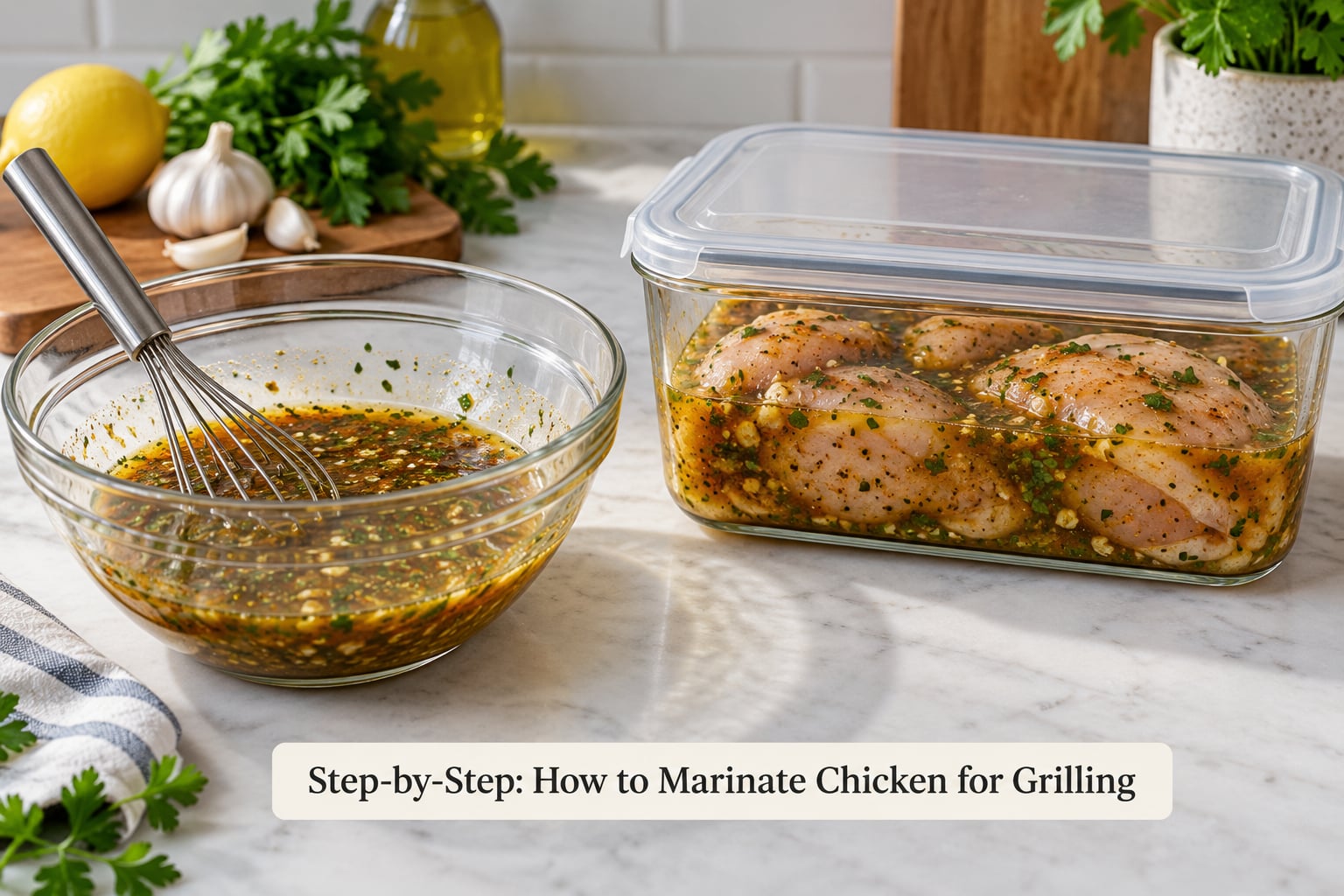
Whisk the acid and salt together first, then stream in the oil while whisking. The mixture turns thick and cloudy once it emulsifies, and that clinging texture is what stays on the meat.
Lemon-herb: 2 tablespoons olive oil, 2 tablespoons lemon juice, 1 teaspoon salt, 2 minced garlic cloves, 1 teaspoon dried oregano, a few black peppercorns. Good on breasts and thighs alike.
Smoky paprika: 2 tablespoons olive oil, 1 tablespoon soy sauce, 1 tablespoon cider vinegar, 1 teaspoon salt, 2 teaspoons smoked paprika, 1 teaspoon onion powder, 1 teaspoon garlic powder. The sugar and soy in this one caramelize fast, so drain it well and grill over medium rather than high.
Yogurt-garlic: 3 tablespoons plain yogurt, 1 tablespoon olive oil, 1 teaspoon salt, 3 minced garlic cloves, 1 teaspoon cumin. Mild acid, so it stays tender much longer. A half-hour works, and a few hours is better.
Sugar is the ingredient that burns. One tablespoon per pound is plenty; a tablespoon and a half over a screaming-hot grill turns bitter before the meat is cooked through.
Step 3: Marinate and Grill Safely
- Pat the chicken dry. Blot the surface with paper towels so the marinade clings instead of sliding off.
- Coat it completely. Put the chicken in the bag or dish, pour the marinade over, and turn each piece with tongs so every side is wet.
- Refrigerate. Seal and refrigerate for the time from the table above. Turn the pieces once or twice during longer soaks.
- Drain. Lift the chicken out and blot off the excess. Wet marinade hitting hot coals is what causes flare-ups and black char.
- Set up two zones. On a gas grill, put one burner on high and one on medium-high. On charcoal, bank the coals to one side. Sear first, then move the chicken to the cooler side.
- Check the temperature. Cook to an internal 165°F in the thickest part. Pull at 155 to 160°F and let carryover cooking finish the job.
- Rest five minutes on a board before slicing so the juices stay in the meat.
Chicken is done when the thermometer reads 165°F, not when the juices run clear. Clear juices are a late signal, and breast meat that hits 170°F is dry.
Serve sliced chicken over a salad or grain bowl, or turn the extras into crispy baked chicken tenders the next night.
Common Mistakes
1. Marinating too long in acid. Citrus and vinegar past 2 to 4 hours leave the outside chalky and mushy. Thicken the cut or shorten the soak instead of waiting longer.
2. Grilling sugary marinade over high heat. Honey, sugar, and soy caramelize and drip into the flame, which scorches the crust and strips the char off. Drain the chicken well and finish on a cooler zone.
3. Crowding the grate. Chicken pieces touching each other steam each other and never brown. Leave a finger-width of space between them, and cook in batches on a small grill.
4. Turning too often. Every flip tears the surface and resets the crust. Give each side 4 to 6 minutes on medium-high heat before turning, and only once or twice.
5. Basting with marinade that touched raw chicken. Raw poultry juices in the marinade make basting unsafe unless you boil it first for a full minute. A cleaner move is to reserve a portion of the marinade before the raw chicken goes in, and keep that separate.
6. Skipping the thermometer. Visual checks fail constantly, especially on a marinated breast that looks done long before it is. Probe the thickest part every few minutes.
Two smaller habits help as much as anything else: use a nonreactive container so a lemon-heavy marinade does not taste metallic after hours, and always refrigerate. Raw chicken marinating at room temperature grows bacteria fast, and a countertop marinade should never sit out longer than two hours.
Frequently Asked Questions
How long should chicken marinate before grilling?
It depends on the cut. Boneless skinless breasts need 30 minutes to 4 hours, boneless thighs 1 to 12 hours, and bone-in pieces or a spatchcocked whole chicken 2 to 24 hours. Thirty minutes is enough to season the surface of a thin breast, but a thick piece or a whole bird needs hours. Keep heavily acidic marinades to 2 to 4 hours.
Can I marinate chicken overnight?
Yes, as long as the marinade is not heavily acidic. Yogurt, soy sauce, and oil-based marinades all soak overnight without turning the surface mushy. Lemon and vinegar marinades should stay under 4 hours because the acid denatures surface proteins quickly. Always refrigerate the container, sealed, on the bottom shelf of the fridge.
Does a lemon or vinegar marinade make chicken mushy?
It can, if you overdo the time. Acid loosens and denatures proteins in the outer layer, so after 6 to 8 hours in a strong lemon or vinegar marinade the surface turns chalky and pasty while the center is still raw. Cap citrus and vinegar at 2 to 4 hours, or switch to yogurt or soy, which are much milder.
Can I marinate frozen chicken without thawing it first?
Yes, and it works well. Put the frozen pieces in a bag, add the marinade, and refrigerate until thawed and fully marinated, usually overnight for boneless pieces and up to 24 hours for a thick bone-in cut. Marinating in the fridge is safer than thawing on the counter. If you need the chicken today, thaw it first using the methods in our guide to how to defrost chicken safely and quickly.
Can I use leftover marinade to baste chicken while it grills?
Only if you boil it first or reserved it clean before the raw chicken went in. Marinade that has touched raw poultry can carry bacteria, and brushing it on during cooking spreads those juices onto the surface you are about to eat. The safe options are boiling the marinade for a full minute or keeping a separate portion made before the raw chicken was added.
How do I know when marinated chicken is fully cooked?
Use an instant-read thermometer in the thickest part of the piece, away from the bone. The USDA safe minimum internal temperature for poultry is 165°F. Because carryover cooking adds several degrees after you pull it off the heat, many cooks take the chicken off at 155 to 160°F and let it finish on the board, then rest it five minutes before slicing.
Conclusion
Keep it simple: mix oil, acid, and salt with aromatics, coat the chicken, refrigerate for the time that matches your cut, grill it over moderate heat with the excess marinade blotted off, and confirm 165°F with a thermometer before you serve. That is the whole process, and it works every time.
Next time you grill a batch, plan for the extras. Sliced grilled chicken turns into a quick chicken grain bowl for dinner with whatever grains and vegetables are in the fridge.