
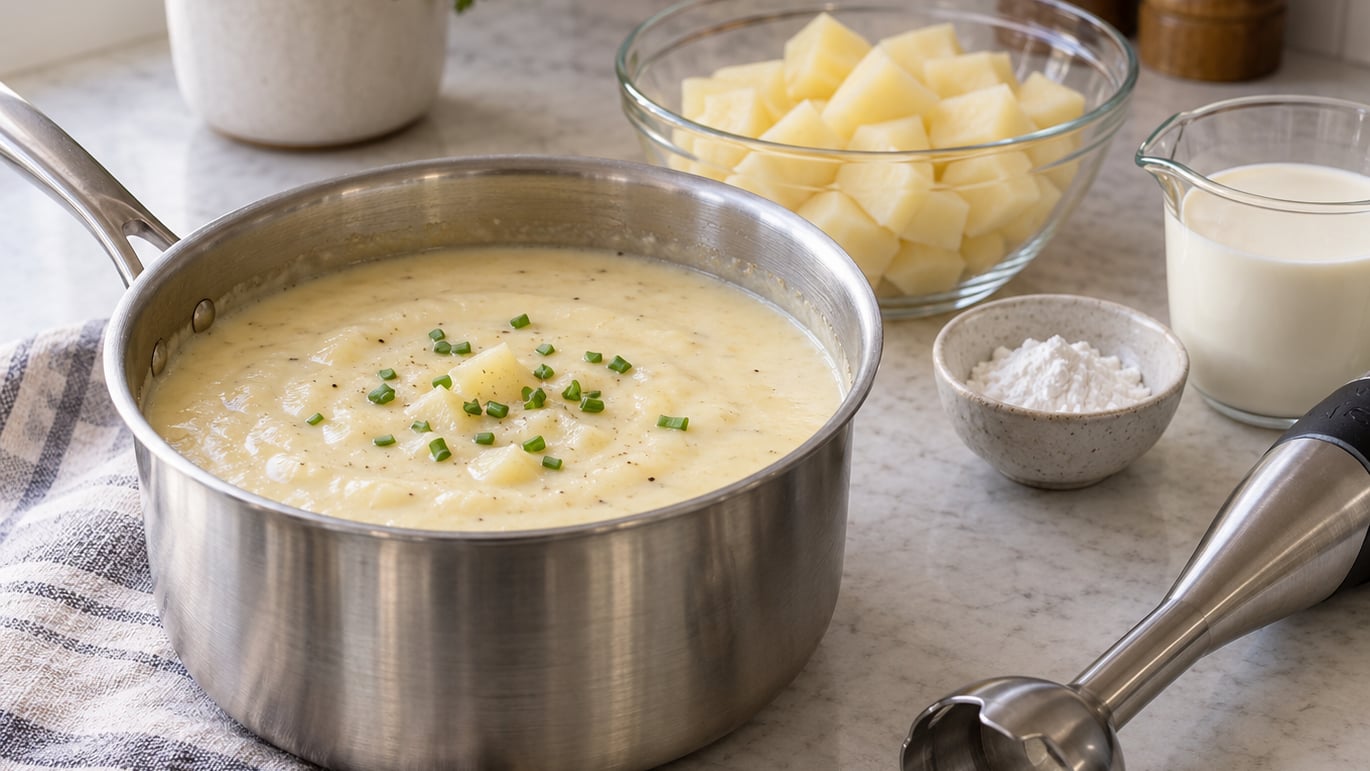
To make potato soup thick and creamy, you are doing two separate jobs. Thickness comes from potato starch, released by cooking the potatoes until they collapse, mashing some of them back in, blending, simmering the liquid down, or adding a cooked thickener such as a flour roux or cornstarch slurry. Creaminess comes from dairy and fat stirred in off the boil.
Most thin potato soup fails because those two jobs get treated as one. You add cream to a watery soup, it tastes richer for a minute, and it is still a thin soup. Fix the body first, add the richness second, and it works almost every time.
The whole job takes about 45 minutes from cutting board to bowl, and nothing in it is difficult. The only skill that matters is knowing when to stop while you adjust the texture.
What You Need
The core ingredient list is short, and most of it is probably already in your kitchen. What you add beyond that determines whether the soup is thin, thick, or rich.
- Potatoes: 2 pounds, peeled and cut into 1-inch dice. Yukon Gold gives a buttery, creamy result with less gluey starch; Russet releases more starch, so it thickens more on its own.
- Aromatics: 1 onion, 2 celery stalks, 3 or 4 garlic cloves. Cooked slowly, they build the flavor the potatoes cannot.
- Fat: 2 tablespoons butter or olive oil. This is where a roux starts, and it carries flavor into the finished soup.
- Liquid: 3 cups chicken broth for every 2 pounds of potatoes. This ratio decides the final thickness before anything else happens.
- Seasoning: salt, black pepper, a teaspoon of smoked paprika, a bay leaf.
- Richness: heavy cream, half-and-half, evaporated milk, sour cream, or 1 to 2 cups shredded sharp cheddar.
- Garnish: cooked bacon, scallions, chives, parsley, or a spoonful of sour cream.
Tools matter less than people think. You need a heavy-bottomed pot with a lid, a potato masher or fork, a whisk, and either an immersion blender or a countertop blender. A fine strainer is useful if you blend in batches and want to catch the skins.
Optional thickeners, if you want to reach for them: cornstarch, all-purpose flour, unsweetened nut butter, a spoonful of the starchy water sitting in the bottom of the potato pot, or xanthan gum at about 1/8 teaspoon per quart whisked into cold water.
Step-by-Step: How to Make Potato Soup Thick and Creamy

Follow these in order and the texture becomes hard to get wrong. The order matters far more than the ingredients, because every step either adds body or adds richness, and the two behave differently.
Build the Flavor Base
Melt 2 tablespoons of butter in a heavy pot over medium heat. Add the chopped onion and celery and cook for 5 to 7 minutes, until the edges are soft and translucent, not browned. Stir in the minced garlic and smoked paprika and cook 30 seconds more.
Aromatics should be soft, not colored. Burnt garlic and dark brown butter turn a mild potato soup bitter within a minute, and cream will not rescue it. If you are using bacon, render 4 slices at the start, scoop out the fat, and use that fat in place of the butter, then crumble the bacon back in at the end.
Cook the Potatoes Until Tender
Add the diced potatoes and 3 cups of chicken broth. Bring to a boil, then drop the heat to a gentle simmer, cover, and cook for 15 to 20 minutes. The potatoes are done when a fork slides in with no resistance at all.
Half-cooked potatoes release almost no starch, and that is the number one reason a potato soup ends up thin. Cook them in broth rather than plain water so the starch they give off goes straight into the liquid you are going to eat.
Some cooks skip the thickener entirely and just cook the potatoes until they collapse into a thick mush. That works, and it is where most of the flavor-friendly thickening comes from.
Choose the Best Thickening Method
Pick one method, not all of them. They stack, but so do the risks of a pasty or gluey finish.
| Method | How it thickens | Amount per quart of soup | Cook time | Best for |
|---|---|---|---|---|
| Mash the potatoes | Releases the potato’s own starch into the liquid | About 1 cup mashed potato | None | First choice, gluten-free, clean potato flavor |
| Cornstarch slurry | Extra starch sets at a rolling boil | 1 tablespoon cornstarch in 2 tablespoons cold water | 1 to 2 minutes | Glossy, clear finish and gluten-free cooking |
| Flour roux | Flour cooked in fat forms a paste that thickens the liquid | 2 tablespoons flour cooked in butter | 3 to 5 minutes | Maximum body and a rustic flavor |
| Reduce | Water evaporates, flavor and solids concentrate | Simmer 10 to 20 minutes uncovered | 10 to 20 minutes | Deepest flavor with no added ingredient |
| Blend | Pureed potato and starch form an emulsion | Blend half the pot | About 1 minute | Silky restaurant texture |
| Xanthan gum | A pinch thickens at any temperature | 1/8 teaspoon whisked into cold water | None | Very thick, gluten-free and dairy-free |
Mash first. Lift out about a third of the cooked potatoes, roughly one cup, and mash them with a fork or a masher. Stir them back in and give the pot a minute. This is the move that keeps chunks in the bowl while still giving the soup body.
Slurry next. Stir 1 tablespoon of cornstarch into 2 tablespoons of cold water until smooth, then pour it in while the soup is already bubbling. Cornstarch needs a boil to thicken, and it leaves the soup glossier and clearer than flour ever will.
Roux, done properly. Melt 1 tablespoon of butter, whisk in 2 tablespoons of all-purpose flour, and cook for 1 to 2 minutes until it smells toasty. Whisk in a cup of the hot soup to loosen it, then return the whole thing to the pot. Dumping dry flour straight into liquid is exactly what makes gluey, pasty soup.
Reduce or blend. Leave the pot uncovered and simmer for 10 to 20 minutes, or put an immersion blender in and pulse for 20 seconds with about half the soup. Both add body without adding a single ingredient.
Add Cream or a Dairy-Free Alternative
Turn the heat down until the soup is barely bubbling, then stir in 1 cup of heavy cream, half-and-half, or evaporated milk. Add dairy off the boil and keep it there. A rolling boil makes the milk proteins clump at the surface, and the soup turns grainy and split.
Warm cream stirred in slowly emulsifies into the starch and coats it, which is the difference between creamy and merely thick. Shredded sharp cheddar does both jobs at once, adding fat and body; stir 1 to 2 cups in off the heat and let it melt completely.
For a dairy-free version, use full-fat coconut milk, or stir 1 tablespoon of unsweetened almond or cashew butter into the broth while it simmers, or whisk 1/2 teaspoon of xanthan gum into cold water and stir that in. Our guide to making creamy soup without heavy cream covers the dairy-free routes in more depth.
Check and Adjust the Final Consistency
Drag a spoon across the bottom of the pot, then hold it above the surface. The trail should hold for about two seconds before it fades. That is the restaurant test, and it is a better measure than any timer.
If the soup is still thin, simmer it uncovered for another 10 minutes and test again. If it is too thick, whisk in warm broth or milk a quarter cup at a time, and save a splash of cold cream for the very end so it does not cook. Season at the last moment with salt, pepper and a pinch of smoked paprika, then taste again.
Common Mistakes
Nearly every disappointing potato soup comes down to one of these seven things.
- Undercooked potatoes. Firm potatoes give up no starch. Cook until a fork passes through with zero resistance, not until the edges look soft.
- Too much liquid. Every extra cup of broth has to be simmered off later. Start with 3 cups per 2 pounds of potatoes and add more only if the pot looks dry.
- Skipping the mash or the blend. Even a third of the potatoes mashed back in makes a visible difference in how the soup hangs on the spoon.
- Adding liquid after thickening. Cold broth or milk at the end undoes everything you just did. Loosen first, thicken second.
- Boiling the dairy. Cream, milk and sour cream all curdle at a hard boil. Add them off the heat and keep the simmer gentle.
- Adding dry flour to the pot. Raw flour forms lumps and a pasty coating. Cook it in butter first, or whisk it into cold water as a slurry.
- Reheating too aggressively. A hard boil breaks the emulsion and makes the soup grainy. Warm it over medium-low with frequent stirring.
For storage, cool the soup and refrigerate it in a shallow container within two hours, where it will keep about three to four days. Reheat on the stove rather than in the microwave, stirring often, and have a little broth nearby because the starch keeps drinking in liquid as it warms. Bring it to 165 F before serving.
Starch also keeps thickening on a warming tray or buffet hold, which is why soup served over a long dinner often needs a splash of broth or milk just before service. If you like to prep food the day before, our guide to making potato salad ahead of time covers the same make-ahead-and-store approach for a different dish.
Frequently Asked Questions
What can I use to thicken potato soup?
Mash about a third of the cooked potatoes and stir them back into the pot, add a slurry of 1 tablespoon cornstarch mixed with 2 tablespoons of cold water, or simmer the soup uncovered for 10 to 20 minutes. A flour roux cooked in butter first works too. Start with the potato itself, since it adds body without changing the flavor.
Is it better to thicken potato soup with flour or cornstarch?
Use cornstarch when you want a clear, glossy finish or need to keep the soup gluten-free. It thickens in about a minute of boiling and needs no fat. Use a flour roux when you want heavier body and a slightly rustic flavor, but cook the flour in butter for one to two minutes before adding liquid, or the soup turns pasty.
How do I fix potato soup that is already too thin?
Turn the heat up and let it simmer uncovered for 10 to 20 minutes, which concentrates the flavor as it thickens. If it still runs off the spoon, mash a cup of the cooked potatoes and stir them in, then follow with a cornstarch slurry. Add liquid only at the end and in small amounts, since you can always loosen soup but never un-thicken it.
Can I make thick potato soup without heavy cream?
Yes. Half-and-half, whole milk, evaporated milk or sour cream all work, and sour cream stirred in off the heat adds tang without thinning the soup. For a dairy-free version, use full-fat coconut milk, a tablespoon of unsweetened nut butter whisked into the broth, or a small pinch of xanthan gum. Blending half the soup gives the body cream would have provided.
What are the common mistakes when making potato soup?
The big ones are undercooking the potatoes so they release no starch, using too much broth, skipping the mash or blend, adding cold liquid after thickening, and boiling the dairy, which curdles it. Adding dry flour straight into the soup instead of cooking it into a roux is the other classic error. Every one has a simple fix.
What is the secret to the best potato soup?
Cook the potatoes until they fall apart, hold some back and mash them in for body, and add cream or cheese off the boil so nothing curdles. A long uncovered simmer does the rest, concentrating the broth into something that tastes like it cooked all afternoon. Season at the end rather than during, since a reduction concentrates the salt too.
Conclusion
The reliable route is short: cook the potatoes until a fork goes through with no resistance, mash about a third of them back into the pot, and let the soup simmer uncovered until it coats a spoon. Cream, cheese or broth goes in last, in small amounts, off the heat.
Next time you start, check your potatoes before you check your thickener. That single habit is most of how to make potato soup thick and creamy without anything added at all.