
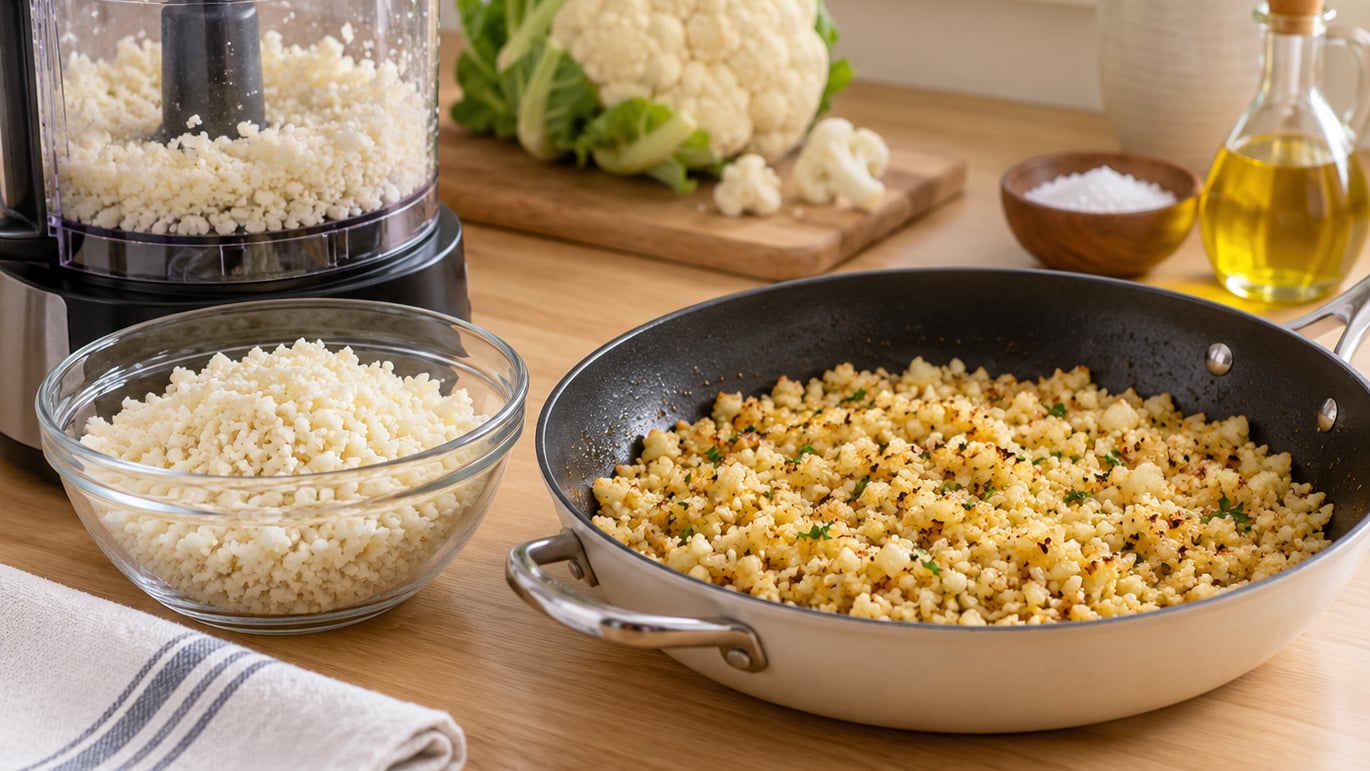
To make cauliflower rice from scratch, break a head into florets, pulse or grate them until the pieces are about the size of rice grains, squeeze out the moisture, then cook in a hot skillet for 5 to 8 minutes. The whole thing takes about 20 minutes, and one large head gives you 5 to 6 cups.
That yield is the part that surprises people. Readers who weigh their batches report getting close to 4 pounds of riced cauliflower from a single head, which is roughly what you would need three or four small bags to match. One head is also fresher, since a pre-riced bag has already sat in a freezer and then a fridge.
I make this most weeks. The technique matters more than the tool you use, and the one mistake that ruins it is pushing the processor a second too long.
What You Need
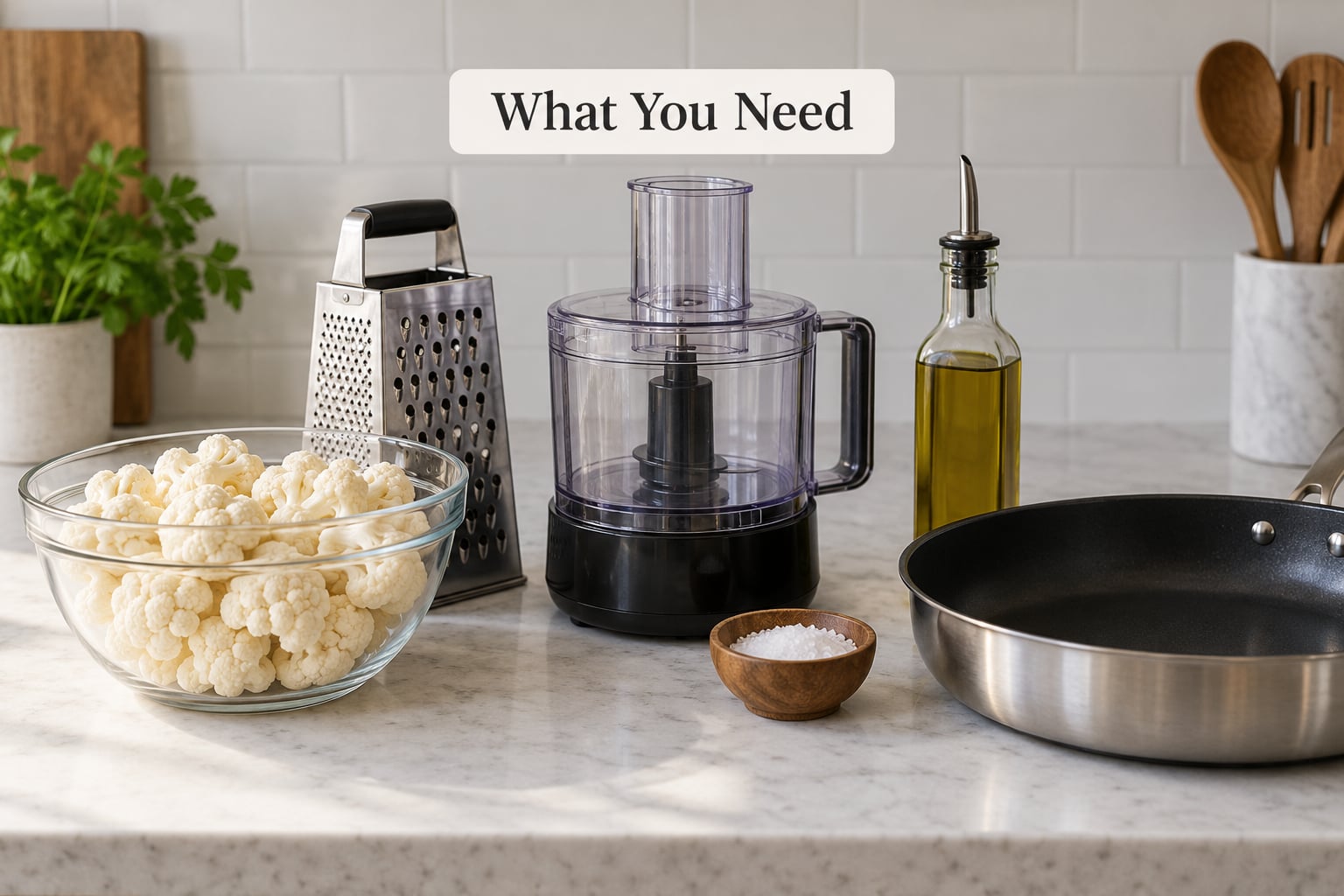
For a basic batch you need very little:
- 1 large head of cauliflower, roughly 1.5 to 2 pounds
- 1 to 2 tablespoons olive oil or avocado oil
- 1/2 teaspoon fine salt, plus black pepper
- Optional: garlic powder, curry powder, soy sauce, lemon or lime juice
On the equipment side, a food processor with an S-blade gives you the fastest result, and the grater disc that comes with many models is even better. A wide skillet, a silicone spatula, a sharp knife, a cutting board and a clean dish towel cover everything else. A salad spinner is helpful but optional.
If you have no processor and no grater, a knife and a slap chopper will get you there. The texture is slightly less uniform, which honestly matters very little once the cauliflower hits a hot pan.
Step-by-Step: How to Make Cauliflower Rice From Scratch
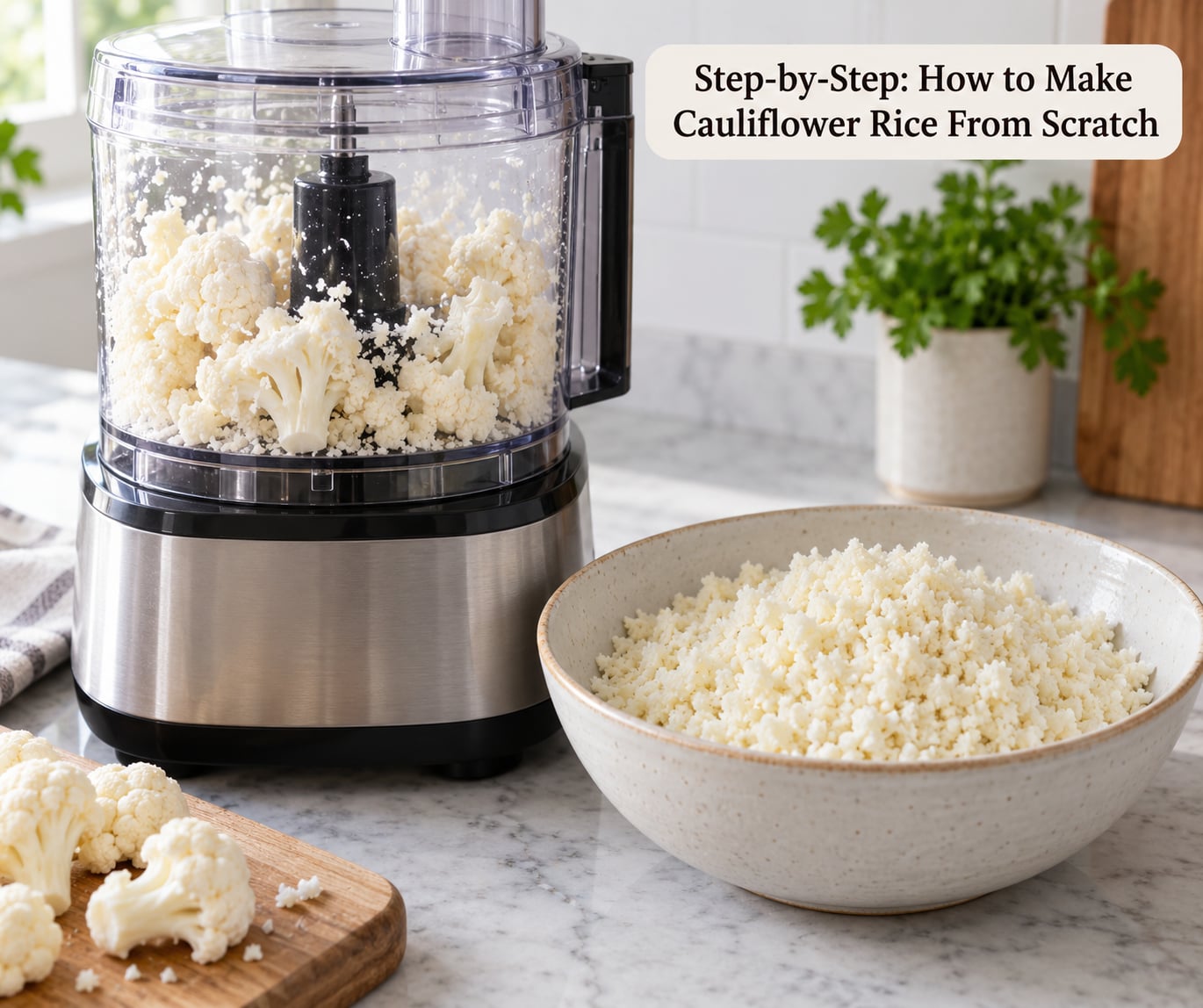
Set aside 15 minutes for prep and 5 to 8 minutes for cooking. Work through the steps below in order and the texture will be right the first time.
Step 1: Cut the Cauliflower Into Florets
Pull off the green leaves and cut away the thick base of the stem. The leaves are worth keeping for soup or roasting, and the tender inner stem rices just as well as a floret, so use it rather than discarding it.
Break the head into pieces roughly 1 inch across and rinse them briefly under cold water. Then dry them thoroughly. Cauliflower holds a surprising amount of water, and this is the step people skip, which is exactly why their cauliflower rice turns soggy in the pan.
Step 2: Pulse or Grate Until Rice-Like
With a food processor, put the florets in the bowl but do not pack more than halfway. Use the grater disc for the most even result, or pulse with the S-blade in short bursts, checking after every second or two.
Stop when the mixture is mostly fine crumbs with a few slightly larger pieces still in the bowl. Those bigger bits are not a failure. Pull them out, save them for a later batch, and pulse the rest again. If you run the blade continuously, the heat and the blade action turn the cauliflower into puree, and that is the number one reason home-riced cauliflower comes out mushy.
A box grater on the medium or large holes works well too, though it produces more uneven pieces and more arm work. Hold the floret against the side rather than the top of the grater so you are using the downward stroke the way the tool was designed.
A blender works, with one adjustment. Add just enough water to cover the pieces, pulse five or six times, then drain in a colander and squeeze the cauliflower dry in a towel. It is less mess than a grater and no faster, and the pulse-then-drain rhythm is the same idea you use for how to make hummus smooth and creamy: short bursts, stop while the texture still has some structure.
After any method, spread the riced cauliflower on a clean towel or a mesh strainer and press or squeeze out the water. You are not trying to make it bone dry. You want it visibly less wet than it came out of the processor.
Step 3: Sauté the Cauliflower Rice
Heat 1 to 2 tablespoons of oil in a wide skillet over medium-high heat until it shimmers. Add the riced cauliflower in a single even layer and leave it alone for 2 to 3 minutes. Crowding the pan drops the temperature, and the cauliflower then steams in its own liquid instead of browning.
Season with salt and pepper at this point rather than at the end. Add garlic powder, curry powder or a splash of soy sauce now as well, since these flavors need a couple of minutes of heat to soften. Stir once, cover, and let it cook another 3 to 5 minutes.
It is done when the granules are tender with a little resistance and the bottom of the pan has browned bits. If you want it softer rather than crisper, add a tablespoon of water, cover again, and give it another 2 minutes off the heat. That short covered rest also softens grains that turned out a little larger than true rice, similar to how stovetop rice without a rice cooker relies on steam rather than more aggressive heat.
For a crisp, golden result, roast instead of sauté. Spread the riced cauliflower on a sheet pan, drizzle with oil and salt, and roast at 425°F until it browns, turning once, roughly 20 to 25 minutes. It browns better than it sautés because the oven lets moisture escape instead of trapping it under a lid.
Common Mistakes and Tips
Most disappointing batches come down to one of these six things, and each one has a quick fix:
- Processing until smooth. The blade generates heat and crushes cell walls, so the cauliflower releases water and turns to paste. Pulse in one-second bursts and stop while a few larger pieces remain.
- Skipping the dry-out step. Surface water steams instead of browns, and the pan gets soggy. Press the rice in a clean towel for 30 seconds before it hits the oil.
- Crowding the skillet. Too much food drops the pan temperature and traps steam. Cook in two batches for more than about 4 cups at once.
- Cooking on low heat. Long gentle cooking dries the outside while the center stays wet. Use medium-high heat and let it sit undisturbed between stirs.
- Adding liquid mid-cook. Water in the pan restarts the steaming cycle. Save water for the last 2 minutes only, with the heat lowered.
- Seasoning at the end. Raw-tasting garlic and curry powder have no time to bloom. Salt and season the moment the rice hits the pan.
On flavor, the trick is to season harder than feels right. Half a teaspoon of salt, a teaspoon of garlic powder and a spoon of soy sauce will cover the raw cauliflower note in almost any dish. Curry powder and a squeeze of lime turn it into a bowl base, and grated parmesan or nutritional yeast after cooking makes it taste creamy without dairy.
For serving, a plain batch works as a side dish, and it takes about ten minutes to turn into a weeknight grain bowl once you add beans, roasted vegetables and a dressing. It also works in stir fries, cauliflower fried rice, burrito bowls and stuffed peppers, where you add less liquid than you would with real rice so the dish does not turn wet.
Cook it within about 30 minutes of processing when you can. Raw riced cauliflower left in the fridge develops a strong sulfur smell, and ricing it right before you cook is the simplest way to avoid that entirely.
Frequently Asked Questions
Does cauliflower rice need to be cooked?
It depends on the dish. Raw riced cauliflower works well in salads, slaws, cold bowls and as a mix-in for soup, where a crunchy texture is what you want. For side dishes, fried rice, stir fries and burrito bowls, cook it briefly in a hot skillet so the flavor softens and the raw bitter bite goes away. Most people find raw riced cauliflower unpalatable on its own.
Which tool gives the best cauliflower rice texture?
A food processor with a grater disc gives the most even, rice-sized result, and it takes about 15 seconds. An S-blade with short pulses is the next best option. A box grater produces more irregular pieces, and a knife gives you the coarsest texture of all. Whichever tool you use, stop before the cauliflower turns to paste, since that is what ruins texture in every case.
How do I keep cauliflower rice from getting mushy?
Three things matter: stop pulsing before the mixture looks smooth, squeeze the riced cauliflower in a clean towel before cooking, and keep the skillet at medium-high heat with the food spread in one layer. Crowding the pan and covering it for the whole cook time both trap steam. Season early and finish within 5 to 8 minutes for a tender but still separate texture.
How long does cauliflower rice last in the fridge and freezer?
Raw riced cauliflower keeps about one day in the fridge before it picks up a sulfur smell, so use it quickly or cook it first. Cooked cauliflower rice keeps roughly 4 days refrigerated in a sealed container. For freezing, press out the moisture first, spread it on a tray to freeze solid, then bag it in portions. It keeps 1 to 6 months and can go straight from freezer to skillet without thawing.
What should I do if my cauliflower is watery or bitter?
If the cauliflower was sitting in the fridge or is past its best, the flavor can be sharp and the texture watery. Squeeze the riced cauliflower firmly in a clean towel to remove as much moisture as possible, and cook it in a hot pan rather than a covered one. A squeeze of lemon or lime juice and a heavier hand with salt and garlic powder will cover most of the bitterness.
Conclusion
Start with fresh, dry cauliflower and pulse it only until the pieces are rice-sized, then cook it in a hot, uncrowded skillet for 5 to 8 minutes. Season it in the pan with salt and garlic, adjust the texture with a splash of water if you want it softer, and the rest takes care of itself.