
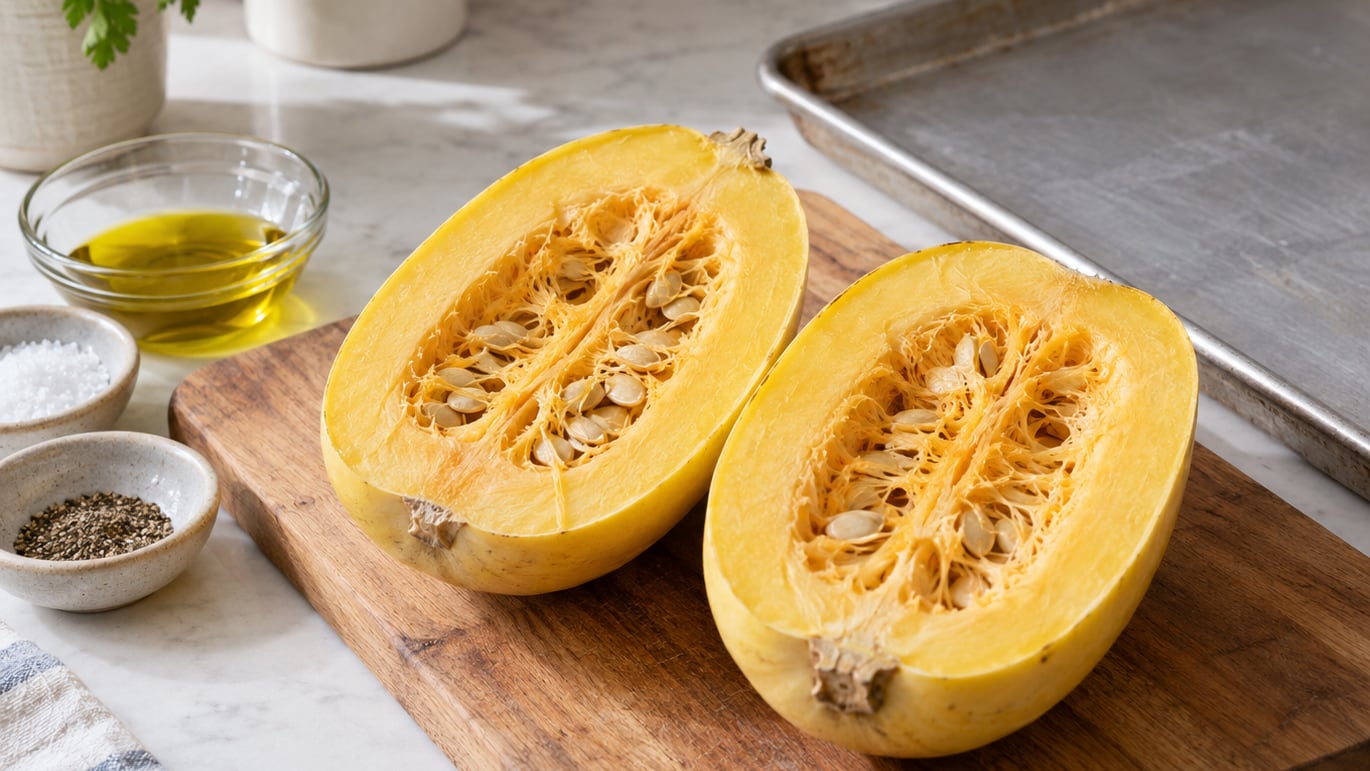
To roast a spaghetti squash, halve it lengthwise, scoop out the seeds, drizzle the cut face with olive oil, season it, and roast it cut side down at 400°F for 30 to 40 minutes until a fork slides into the flesh with no resistance. From board to plate it takes about 50 minutes, and the only stubborn part is getting through the rind.
That single detail, cut side down on a hot pan, is what separates a good roast from a watery one. Press the flesh flat against the metal, let the natural sugars brown a little, and the inside shreds into strands that behave like pasta instead of steaming into mush. Everything below builds on that.
Table of Contents
- What You Need
- Step-by-Step: How to Roast a Spaghetti Squash
- Common Mistakes
- Frequently Asked Questions
- At what temperature do you roast spaghetti squash?
- Do you roast spaghetti squash cut side up or down?
- Can I roast spaghetti squash without cutting it?
- Why is my cooked spaghetti squash watery?
- How do I soften a hard spaghetti squash before cutting?
- How long can cooked spaghetti squash sit out, and how should I store it?
- Conclusion
What You Need
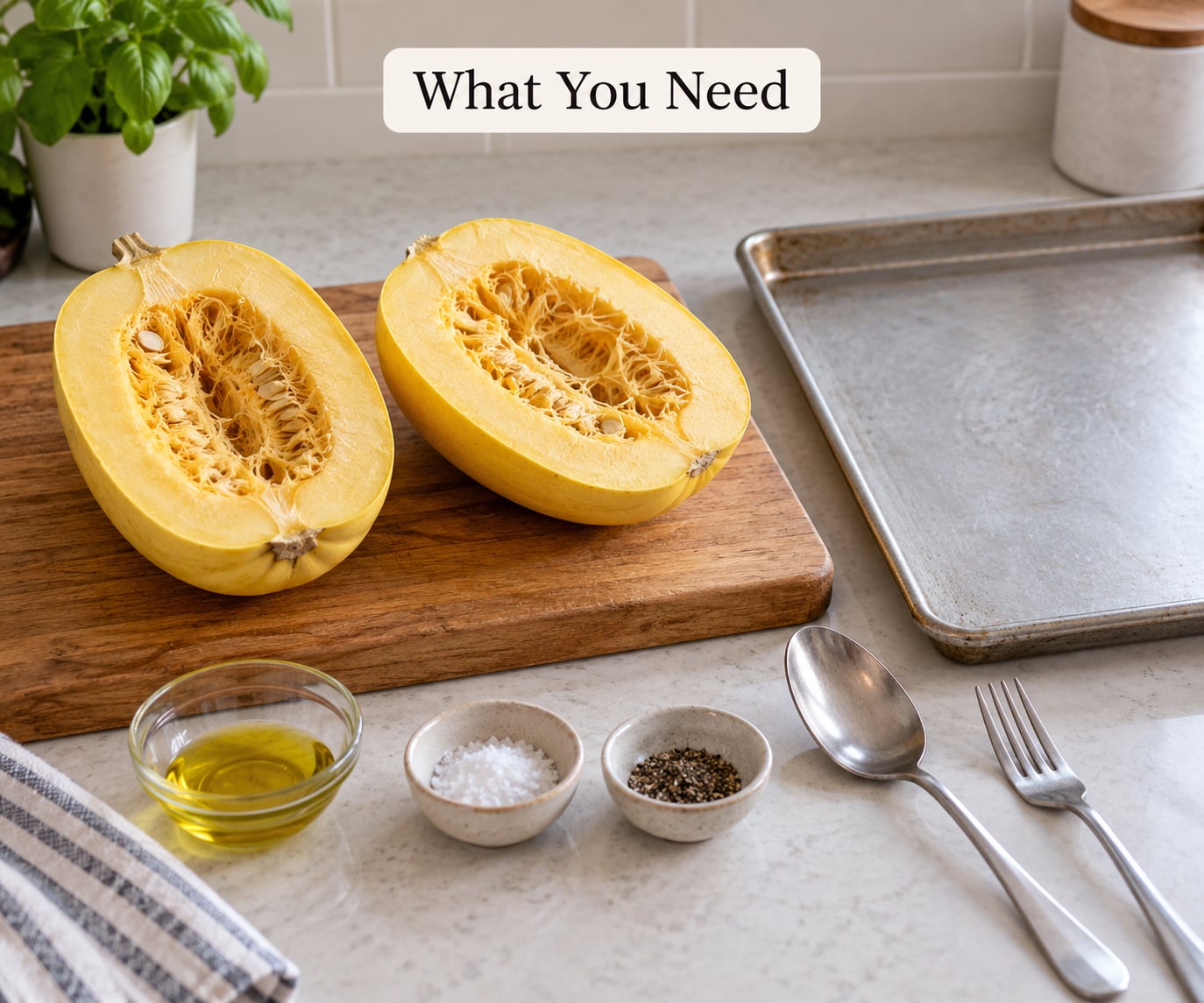
- 1 medium spaghetti squash, about 1.5 to 2 pounds, heavy for its size with an even cream or pale yellow rind
- 1 to 2 tablespoons olive oil
- Coarse sea salt and freshly ground black pepper
- Garlic powder, smoked paprika or red pepper flakes, optional
- A sharp chef’s knife and a large cutting board
- A sturdy spoon for scraping out seeds and pulp
- A rimmed baking sheet, lined with parchment paper or foil
- A fork for shredding and testing
On temperature, 400°F is the reliable default and where most recipes land. Push to 425°F if you want crisper edges and pull the time down by 5 to 10 minutes, or drop to 375°F for a gentler roast and add the same back. The squash is forgiving, but a very hot oven is where browning turns to scorching.
Step-by-Step: How to Roast a Spaghetti Squash
Heat the oven to 400°F and set a rack in the center so the squash sits where the air circulates evenly. A cold oven is the usual reason a roast takes twice as long as expected.
How to Prepare the Spaghetti Squash
Scrub the rind under running water and pat it dry. Rinse works, since you are not eating the skin, but the top layer often carries dust and field residue.
- Halve it lengthwise. Stand the squash on one end, slice straight down through the middle along its long axis, and rock the blade through the stem end last because it is the thickest part. Steady pressure works better than force.
- Scoop out the seeds and stringy pulp with a spoon, scraping the cavity clean but not cutting into the flesh. Saving the seeds is worth it; a few minutes in a dry skillet turns them into a crunchy topping.
- Trim both ends so each half sits flat. A rocking half tips, and a tipping half browns unevenly and steams on one side.
- Oil and season the cut face. Spoon 1 to 2 tablespoons of olive oil over the flesh, then add salt, pepper and whatever seasoning you like. A light hand here matters: excess oil and excess salt both pull water out of the squash and leave you with a puddle instead of strands.
If the knife skates off the skin and will not bite, stop before you force it. A hard squash needs softening, and a 10 minute roast whole in the 400°F oven or 3 to 5 minutes in the microwave is enough. Let it cool a few minutes and it will cut like a firm squash. Handling winter squash with a rind this thick is the same idea as trimming a hard-skinned pumpkin, and how to cut a butternut squash safely walks through the technique.
How to Roast a Spaghetti Squash Until Tender
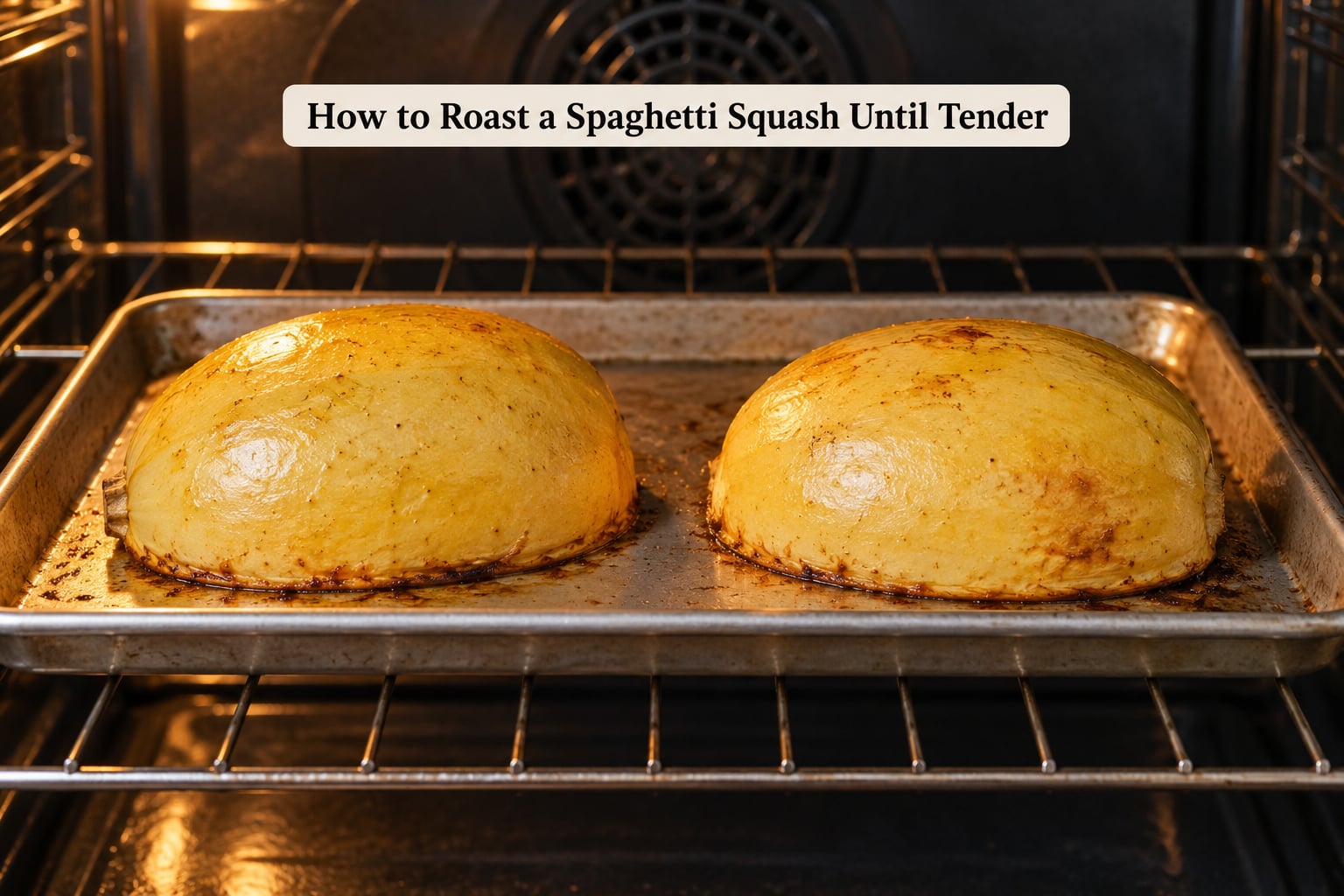
Set the halves cut side down on the lined baking sheet, leaving a finger’s width of space between them so air can move. Crowding drops the pan temperature and traps steam, which is the second big cause of soggy squash.
Roast, unstirred and unturned, until a fork slides into the thickest part of the flesh without resistance. Timing scales with size rather than with the clock on your recipe:
- Small, under 1 pound: 25 to 30 minutes
- Medium, 1 to 2 pounds: 30 to 40 minutes
- Large, over 2 pounds: 40 to 50 minutes
Ovens run hot and cold, so probe at the 25 minute mark for a small squash and the 35 minute mark for a medium one. When the bottom edges just start to brown, pull the pan and let the squash sit on it for 5 minutes; that rest crisps the base without pushing the flesh into mush.
How to Tell When Spaghetti Squash Is Done
Look for three things at once. The cut face turns translucent with a few golden patches where it touched the pan, the strands release in loose ribbons when you drag a fork across the inside, and a fork slides in with almost no drag but still meets a faint firmness at the center.
A little bite is not a failure. Slightly underdone squash has the texture people describe as al dente, and it holds up better under a heavy sauce than a fully soft one. Food-safety-wise, squash is eaten as a cooked vegetable, so give it a proper roast rather than serving it raw from the fridge, but a strand that still snaps a little is perfectly good eating.
Past that point the strands collapse, release water as you shred them and go gluey. If your oven runs hot and the top browns before the center softens, drape a loose piece of foil over the pan for the last 10 minutes.
How to Season and Serve Roasted Spaghetti Squash
Let the squash rest on the pan for 5 minutes, then flip it cut side up and use a fork to scrape from the outer edge toward the center, working around the shell until the strands lift out loose. Scraping from the outside in preserves length; scraping across the middle tears them short.
Season while the strands are still hot, since they drink up dressing fast:
- Butter, black pepper and a pinch of salt, the simplest treatment, close to the flavor of the squash itself
- Melted butter, grated Parmesan and chopped parsley, with 2 more minutes under the broiler to brown the top
- Garlic powder, smoked paprika and olive oil brushed on before roasting, for a deeper roasted flavor
- Marinara or any tomato sauce in place of pasta sauce, which is how most people end up using it
If sauce turns thin or watery after you add it, put the shredded squash in a colander for 10 minutes before dressing it. That draining step is the difference between a sauce that clings and one that pools at the bottom of the bowl, and it is the fix people most often miss.
It also works as a side next to the main event, the same way any roasted vegetable does, and it holds up well in a spread. Planning a roast chicken dinner, you can read how to stretch one roast chicken into three meals for a menu that leaves room for it.
Common Mistakes
Cutting crosswise into rounds. Slices taken across the squash cut against the strands and give you short, broken shreds. Slice lengthwise for the longest strands, and if you want even longer ones, cut a softened squash into 1 inch rings and roast each ring cut side down.
Roasting cut side up. The face steams in its own moisture instead of browning against the pan. Cut side down is what drives water out and creates the flavor; cut side up is the single most common reason the strands taste bland.
Crowding the pan. Two halves with no space between them steam each other. Use two pans if you have them.
Cranking the heat. Above 425°F the edges brown long before the center softens. Save the broiler for a 2 minute finish after the strands are already tender.
Skipping the oil, or pouring on too much. Oil gives you browning and carries flavor; a heavy pour gives you a slick, watery result. One tablespoon per half is plenty.
Salting early and heavily. Salt drawn ahead of time pulls water out of the flesh. Season right before it goes in, taste, and adjust after roasting.
Not trimming the ends. A rounded half rocks on the sheet, and one side browns while the other stays pale.
Waiting on the clock instead of testing. A squash at the top of the size range can need 50 minutes, and a small one can be done in 25. The fork does not lie.
Shredding straight onto the sauce. Draining first keeps the sauce from turning watery. Ten minutes in a colander is all it takes.
Frequently Asked Questions
At what temperature do you roast spaghetti squash?
Roast a spaghetti squash at 400°F, cut side down on a baking sheet, for 30 to 40 minutes for a medium 1 to 2 pound squash. That temperature browns the cut face enough to develop flavor without burning the edges before the center softens. You can go to 425°F for extra-crisp edges and cut about 5 to 10 minutes off the time, or drop to 375°F and add the same amount back.
Do you roast spaghetti squash cut side up or down?
Cut side down. The flat face pressed against the hot baking sheet browns, and that contact drives moisture out of the flesh instead of trapping it. Cut side up lets the squash sit in its own steam, which softens it but leaves it watery and bland. The only reason to flip it during cooking is to cover the top with foil if the edges darken before the center is fork tender.
Can I roast spaghetti squash without cutting it?
Yes, though it takes longer and cooks less evenly. Roast a whole uncut squash at 400°F for 50 to 60 minutes, or until a fork inserted into the thickest part goes through the skin with little resistance. Prick the skin a few times with a fork so steam can escape. Whole squash is handy for meal prep, but the texture is softer and less controllable than halved squash.
Why is my cooked spaghetti squash watery?
Four things cause watery strands: roasting cut side up, crowding the pan so the halves steam each other, using more than about a tablespoon of oil per half, and salting the flesh well before roasting. Water pulled out by excess salt pools when you shred. Fix it after the fact by putting the shredded squash in a colander for 10 minutes, then dressing and serving it.
How do I soften a hard spaghetti squash before cutting?
Give it a short pre-softening. Roast the whole squash at 400°F for 10 minutes, or microwave it for 3 to 5 minutes on high in 1 minute bursts, then let it cool for a few minutes before cutting. The rind will still be firm but no longer resists the knife. Cutting it cold or forcing the blade through a hard shell is how most people injure themselves with this squash.
How long can cooked spaghetti squash sit out, and how should I store it?
Cooked squash left on the counter sits in the food safety gap of about two hours, less in a hot kitchen, so refrigerate it sooner than that. Store it in an airtight container in the refrigerator for 3 to 4 days. To reheat, spread the strands on a baking sheet and warm in a 350°F oven for 8 to 10 minutes, or microwave in short bursts. A microwave reheats it soft, so the oven keeps more texture.
Conclusion
The first move decides how the rest goes: halve the squash lengthwise, scoop the seeds, trim the ends flat, oil and season the cut face, and roast it cut side down at 400°F for 30 to 40 minutes. After that, judge it with a fork instead of the timer, scrape the strands from the outside in, and drain them in a colander if you are saucing them.
Seasoning and serving are the fun part. Keep the salt and oil moderate, then finish with butter and pepper, Parmesan and parsley, or the tomato sauce you would have used on pasta.