
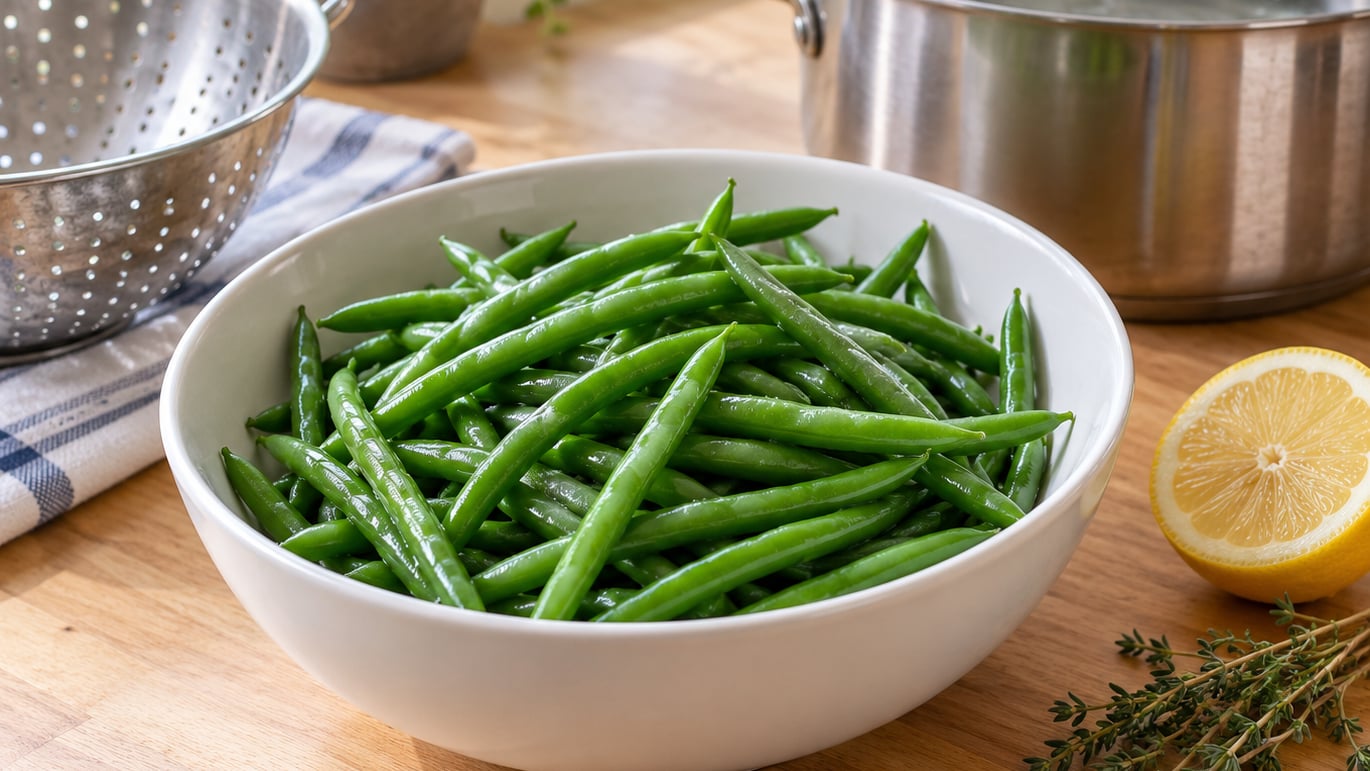
To cook green beans so they stay bright, blanch them in a rolling salted boil for 2 to 3 minutes, then plunge them straight into ice water for 30 seconds and dry them well. That short, hot cook plus a hard cold shock is what keeps the color vivid and the pods crisp instead of soft and olive-colored.
The whole method takes about 10 minutes start to finish, and the only real skill is knowing when to pull the beans. Watch the pot, not the clock: the moment the pods turn an even, glossy green and bend with almost no resistance, they are done.
Table of Contents
- What You Need
- Step-by-Step: How to Cook Green Beans So They Stay Bright
- Common Mistakes
- Frequently Asked Questions
- Do I need the ice bath, or will cold running water work?
- Should I blanch green beans before sauteing?
- Can I blanch green beans ahead of time?
- Why do my green beans turn brown or gray when I cook them?
- Does adding baking soda to the water keep green beans brighter?
- How do I reheat green beans without turning them gray?
- Conclusion
What You Need
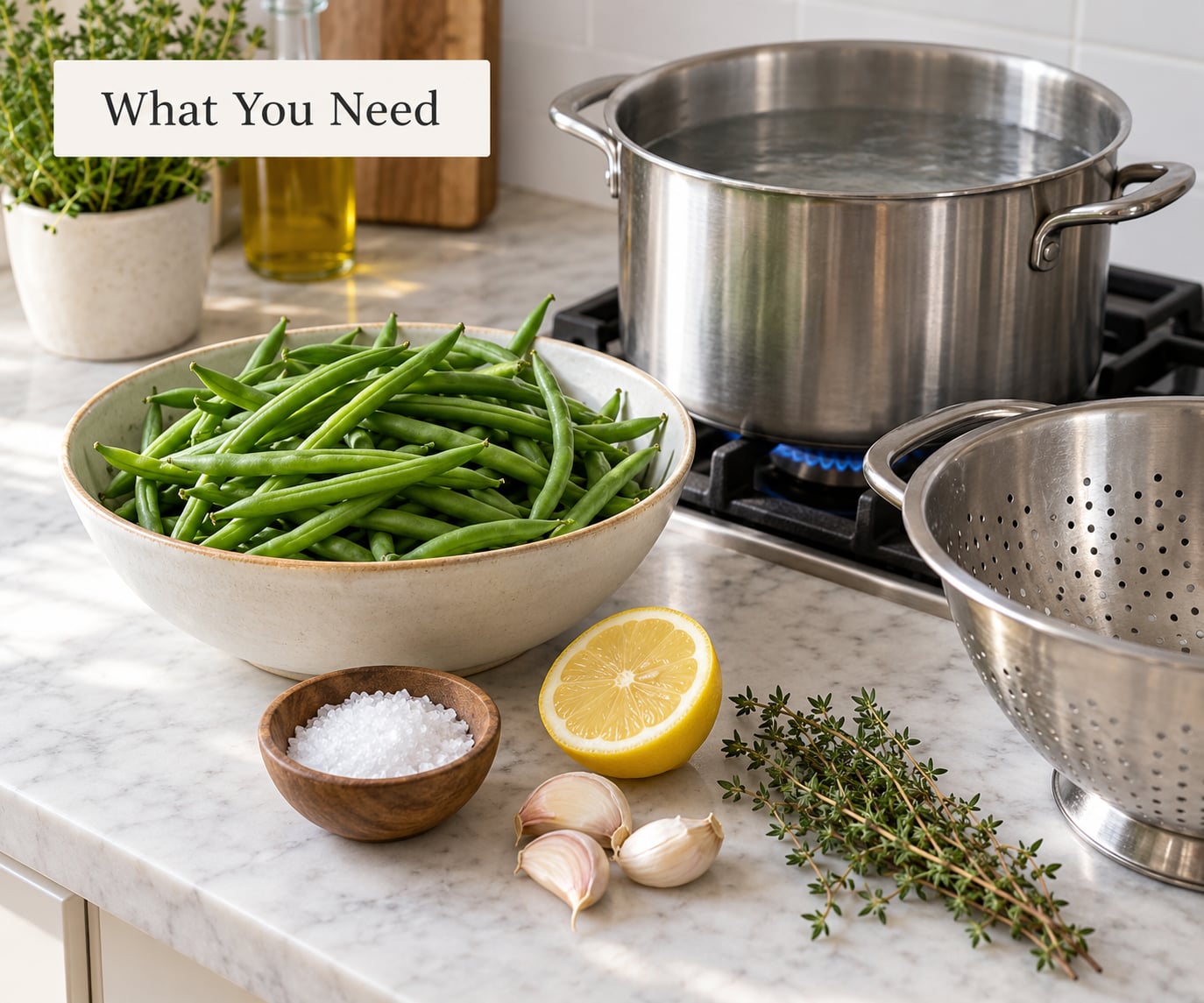
The basics
- 1 pound fresh or frozen green beans, trimmed
- A large pot, filled about two-thirds full of water
- Kosher salt, roughly 1 tablespoon per quart of water
- A slotted spoon or spider
- A large bowl filled with ice and cold water
- A colander and a clean towel or paper towels
For the finish
Butter, olive oil, or sesame oil for the pan. Minced garlic, a squeeze of lemon, flaky salt, toasted almonds or walnuts, and a few fresh thyme or parsley leaves.
Skip the lemon until the beans are off the heat. Acid is the fastest way to turn bright green pods brownish-green, and it works even after cooking is finished.
Choosing beans that hold their color
Thin French beans, often called haricot vert, hold color and stay crisp after a short cook, which makes them the easiest choice. Standard string beans need a few more seconds. Wax beans and purple beans cook up lighter and are worth trying if you want something different on the plate.
Pick pods that snap clean when you bend them and that look firm and glossy, not dull or rubbery. Beans that have been sitting for a week cook dull faster no matter how well you blanch them.
Step-by-Step: How to Cook Green Beans So They Stay Bright
Blanch the Beans Quickly
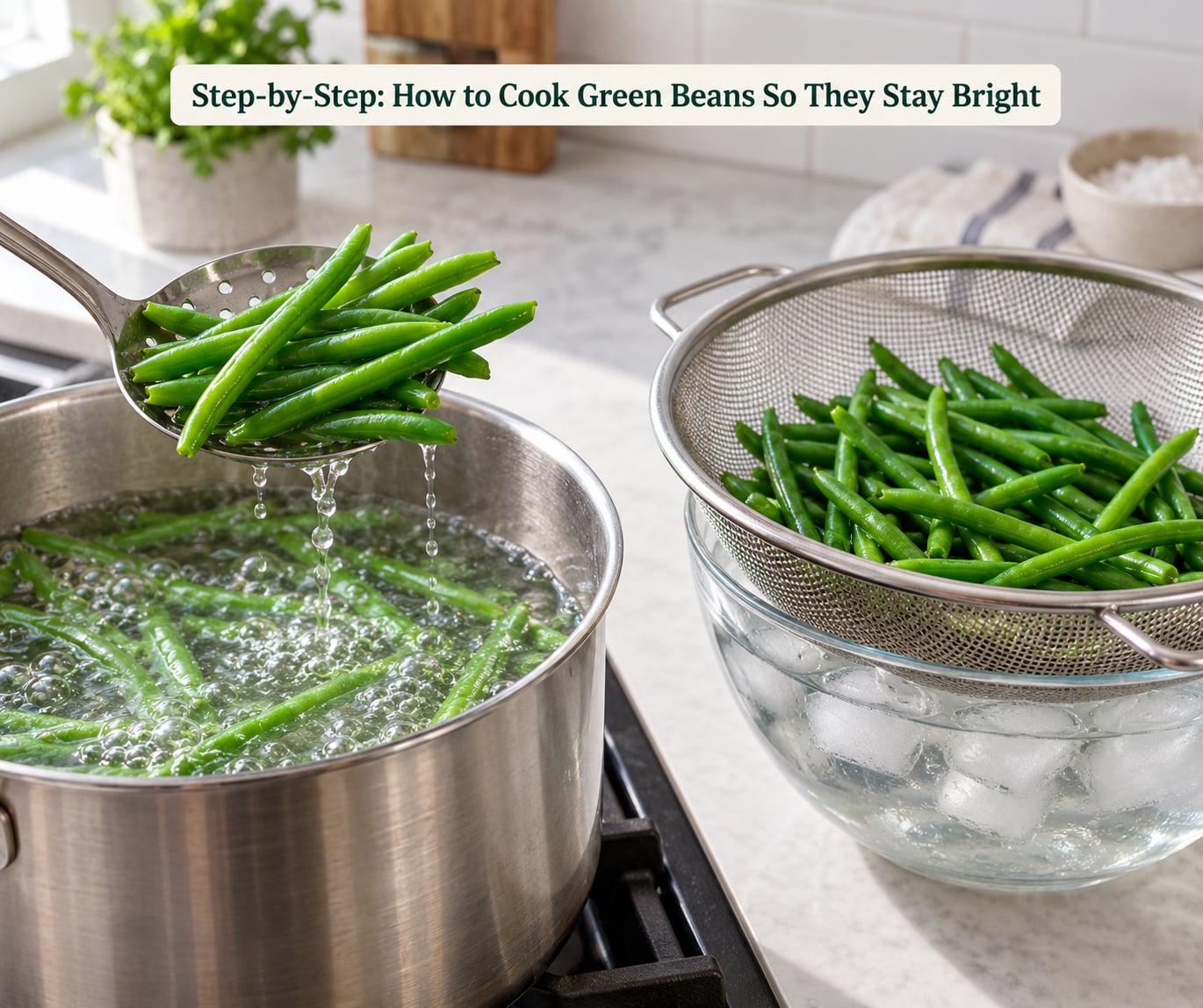
Bring a large pot of water to a full rolling boil, then add about 1 tablespoon of kosher salt per quart. A rolling boil is the one step people skip, and it is the step that matters most: a pot at a lazy simmer cooks the beans slowly and evenly until they are soft and dull, which is where the rubbery texture comes from.
Add the beans in one layer and set a timer. One pound takes 2 to 3 minutes; frozen beans take under 2. Work in smaller batches rather than crowding the pot, because a large cold mass of beans drops the water temperature and the cook turns into a simmer.
- Thin French beans, 1 pound: 2 minutes
- Standard string beans, 1 pound: 2 to 3 minutes
- Extra-large flat beans, 1 pound: 3 to 4 minutes
- Frozen beans, 1 pound: 1.5 to 2 minutes
- Two pounds or more: same time per batch, water back at a rolling boil between batches
The doneness cue beats any timer. Beans are ready when they are an even, glossy green and a bean bends easily in the mouth with a distinct snap, usually a few seconds before you think they are done.
Shock or Rinse for Color
Drop the beans into the ice water and swirl them for 30 seconds. Cold water halts the cooking instantly, which locks in the color and stops the pods from going soft while you season them.
Running cold water over them in a colander is a fair substitute, though less reliable. The beans keep cooking for a few seconds after you drain them, so they carry more residual heat into the finish and tend to go a shade duller. Thirty seconds in ice water is cheap insurance.
Dry them thoroughly. Moisture clinging to a pod makes it steam instead of sear, and a wet bean never tastes as crisp. Toss them on a towel for a minute, or give them a short spin in a salad spinner.
Finish with a Quick Sauté
Melt a tablespoon of butter in a skillet over medium-high heat. Add the dried beans and two minced garlic cloves, then keep everything moving for 60 to 90 seconds. Season with flaky salt, and add lemon juice or zest only at the very end, off the heat.
Salting in layers as the pan heats and again at the finish does more for the beans than one heavy sprinkle at the table. I wrote more about that in how to season food as you cook, and the same logic holds for any vegetable.
For a faster weeknight version, skip the ice bath entirely. Put the trimmed beans in a skillet with 2 to 3 tablespoons of water, cover, and steam for 4 to 5 minutes until the water is gone. It is the quickest route to a bright side dish, and it drops neatly into how to cook dinner in under thirty minutes.
Whether you blanch first is a fair question, and the honest answer is no for tonight’s dinner. Blanching buys you color, texture you can control precisely, and beans that freeze well. For a weeknight sauté it is one step too many.
Roast Them for Caramelized Edges
Heat the oven to 450°F. Toss the trimmed beans with olive oil and salt, spread them in a single layer on a sheet pan, and roast 8 to 10 minutes, turning once, until the edges blister and the centers are still crisp.
Take them out while they are still bright green. Beans continue cooking from residual heat, so a tray that looks perfectly done coming out of the oven will be one shade duller by the time it reaches the table. Crowding the pan steams them instead of roasting them, so use two pans rather than one pile.
Common Mistakes
Beans come out gray or olive
The pot was not at a rolling boil, so the cook was slow and long. Add the beans to water that is already boiling hard, and keep the boil going the whole time.
Beans turn duller after you season them
You added lemon, vinegar or a tomato dressing too early. Acid breaks down the green pigment in the pod, and it keeps working after the beans leave the heat. Add acid at the table, and keep it off anything you plan to store.
Beans are soft or rubbery
Either you left them past the snap, or the water never recovered after the beans went in. Cook one pound at a time, and pull them the second they bend without resistance.
Colors bleed together
You thawed frozen beans slowly and cooked them in their own purple or cloudy liquid. Thaw frozen beans under cold running water, then blanch them in fresh salted water.
Beans fall apart when you drain them
They sat in the hot water after cooking finished, and a hot pot holds heat for a long time. Move them to the ice water right away rather than letting them rest in the pot.
You added baking soda to the water
A pinch of baking soda makes the water alkaline, and alkaline water holds on to green pigment longer. The trade-off is texture: alkaline cooking softens the cell walls, and the pods turn silky and tender instead of snapping. Use it for beans going into a soup, not for a plate you want crisp.
Frequently Asked Questions
Do I need the ice bath, or will cold running water work?
A cold running rinse is an acceptable substitute, but ice water is more reliable. Water that keeps cooking the beans after you drain them means they arrive at your pan still hot, which dulls the color. Thirty seconds in a bowl of ice and cold water stops the cook instantly and costs you almost no time.
Should I blanch green beans before sauteing?
Not for a weeknight dinner. Sauteing raw beans in a little water, covered, for 4 to 5 minutes gives you bright, crisp beans with one pan and no ice bath. Blanch first when you want precise control over texture, when you are cooking for a crowd, or when the beans are going into a salad or the freezer.
Can I blanch green beans ahead of time?
Yes, and it is the standard way to prep for a gathering. Blanch, shock, dry, then refrigerate in a sealed container for up to 3 to 4 days. Hold them unwashed, so any surface moisture does not sit on the pods. Bring them back to the skillet with a splash of water and warm them for 60 seconds rather than reheating them dry.
Why do my green beans turn brown or gray when I cook them?
Heat and acid break down chlorophyll, the pigment that makes green vegetables green, and the result is a dull olive-brown color. Long cooking, a pot that never reaches a rolling boil, and acidic ingredients added before serving all speed that up. Short cooking, a hard ice bath, and lemon added at the end all push the color back the other way.
Does adding baking soda to the water keep green beans brighter?
It does keep the color longer, because alkaline water slows the breakdown of green pigment. The cost is texture: the same alkalinity softens the pods until they turn silky and tender. Baking soda makes sense for beans going into soup or a stew. Leave it out when crispness is the whole point.
How do I reheat green beans without turning them gray?
Reheat gently and briefly, with a little moisture. Put blanched beans in a skillet with a splash of water, cover for 60 to 90 seconds, and toss. Microwaving them dry for a full minute dries the pods and dulls the color, and reheating them in a saucy acidic dish turns them olive gray fast.
Conclusion
That is how to cook green beans so they stay bright: hot salted water, a short 2 to 3 minute cook, and a hard cold shock. Start with the rolling boil, pull the beans the moment they snap and look evenly green, then dry them well and give them 60 seconds in butter or olive oil. Beans finished that way are still bright and crisp an hour later.