
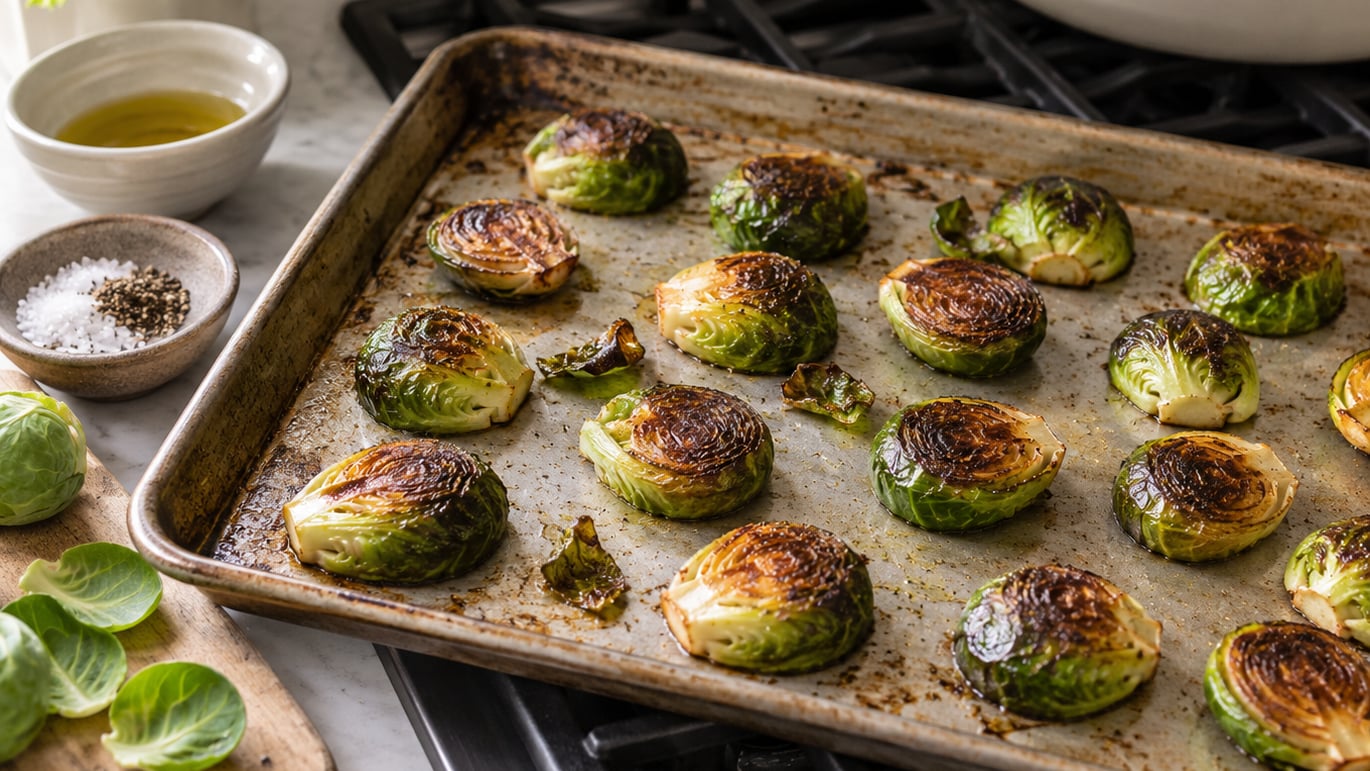
How to roast brussels sprouts so they are crispy comes down to heat, space, and dryness. Roast them at 450°F on a hot, roomy baking sheet, set them cut-side down, and do not touch them for the first 20 minutes. Dry them properly before they go in, and that flat face turns into a caramelized crust while the centers stay tender. Twenty-five minutes start to finish, and most of the work is prep.
Crispness here comes down to four things: no water on the surface, space between the pieces, real heat, and patience. Skip any one of them and you get soft, pale sprouts, which is exactly what most people picture when they say they dislike Brussels sprouts.
A note on oil first, because it matters more than people expect. Extra-virgin olive oil is lovely on a salad and wrong for this job at 450°F, since it smokes and turns bitter fast. Regular (light) olive oil, avocado oil, or vegetable oil all handle the heat without complaint.
What You Need
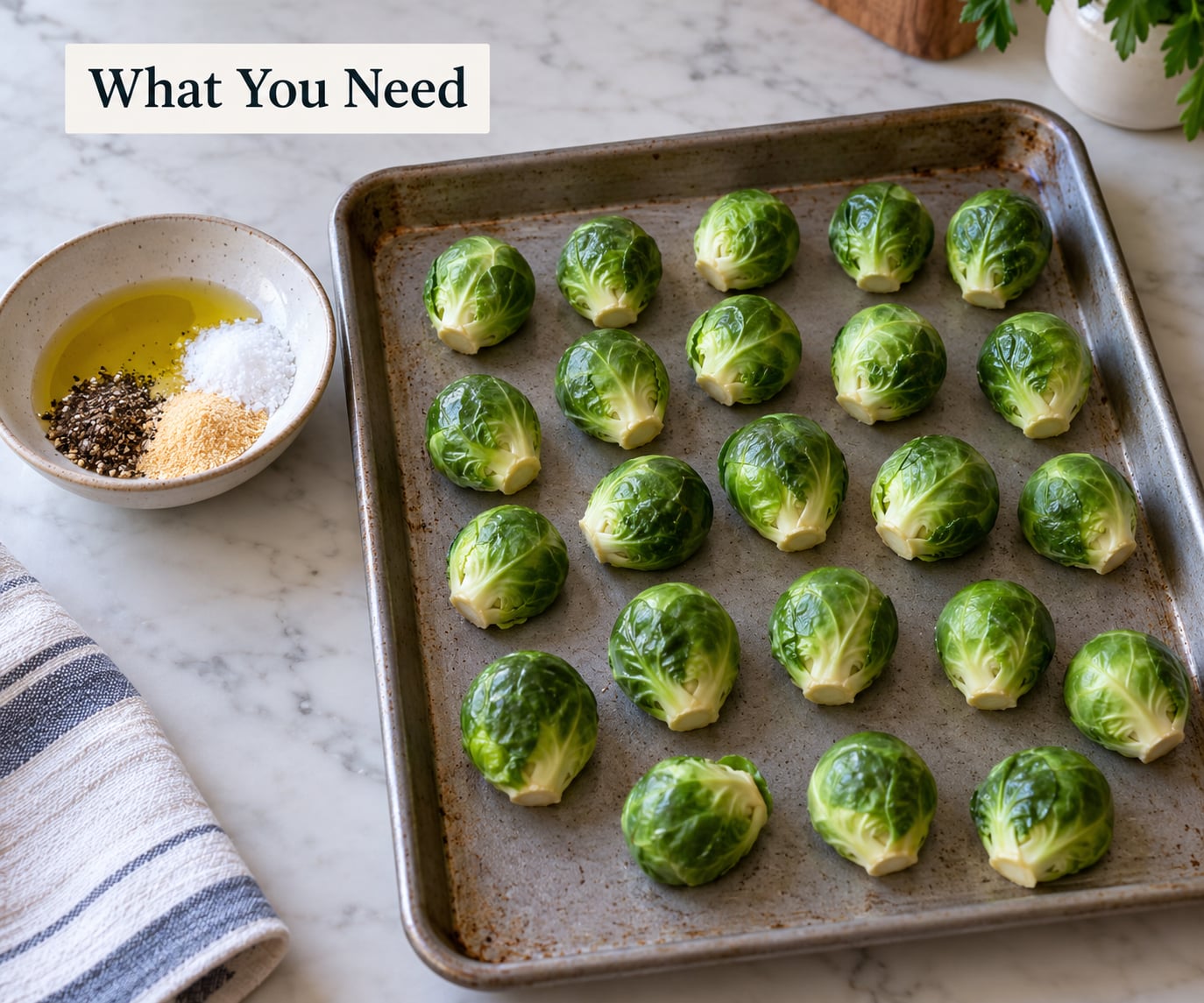
For about 1.5 pounds of sprouts, serving four as a side:
- 1.5 pounds Brussels sprouts, loose outer leaves removed but kept for roasting
- 2 tablespoons avocado or regular olive oil
- 1 teaspoon kosher salt, plus more to taste
- 1/2 teaspoon freshly ground black pepper
- 1/2 teaspoon garlic powder (optional)
- A rimmed baking sheet and a wire rack, if you have one
The wire rack is the quiet upgrade. It lifts the sprouts off the metal so hot air circulates under them, which keeps the underside from going pale in spots. Parchment works too, though a bare oiled sheet colors your crisp edges a little better.
Pick sprouts that are tight and firm with bright green leaves. Loose, yellowing, or soft ones carry more water and rarely crisp, no matter how long you roast them. Larger sprouts cut into quarters cook more evenly than medium ones cut in half, because the flat face is wide enough to actually brown.
Step-by-Step
Step 1: Trim and Halve the Brussels Sprouts
Pull off any yellow or limp outer leaves and save them, since they crisp up like chips in a hot oven. Cut the stem end off flat, then cut each sprout in half lengthwise through the core.
The cut face is where all the browning happens, so keep it flat. If your sprouts are big, quarter them. If they are small, halve them and leave the very smallest ones whole so they finish cooking at the same time as the rest.
Step 2: Dry Them Thoroughly
This is the step people skip, and it is the reason so many trays of sprouts come out soggy. Moisture turns to steam in the oven, and steam softens instead of browns. When someone asks me how to roast brussels sprouts so they are crispy, drying is the first thing I point at.
Pat the cut faces with a clean kitchen towel, then let the sprouts sit on the towel for five minutes. They should feel tacky and almost dry to the touch, not damp.
Step 3: Season the Cut Sides
Toss the sprouts with the oil, salt, pepper, and garlic powder so every cut face gets a thin, even coat. Too much oil pools and steams, too little and the edges scorch before they crisp, so measure rather than eyeball.
Season now rather than later. Salt added before roasting draws a little moisture, but a light sprinkle up front seasons all the way through, and you can always add more at the end.
Step 4: Roast Until Browned and Tender
Heat the oven to 450°F and put the rack in the lower-middle position. Let the baking sheet sit in the hot oven for 3 to 4 minutes so it is hot before the sprouts land on it. A warm sheet starts steaming; a hot sheet starts browning.
Arrange the sprouts cut-side down with about an inch of space between each one. Use two sheets rather than piling one. Roast for 20 minutes without opening the door or moving anything, then check.
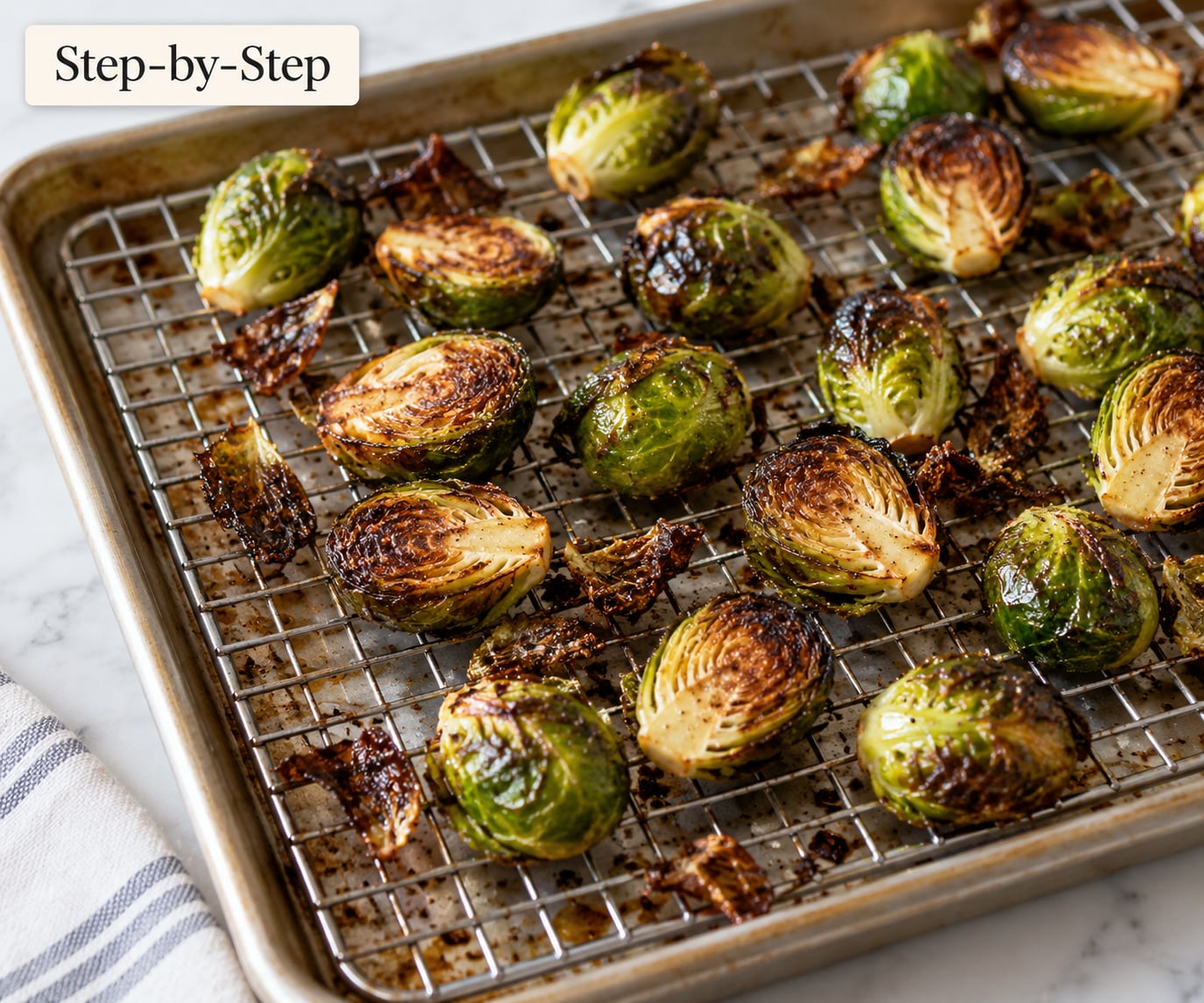
You want the cut faces deeply golden brown, with a few darker, almost charred spots and crisp edges. Slide a thin knife into the thickest half: if it meets no resistance, they are done. If the outsides are browning but the centers are still firm, give them another 5 minutes. Pull them the moment they are tender, because they keep cooking on the hot pan after they leave the oven.
Step 5: Finish and Serve
Season with a pinch of flaky salt while the sprouts are still hot, and serve right away. A spoonful of balsamic reduction or a drizzle of honey and a squeeze of lemon works well, but add it after roasting, since sugar burns fast at this temperature.
Any glaze that goes on in the last five minutes is also fine: maple mustard, sriracha and honey, or a garlic Parmesan blend mixed with a little melted butter. Toasted walnuts, dried cranberries, and bacon bits scattered over at the end add crunch and salt. Leftovers do not hold that crunch, so I only make enough for one sitting.
The same dry-then-roast logic applies to other vegetables. My how to make crispy roasted potatoes in the oven uses the same hot-sheet and spacing rules for a bigger, starchier version of the idea.
Common Mistakes
Crowded pan. This is the number one problem, according to every cook I have asked about it. Sprouts touching each other trap steam and cook each other instead of browning. One sheet per 1.5 pounds is the safe ratio; use your second oven rack if dinner is big.
Wet sprouts. Rinsing then dumping them on the tray adds a layer of water you cannot season evenly. Dry them with a towel and give them five quiet minutes.
Heat too low. At 350°F or even 375°F, sprouts cook before they brown, so you get olive-green, limp results. 425°F is the workable floor for most ovens, and 450°F is where the flavor gets nutty and sweet.
Extra-virgin olive oil at high heat. It is the first thing to smoke in the tray, and smoke-tasted oil tastes bitter. Use avocado, canola, or regular olive oil instead.
Glaze added too early. Honey and balsamic go on after roasting or in the final few minutes. Sugar in a 450°F oven goes from sticky to black fast.
Stirring mid-roast. Flipping breaks the crust you spent 20 minutes building. Leave them alone, then toss everything together once at the end.
Uneven sizing. Mixing one-pound sprouts with two-pound ones means the small ones burn before the large ones soften. Buy similar sizes, or cut the big ones into quarters.
Waiting for them to brown evenly. Deep golden with a few charred edges is the goal, not uniform color. Pulling them at pale green means crisp flavor never develops.
If you are roasting a main dish alongside them, oven chicken tenders run at a similar temperature, which makes timing a simple matter of dropping both in at once and checking the tray together.
Frequently Asked Questions
Should I roast Brussels sprouts at 400 or 425?
Roast them at 425°F minimum, and 450°F is better for real browning. At 400°F the sprouts cook through before the cut faces caramelize, which is why so many trays come out pale and soft. If your oven runs hot, drop to 425°F and give them an extra five minutes. The temperature matters less than a fully preheated oven and a sheet that is hot before the sprouts go on.
Should Brussels sprouts be soaked in water before roasting?
Skip the soak. Soaking, even briefly, leaves moisture on the surface and in the layers, and moisture is exactly what stops browning. If you want to calm down a strongly flavored sprout, slice it thinner and roast it faster instead. Dry the sprouts with a towel after rinsing, or buy them pre-washed and dry, then let them sit uncovered for five minutes before seasoning.
Why are my Brussels sprouts not getting crispy?
Almost always one of four things: too much water on the surface, a crowded pan, an oven that was not hot enough, or stirring too early. Pat them dry, space them an inch apart, roast at 450°F, and leave them untouched for the first 20 minutes. If they still pale up, your sheet probably went into a cold oven, so preheat it for three minutes before they go on.
Should I flip Brussels sprouts while roasting?
No, not during the main cooking time. The cut side needs to sit against the hot sheet undisturbed to build a crust, and flipping breaks it. Check at 20 minutes instead, and only turn a piece if one side is very dark. Toss the whole tray once after roasting if you want the glaze to coat evenly.
Can I roast frozen Brussels sprouts instead of fresh?
Yes, and frozen sprouts often crisp better than fresh ones because they are blanched before freezing. Roast them straight from the freezer at 425°F for 25 to 30 minutes, spread out in a single layer, and do not thaw or rinse them first. Thawing adds exactly the moisture you are trying to avoid, so skip it.
Conclusion
Start with the drying step. That is the first thing to fix, and the one most home cooks skip. Pat the sprouts dry, let them sit, then heat the oven to 450°F and the sheet with it.
Lay them cut-side down with space between each piece, leave them alone for 20 minutes, and pull them when a knife slides through without resistance and the flat faces are deep golden. That is how to roast brussels sprouts so they are crispy every time, rather than a good idea that only works twice a year.