
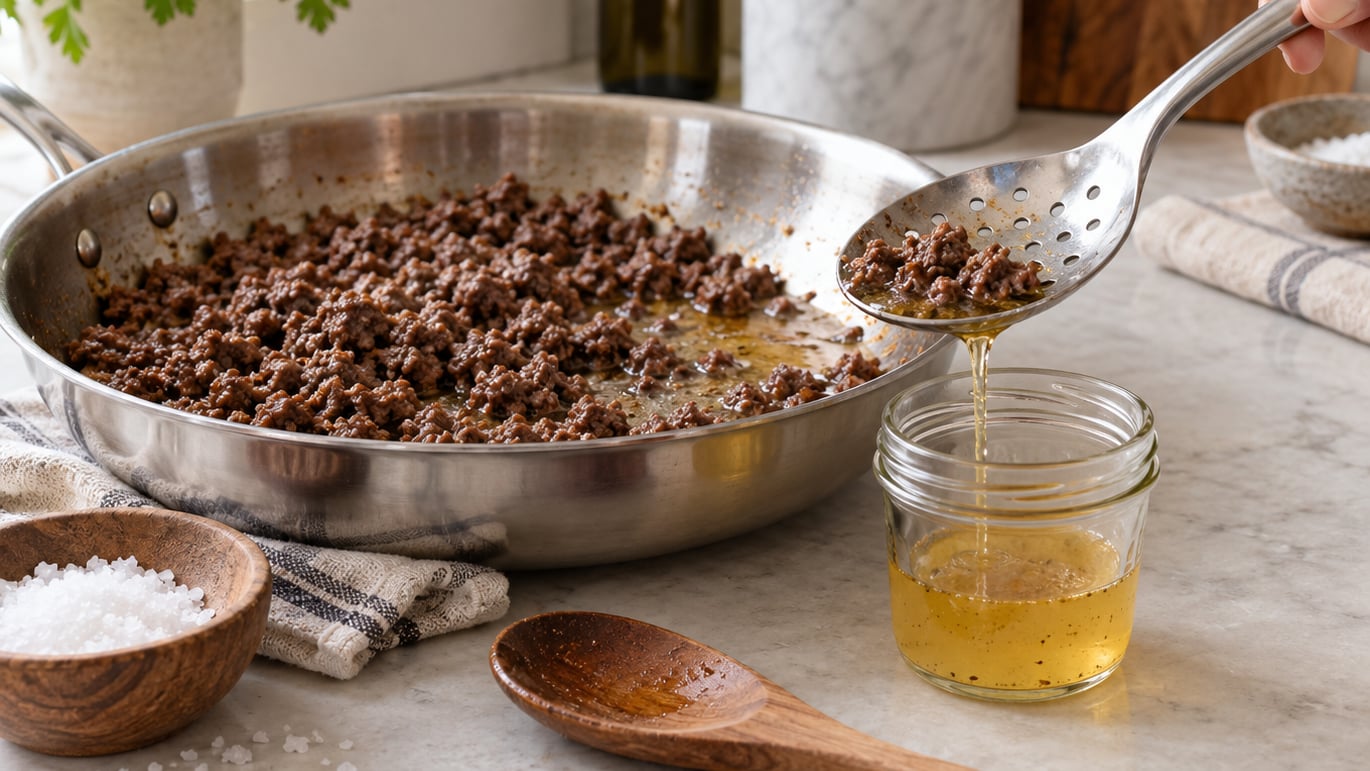
Learning how to cook ground beef without it getting greasy comes down to three things: how hot the pan is, how much you stir, and whether you take the rendered fat out before you serve. Brown the meat in a roomy skillet in a single loose layer, leave it alone for four or five minutes at a time, then spoon off the fat that pools around the crumbles. The whole method takes about 12 minutes and needs nothing more exotic than a spatula and a bowl.
That matters more than it sounds. A slick of fat will not thicken a sauce, and it floats on top of a bowl of chili instead of sinking into it. It makes tortillas soggy, coats the meat in sloppy joes, and can mask everything you season it with.
Table of Contents
- What You Need
- Step-by-Step: How to Cook Ground Beef Without It Getting Greasy
- Step 1: Temper the meat and blot it dry
- Step 2: Heat the pan, not the oil
- Step 3: Lay it down in one loose layer
- Step 4: Leave it undisturbed for 4 to 5 minutes
- Step 5: Break it up and keep cooking
- Step 6: Drain the fat while the pan is hot
- Step 7: Season after draining
- Step 8: Check the temperature
- How do you keep ground beef from releasing too much grease?
- Common Mistakes
- Frequently Asked Questions
- Conclusion
What You Need
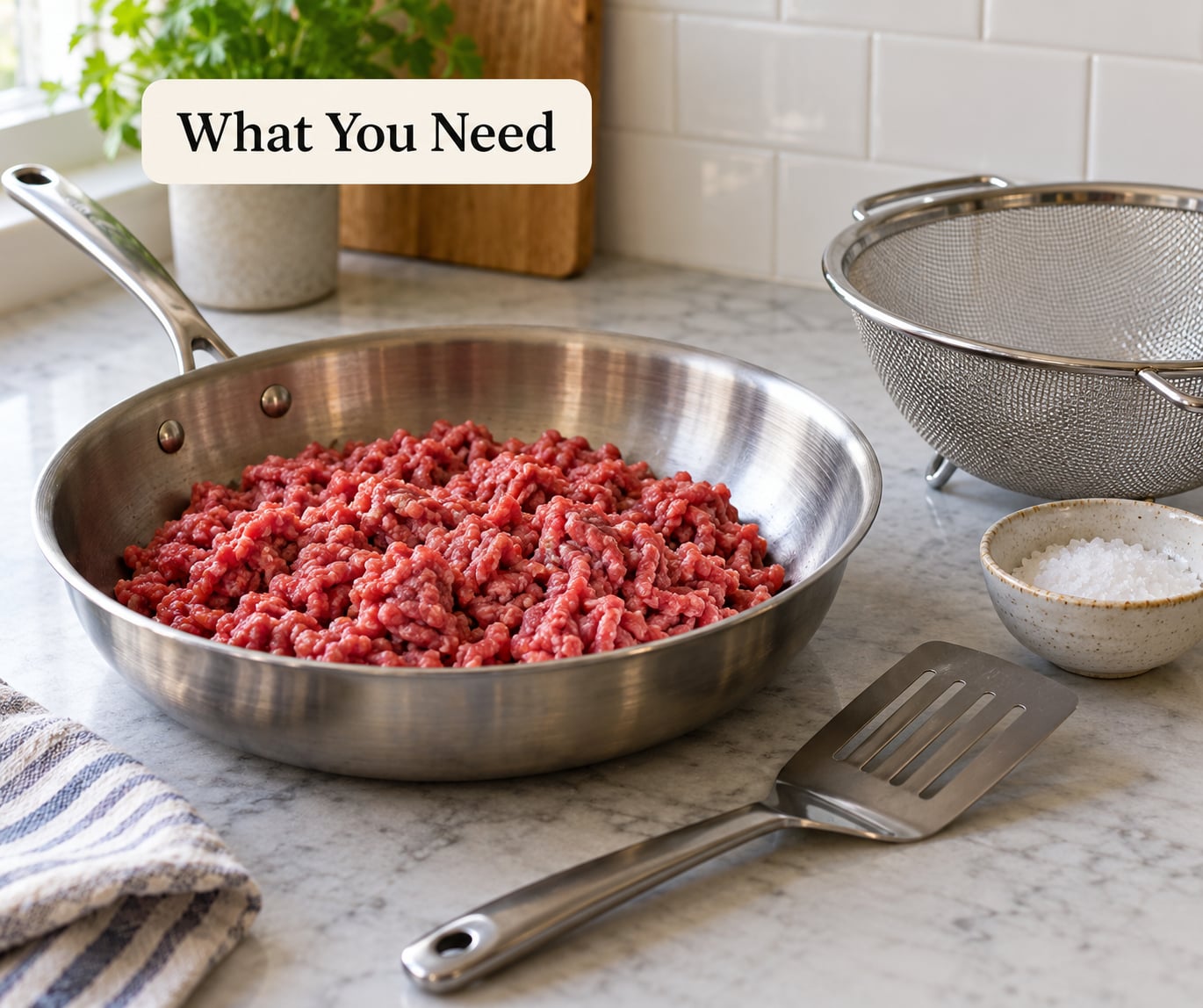
A 12-inch skillet with a heavy base is the one piece of equipment worth caring about. Stainless steel or cast iron both brown well and both let you see the fat clearly.
- Lean ground beef. 85/15 for everyday dishes, 90/10 when you want the lightest result.
- A heavy skillet at least 12 inches across, so a pound of meat spreads instead of piling up.
- A fish spatula or slotted spoon for breaking up the meat and lifting out fat.
- A heat-safe bowl, jar or small strainer to catch the rendered fat.
- Kosher salt and whatever seasoning your dish calls for.
- Baking soda, optional. A teaspoon mixed into the raw meat with a 10-minute rest raises the surface pH and gives a deeper browning and more moisture. Skip it if you are on a tight timer.
If you want the whole technique in one place, our guide to how to season food as you cook covers the part that happens after the meat is browned.
Step-by-Step: How to Cook Ground Beef Without It Getting Greasy
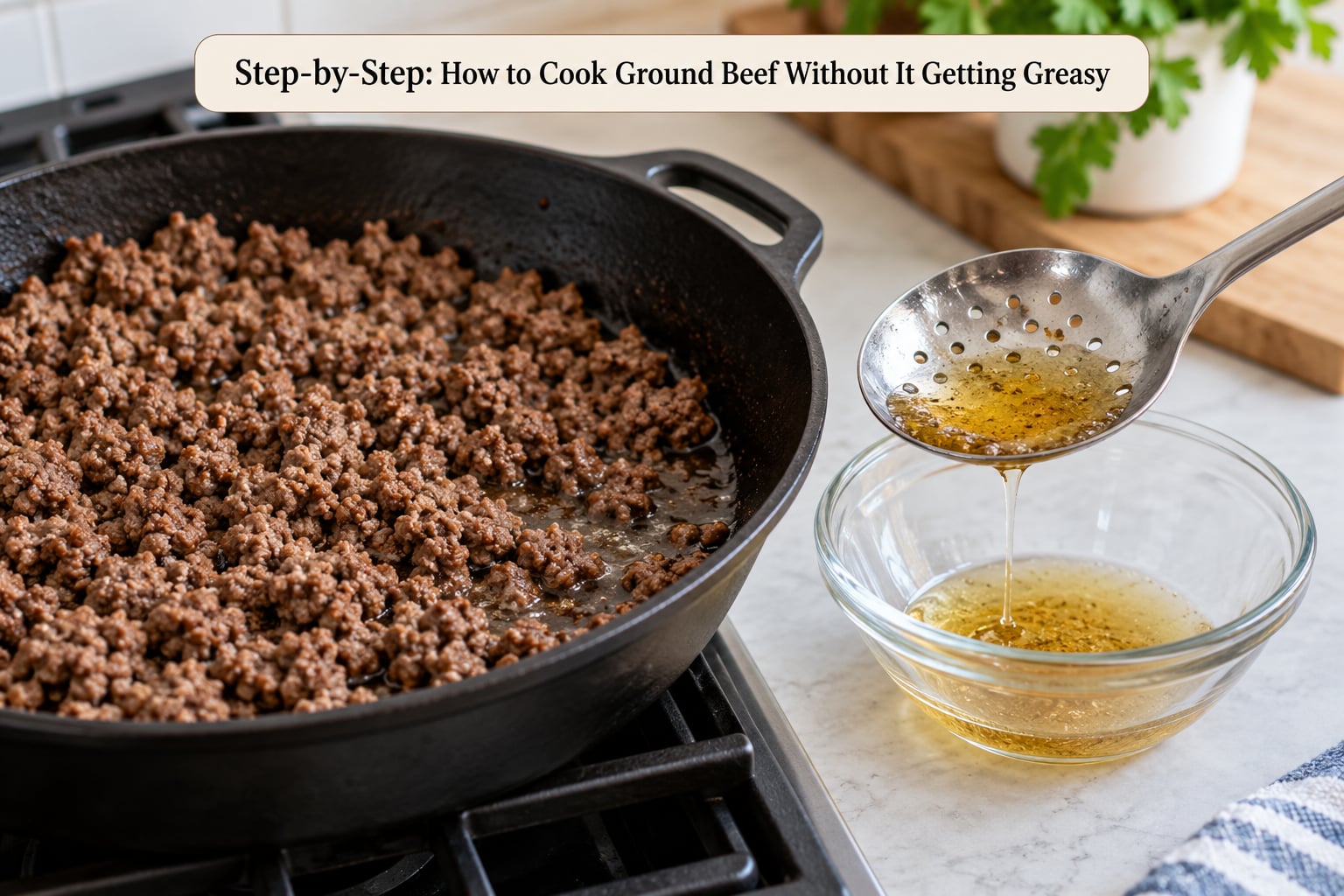
Follow these steps in order and the grease never gets a chance to coat the meat. Timings assume about a pound of beef in a 12-inch skillet over medium-high heat.
Step 1: Temper the meat and blot it dry
Take the beef out of the fridge 15 to 20 minutes ahead so it is not refrigerator-cold. Pat it with paper towels; surface moisture is the enemy of browning and excess water keeps the meat grey and wet.
Step 2: Heat the pan, not the oil
Set the empty skillet over medium-high and give it a minute and a half. Cast iron needs closer to two. Skip the oil for now unless you are using 90/10 beef, which has almost no fat of its own to prevent sticking.
Step 3: Lay it down in one loose layer
Break the beef up with your fingers and let it fall into the pan. Do not press or pack it. If the meat covers the entire base of the pan, cook two batches instead. A crowded pan drops the temperature and traps steam.
Step 4: Leave it undisturbed for 4 to 5 minutes
This is the step most people skip, and it is the one that matters. The underside sears and browns, then the rendered fat runs down and away from the meat into the edges of the pan. Stir constantly and you roll that fat right back over the surface instead.
Step 5: Break it up and keep cooking
Scrape with the fish spatula, turn the pieces, and repeat in 3-to-4-minute intervals. You want most of the pink gone with a scattering of dark brown bits. When there is no pink left, the color you see is the browning itself, not the color of the raw meat.
Step 6: Drain the fat while the pan is hot
Tilt the pan and spoon or baster off everything that is not a crumble. Work in two passes, since the meat sits in the fat that collects again as you drain.
- Tilt and baster or slotted spoon: the cleanest method for a single batch. Nearly no lost juice.
- Tip into a fine strainer set over a bowl: the fastest way when you are draining several pounds at once.
- Blot with paper towels: works for a small amount, but the towels soak up juices along with the fat.
- Spoon fat off after cooling: the fat solidifies and lifts off in one layer, but you have to cool and scrape, which costs you time on a weeknight.
Step 7: Season after draining
Seasoning a wet surface will not stick, and a pool of fat dilutes whatever you add. Drain first, then salt and add spices. Our notes on building flavor layer by layer go deeper on the order of operations.
Step 8: Check the temperature
Ground beef is safe to eat at 160°F internal temperature, which is 71°C. Insert a thermometer into the thickest part of a crumble. Restaurants and many home cooks take it further to 170°F, where the texture is noticeably drier, so watch the reading rather than the clock.
How do you keep ground beef from releasing too much grease?
Start with reasonably lean meat, because 80/20 puts more fat in the pan than the technique can take out. Then give the meat room, keep the skillet hot, stir only every few minutes, and lift the rendered fat out before you add sauce, vegetables or a finishing seasoning. Those five controls handle nearly every greasy pan you will meet.
Common Mistakes
Starting with a cold, crowded pan. Meat added to a cold pan releases water first and sits in it. The result is grey, wet crumbles with fat still trapped in the meat. Heat the pan first and batch the beef so it spreads.
Stirring constantly. Every turn of the spatula puts moisture back on the surface and pushes rendered fat across the meat. Stir every three or four minutes, not every thirty seconds.
Adding a heavy glug of oil. Oil does not stop sticking the way people expect, and you end up with more total fat in the pan plus a layer that has to be drained out later. A teaspoon of oil on 90/10 beef is plenty. On 85/15 and fattier blends, use none at all.
Seasoning before you drain. Salt and spices applied to a wet, fatty surface slide off and wash away. Drain first, then season.
Pouring the fat down the sink. Pouring hot beef fat down a drain is how you coat the inside of the pipe with a waxy layer that will not wash away. It is the most asked-about complaint on cooking forums and the one cleanup step nobody warns you about.
What to do with the drained grease
- Save it. Pour it through a fine strainer into a jar and keep it in the fridge for up to a month. It is excellent for browning potatoes, searing a steak, or starting a pan of greens.
- Freeze it. Let it cool, jar it, and freeze it in small batches for the next batch-cooking session.
- Toss it. Scrape it into the trash or a sealed container once it has cooled. Scrub the pan with hot soapy water while it is still warm.
How to fix a dish that is already greasy
Spoon off what you can from the top. For a sauce, add a splash of broth or water and simmer it hard for two or three minutes so the fat floats and you skim it again. For taco meat or a bowl, blot the surface with a paper towel and pile on something with texture, like raw onion, shredded lettuce or pickled jalapenos, so the grease is not the last thing you taste.
Dish matters when deciding how much fat to leave in. Chili and spaghetti sauce want a little fat for body, so skim only the obvious pool. Tacos and rice bowls want less, so drain harder. Burger patties are best left alone until they hit the grill, where the fat renders and seasons the crust.
Frequently Asked Questions
Is it better to season ground beef before or after draining the grease?
Season after. Salt and ground spices will not stick to a wet, fatty surface, and any fat left in the pan dilutes them. Drain the rendered fat first, then season over medium heat for the last minute of cooking so the spices toast without burning.
Is it better to cook ground beef with or without oil?
Without, if you are using 85/15 beef, since it renders enough fat of its own. Add a teaspoon of a high-smoke-point oil for 90/10 or leaner, or anytime you use stainless steel, which needs more fat in the pan to keep the beef from sticking. A heavy pour of oil adds fat you will only drain out later.
How do you cook lean ground beef so it’s not dry?
Treat moisture and grease as a trade-off rather than one problem. Stop draining at 160°F instead of cooking to 170°F, leave a thin film of fat in the pan, and add a splash of broth or sauce back in at the end. A teaspoon of baking soda with a 10-minute rest also holds moisture in the meat.
Can you save grease from ground beef?
Yes. Let it cool slightly, strain it through a fine sieve into a jar, and refrigerate it for up to a month or freeze it in small portions. Beef fat browns potatoes and eggs well and seasons a pan of greens. If you would rather not store it, cool it and scrape it into the trash rather than the drain.
Should I drain ground beef for tacos and spaghetti sauce?
Drain for tacos, where extra fat makes tortillas soggy and pooling at the bottom of the bowl. For spaghetti sauce and chili, skim off only the obvious pool and leave a film behind, because a little fat gives the sauce body and carries flavor. Never pour it down the sink in either case.
If your weeknights are already tight, the same hot-pan technique carries over well to other fast stovetop meals. Our guide to how to cook dinner in under thirty minutes builds on it, and how to cook one meal the whole family eats covers the picky-eater side of the same problem.
Conclusion
Do one thing first: brown the beef in a roomy skillet that is already hot, in small batches so it spreads into a single layer, and give it four or five minutes untouched between stirs. Then drain the rendered fat before any seasoning, sauce or vegetable goes in. Everything else, including which cut you buy and whether you add oil, is a fine-tuning decision on top of that.