
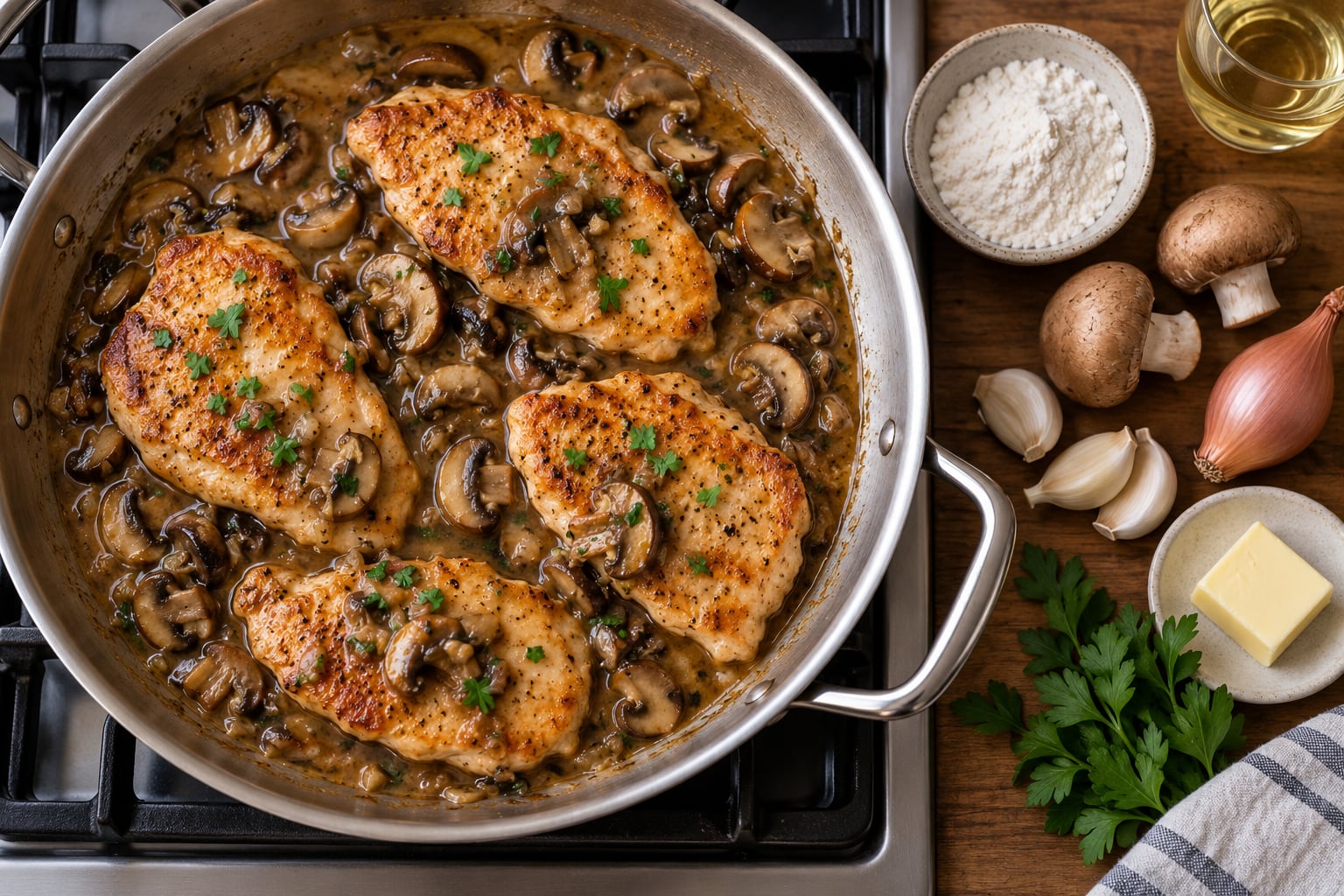
The short answer: how to make chicken marsala like a restaurant comes down to four moves. Pound the chicken to an even 1/4 inch, dredge and sear it in batches until deeply golden, brown the mushrooms on their own in a hot pan, then deglaze with dry Marsala off the heat and finish with cold butter. Forty-five minutes, one skillet, ten ingredients.
Most home kitchens get this dish about 80 percent right. The chicken browns, the sauce smells right, and then it lands on the table pale and watery with a rubbery breast sitting in a puddle. The missing 20 percent is almost never the recipe. It is the pan, the thickness of the meat, and how long you let the sauce reduce.
One quick note before we start, since it comes up constantly: this is chicken marsala, an Italian-American dish built on Sicilian fortified wine. Chicken masala is a completely different Indian dish with tomatoes and spices. No relation, and not a substitute.
Kitchen-tested and updated for 2026.
What You Need
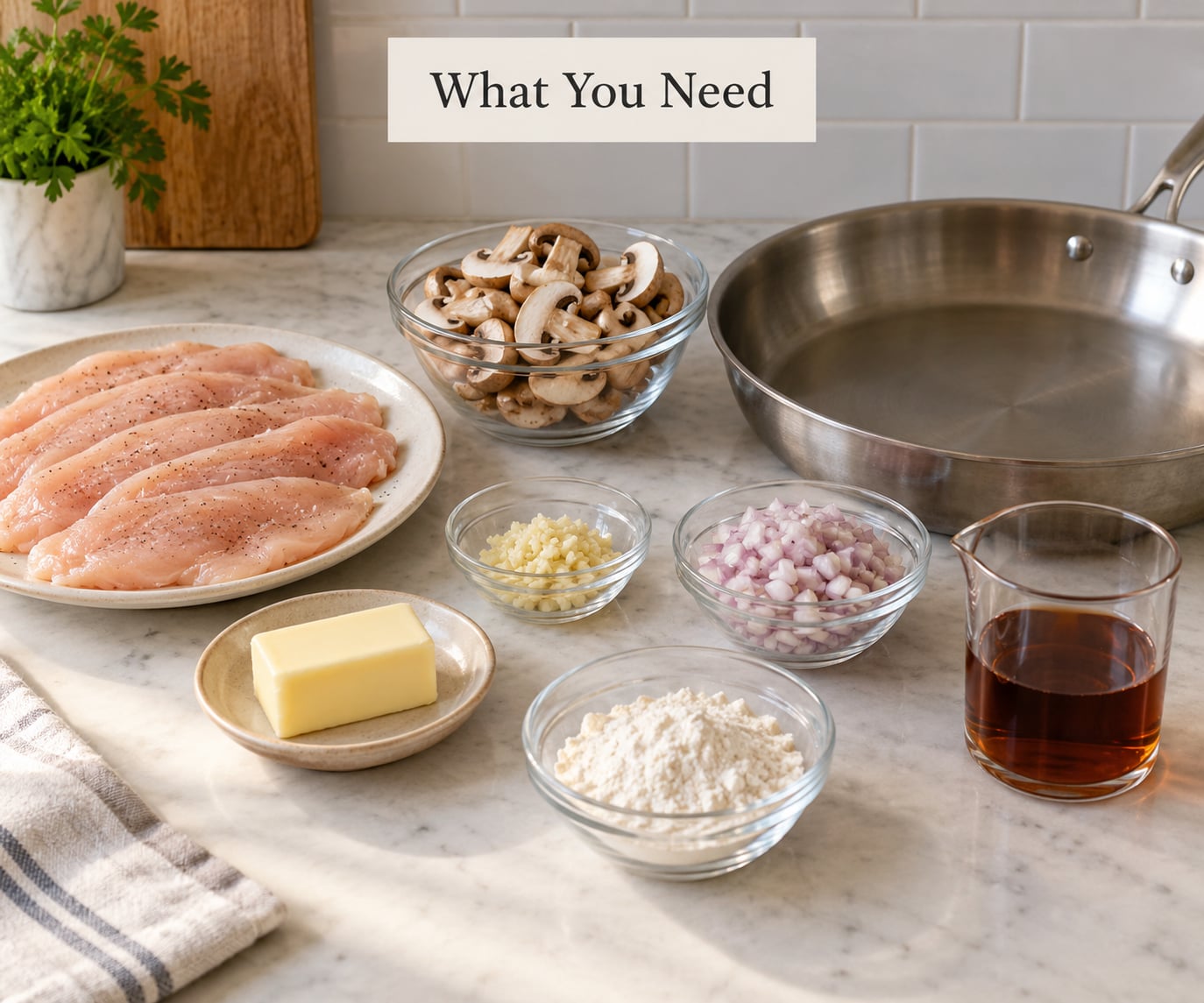
Buy 4 boneless skinless chicken breasts, 8 ounces of cremini or baby bella mushrooms, one small shallot, two garlic cloves, 1/2 cup of all-purpose flour, 1/2 cup of dry Marsala wine, 1 cup of low-sodium chicken broth, and 6 tablespoons of unsalted butter. You also need salt, black pepper, a few thyme leaves, and flat-leaf parsley for the finish.
Each ingredient has a job, and skipping one leaves a hole in the dish:
- Chicken breasts, 4 — the protein. Butterflied and pounded, one breast feeds one person generously.
- All-purpose flour, 1/2 cup — the crust and the thickener. It is what stops the sauce from being a thin wine puddle.
- Dry Marsala wine, 1/2 cup — the acid and the flavor backbone. Use a drinking wine, never cooking wine, which is salted and tastes flat.
- Cremini or baby bella mushrooms, 8 oz — sliced 1/4 inch thick. Mushrooms carry the savory weight of the sauce.
- Shallot, 1 small — milder and sweeter than onion, it disappears into the wine.
- Garlic, 2 cloves — minced fine so it does not sit in one spot and burn.
- Unsalted butter, 6 tbsp — 2 tablespoons for searing, 4 tablespoons cold, cubed, for the final emulsion.
- Chicken broth, 1 cup — stretches the wine into a sauce that coats instead of burns. If you have a bag of bones in the freezer, how to make chicken stock from bones is a good weekend project.
- Fresh thyme and flat-leaf parsley — the finish. Dried thyme works in a pinch.
Equipment matters more than usual here. You need one 12-inch skillet with straight sides, a meat mallet or the flat bottom of a heavy pan for pounding, two shallow bowls for the dredging station, and a wide spatula. A nonstick pan is the one thing to avoid; you need fond, and nonstick gives you almost none.
Let me make two substitutions clear. If you have no Marsala, use a dry white wine such as Pinot Grigio or Sauvignon Blanc, or 1/2 cup broth plus 1 tablespoon balsamic vinegar plus 1 teaspoon grape juice for an alcohol-free version that still reads savory. If you want to skip flour entirely, dust the chicken with a little cornstarch instead; the crust will be lighter and the sauce thinner, so reduce the broth to 3/4 cup.
Prep takes 20 minutes, cooking takes 20 to 25, and the whole thing serves 4. Chicken breasts vary in thickness by a full inch between brands, which is exactly why you pound them before anything else.
Classic, creamy or veal: which version is “restaurant style”?
There is no single chicken marsala in American restaurants, and knowing which one you are chasing saves a lot of disappointment. The classic is wine-forward with no dairy, the creamy version is what most Italian-American chain kitchens serve, and veal marsala is a thinner, more tender cousin.
| Version | Protein | Cream? | Sauce texture | Cook time | Restaurant match |
|---|---|---|---|---|---|
| Classic Italian-American | Pounded chicken breast | No | Glossy, wine-sharp, clings in a thin film | 20-25 min | Neighborhood Italian restaurants, red-sauce houses |
| Creamy restaurant version | Pounded chicken breast | Yes, 1/2 cup heavy | Velvety, thicker, coats a spoon heavily | 25-30 min | Most chain steakhouses and pasta houses |
| Veal marsala | Veal cutlet | Either | Same sauce, noticeably more tender | 12-15 min | Upscale Italian and northern Italian menus |
Quick note on the creamy version: the cream is not Italian, it is an Italian-American restaurant addition, and it is what most diners picture when they picture the dish. My advice is to cook the classic first, then add 1/2 cup of heavy cream with the butter at the very end if you want that style. Do not add cream before reducing or the sauce will never tighten.
Step-by-Step
Prepare and season the chicken so it cooks evenly
Slice each breast horizontally through the thickest part to open it like a book, leaving a hinge. Do not cut all the way through. Lay it cut-side down between two sheets of plastic wrap or a zip bag, and pound with a mallet from the center outward until it is an even 1/4 inch thick.
Even thickness is the whole game. A breast that is 3/8 inch in the middle and 1/4 inch at the edges cannot cook evenly, so the thin parts turn dry before the thick part is done. Restaurants pound for this reason and no other.
Set up the dredging station now: one shallow bowl with 1/2 cup flour, salt and pepper whisked in, one empty bowl. Pat the chicken dry with paper towels and season both sides with salt and pepper. Dry surface is what gives you a crust instead of a steamed, pale coating.
Sear the cutlets until golden without crowding the pan
Heat 2 tablespoons of butter with 1 tablespoon of olive oil in your 12-inch skillet over medium-high heat. The butter is ready when it foams and the foaming slows down, but before it turns brown. If it browns, you are already past the point for a pale sear.
Dredge a cutlet in the seasoned flour, shake off the excess so no thick patches remain, and lay it in the pan away from you. Listen for a steady sizzle. No sizzle means the pan is not hot enough, and a splattering roar means it is too hot.
Cook for 2 to 3 minutes per side without touching it. Do not flip early, do not test it, and do not move it. Restaurants flip exactly once, and the crust is what that patience buys you. The cutlet is done when the thickest part reaches 165°F and springs back when pressed.
Repeat in batches, never more than two cutlets at a time, adding a little oil and butter between batches as needed. Crowding the pan drops the temperature, and the chicken steams in its own moisture instead of searing.
One extra step is worth it: after the first sear, let the cutlet sit for 30 seconds, then dredge it in the flour a second time and give it another 90 seconds per side. A double-dredge builds the thicker, crunchier shell you get in restaurants. Then transfer the cutlets to a warm plate.
Build the mushroom sauce from browned bits and wine
Keep the chicken warm, not hot. Restaurants hold seared chicken in a 200°F oven on a rack while the sauce finishes so it never overcooks. If you are not using an oven, tent the plate loosely with foil.
Turn the heat to medium and add 2 tablespoons of butter to the same skillet. Add the mushrooms in a single layer and add nothing else. Do not stir them for the first two minutes. Cremini mushrooms release water when they are crowded and stay pale when they are moved around; leaving them alone over real heat is how they get golden.
Once they are deep brown, add the shallot and garlic and cook 60 to 90 seconds until fragrant. Pour in 1/2 cup of dry Marsala, turn the heat down, and scrape the bottom of the pan with a wooden spoon to lift every browned bit. That fond is the entire reason the sauce tastes restaurant-deep. Deglazing off the heat prevents the flare-ups that happen when wine hits a screaming-hot pan.
Add 1 cup of broth and simmer until the liquid is reduced by about half and coats the back of a spoon, roughly 4 to 6 minutes. Stir the cold butter in one cube at a time off the heat to emulsify the sauce into something silky. For a creamy version, stir in 1/2 cup of heavy cream at this point, after the reduction, not before.
Finish the chicken in the sauce to 165°F
Taste the sauce before you go any further. This is the step home cooks skip and restaurants never do. If it tastes flat or slightly sweet, it needs salt, not more wine. Add salt, stir, taste again, and adjust with a splash of broth if it got too concentrated.
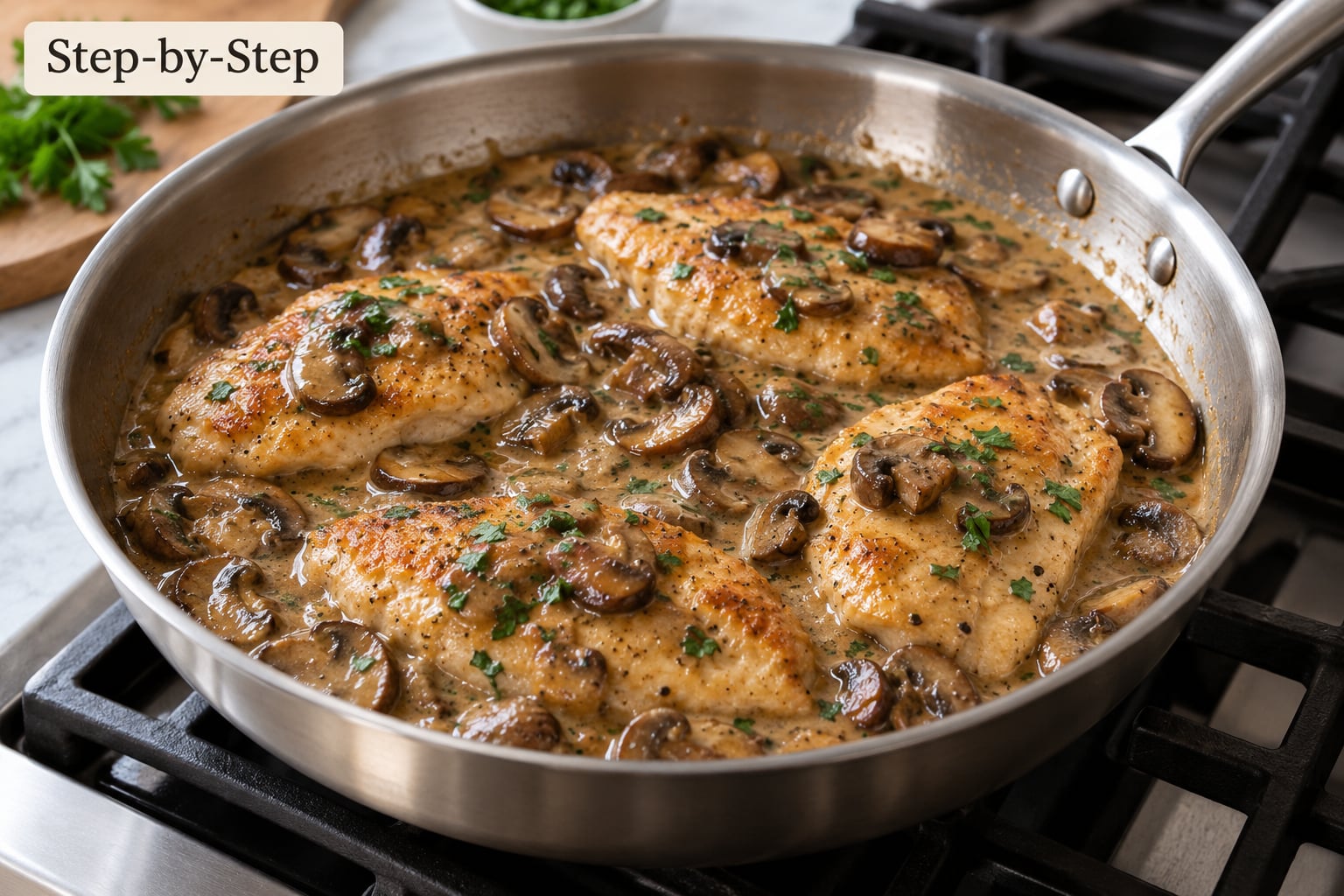
Return the cutlets to the skillet and spoon sauce over the top. Simmer gently, not boiling, for 1 to 2 minutes just to bring the chicken back to temperature and marry the flavors. Do not simmer them for 10 minutes. A pounded breast that is already cooked will turn rubbery in that time, which is the single most common complaint about home chicken marsala.
Rest, plate and serve
Let the cutlets sit in the sauce for 3 to 5 minutes. They finish cooking from residual heat, and resting keeps the juice in the meat instead of on the cutting board. A gentle simmer in the sauce to hit 165°F is required for poultry, and any resting time after that is purely for texture.
Serve with something that soaks up sauce: pasta, creamy polenta, roasted or restaurant-style mashed potatoes, or rice. Scatter flat-leaf parsley and a few thyme leaves over the top, and bring the skillet to the table if you can, since the sauce keeps moving and the last of it is the best part. If you want the rest of the plate to look the part too, how to plate food like a restaurant covers the arrangement.
What to serve with it
Chicken marsala is a sauce-forward dish, so sides should absorb rather than compete. Pasta is the classic choice, particularly angel hair or pappardelle. Creamy mashed potatoes, roasted baby potatoes, or creamy polenta all work for the same reason. For vegetables, sautéed broccolini or green beans cut the richness without adding weight.
Keep one element crunchy on the plate. A small salad with a sharp vinaigrette, or a handful of toasted breadcrumbs scattered over the top, keeps the meal from feeling heavy. For wine, pour the same Marsala you cooked with, or serve a lightly chilled Pinot Grigio.
Common Mistakes and How to Fix Them
Almost every disappointing chicken marsala comes from one of six things. Find your symptom, name the cause, and change one thing next time.
| Symptom | Cause | Fix |
|---|---|---|
| Pale, soft or soggy chicken | Pan was not hot enough, cutlets were crowded, or chicken was moved while cooking | Heat the pan until butter foams, cook two cutlets at a time, and do not touch them for 3 minutes |
| Tough, rubbery, dry cutlets | Cooked all the way through in the pan, then simmered in the sauce for too long | Pound to 1/4 inch, pull at 160°F carryover cooking, and simmer in sauce only 1 to 2 minutes |
| Watery, pale mushrooms | Crowded, salted too early, or stirred constantly | Single layer, no salt until they brown, leave them alone for two minutes |
| Sauce too thin and pooly | Not reduced enough, or not enough flour on the chicken | Simmer until it coats the back of a spoon; stir in 1 tablespoon cornstarch slurry if it stays thin |
| Grainy or split sauce | Butter added over high heat, or cream added before reducing | Take the pan off the heat, add cold butter one cube at a time and swirl |
| Sauce tastes sweet or grey-beige | Sweet Marsala, cooking wine, or a fond that was scorched | Use dry drinking Marsala and add salt until it tastes savory, not sweet |
A few shorter rules that cover most of the rest:
- Never use cooking wine. It is salted and made to be sipped, not reduced, and it will make the whole dish taste flat.
- Reduce by half, then taste. Volume is not thickness. The sauce is ready when a spoon drawn through it leaves a clean line for a second.
- Deglaze off the heat. Wine into a screaming-hot skillet is how you get a flare-up and a bitter, scorched sauce.
- Cook the chicken in batches. Two at a time in a 12-inch skillet is the ceiling. Three and you are steaming.
- Save the mushroom liquid. If they release water, cook it off in the pan rather than pouring it away; that liquid is mushroom flavor.
For storage, cool the chicken and sauce separately and refrigerate them in a sealed container for up to 3 to 4 days. Reheat gently in a covered skillet over low heat with a splash of broth, and make sure it reaches 165°F all the way through. The sauce tightens in the fridge, so a little liquid almost always helps. It does not freeze well, because cream and starch both separate on thawing.
Next-day ideas, if you have extra: pile the cutlets and sauce onto a roll for a sandwich, chop everything and toss it with cooked pasta and a splash of pasta water, or warm it gently and spoon it over a baked potato. The mushroom sauce works as a quick pasta sauce on its own too.
Scaling up for a crowd is a pan problem, not a recipe problem. Double the recipe and use two skillets rather than one, because crowding is what ruins a sear. Cook the cutlets in four batches, hold the finished ones in a 200°F oven on a single layer with no stacking, and make the sauce in each skillet right before it goes to the table. Budget about 15 minutes of cooking per batch.
Frequently Asked Questions
What is the best cut of chicken for chicken marsala?
Boneless skinless chicken breast is the standard choice, and it only works when you butterfly it and pound it to an even 1/4 inch thickness. Thighs are a good swap for a more forgiving dish: they stay juicy if you overcook them slightly, and home cooks often increase the wine, broth and shallot by half for a richer sauce. Avoid breast fillets that are already thin, since they dry out before the sauce is ready.
Can I make chicken marsala without flour?
Yes, and the result is lighter but less classic. Use cornstarch in place of the dredging flour for a crisper crust that is nearly translucent, and the sauce will be thinner since flour is what thickens it. Reduce the broth to 3/4 cup so the sauce still tightens. You lose the classic dusty coating that gives the dish its restaurant look, so the crust will not be as substantial.
Can I use chicken breasts instead of cutlets?
You are already using them. Chicken cutlets are simply butterflied or pounded chicken breasts, which is why pounding to an even 1/4 inch is the first step rather than an optional extra. If you buy pre-sliced cutlets, skip the butterfllying and pound them only if they are thicker than 1/4 inch. Cook them 2 to 3 minutes per side and pull them at 165°F.
What wine can I substitute for marsala?
Any dry white wine works, and Pinot Grigio or Sauvignon Blanc are the most neutral choices that will not fight the mushrooms. Dry vermouth, Madeira, or a dry sherry also work because Marsala is a fortified wine. For an alcohol-free version, use 1/2 cup broth with 1 tablespoon balsamic vinegar and 1 teaspoon grape juice. Avoid sweet Marsala unless you add extra salt, and never use cooking wine.
How do I keep the mushroom sauce from becoming watery?
Cook the mushrooms in a single layer in a hot pan with butter and do not stir them for the first two minutes. Salt them only after they have browned, since salt pulls out water and starts the steaming process early. If they still release liquid, let it cook off over high heat rather than pouring it away. A wide pan and a full 8 ounces of mushrooms per batch is the other half of the fix.
How long does homemade chicken marsala last?
Refrigerated in a sealed container, chicken marsala keeps for 3 to 4 days. Cool the chicken and sauce separately if you can, and reheat gently in a covered skillet over low heat with a splash of broth, since the sauce thickens as it chills. Reheat only until it reaches 165°F, and avoid microwaving, which dries the cutlets and can break the sauce emulsion. Freezing is not recommended.
If you make one change to how to make chicken marsala like a restaurant at home, make it the pound. Even 1/4 inch chicken is what lets a 2 to 3 minute sear produce a golden crust and a juicy center at the same time, and everything else in this method depends on that step being right.
After that, the two habits worth building are browning the mushrooms on their own and deglazing off the heat. Together they take about eight extra minutes and they are the difference between a pleasant weeknight chicken dinner and the one people ask you to make again.