
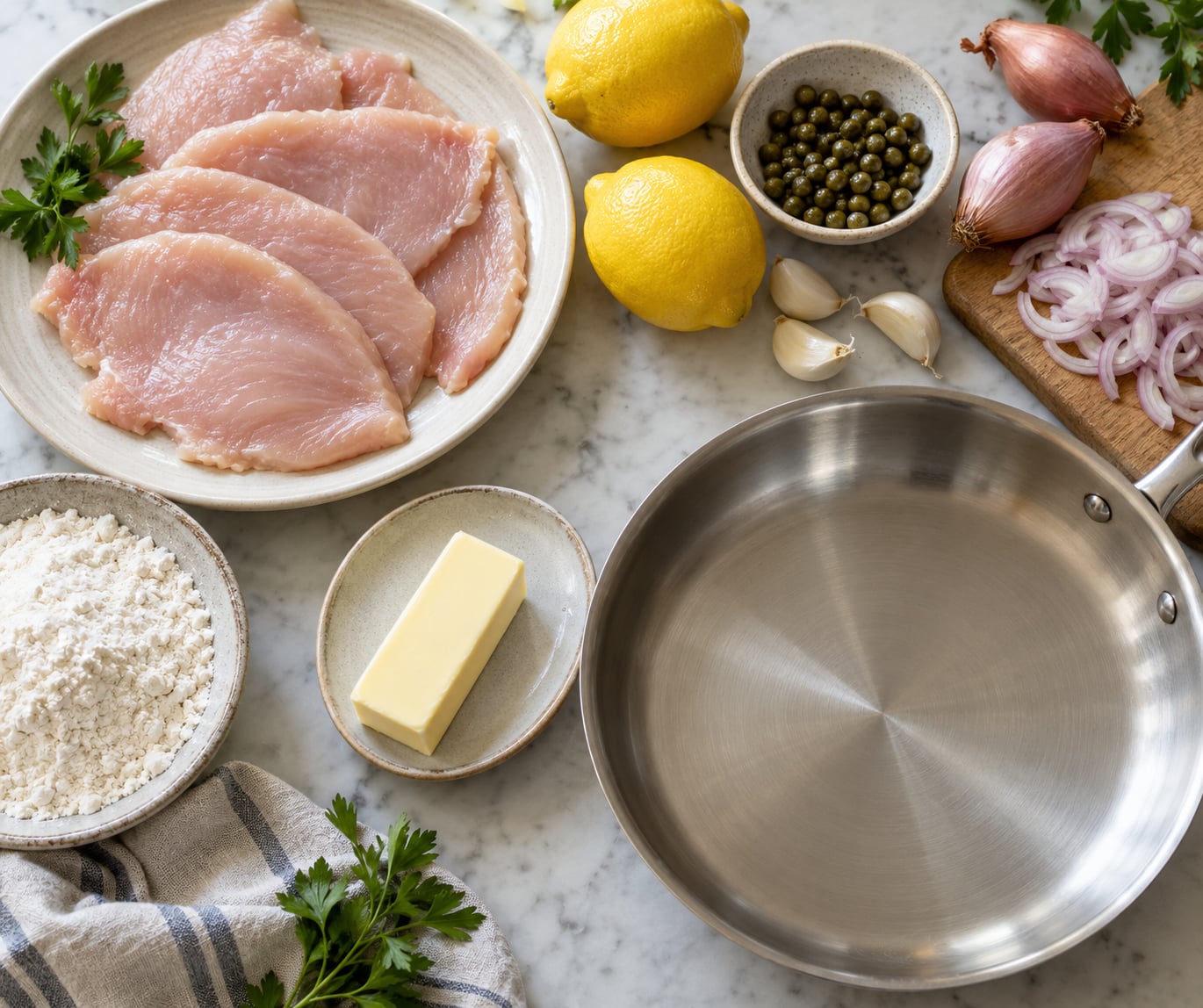
Chicken piccata is thin, pan-seared chicken cutlets with a golden crust, covered in a bright pan sauce of lemon juice, butter, capers and a splash of white wine, all built in one skillet. Learning how to make chicken piccata takes about 35 minutes from start to finish and serves four. The technique is simple, but the details are what separate a juicy restaurant plate from a dry grey one.
The four things that matter most: pound the chicken even, salt the meat itself before it hits flour, sear in small batches in a genuinely hot pan, and finish the sauce with cold butter off the heat. Skip any one of those and you get a different dish. Get all four and you get the lemon-caper chicken people order when they want something quick that still tastes like a restaurant made it.
What You Need
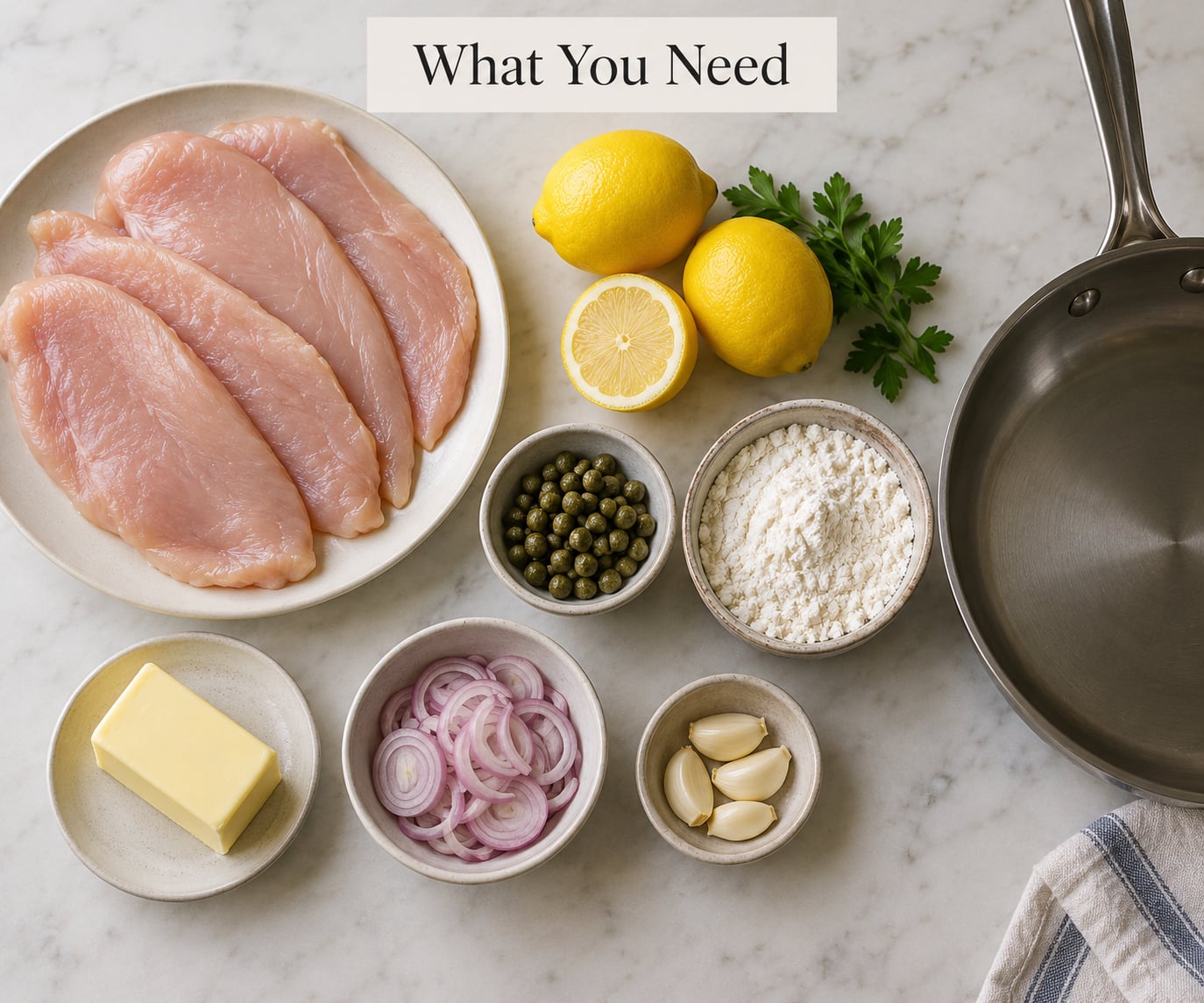
Everything below is for four servings. A 10 or 12 inch skillet is the sweet spot, big enough for two cutlets at a time but small enough that the sauce reduces quickly.
For the chicken
- 4 small boneless, skinless chicken breasts, or 2 large ones sliced crosswise into four cutlets
- 1 teaspoon kosher salt
- 1/2 teaspoon freshly ground black pepper
For the dredge
- 1/2 cup all-purpose flour
- 1 teaspoon kosher salt
- Zest of 1 lemon
For the sauce
- 2 tablespoons extra-virgin olive oil
- 2 tablespoons unsalted butter, plus 2 tablespoons cold butter for finishing
- 2 garlic cloves, smashed
- 1/3 cup dry white wine, such as Pinot Grigio, Chardonnay or Sauvignon Blanc
- 1/2 cup chicken stock
- Juice of 1 lemon, plus a squeeze more at the end
- 2 tablespoons capers, coarsely chopped
- 2 tablespoons chopped flat-leaf parsley
Equipment is short: a meat mallet or heavy rolling pin for pounding, two shallow bowls for the dredge station, a wide plate to hold the cooked cutlets, tongs, and an instant-read thermometer if you have one.
Swaps worth making
No wine is the most common substitution. Use an equal amount of extra chicken stock plus a teaspoon of white wine vinegar or a splash of lemon juice, and you lose nothing important.
Capers can be swapped with chopped green olives, and gluten-free cooks can use a 1-to-1 gluten-free flour blend in the dredge. Do not rinse the capers, though. Brined capers hold their flavor and saltiness in the sauce, and rinsing strips both.
How to Make Chicken Piccata Step by Step
The order is deliberate. Prep first, then a single uninterrupted stretch at the stove, so have everything measured and lined out before the pan gets hot.
How to Prepare the Chicken for Searing
Slice two large breasts crosswise into four even cutlets, or lay four small breasts on a cutting board. Put each piece between two sheets of plastic wrap and pound with a meat mallet from the center outward until each cutlet is about 1/4 inch thick, roughly the thickness of a dollar coin.
Pound gently. You are flattening the meat, not tearing it, and a heavy whack can push the breast out from under the wrap or leave ragged edges. Lift the plastic off and check the thickness by feel, not by eye, since a raw breast looks thinner than it cooks.
Season both sides with the teaspoon of salt and the pepper. Seasoning the meat itself matters more than seasoning the flour, and it is the step most home cooks skip. Then dredge each cutlet lightly in the seasoned flour and tap off the excess.
You want a thin, almost translucent coat. Thick patches of flour turn gummy and pale in the pan instead of turning crisp.
How to Brown the Chicken Without Burning It
Set a 10 or 12 inch skillet over medium-high heat and add the olive oil and 2 tablespoons of butter. Wait until the butter is fully melted and the oil shimmers when you tilt the pan. Foaming butter that has gone brown means the pan is too hot, so lower the heat and start again.
Lay in two cutlets at a time, leaving real space between them. If the oil stops sizzling on contact, the pan is crowded or cool, and the crust will turn pale and greasy instead of golden.
Leave the cutlets alone for 2 to 3 minutes per side. Resist flipping early and resist moving them at all, since the crust releases from the pan when it is ready and nowhere before. When the first side is deeply golden, turn and cook another 2 to 3 minutes.
Check the thickest part with an instant-read thermometer. Poultry needs to reach 165 F / 74 C internal, and because the cutlets are thin that usually arrives well before the outside looks done. If you have no thermometer, press the thickest spot with a finger and check for any resistance or translucency.
Move the finished cutlets to a warm platter in a single layer, not stacked. Repeat with the remaining two. Keep the rendered bits in the pan, because they are the base of the sauce.
If a seasoning guide for this style of dish is useful to you, our oven chicken tenders guide covers the same high-heat sear logic in more detail.
How to Make the Lemon-Caper Pan Sauce
Lower the heat to medium and add the smashed garlic to the same skillet, swirling it through the oil and brown bits for about 30 seconds. The garlic should smell sweet, not scorched. If it browns in seconds, the pan is still too hot.
Pour in the wine and scrape the bottom of the pan with a wooden spoon. This is the deglaze, and those stuck-on bits carry most of the flavor in the finished dish. Let the wine bubble and reduce by about half, roughly a minute and a half.
Add the chicken stock and the chopped capers, then simmer another 2 to 3 minutes until the liquid drops by roughly half and coats the back of a spoon. Add the lemon juice now, not earlier, since long simmering flattens the lemon and dulls it.
Take the skillet off the heat. Add the 2 tablespoons of cold butter cut into small pieces and swirl the pan until the butter melts into a glossy sauce. This finishing step is what emulsifies the fat with the liquid, and the same idea behind a simple vinaigrette that emulsifies.
If the sauce looks thin, simmer it another minute or two before the butter goes in. If it tastes too rich or too buttery, splash in a tablespoon of stock or hot water to loosen it. Either fix is easy in the pan and impossible later.
How to Serve Chicken Piccata
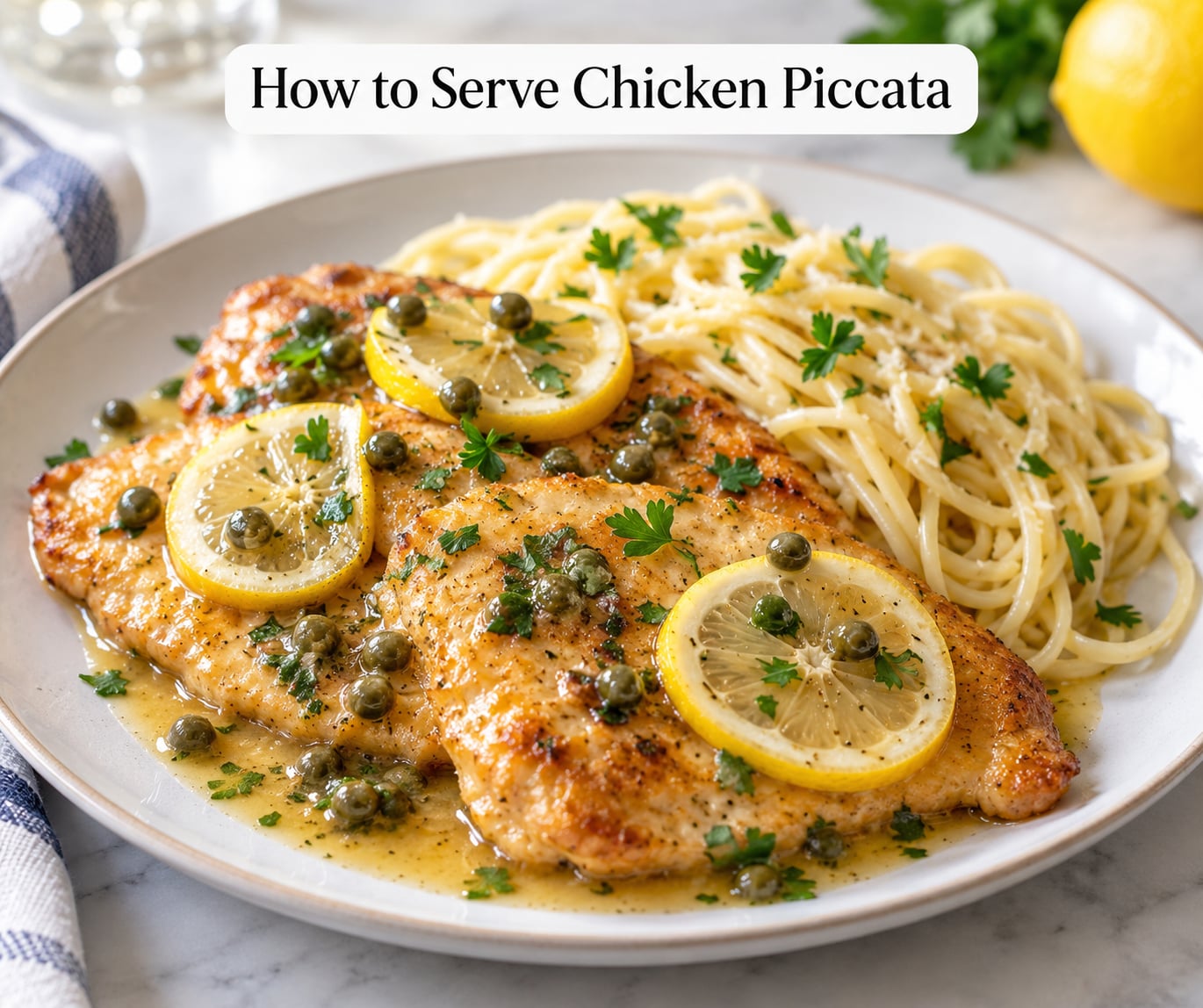
Get the sauce onto the plate first. Spoon a thin layer over each serving, lay two cutlets on top, then spoon a little more sauce over the chicken. Scatter with parsley and add lemon slices on the side rather than on top, so the crust stays crisp under the sauce only where it is wet.
The timing matters more than the arrangement. Return the chicken to the warm sauce only for the minute it takes to heat through, then pull it out if you are holding it before serving. Cutlets that sit in the sauce absorb it and turn soft, which is the single most common complaint about homemade piccata.
Angel hair or spaghettini is the classic partner, since the sauce doubles as the pasta dressing. Other good choices: mashed potatoes with the sauce pulled over the top, sautéed green beans or asparagus, roasted broccoli, or a simple arugula salad dressed with lemon and olive oil.
If you like the sauce on the side rather than underneath, a sauce swoosh on a plate keeps the crust untouched until the last bite.
Common Mistakes
The chicken is dry or uneven. Usually one of two things: the cutlets were thicker than 1/4 inch, or they cooked past 165 F. Slice and pound before seasoning, and pull them the moment the thermometer reads done. Because the meat is so thin, carryover cooking finishes the job while the chicken rests.
The crust is pale and greasy. The skillet was not hot enough, or too many cutlets went in at once. A crowded skillet drops the temperature and the flour steams instead of toasting. Two cutlets per batch in a 10 inch pan, and wait for the shimmer.
The sauce is brown instead of glossy. You reduced it too long or over too much heat after deglazing, or the butter browned before the wine went in. Once the wine is added, keep the heat moderate and reduce only until it coats a spoon.
The sauce breaks or turns grainy. That is the butter added too hot or boiled after emulsifying. Cold butter, off the heat, and swirl rather than stir.
The capers overwhelm everything. Either you used more than 2 tablespoons or you added them early and cooked them until they dissolved. Capers should still be identifiable little briny bursts in the finished sauce.
The chicken gets soggy. It sat in the sauce too long before serving. Sauce the plates at the last second rather than saucing early and holding.
Two habits fix most of the above. Season the meat, not just the flour, and cook in batches even when it feels inefficient. Read them once now and you will not have to think about them again.
Frequently Asked Questions
Can I make chicken piccata without a meat mallet?
Yes. A heavy rolling pin works just as well, and so does the flat side of a sturdy skillet or a wooden ladle. What matters is even pressure from the center of the breast outward until the cutlet reaches about 1/4 inch. You can also skip pounding entirely by slicing the breast horizontally into two thin pieces, which gets you close to the right thickness without any tool.
What is the best cut of chicken for chicken piccata?
Boneless, skinless chicken breasts, sized evenly so they cook at the same rate. Small breast fillets, sometimes sold as chicken cutlets, need no pounding at all. Chicken thighs work too, but they carry more fat and take longer to cook through, so they suit a saucier version rather than the classic crisp-crusted one.
How do I keep the chicken piccata sauce from breaking?
Add the finishing butter cold and off the heat, in small pieces, and swirl the pan rather than stirring. Heat breaks an emulsion because the fat and liquid separate when they are agitated while hot. If the sauce already broke, take the pan off the heat and whisk in a tablespoon of cold stock or water, and it usually comes back together.
Can I prepare chicken piccata ahead of time?
Prep the cutlets, pound them and mix the dredge up to a day ahead, stored separately and covered. Sear and sauce close to serving, because the crust softens and the sauce tightens as it sits. If you must cook ahead, hold the chicken and the sauce separately and warm them gently, pouring the sauce over only at the table.
What should I serve with chicken piccata?
Angel hair or spaghettini is the traditional answer, because the pan sauce becomes the pasta dressing. Mashed potatoes, roasted broccoli, sautéed green beans and a lemon-dressed arugula salad all work well. Keep the sides light and acidic so they cut the butter in the sauce rather than adding more weight to the plate.
Can I use chicken breasts without pounding them?
You can, but the results differ. Unpounded breasts cook unevenly and take longer, so the outside turns leathery before the center reaches 165 F. If you skip the pounding, slice the breast horizontally into two thinner pieces rather than leaving it whole, and keep an eye on the cooking time. Thin cutlets are the whole point of the dish.
Conclusion
The whole dish comes down to four moves done in the right order. Pound the chicken to an even 1/4 inch and season the meat itself. Sear it in batches in a shimmering pan until deeply golden and cooked through to 165 F. Build the lemon-caper sauce in the same skillet, finishing it with cold butter off the heat. Then combine the two at the very last second so the crust stays crisp.
Start by slicing and pounding your cutlets and zesting the lemon. Get those two things done before the pan is hot and the rest is a short, calm stretch of cooking.