
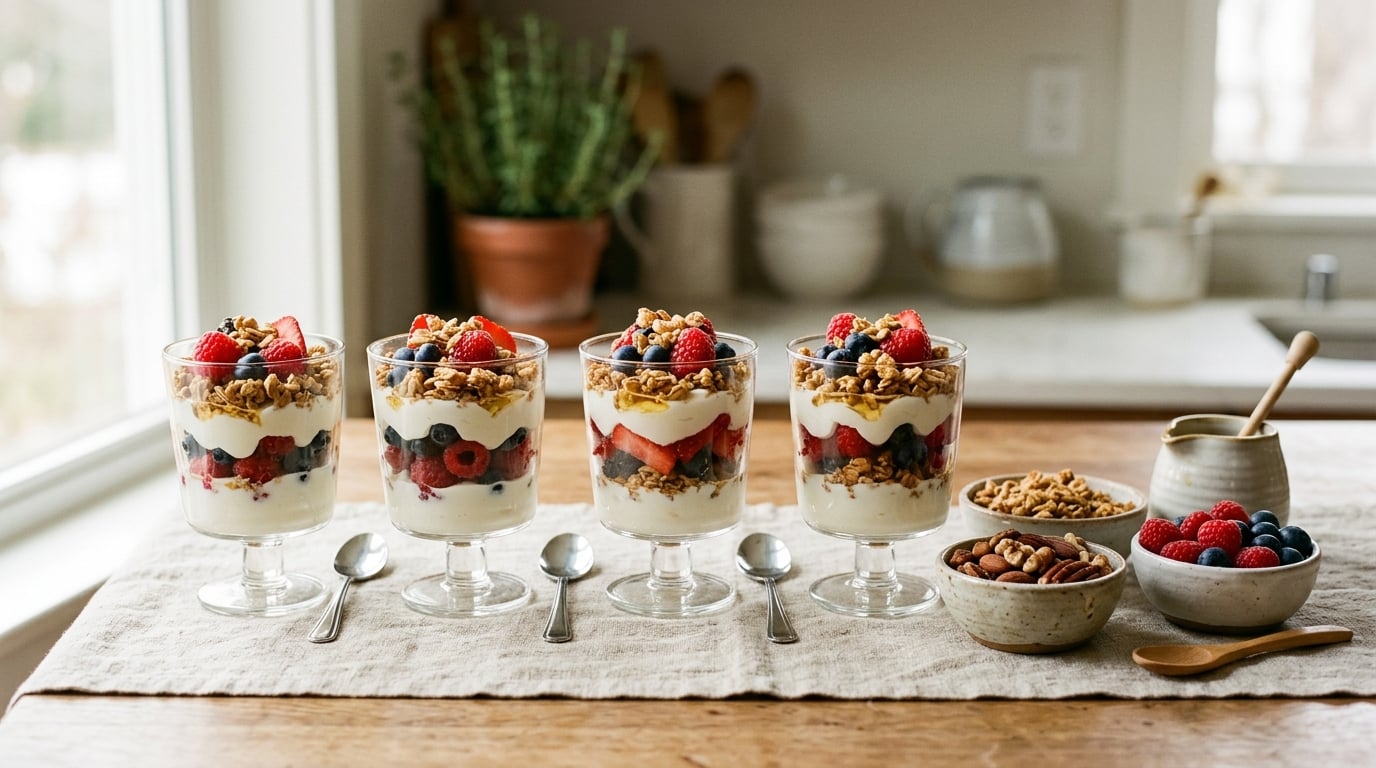
Most hosts learn how to make yogurt parfaits for a brunch table the hard way: they layer everything the night before, and by the time the coffee is poured the granola has turned to paste. Prep the components in separate bowls, layer them in individual clear glasses the morning of, and keep the crunch out of the glass entirely, served from a topping bar beside it.
Most parfait recipes online are written for one person, which is why they keep falling apart the moment you try to serve a table of eight. This guide is built for the group case: how much yogurt per guest, what size glass holds a real serving, and exactly which parts survive an overnight head start.
Assembly itself takes about ten minutes a dozen. The work worth doing in advance is washing fruit, portioning yogurt, and setting out the crunch. If you are planning the rest of the morning, our guide on how to make brunch for a crowd without stress covers the timing side of things.
Table of Contents
- What You Need
- How to Make Yogurt Parfaits for a Brunch Table
- Common Mistakes
- Tips for a Brunch-Ready Parfait
- Frequently Asked Questions
- Can I make yogurt parfaits the night before a brunch?
- What can I use instead of granola so the parfaits do not get soggy?
- Should yogurt parfaits be made in individual glasses or one large dish?
- What fruit works best in a yogurt parfait?
- Can I make yogurt parfaits without sugar?
- How do I keep the layers from turning muddy?
- Conclusion
What You Need
This list covers eight individual servings. Guests at brunch rarely eat more than one small glass, and most leave a spoonful behind, so plan on eight or nine glasses for every eight people at the table.
- Glasses: eight 5 to 6 oz parfait glasses, or four 8 oz wide-mouth mason jars if you want a bigger, more filling portion
- Base yogurt: about 4 cups (32 oz) of plain Greek yogurt, roughly 4 oz per guest
- Fruit: 2 to 3 cups, sliced berries for color plus one softer fruit
- Crunch: 1 to 1.5 cups granola, plus optional toasted coconut, chopped nuts, or wheat germ
- Sweetener: honey or maple syrup for drizzling, and a small amount of vanilla or lemon zest
A note on yogurt choice. Plain Greek yogurt holds its shape best because it is thick enough to stay in distinct layers, and full-fat versions set more firmly than low-fat. Regular yogurt is softer and sweeter, so it needs less added sugar and layers more easily for kids who dislike the tang of Greek yogurt.
For a table of twelve, double every number. For four, halve them and use 5 oz glasses rather than shrinking the portions further.
| Guests | Greek yogurt | Fruit | Granola | 5 oz glasses |
|---|---|---|---|---|
| 4 | 2 cups (16 oz) | 1 to 1.5 cups | 1 cup | 4 to 5 |
| 8 | 4 cups (32 oz) | 2 to 3 cups | 1 to 1.5 cups | 8 to 9 |
| 12 | 6 cups (48 oz) | 3 to 4 cups | 2 cups | 12 to 14 |
If you want an even lighter spread, you can trim the yogurt to 3 oz per guest and let people top their own glasses. That works well for large groups, since it leaves the last two guests of the morning something to add rather than a half-eaten glass.
How to Make Yogurt Parfaits for a Brunch Table
1. Choose the Right Glasses and Ingredients
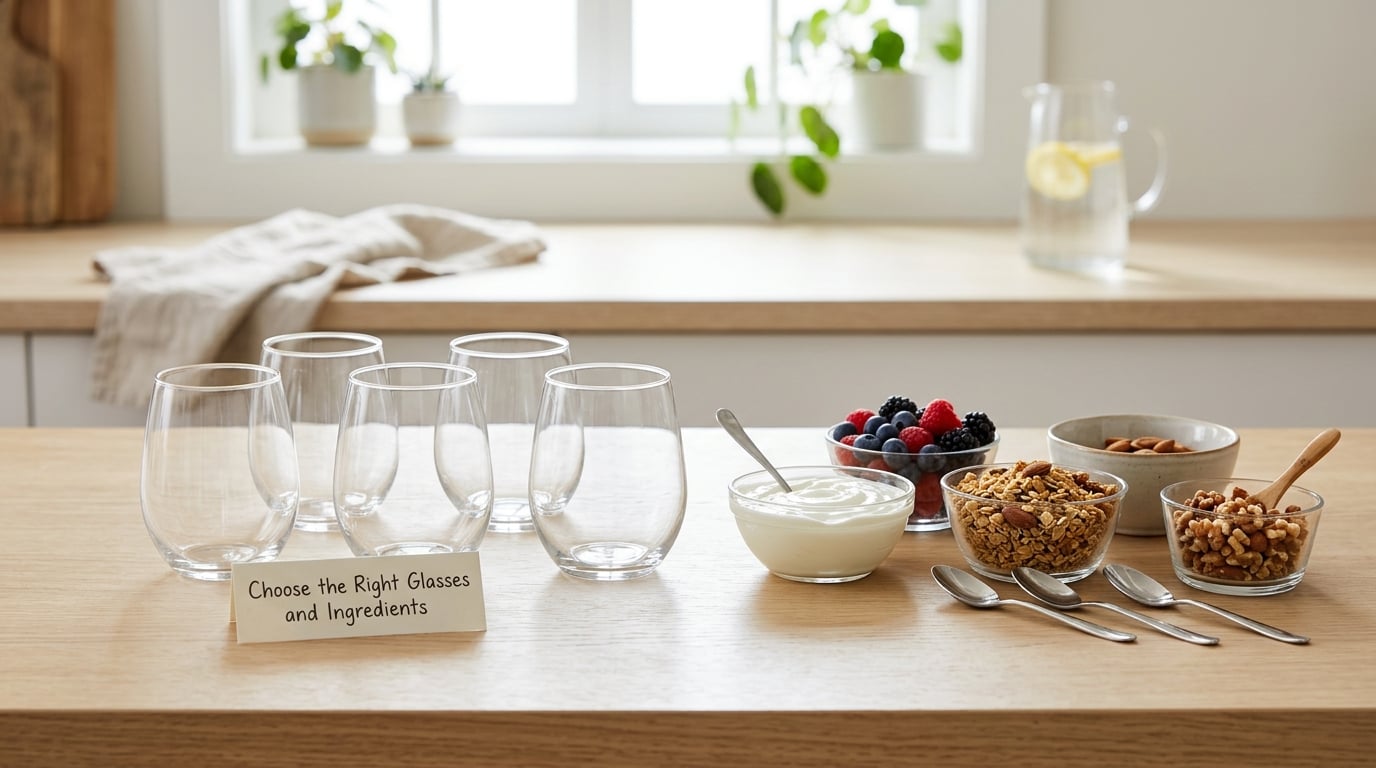
Glass size is the decision hosts argue about most. A 5 oz glass looks elegant but reads small, and guests who suspect that will take two. An 8 oz mason jar is generous, holds clean tall layers, and looks casual enough for a weekend table. Pick one size and commit to it, because mixed sizes make a buffet look accidental.
Set the glasses out the night before and chill them. Cold glass slows the yogurt down once it hits, which buys you real time on a busy morning. If you are serving buffet-style, choose glasses that stand on a flat foot rather than stemless ones that tip when a guest reaches past them.
Chill everything, not just the yogurt. Fruit straight from the fridge sweats when it meets a warm ingredient, and that liquid pools at the bottom of the glass within minutes.
2. Prepare and Sweeten the Yogurt Base
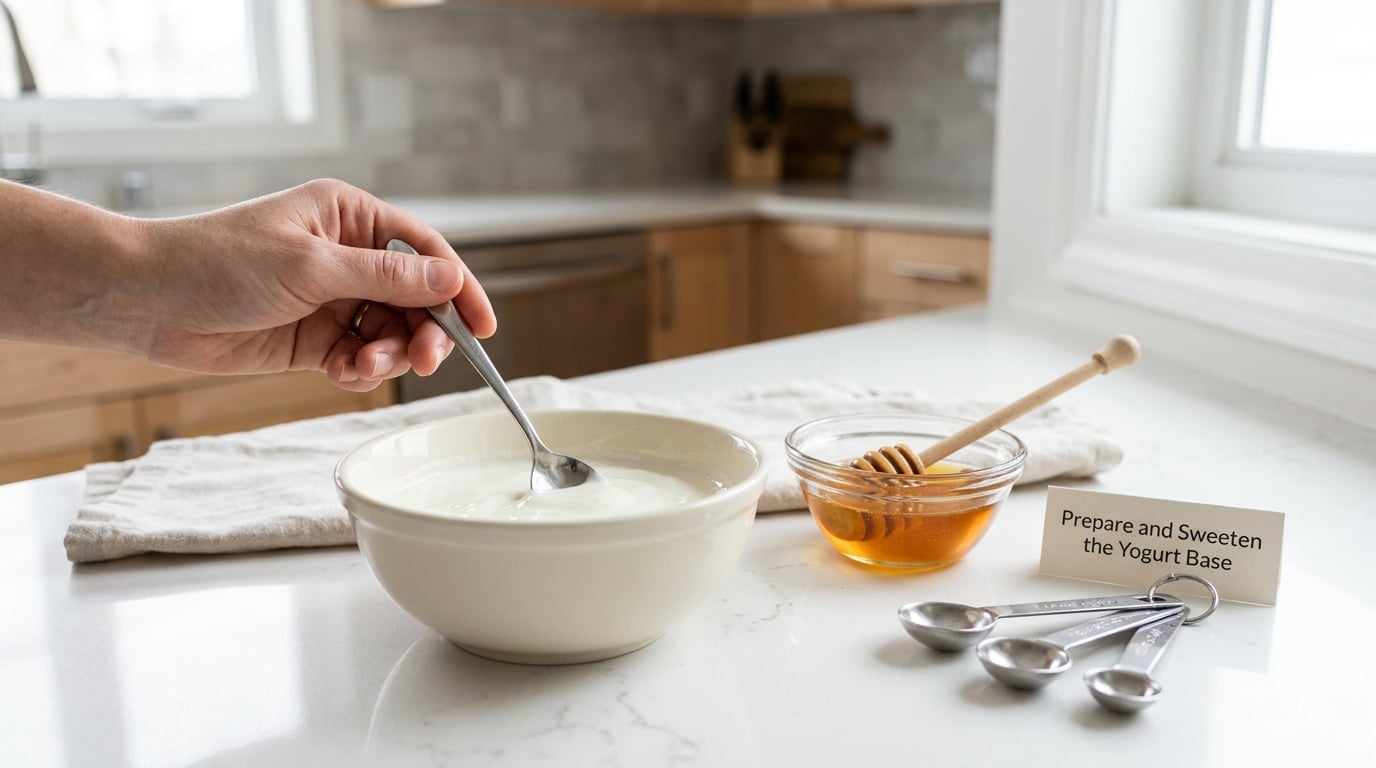
Whisk 4 cups of plain Greek yogurt with 2 tablespoons of honey and a teaspoon of vanilla, then let it sit so the honey finishes dissolving. A quick whisk in the morning of the day works too, but honey straight from the spoon leaves sweet pockets at the bottom of the glass.
If your yogurt is thinner than you like, strain it through a fine sieve lined with cheesecloth for about an hour. That one step fixes most watery parfaits, because it removes the whey that the fruit is about to release more of.
Taste it before you layer anything. Yogurt that is too sweet once fruit and honey are added reads as dessert candy rather than breakfast, and it is very hard to fix after eight glasses are built.
3. Build the Layers
Order matters more than most recipes admit. A reliable sequence from the bottom is yogurt, then fruit, then yogurt again, with the final spoon of yogurt on top as a lid against the fruit above it. That top yogurt layer is what stops berries from weeping down through the granola.
Put the crunch in last, or leave it out. That is the single decision that separates a parfait that survives a two-hour brunch from one that turns to paste by the time the second round of coffee is poured.
A handful of hosts place a thin layer of granola on the very bottom instead, so it drinks up juice leaking down from the fruit. It is an unusual-looking glass, but it is a good trick when the fruit is ripe enough to weep.
Wet fruit is the other trap. Watermelon, peaches, and plums release enough juice to loosen the whole yogurt layer, so serve them in a separate bowl on the table and let guests add them to their own glass. Berries, pineapple, and firm apples hold their shape and can go straight into the parfait.
4. Chill and Make Ahead
Layered parfaits without granola keep well covered in the refrigerator for up to two days, and the yogurt and fruit layers are actually brighter the next morning. Granola is the part that ruins the batch, which is why the topping bar solves the whole problem rather than just shifting it.
Here is the split most useful for a brunch table.
- The night before: wash and dry berries, cut sturdy fruit, whisk and chill the yogurt, portion granola and toppings into lidded containers, set out the glasses and small spoons
- The morning of: layer yogurt, fruit, and any garnish, then cover and refrigerate until guests arrive
- Ten minutes before serving: move the glasses to the table and set the topping bar out beside them
Cut fruit the night before but keep it dry. Store it in a paper towel in the refrigerator rather than an airtight tub, and skip the sugar until serving, because sugar pulls liquid out of cut fruit faster than anything else you can do to it.
Dairy out on a table is a real consideration for a long service. Keep the assembled parfaits chilled until the last minute, then plan to move any leftovers back into the refrigerator within about two hours, sooner if your kitchen gets warm.
5. Finish and Serve
Set the topping bar so it reads as part of the spread rather than an afterthought: small bowls of granola, toasted coconut, chopped nuts, and chocolate chips, a small pitcher of honey, and spoons that are not the ones that came taped to the glass set.
A two-hour service window is where presentation suffers. If you expect the table to sit longer, layer only the yogurt and fruit in the morning, hold the glasses back in the refrigerator, and build the rest as guests arrive. Twenty seconds per glass is a small price for a table that still looks right at noon.
For guests with different tastes, build a plain base and let everyone finish their own. A glass of plain yogurt, a bowl of fruit, a bowl of granola, and one jar of lightly sweetened yogurt covers picky eaters and everyone else in the same ten minutes.
Common Mistakes
Watery yogurt. Usually whey from a thin yogurt, or fruit juice released overnight. Strain the yogurt for an hour first, keep the fruit out of the morning assembly, and skip very juicy fruits entirely.
Soggy granola. Never layer it in advance. Serve it from the topping bar, or bring the glasses out ten minutes before guests and add crunch at the table.
Muddy layers. Layers look messy when the yogurt is too soft or when berries are piled without draining. Use Greek yogurt, dry the fruit well, and press down each layer with the back of the spoon so it holds a clean line.
Overfilled glasses. Guests will eat what fits, and full glasses leave nothing for seconds or for the person who was last in line. Fill about two-thirds and let the last spoonful be the topping bar’s job.
Too sweet. Vanilla yogurt, sweetened fruit, honey, and granola often stack into a dessert-level sweetness. Use plain yogurt, season it lightly yourself, and let the fruit carry the sweetness.
Watermelon in the glass. It turns to juice within the hour. Serve it alongside in a separate bowl, which also solves the problem of one guest disliking it when the whole batch is already built.
Tips for a Brunch-Ready Parfait
Swap fruit by season rather than by habit. Strawberries and blueberries in late spring, peaches and blackberries in midsummer, apples and pomegranate seeds in fall, cranberries and orange segments in winter. The color of the fruit is what makes a clear glass worth having, so pick at least two colors per batch.
Try a savory version alongside the sweet one: herbed Greek yogurt with lemon zest and a pinch of salt, layered with cucumber, dill, and a little olive oil. It works better as a small starter glass than as a full serving.
For dietary needs, plant-based yogurt thick enough to hold layers works in the same method, and toasted coconut, pumpkin seeds, or sunflower seeds cover nut-free tables. Check labels on granola since many varieties are cross-contaminated in the same facility as tree nuts.
Label anything unusual on a small card beside the dish rather than on the glass itself. A tiny label reading nut-free, or dairy-free, saves a guest from picking up a glass they cannot eat and putting it back down.
For the table itself, a brunch station like this pairs well with a simple spread of savories. Our beginner’s guide to building a cheese board covers the savory side, and how to set a table for a casual dinner party covers glasses, heights, and where a station like this fits on the surface.
One last note. Most parfait recipes you’ll find online were published years ago and never updated, so trust the texture rules here over any older page claiming a parfait keeps perfectly for three days. As of 2026, the same advice holds: yogurt and fruit travel well, crunch does not.
Frequently Asked Questions
Can I make yogurt parfaits the night before a brunch?
Yes, if you leave the granola out. Layer yogurt and fruit the night before, cover, and refrigerate; the layers stay clean for up to two days. Keep granola, toasted coconut, and nuts in a separate lidded container and set them out at service. Cut fruit the night before too, but keep it dry in a paper towel and add any sweetener in the morning.
What can I use instead of granola so the parfaits do not get soggy?
Toasted coconut, chopped toasted nuts, pumpkin seeds, or a coarse oat crumble all hold their texture much longer than granola in a wet base. For a nut-free table, use toasted sunflower or pumpkin seeds. Skip anything sugar-coated, which dissolves quickly once it touches yogurt, and skip cereal, which softens within an hour.
Should yogurt parfaits be made in individual glasses or one large dish?
Individual glasses, for a brunch table. A large dish loses its layers, gets stirred rather than scooped, and leaves no portion control once guests serve themselves. Individual 5 oz glasses suit a plated service; 8 oz wide-mouth mason jars suit a casual table where people want a bigger breakfast portion. Either way, build each one in layers.
What fruit works best in a yogurt parfait?
Firm fruits hold their shape and color: strawberries, blueberries, raspberries, pineapple, and diced apple or pear. Avoid watermelon, peaches, plums, and very ripe berries, which release juice and loosen the yogurt. Cut sturdy fruit the night before and keep it dry, and pick at least two colors so the glass looks layered rather than beige.
Can I make yogurt parfaits without sugar?
Yes. Use plain unsweetened Greek yogurt, skip the honey in the base, and choose a naturally sweet fruit such as ripe strawberries or mango for the main sweetness. Granola still contains added sugar, so check the label if that matters to you, or swap in toasted coconut and unsalted seeds. Ripe fruit is usually enough on its own.
How do I keep the layers from turning muddy?
Use thick Greek yogurt, press each layer down with the back of your spoon, and keep a yogurt layer on top so the fruit above it cannot bleed downward. Drain berries and dry them well before they go in the glass. Fruit that sweats in the refrigerator overnight is the usual cause, so give it room in a towel-lined container.
Conclusion
Start by picking one glass size and counting your guests. Chill the glasses and the yogurt the night before, wash and dry the fruit, and keep the crunch in its own container until the table is set.
What is left is ten minutes of layering the morning of, and a parfait table that still looks the way you built it when the last guest sits down.