
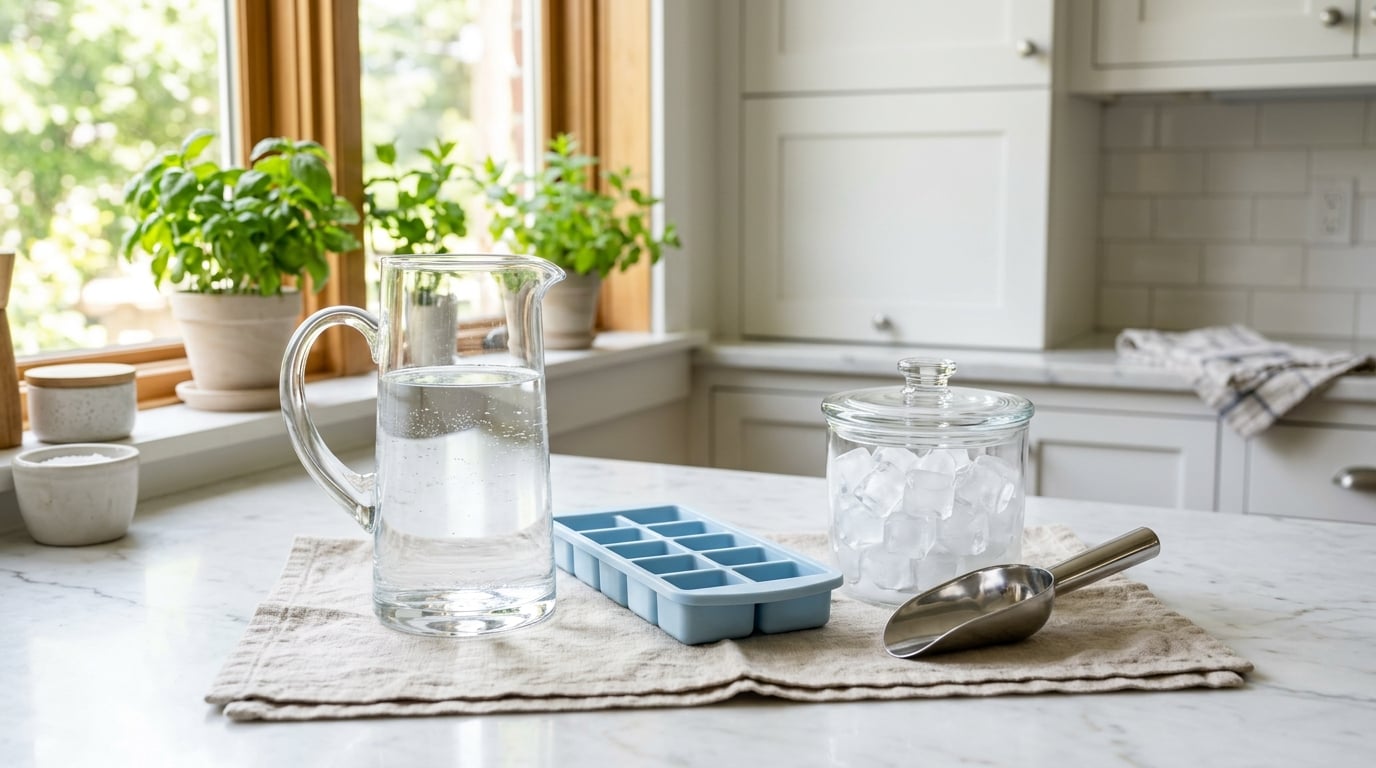
Bad-tasting ice almost always comes down to four things: water that already tastes off, a tray or ice maker that has trapped old smells, ice that sat in the freezer long enough to soak up food odors, or storage that was never airtight. Fix those in that order and the problem usually goes away within a day or two. Learning how to make ice that does not taste bad is mostly a matter of controlling what touches the water and the cubes, and the whole job takes about 15 minutes of cleaning plus one overnight freeze.
The annoying part is that ice is a far better sponge than people expect. It is more porous than liquid water, it sits in the same air as your frozen shrimp and garlic, and if you use an ice maker rarely you are pouring a drink over cubes that have been quietly marinating in freezer air for weeks.
Here is the method I use, from water choice all the way to the glass.
Table of Contents
- What You Need
- Step-by-Step
- Common Mistakes
- Tips for Consistently Good-Tasting Ice
- Frequently Asked Questions
- Why does my ice taste bad but not my water?
- How long does it take for ice to taste normal after a deep clean?
- Will baking soda get rid of a freezer smell?
- How often should I replace the refrigerator water filter?
- Why does my countertop ice maker taste like plastic?
- How long does homemade ice last in the freezer?
- Conclusion
What You Need
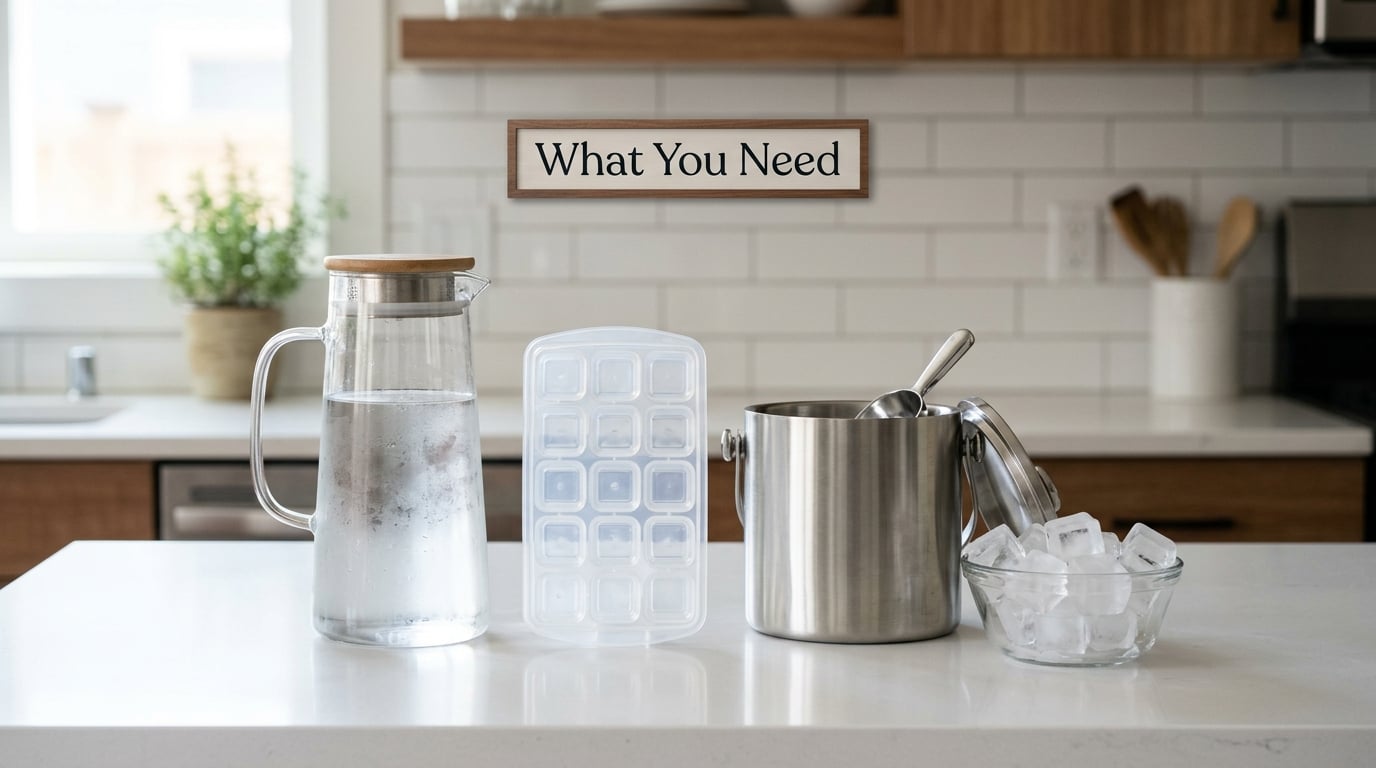
Gather everything before you start, because halfway through a clean you will not want to be hunting for a toothbrush.
- Water that tastes good on its own. Cold tap water you are happy to drink, or filtered water if your tap has a chlorine or mineral note. Distilled water works too if you want the cleanest possible cube.
- An ice tray or ice maker. Silicone, plastic, and metal all work; each leaves a slightly different taste and texture, which I get into below.
- Warm water and dish soap, plus an old toothbrush for the grooves in a tray and the corners of an ice bin.
- White vinegar for scale and grease on the tray, bin, and removable machine parts.
- Baking soda to sit open in the freezer and take on stray odors.
- Airtight storage. A covered ice bin, a lidded glass container, or sealed bags in a freezer bag. Loose ice in an open bin is the single most common reason good ice turns bad.
- Clean tongs or a scoop that lives only with the ice, never with raw produce or packaging.
If you drink a lot of iced coffee or cold brew, it is worth having a dedicated clear ice container you can keep in the door. Same idea, different purpose.
Step-by-Step
1. Choose Water That Tastes Good on Its Own
Start by tasting a glass of your water cold, straight from the tap or pitcher. If it tastes fine warm but sharp or flat cold, that taste is what your ice is going to taste like, only stronger.
Municipal water is disinfected with chlorine, and cold water holds on to that note longer than warm water does. If your cubes come out faintly like a swimming pool, you are not doing anything wrong with the freezing. Switch to water that has been left open on the counter for an hour, boiled and cooled, or run through a carbon filter.
Hard water is the other common culprit. Calcium and magnesium have almost no taste of their own, but they change the texture of ice, making it crunchy and slightly chalky, and they build up as scale inside trays and ice makers. Filtered or distilled water sidesteps it.
How do you know when you have fixed the water? Fill a glass with the treated water, drop in a plain cube made from it, and let the cube melt in the glass. If the melted result tastes like the water did, you are there. Testing the water and the melted ice together is the fastest way to separate a water problem from a freezer problem.
2. Clean the Ice Tray or Ice Maker
Fill a sink or bowl with warm water and a squeeze of dish soap. Wash the tray, the ice bin, the scoop, and any removable part of the ice maker, then scrub the grooves with an old toothbrush.
For anything with mineral film, wipe it with white vinegar and let it sit for ten minutes before rinsing. Vinegar dissolves the scale that traps odors; soap alone will not.
The part most people skip is the chute, the narrow channel where cubes drop into the bin. On a built-in ice maker, pull it off and wash it separately. On a countertop machine, the chute and the water pump housing are the two places that smell worst when people wonder why their ice does.
Rinse everything thoroughly and let it dry completely before it goes back in. Reassembling a damp ice bin puts you right back where you started.
A quick way to know the clean worked: the parts should smell neutral when you hold them close, not clean-smelling. If they still carry a whiff of onion or fish, they need another pass.
3. Fill the Tray Without Overfilling
Fill each compartment to roughly two-thirds. Overfilled cubes freeze into one solid block that is awkward to break and, because the center freezes last, holds a pocket of concentrated water that tastes stronger than it should.
That concentration is the mechanism worth understanding, because it also explains an everyday complaint. Freezing pushes water molecules into a lattice, and anything that does not freeze with them, meaning minerals, metals, and most dissolved flavor compounds, gets squeezed into less liquid than it started in. Impurities that were barely noticeable in a full glass of water become the dominant flavor in a cube.
Cold also dulls your sense of sweetness. A cold drink registers as less sweet than the same drink at room temperature, so ice made from slightly sweet water can read as flat or vaguely off once it is cold enough.
Leave the tray level in the middle of the freezer, ideally at the back where the airflow is most consistent and away from anything raw or spicy. Cold and steady is what makes a clean-tasting cube; a tray that partially thaws and refreezes gets air and odor pockets in it.
4. Freeze the Water Uncovered for Better Results
Leave the tray open while it freezes. Covering a tray traps condensation against the surface of the water, and that water carries whatever is in the freezer air down onto your ice.
Some people freeze ice inside sealed silicone lids for a different reason. That is a legitimate method for clearer cubes, because it insulates the water from freezer odors and slows the escape of gases. The tradeoff is that you have to check for odors yourself, since you can no longer smell them.
Whichever you pick, put a small bowl of baking soda in the freezer while the ice forms. It does not remove odor from already-frozen water, but it keeps the air the ice is forming in noticeably cleaner.
Expect a full freeze to take three to four hours in a typical home freezer. After four, the cubes should be solid to the bottom with no slushy core; if there is a core, the water was overfilled or the freezer is packed too tightly to pull the heat out.
5. Transfer and Store the Ice Correctly
Drop the cubes straight into a clean, dry container. Use the dedicated scoop or tongs, not your hands, since your hands carry whatever you just handled.
Get them covered and into the freezer within a couple of minutes. Every minute an ice cube sits at room temperature in open air is a minute it is collecting what is in the room, which in a kitchen is usually cooking smells.
Storage is where most of the damage happens. Ice sitting in an uncovered bin for a week takes on the odor of everything around it, and the smell compounds at the bottom of the pile, which is why the last cubes in the bin always taste the worst.
If your bin is not airtight, transfer the ice to sealed bags or a lidded container within a day. It costs you one extra step and it is the difference between ice that tastes like water and ice that tastes like your freezer.
6. Use the Ice Within Its Best Window
Frozen water does not spoil the way food does, so ice will not make anyone ill just from being old. It will absolutely stop tasting good though, and that is a separate problem from safety.
In practice, cubes keep their clean taste for roughly four to six weeks in a sealed container at zero degrees Fahrenheit, and noticeably less than that in an open bin or in a busy household where the pile keeps being topped up and dipped from.
The habit that works is to date your container. When the new batch goes in, dump whatever is left. Most off-taste complaints I have seen trace back to ice that sat for a month because nobody drinks enough ice to empty the bin.
If a batch still tastes wrong after four to six weeks of sealed storage, the problem is upstream, and it is worth working through the next section rather than waiting longer.
Once a batch of new ice is ready, start over with a clean glass rather than the same one you have been sipping from, so the only variable is the ice itself.Common Mistakes
Leaving the ice uncovered while it freezes. The water picks up freezer air the entire time it is open. Freeze it uncovered in a clean freezer, or covered with an insulated lid, but not half covered and exposed.
Ignoring the ice bin because the tray looks clean. The bin and the chute hold more odor than the tray ever will. On a built-in machine, the chute is the piece almost everybody leaves in place.
Storing ice next to strong-smelling food. Garlic, onion, curry, fish, and raw meat all permeate freezer air and then get locked into porous ice. Seal the food, keep the ice bin in a different part of the freezer, and skip storing ice in a fridge where a frozen pizza is the neighbor.
Freezing tap water with a strong chlorine note. The chlorine concentrates as the water freezes. Filter it, boil it and let it cool, or use bottled water.
Judging the fix after one batch. This is the mistake that makes people give up. The old ice sitting in the machine, in the tray, and in the bin has to cycle out. After a deep clean, discard the first two or three batches before you decide whether it worked.
Reassembling before the parts dry. Damp parts in a closed chute grow a biofilm, and a biofilm is exactly the off-taste people notice later.
Blasting plastic ice-contact parts with harsh cleaner. A dilute vinegar solution handles scale and grease on parts that touch ice. Use the manufacturer instructions for the machine as a whole, and follow the appliance maker on which parts are dishwasher-safe rather than guessing.
Tips for Consistently Good-Tasting Ice
Once the basics are in place, a few habits keep the cubes sharp week after week.
Boil and cool your water. Boiling for a minute, then cooling it uncovered in the fridge, drives off dissolved gases that get trapped in the ice. It also encourages the freezing front to push impurities outward instead of into the center of the cube.
Match the water to the drink. Distilled or filtered water for sparkling water and cocktails, where you want the cube to disappear. Filtered tap for iced coffee, where a little body is fine. If you make a lot of cold brew, the cold brew coffee recipe is worth pairing with ice made from filtered water so the coffee flavor comes through and not the chlorine.
Freeze smaller cubes for drinks and bigger ones for slow drinks. Small cubes melt fast and dilute a spirit in under two minutes. Large cubes, or a sphere cut from a block, last the length of a drink. Making clear cubes from a block works well with water you have already filtered.
Compare tray materials, once. Silicone is the easiest to clean and imparts almost nothing. Plastic picks up odors faster over time. Metal trays freeze fast and produce hard, clear cubes that can pick up a slight metallic note. Once you find the one you like, stay with it.
Keep a backup container of distilled water. When a batch comes out off, you can tell instantly whether it is the water or the freezer.
Make a small batch you will actually finish. A tray that gets refilled and never emptied is stale ice by definition. Freezing half a tray twice a week beats freezing a full tray once a month.
Pour drinks over ice you have already portioned. Scooping from a bin that has been sitting for a week is different from grabbing a sealed bag of cubes made on Sunday. If you host, keep the good ice in a covered tub and hand it out first.
Serve syrups and mixers over the same clean ice. Once the water is right, keep it right. Our [1:1 simple syrup recipe](https://5anddiamondrestaurant.com/how-to-make-simple-syrup-for-drinks/) for instance is a good reason to have ice you will not have to apologize for.
Frequently Asked Questions
Why does my ice taste bad but not my water?
Ice is more porous than liquid water, so it absorbs freezer odors directly from the air around it. Freezing also concentrates non-volatile impurities such as minerals and metals into a smaller amount of water, and cold temperatures dull how sweet anything tastes. That means a cube can carry a flavor your drinking water never showed you.
How long does it take for ice to taste normal after a deep clean?
Plan on discarding the first two or three batches, which usually takes most of a day. Old cubes sitting in the tray, the ice bin and the chute have to cycle out before you can judge the result, and anyone who tastes after a single batch usually concludes the clean did not work.
Will baking soda get rid of a freezer smell?
Yes, and it is the cheapest tool for the job. Keep an open box in the freezer on a dish so powder does not spill, replace it every month or so, and it will absorb a surprising amount of stray odor. It works on air, so existing ice that already smells needs to be discarded rather than treated.
How often should I replace the refrigerator water filter?
Every six months is the standard interval, and going longer is the most commonly skipped habit. An exhausted carbon filter stops removing chlorine and odor compounds, and those concentrate in the ice. Mark the date on the housing with a piece of tape so you stop guessing.
Why does my countertop ice maker taste like plastic?
Countertop machines draw from a water reservoir or a plain line with no carbon filter, so they concentrate whatever is in the supply. Plastic supply tubing and new machine parts can also off-gas a faint resin smell for the first few batches. Empty and wash the reservoir, switch to filtered water, and discard two or three batches before judging.
How long does homemade ice last in the freezer?
Kept in a sealed container at zero degrees, ice keeps its clean taste for roughly four to six weeks. In an open bin it can pick up freezer odors within days, which is a quality issue rather than a safety one. If your household does not empty the bin, freeze smaller batches so nothing sits for a month.
Conclusion
Start with the water. Taste it cold on its own, and if it is not clean, switch to filtered or boiled and cooled water. Then scrub the tray, the bin and the chute, dry everything completely, and put the ice into an airtight container right away.
Give it two or three discarded batches before you call it. Once you taste a proper cube in a glass of cold water, you will know how to make ice that does not taste bad every single time.