
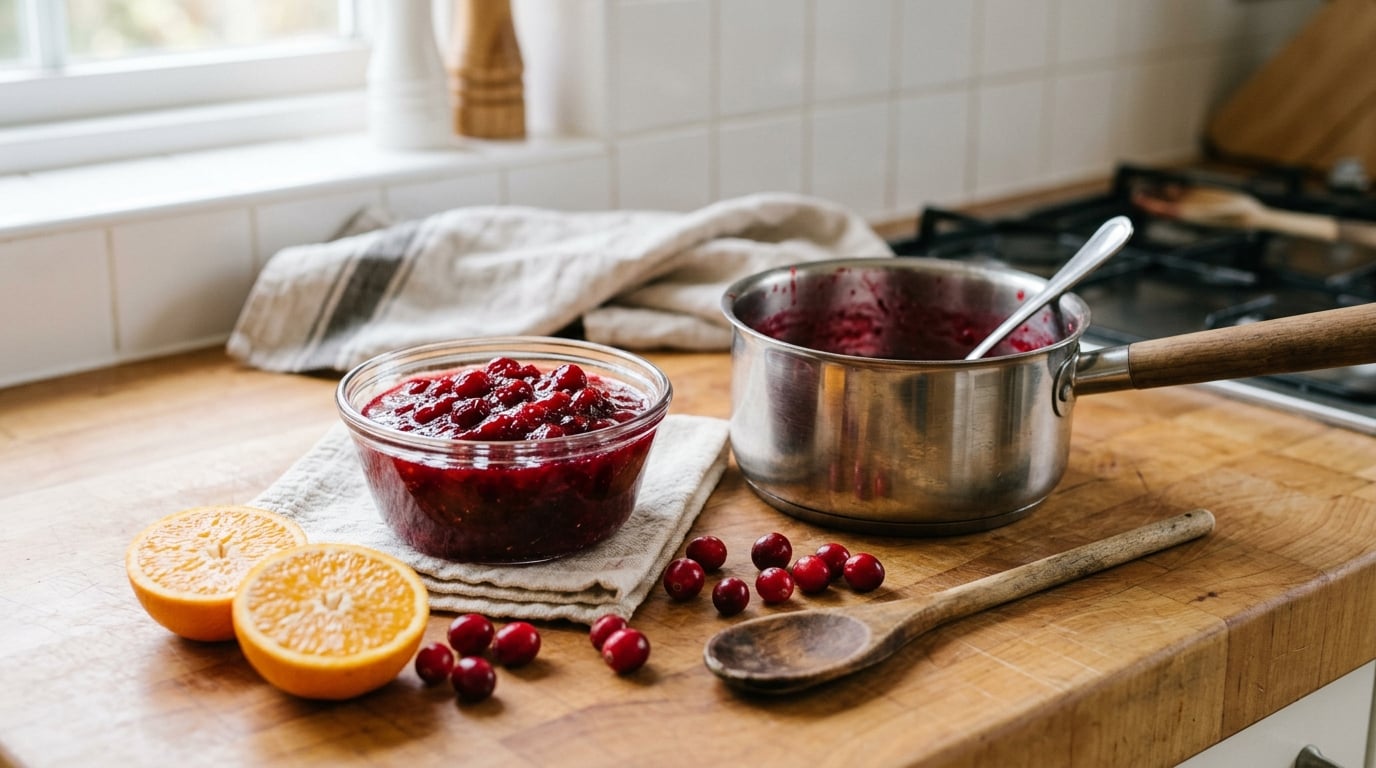
To make cranberry sauce from scratch, simmer 12 ounces (340 g) of cranberries with 3/4 cup (150 g) sugar and 1 cup (240 ml) orange juice or water for 10 to 15 minutes, until the berries burst and the liquid thickens. That is the whole recipe, and it takes about 15 minutes start to finish in one saucepan.
- 12 ounces (340 g) fresh or frozen cranberries
- 3/4 cup (150 g) granulated white sugar
- 1 cup (240 ml) orange juice or water
Cranberries are naturally high in pectin, a thickener that gets released as the berry skins break during cooking. Sugar binds with it, and the sauce gels as it cools, which is why it looks thinner in the pan than it will be on the table.
Table of Contents
- What You Need
- Step-by-Step: How to Make Cranberry Sauce From Scratch
- Common Mistakes
- Tips
- Frequently Asked Questions
- What are the three ingredients needed to make homemade cranberry sauce?
- What are common mistakes when making cranberry sauce?
- Is brown sugar or white sugar better for cranberry sauce?
- What to do if cranberry sauce doesn’t set?
- Is there a difference between cranberry sauce and jellied cranberry sauce?
- How long does homemade cranberry sauce last?
- Conclusion
What You Need
The base list is three ingredients. Everything else is a choice, not a requirement.
- Cranberries: 12 ounces (340 g), roughly a standard bag. Fresh berries run September through December; frozen work year-round and usually cost less per ounce.
- Sugar: 3/4 cup (150 g) granulated white sugar is the classic amount. That is about 25 percent of the weight of the berries.
- Liquid: 1 cup (240 ml) orange juice, water, or a mix. Pomegranate juice is a good non-citrus swap.
Optional flavor additions
- Zest and juice of one navel orange, for the version most people actually want on the table
- One cinnamon stick, or 1/2 teaspoon ground cinnamon
- A pinch of ground cloves, allspice, or nutmeg for a spiced holiday version
- A tablespoon of bourbon or dark rum stirred in off the heat
- Chopped pecans or walnuts, folded in at the end
- One tablespoon of maple syrup or honey in place of some of the sugar
Equipment and prep
You need a medium saucepan with a lid, a medium-high heat burner, a wooden spoon or potato masher, and a microplane or fine peeler for the zest. A colander handles the rinse.
This makes about 3 cups (700 ml), which serves 6 to 8 as a side dish. Rinse and sort the berries before you start, and zest the orange before the pan goes on the heat, since zest takes longer than the cook time.
Step-by-Step: How to Make Cranberry Sauce From Scratch
1. Rinse and Prepare the Cranberries
Pour the berries into a colander, rinse under cool water, and pick out any soft, split, or oddly colored fruit. Those damaged berries break down into mush and leave the finished sauce with a cloudy, papery feel.
Pat the berries dry. Water clinging to them dilutes your liquid and slows the reduction, which is a common reason a homemade batch stays thin.
If you are working from frozen, check for ice clumps and let the berries sit at room temperature for 10 minutes while you zest the orange. Do not thaw them fully, or the sauce will need extra cooking to bring the liquid back down.
2. Cook the Cranberries with Sugar and Liquid
Put the cranberries, sugar, and orange juice or water into the saucepan and set it over medium-high heat. Stir once to wet the sugar so it dissolves instead of sitting in a dry layer on the bottom.
Bring the mixture to a boil, then reduce the heat to low so it holds at a steady simmer. Cover and cook for 10 to 15 minutes, stirring occasionally.
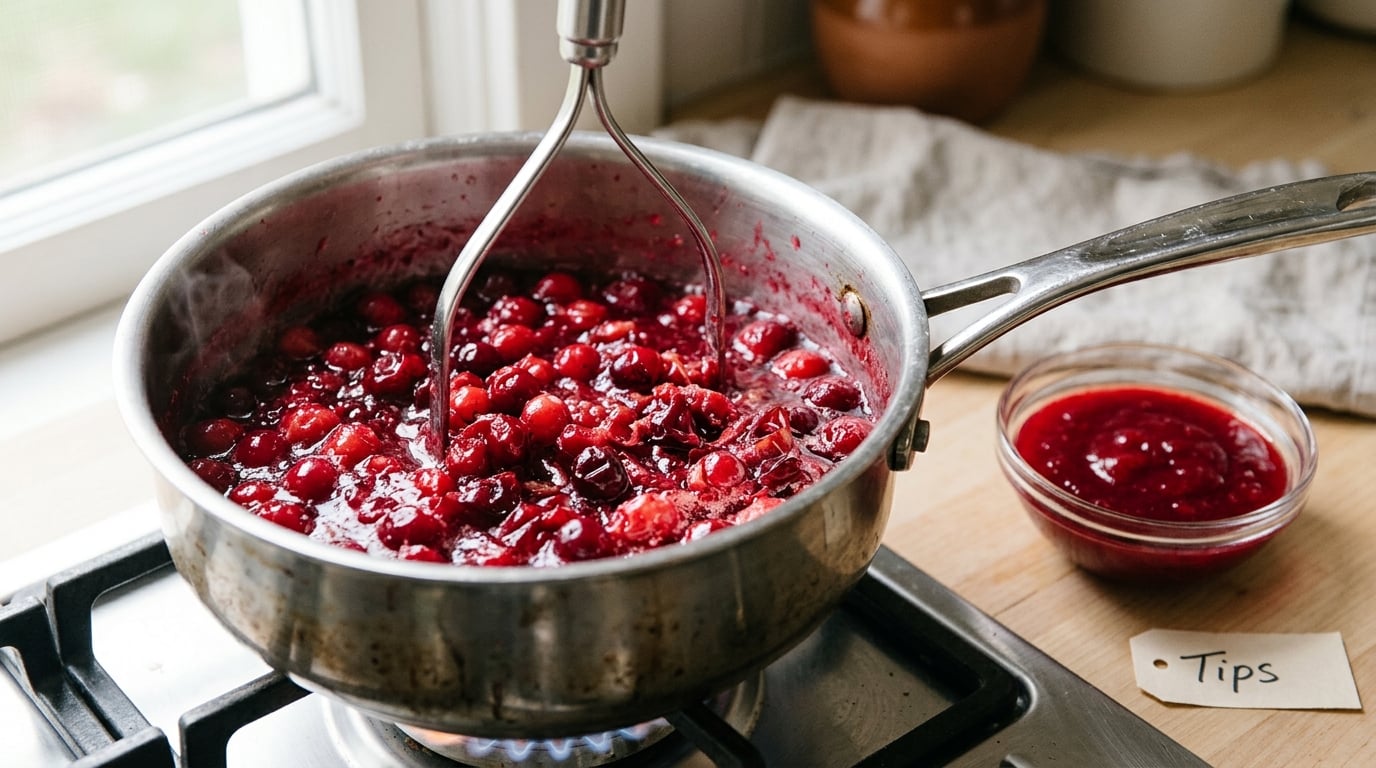
You will know it is working by sight and sound before you reach the clock. The popping is the signal: individual berries split with a small audible pop, red streaks run through the liquid, and about a third of the liquid has cooked away. If the pot is hissing hard and spitting, drop the heat a notch.
3. Add Orange and Seasoning
Add the orange zest and any spices when the berries first start to pop, around the 5-minute mark. Zest added at the start softens and perfumes the whole pot, which is what you want. If you stir the zest in at the very end off the heat, you keep a brighter, more distinct citrus note.
Stir in the bourbon or rum after the heat is off, never before, or the alcohol cooks off and all you taste is the wood.
Now taste for balance. Cranberries are about as tart as fruit gets, so if the sauce tastes only sour, add a tablespoon of sugar. If it tastes cloying, a squeeze of lemon or a splash of orange juice pulls it back. A small pinch of salt sharpens everything without making itself obvious.
4. Choose the Right Texture
This is the part most recipes gloss over, and it is really the whole decision. Cranberry sauce lands in one of four places, and you pick before you start stirring.
| Style | How you get it | Effort | Best for |
|---|---|---|---|
| Whole berry | Simmer untouched, stir gently, do not press the berries | None | A loose, jammy relish that scoops |
| Lightly crushed | Mash about half the berries with the back of a spoon for the last 2 minutes | 2 minutes | The most common homemade version |
| Smooth | Mash everything, then strain through a fine mesh sieve | 10 minutes | Pouring over pancakes, cocktails, or a plated dessert |
| Jellied | Sugar up, cook longer, and chill until sliceable | Hours of chilling | Nobody in our kitchen asks for this, but it is the canned style |
Mashing releases more pectin, which is how one batch gets a body the whole-berry version does not have. You can also mash more than you think you should and stop, since you cannot un-mash a berry.
5. Cool and Check the Final Flavor
Turn off the heat and leave the pan on the stove. Cranberry sauce thickens substantially as it cools, often more than most home cooks expect, and a sauce that looks loose in the pan usually sets to a proper jelly on the table.
Test it after 20 minutes by dragging a spoon through the pan. A clean line that stays open is right for table service. If you want it firmer, transfer it to a bowl, cover loosely, and refrigerate until fully cold; the last part of the set happens there.
Do not cover it tight while it cools. Trapped steam condenses and drips back in, which waters down the sauce and leaves a thin skin on top.
6. Serve or Store the Cranberry Sauce
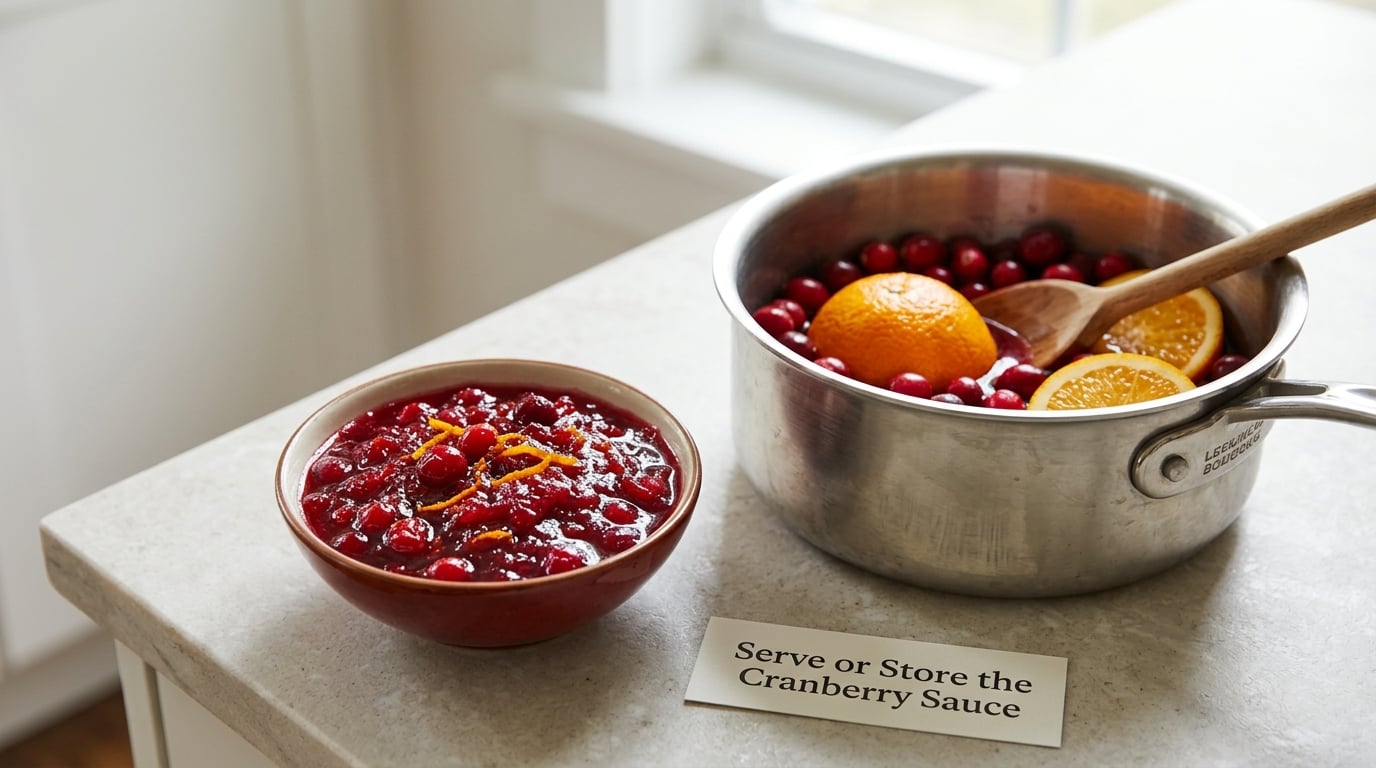
For storage, cool the sauce completely, then move it to an airtight container in the refrigerator. It keeps 4 to 5 days, and the flavor is best in the first 3. Many holiday hosts make it two days ahead with no problem at all.
Freezing works fine. Portion it into a shallow container or ice cube trays, cool it fully, and freeze for up to three months. Thaw it overnight in the refrigerator, not on the counter, and expect it to be looser than when it went in.
Serving is a family argument that never ends. Some tables eat it cold and jewel-toned, others pour it warm over the turkey. Cold is the more traditional answer, and it sits better next to a rich bird than hot sauce does.
It pairs with everything on a Thanksgiving table, and if you are building the rest of the menu, our restaurant-style mashed potatoes at home are the sort of thing that makes the whole plate feel considered. For the other sauce on the table, our guide to hollandaise that does not break works just as well on eggs benedict the morning after.
Common Mistakes
Almost every failed batch comes down to one of six things, and all of them are fixable.
The sauce is watery
Usually one of three things: the berries were rinsed and not dried, the pot was too large so the liquid never reduced, or it was judged before it cooled. Cover the pot, drop to a low simmer, and give it another 5 minutes. Remember that the set mostly happens off the heat, so a cold sauce can look thin and still be perfect.
The sauce is too sweet
You cut the sugar. Sugar is not just flavor here; it binds pectin and the balance needs the acid from the berries to match it. The better fix is to add more cranberries, a tablespoon of lemon juice, or a splash of pomegranate juice rather than reaching for more sugar.
The berries stayed tough
They did not get enough time at a full simmer, or the heat was too gentle to break the skins. You need visible popping, not a slow warm bath. Cover, raise the heat a bit, and wait for the pops.
There is also nothing wrong with soft berries. Nobody has ever complained about a cranberry sauce where the fruit gave way a little too easily.
The bottom of the pan scorched
A hard boil plus sugar means the bottom cooks faster than the top. Use a wooden spoon, stir every few minutes, and keep the heat at a steady simmer rather than a rolling boil. A splash of water when the pan looks dry will save it.
The sauce turned out too smooth
You strained it or mashed too hard, which is a one-way trip. Next time mash only half the berries and leave the rest whole. If it already happened, spoon it over ice cream or yogurt and let the texture do the work for you.
A skin formed on top
Cooling with a tight lid on creates condensation. Cool it uncovered or loosely covered, and press a piece of parchment or plastic wrap lightly against the surface if you are worried.
The fix ladder for a thin sauce
Work down this list in order, stopping when the consistency looks right.
- Let it cool fully. Most thin sauces are not actually thin.
- Simmer uncovered at low heat for another 5 minutes to reduce the liquid.
- Mash more of the berries with the back of a spoon to release extra pectin.
- Stir in a slurry of 1 tablespoon cornstarch and 1 tablespoon water, then simmer 2 minutes.
- Chill it for an hour and test again, since the final set is a cold set.
Tips
A few things worth knowing before next time.
- Brown sugar versus white sugar. White sugar gives a clean, bright berry flavor and the clearest set. Brown sugar adds caramel and molasses notes, which suits cinnamon and ginger, and behaves almost identically for thickening. Half and half is a good compromise.
- Maple syrup or honey. Both work, but use them as a partial swap rather than a full replacement. They add less sugar overall, so the set can be looser. Expect a thinner, more relish-like sauce.
- Fresh versus frozen. Frozen berries cook down slightly faster and make a softer, jammier sauce. Thaw only until the ice is broken, and add them straight to the dry pan so there is no extra water to burn off.
- Keeping skins from going papery. Cook them until they split but do not cook them long after that. Overcooked skins turn leathery, and straining is the only way out.
- Scaling up. Double the recipe for 12 to 16 servings, quadruple for a crowd of 25 or more. Give the bigger pot room; a crowded pan reduces too slowly.
Scaling the ratio
| Cranberries | Sugar | Liquid | Yield |
|---|---|---|---|
| 12 oz (340 g), 1 bag | 3/4 cup (150 g) | 1 cup (240 ml) | About 3 cups |
| 24 oz (680 g), 2 bags | 1 1/2 cups (300 g) | 2 cups (480 ml) | About 6 cups |
| 48 oz (1.4 kg), 4 bags | 3 cups (600 g) | 4 cups (950 ml) | About 12 cups |
| Tart, less sweet | 1/2 cup (100 g) | 1 1/2 cups (360 ml) | Looser, more relish-like |
Make-ahead timeline
- Five days out: Buy the berries. Fresh ones keep a week or two in the refrigerator and freeze fine for later.
- Two days out: Make the sauce, cool it fully, and refrigerate it covered. This is the sweet spot for flavor.
- The day before: Reheat gently on the stove with a splash of orange juice if it has thickened too much in the fridge.
For a large gathering, the sauce can be made two days ahead and gently warmed on the stovetop right before dinner. Do not boil it, and do not reheat it in a microwave at full power; both will scorch the sugar.
Other ways to cook it
An Instant Pot does the same job in about 6 minutes on high pressure with a natural release. A slow cooker on high for two and a half hours gives up the same result with no stirring, which is useful when the stove is busy with a turkey.
Using extra sauce
This is the part that quietly saves you money, since cranberry sauce keeps and most people stop at a spoonful. Spoon it onto cream cheese with crackers for the appetizer table, stir it into French toast with brioche instead of syrup, or swirl it through oatmeal and yogurt.
It also works in savory cooking. Whisk it into a pan sauce for pork or chicken in the last two minutes, use it as a glaze for roasted carrots or a ham, or shake it with bourbon, ginger juice, and ice in a shaker for a holiday cocktail.
Frequently Asked Questions
What are the three ingredients needed to make homemade cranberry sauce?
Cranberries, sugar, and liquid. The classic base is 12 ounces (340 g) of cranberries, 3/4 cup (150 g) granulated white sugar, and 1 cup (240 ml) of orange juice or water. Everything else, including orange zest, spices, and bourbon, is optional. Cook it over medium-high heat until it boils, then simmer 10 to 15 minutes until the berries burst and the liquid has reduced.
What are common mistakes when making cranberry sauce?
The usual four are boiling hard instead of simmering, cutting the sugar, cooking the berries too long after they pop, and judging the sauce before it has cooled. Sugar is required for the pectin to set, hard boiling scorches the pan bottom, and overcooked skins turn leathery. Cover the pot and stir often, keep the heat at a steady simmer, and wait until the sauce is cold to judge the consistency.
Is brown sugar or white sugar better for cranberry sauce?
White sugar gives a cleaner, brighter berry flavor and the clearest set, so it is the classic choice. Brown sugar adds caramel and molasses notes that pair well with cinnamon, ginger, and cloves, and it thickens the sauce almost the same way. Using half white and half brown is a good middle ground for a holiday table. Avoid cutting the total sugar, since the balance is what lets the pectin gel.
What to do if cranberry sauce doesn’t set?
First, let it cool completely, because most thin sauces set as they chill. If it is still loose, simmer it uncovered at low heat for another five minutes to reduce the liquid, then mash more berries with the back of a spoon to release extra pectin. If it still will not thicken, stir in a slurry of one tablespoon cornstarch mixed with one tablespoon water and simmer for two minutes.
Is there a difference between cranberry sauce and jellied cranberry sauce?
Yes. Whole-berry cranberry sauce keeps the fruit visible and loose enough to scoop, which is what most homemade versions are. Jellied cranberry sauce is cooked longer with more sugar and allowed to chill until it is firm enough to slice, which is the canned jelly-jar style. You can make either at home: mash less for a chunky sauce, or mash and strain everything for a smooth, pourable one.
How long does homemade cranberry sauce last?
Kept in an airtight container in the refrigerator, homemade cranberry sauce lasts 4 to 5 days, though the freshest flavor is in the first 3. Make-ahead is one of its real advantages, so cooking it two days before a holiday dinner works well. It also freezes for up to three months if you cool it fully first, then thaw it overnight in the refrigerator rather than on the counter.
Conclusion
Start by putting the berries, sugar, and liquid in a saucepan and cooking until you hear the first pops. That sound, not a timer, tells you the skins have broken and the pectin is doing its work.
From there the sauce is forgiving. Leave the berries whole for a jammy relish, mash half for the classic chunky texture, or strain everything for a smooth pour. Cool it before you judge it, make it two days ahead if you want, and serve it cold next to the turkey.