
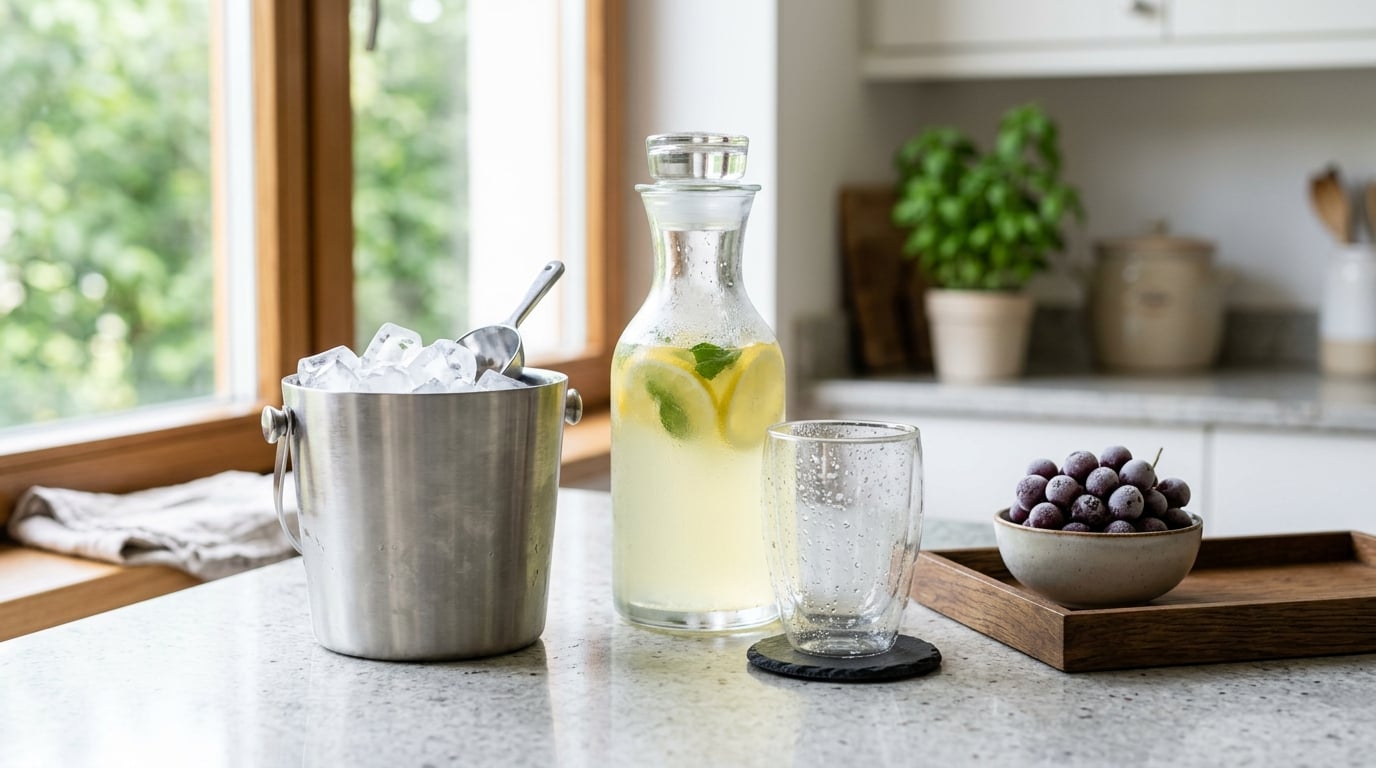
A warm drink is a problem you fix. A watery one is a problem you create, usually by letting ordinary ice melt into it. So learning how to keep drinks cold without watering them down comes down to one decision: change what does the chilling, not how cold you serve the drink.
That means bigger blocks, ice frozen from the drink itself, or reusable cubes that never melt at all. Most of the methods below need five minutes of setup and nothing you don’t already own.
What You Need
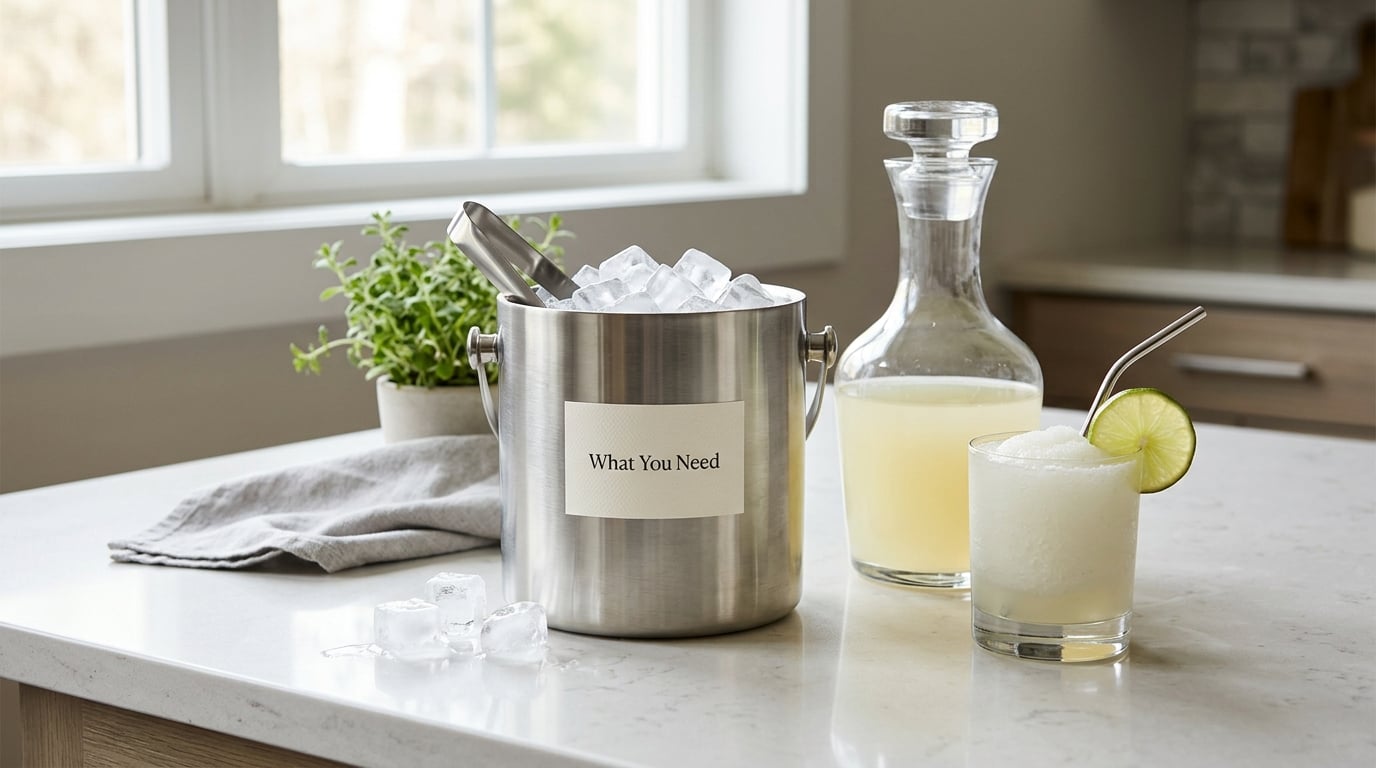
You need very little. Most of these items already live in a freezer and a cupboard, and several of the best methods are completely free.
- Standard ice cube tray. For everyday chilling, useful only when you add the ice at the last second.
- Silicone mold or loaf pan. Makes one large block that does the job of six small cubes.
- Ice sphere mold. Produces a 2.5 to 3 inch sphere, the slowest-melting shape you can make at home.
- Freezer bags or a rigid container. Keeps frozen blocks and frozen cubes from stacking into one solid lump.
- Reusable chillers. Stainless steel cubes, soapstone cubes, or sealed plastic cubes.
- Frozen fruit. Grapes, berries, citrus halves, or melon balls. Freeze them in a single layer on a tray first, then bag them.
- A wet paper towel and a shallow bowl. For chilling bottles in the fridge without any ice at all.
- Coarse salt. Turns an ordinary ice bath into a much faster one.
- An insulated tumbler or double-wall glass. Slows warming after the drink is poured.
- Ice tongs or a scoop. Keeps ice, and therefore the drink, from warming during service.
If you buy only one thing, make it the sphere mold or a set of silicone molds. That single upgrade improves every drink you serve, and it does not change a thing about how the drink tastes.
Step-by-Step
Order matters more than gear. Chill the glass first, pick an ice shape that suits the drink, and add the ice as late as you possibly can. That sequence alone fixes most of the dilution people complain about.
Choose the Right Ice for Your Drink
Match the ice to the drink. Big solid blocks for anything served neat or over a few cubes, flavor-matched cubes for mixed drinks, and small or crushed ice only when you plan to finish the glass fast.
- Regular cubes. Chill quickly and melt quickly. Fine for water, sparkling water on a hot afternoon, or anything a kid will empty in five minutes.
- Large cubes or a loaf-pan block. More water to melt, so the drink holds its strength longer. Best for whiskey, gin, iced tea, and anything on the rocks.
- An ice sphere. The lowest surface-area-to-volume ratio of any shape you can buy, which is why bars use them. It looks deliberate, and it is the slowest-melting option on this list.
- Crushed ice. Maximum surface area, so it melts and dilutes faster than anything else. Reserve it for slushy drinks and blended punches.
- Reusable cubes. They never melt, so they never dilute, but they also only cool on contact. A metal cube sitting in a room-temperature glass cannot chill the whole drink the way melting ice can.
Two large cubes beat five small ones every time. The glass reaches temperature just as fast, and the last sip tastes like the first.
Chill the Glass Before You Pour
Pre-chilling the glass keeps a drink cold without adding a single drop of water, because nothing melts into the drink. A room-temperature glass absorbs a real share of the chill in the first minute or two of service, which is why your drink warms up faster than the ice takes to melt.
Put glasses in the fridge for 30 minutes, or in the freezer for 10 to 15 minutes. Running cold water over the inside for a minute works too, and it is the fastest option when guests are already sitting down.
The move I use most: fill the glass with ice and a splash of water, leave it in the freezer while you finish everything else, then dump the water and refill with fresh ice and the drink. The glass starts colder than anything you could pour into a room-temperature one.
Use an Insulated Cup or Double Wall
Insulated drinkware is the one method that keeps working after the ice would already be gone. A vacuum-insulated tumbler holds a cold drink for hours and keeps condensation off the outside of your hand.
- Vacuum-insulated tumbler. The workhorse for iced coffee, seltzer, and anything you carry around.
- Double-wall glass. Looks like ordinary glass but holds temperature far better, which makes it right for a table setting.
- Full metal tumbler. Chill it in the fridge overnight and pour into it. Metal moves heat faster than glass, so a pre-chilled metal cup is a strong, cheap substitute for a double wall.
- Covered pitcher or carafe. A lid keeps warm air out and stops ice from sublimating on top.
One caveat: insulation stops the drink from warming, but it does not stop dilution. If you use a tumbler, still pick your ice carefully.
Freeze the Beverage When Appropriate
When the ice is made of the drink, there is nothing left to dilute it. This is the most reliable version of how to keep drinks cold without watering them down, and the one most people never try.
- Iced coffee and cold brew. Freeze leftover coffee in a cube tray and use the cubes in the next glass. They hold the flavor and add a little body as they melt. A strong batch you brewed yourself freezes better than a shop-bought can, so if you do not already have a method, [how to make cold brew coffee at home](https://5anddiamondrestaurant.com/how-to-make-cold-brew-coffee-at-home/) is the easiest place to start.
- Juice and lemonade. Freeze it in cubes and serve the drink over juice ice instead of water ice.
- Wine. Freeze a splash of the same bottle in a silicone tray. The wine cube tastes like wine.
- Cocktails. Freeze the concentrate, juice, or syrup that goes into the drink. A quick [1:1 simple syrup](https://5anddiamondrestaurant.com/how-to-make-simple-syrup-for-drinks/) is easy to batch and freezes well. Never freeze the finished cocktail, because spirits and sugar do not freeze evenly.
- Anything dairy or cream based. Freeze only the coffee or juice base, and use the cubes quickly. Half-melted cream ice turns chalky fast.
For a dinner party, pour half a bottle of wine into a flat-sided container and freeze it solid. That block chills the rest of the bottle and any glass you set beside it.
One safety note worth knowing: never freeze a sealed can or bottle of soda. Water expands as it freezes, the carbonation adds pressure, and the container can split. Freeze carbonated drinks in an open tray or an ice cube mold instead, and leave headroom in any rigid bottle you do freeze.
Add Ice at the Last Moment
Every minute ice sits in a glass is a minute of meltwater in it. This is the simplest rule in the whole guide and the one most often skipped.
Pre-chill the glass with ice, dump that ice, then top with fresh ice right before the drink goes down. Keep an ice bucket filled and out of direct sun until guests actually sit at the table rather than setting it out an hour early. When you serve a bottle in a bucket, keep the ice packed above the neckline so the bottle stays covered as the ice settles.
Handle ice with tongs, never a bare hand or a scoop that has been sitting in meltwater. A second round of drinks should mean a fresh glass, not a top-off on a half-melted one.
Keep the Container Covered and Cold
A lid and a cold room are the cheapest ice you will ever own. Covering a vessel slows down the two things that warm a drink: warm air moving in and ice slowly disappearing.
For a bottle bath, use roughly equal parts ice and water by volume. Water makes full contact with the whole bottle, which chills far faster than ice alone, and the drink itself never touches the melt. Add a generous handful of coarse salt per quart of water when you need it fast. A room-temperature bottle reaches drinkable temperature in roughly 20 to 30 minutes in an ice, water, and salt bath, and closer to 40 minutes in ice and water without salt.
Keep a covered pitcher in the fridge for self-service rather than setting it on the table, and pre-chill the cooler before you pack it. In a cooler, frozen water bottles or reusable ice bags beat loose ice because they do not melt into anything. Packing a cooler in the shade with a blanket over the lid holds its cold far longer than leaving it open on hot grass.
Common Mistakes
Most watery drinks come down to one of a handful of habits. Each has a quick fix.
- Pouring into a room-temperature glass. Fix: chill the glass first, then add ice. The glass absorbs less chill, so you need less ice and get less melt.
- Using crushed ice in a drink meant to be savored. Fix: swap to one large block or a sphere. Surface area drives melt rate, and crushed ice has the most of it.
- Topping off a partly finished drink. Fix: dump the glass and build a fresh one. The top-off keeps the diluted liquid and re-adds ice that melts on contact.
- Freezing soda in a sealed can or bottle. Fix: never do it. Expanding water plus carbonation pressure can split the container.
- Expecting reusable cubes to chill like real ice. Fix: pair them with a pre-chilled drink and a pre-chilled glass. They cool by contact only, so give them something cold to work with.
- Keeping reusable plastic cubes with a cracked shell. Fix: toss any cube with a split seam or cloudy liquid inside. Discard it rather than pouring your drink over it.
- Leaving ice in an open bucket all afternoon. Fix: lid it, drain the meltwater, and top up with fresh ice before guests arrive.
- Filling the glass to the brim with small cubes. Fix: two large blocks chill just as fast and give the drink far less to melt.
Match the method to the occasion and it gets easier. For home cocktails, stir with ice and strain over one large block. For a wine dinner, wrap the bottles in a wet paper towel and refrigerate them for about 15 minutes. For beer, the same trick works in the fridge, and in the freezer a damp paper towel speeds it up further, though check every 10 minutes and pull the bottles before they freeze solid and crack.
For picnics and tailgates, freeze a portion of each bottle flat so it can chill the rest of itself. For a punch bowl, freeze the punch base in blocks and set them in the bowl before adding fresh punch, or float an ice ring made from juice or tea so the bowl stays cold with almost no dilution. On a hot day, freeze lemonade or iced tea itself into cubes and use frozen grapes when you want something that looks like a garnish. If iced coffee is the drink you are chasing, [the difference between cold brew and iced coffee](https://5anddiamondrestaurant.com/cold-brew-vs-iced-coffee-difference-explained/) decides how strong your frozen cubes end up tasting.
Frequently Asked Questions
What is the best way to keep drinks cold without watering them down?
Freeze part of the drink itself and use it as ice, whether that is leftover coffee, juice, wine, or the concentrate in a cocktail. Because the ice is the same beverage, nothing weakens the drink as it melts. For drinks you cannot freeze, use one large block or a sphere so less water is available to melt, and pour into a pre-chilled glass.
Can I use reusable ice cubes without diluting my drink?
Yes. Stainless steel, soapstone, and sealed plastic cubes never melt, so they add no water at all. The trade-off is that they chill only by contact, so they cool the drink more slowly than melting ice and warm up once they sit in room air. Pre-chill the glass and the drink first, and keep them in an insulated tumbler. Discard any plastic cube with a cracked shell.
What kind of ice melts the slowest?
Large solid blocks melt slowest, and a clear ice sphere is the slowest shape you can make at home. Melt rate is driven by surface area relative to volume, so a big block exposes far less surface than the same ice cut into cubes. Clear ice is widely reported to melt 30 to 50 percent slower than cloudy ice, since trapped air is what gives cloudy ice its extra texture and structure.
How do I keep drinks cold at a party?
Pre-chill the beverages and the serving vessels ahead of time, then keep the ice in a covered bucket and add it right before guests sit down. For bottles, use an ice and water bath with a handful of coarse salt per quart, and keep the ice packed above the neckline. In a cooler, freeze water bottles or reusable ice bags instead of loose ice so nothing melts into the drinks.
Do frozen drinks taste watery when they melt?
Not when the cubes came from the drink itself. A frozen coffee cube melts into more coffee, and a frozen juice cube melts into more juice, so the flavor concentrates slightly rather than thinning. Cream and other dairy-based cubes are the exception, turning chalky as they go, so freeze those drinks with a base of coffee or juice instead. Plain water ice is the only thing that reliably waters a drink down.
How can I keep a drink cold without using ice?
Pre-chill the glass and pour into an insulated tumbler or a double-wall glass, which slows warming without adding meltwater. You can also chill a bottle in the fridge, wrap it in a wet paper towel for about 15 minutes, or stir the drink with ice and strain it into a cold glass. In restaurants, a steel shaker filled with ice chills a drink in under a minute and leaves no ice behind.
Where to Start Tonight
If you do one thing, put a couple of glasses in the freezer and freeze a few cubes of whatever you drink most. That covers how to keep drinks cold without watering them down for almost every drink you make, and it costs nothing beyond a few hours of freezing.
After that, work outward. Add a sphere mold if you serve spirits, a wet paper towel for bottled drinks, and an insulated tumbler for anything that has to travel. Nothing in this list changes the recipe. It just keeps the drink as strong as the moment you poured it.