
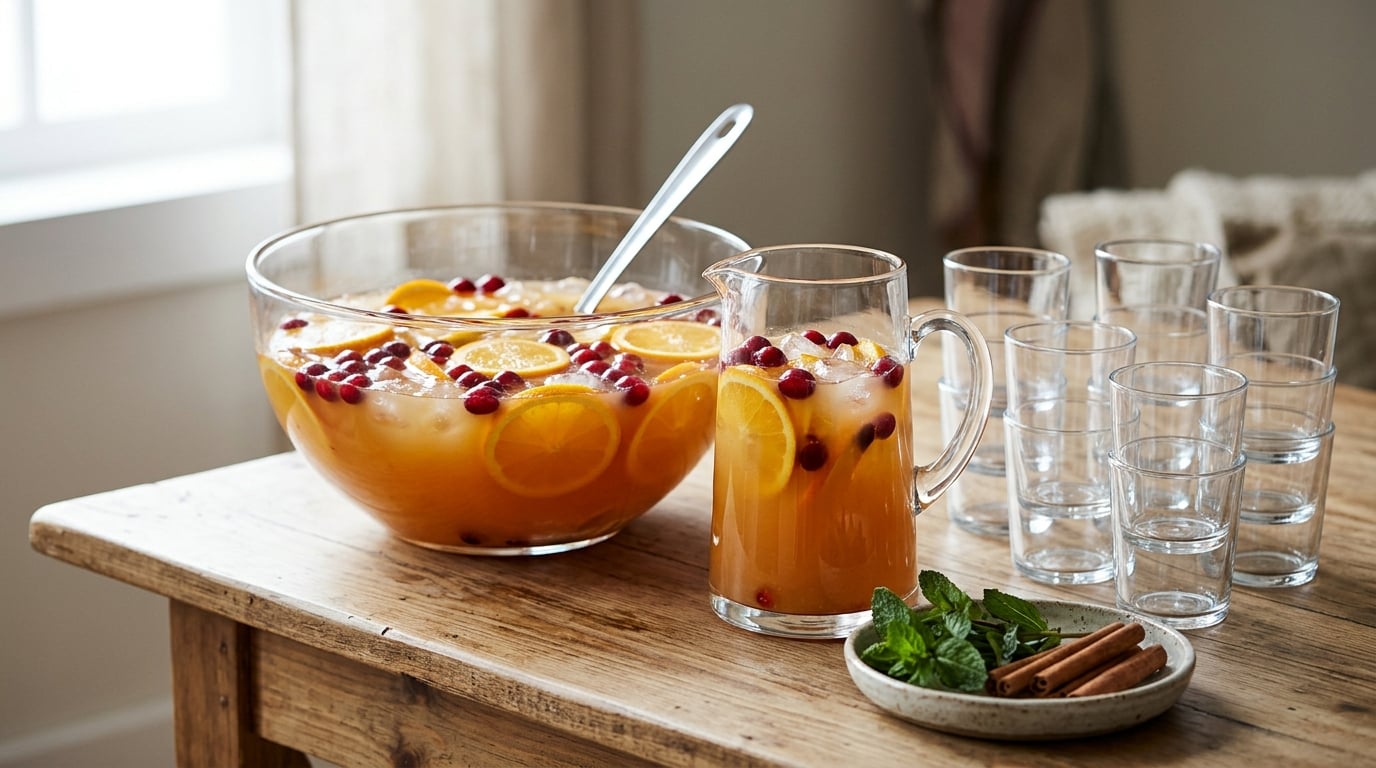
To make punch for a large group, plan two 8-ounce servings per guest for a party under two hours and three for a longer afternoon, then build one big base and add every bubbly ingredient at the last minute. A gallon is 128 ounces, which is 16 eight-ounce servings, so 20 guests need about two and a half gallons and 100 guests need 12.5 to 14 gallons depending on how long the event runs.
The reason most batch punch disappoints is not the recipe. It is the arithmetic and the ice. Hosts pour sparkling water into the whole bowl an hour early, fill the vessel halfway with cubes, and by the time most guests drink, the batch is flat and thin.
I mix punch for events of 20 to 150 people, and the same four rules come up every time: measure by the gallon, build the still base ahead and hold it cold, keep ice out of the batch where you can, and add carbonation at service. Here is how to do each one, plus the equipment, timeline and fixes for the mistakes that ruin an otherwise good batch.
What You Need
Punch has four moving parts and one optional fifth. Gathering them before you start is the difference between a ten-minute job and an hour of hunting through the kitchen mid-party.
- Base. Juice, tea, wine, or a zero-proof mixer. This is the largest volume in the bowl and it carries the flavor.
- Acid. Fresh lemon or lime juice, or a fruit juice that is tart on its own, such as cranberry or pomegranate.
- Sweetener. Simple syrup, honey, sugar, or a sweet juice like pineapple. Measure it with a marked cup rather than pouring straight from the bottle.
- Weak or bubbly. Soda water, seltzer, ginger ale, sparkling wine or champagne. This goes in last.
- Garnish and ice. Citrus wheels, frozen berries, mint, cinnamon sticks, and one large block of ice or a bucket of cubes for the glasses.
If you are mixing your own simple syrup, our how to make simple syrup for drinks guide uses a straight 1:1 ratio of sugar and water, which doubles and quarters cleanly when you scale a recipe.
Equipment depends on headcount. For 10 to 20 people, two large pitchers on a tray work fine. From 20 to 50, use a 3-gallon drink dispenser with a spigot. Past 50, run two dispensers side by side rather than lining up four, and keep the reserve in the fridge or a cooler.
You also want a jigger or a 1-cup measuring cup with ounce markings, a large ladle, a pitcher for the sparkling topper, and masking tape and a marker for labeling anything you mix ahead. A 5-gallon bucket works for mixing batches of 40 or more, and it is far easier to stir than a narrow pitcher.
Step-by-Step: How to Make Punch for a Large Group
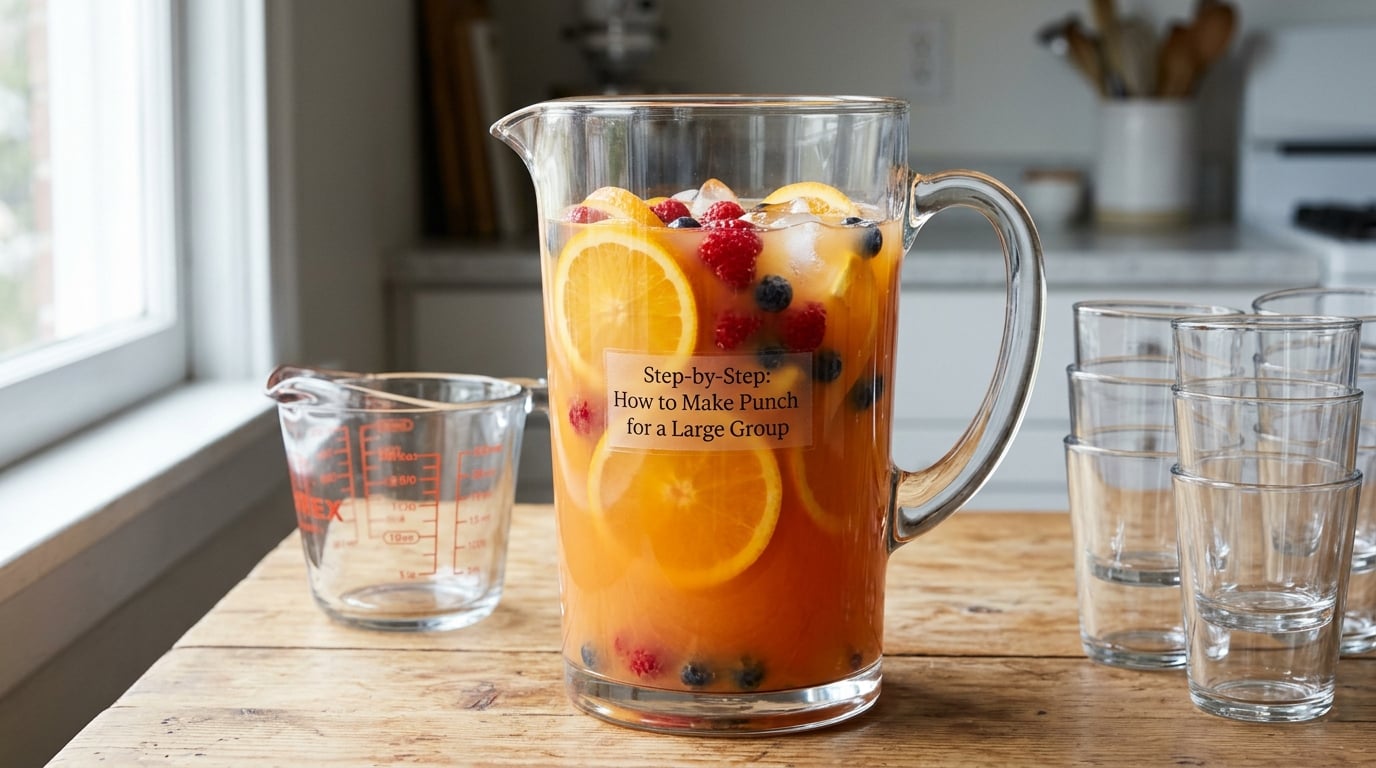
Follow these steps in order and the batch will still taste right at hour four. Nothing here takes more than 30 minutes of active time; the rest is waiting in the refrigerator.
How to calculate the right amount of punch
Budget about 5 to 6 ounces per guest for each half hour of drinking. That works out to two 8-ounce glasses for a 2-hour event, three for a 3-hour afternoon. Multiply your guest count by the servings, multiply by 8 ounces, then divide by 128 to get gallons, and add a 10 percent cushion, because a punch bowl never empties as evenly as you expect. The late arrivals drink two glasses; the people who chat by the kitchen drink none.
| Guests | Servings at 8 oz (2-hour event) | Total punch needed | Gallons plus 10 percent |
|---|---|---|---|
| 10 | 20 | 1.25 gallons | 1.4 gallons |
| 20 | 40 | 2.5 gallons | 2.75 gallons |
| 30 | 60 | 3.75 gallons | 4.1 gallons |
| 50 | 100 | 6.25 gallons | 6.9 gallons |
| 100 | 200 | 12.5 gallons | 13.75 gallons |
| 150 | 300 | 18.75 gallons | 20.6 gallons |
One gallon of punch serves 16 people at an 8-ounce glass, 12 at a 10-ounce glass, 10 at a 12-ounce glass, or 8 at a 16-ounce glass. A 3-gallon dispenser holds 384 ounces, which is 48 eight-ounce servings before any ice goes in.
Ice takes up volume, so a “full” dispenser rarely holds a full stated volume of drink. If you plan to put cubes in the dispenser, assume you are pouring 10 to 15 percent fewer servings than the label suggests.
Then add the dilution allowance. A drink served over ice picks up roughly three-quarters of an ounce of meltwater per serving, and guests never finish every glass they pour, so the practical rule is to build the batch about 10 percent larger than the table says. For a 5-gallon batch serving 80, that works out to roughly 60 ounces, or half a gallon, of extra water mixed into the base. Working bartenders call this pre-dilution, and it is the single number that keeps a large batch from tasting like syrup and lime by hour three.
Choose a Balanced Base
Every good batch follows the same four-part formula: strong, sour, sweet, weak. Strong is your spirit or a fortified mixer. Sour is citrus. Sweet is syrup, honey or a sweet juice. Weak is water, tea, soda or sparkling wine. At least three of the four must be present for punch to taste finished.
Once you know the four parts, stop measuring in cups and switch to parts by volume. A ratio scales to any headcount without arithmetic. One large batch I mix regularly runs 4 parts pineapple-orange juice, 2 parts cinnamon simple syrup, 1 part lime juice, 1.5 parts dark rum, 1.5 parts light rum, and about 8 parts water for pre-dilution. A common large-party ratio follows the same logic in a simpler shape: 1 part lime, 2 parts syrup, 3 parts rum, 4 parts juice.
Keep the sweetness restrained. You are balancing against acid and dilution, so a mix that tastes sweet when you stir it alone will taste cloying after the ice melts. Taste it undiluted, then taste it again after a splash of water, and only then decide whether it needs more sugar.
Two ingredients do not survive a big batch. Fresh muddled mint turns bitter and green within an hour, so steep it into a syrup hours ahead instead. Fresh cream or milk punch cannot be held at volume without breaking or separating, so keep the dairy component in a separate pitcher guests pour themselves.
Mix, Chill, and Add Sparkling Liquid
Combine everything except the bubbly component in a bucket, pitcher or bowl, stir thoroughly, and refrigerate until about 30 minutes before guests arrive. Cold punch holds its flavor and its chill far better than room-temperature punch poured over ice.
Keep the batch at or below 40 F the whole time it is on display. If the punch contains fresh fruit, dairy or cut citrus, do not let it sit out longer than two hours, or one hour if the outdoor temperature is above 90 F. Use an insulated dispenser in the sun or set the vessel inside a larger tub packed with ice and water.
Soda water, seltzer, ginger ale and sparkling wine go in last, in the bowl or pitcher, right before the first pour. Carbonation starts leaving the moment it meets liquid, so anything mixed an hour early arrives flat. If you must pre-mix, keep the ratio of bubbly to base very low and add a fresh top-up halfway through the party.
For a long event, keep half the batch in the refrigerator and add it to the dispenser at the halfway mark with a fresh handful of ice. Any party running past four or five hours benefits from that rotation, and it works because the second half of the batch never warms up.
Serve It Over Ice Without Ruining the Batch
A punch bowl is fine for 10 to 15 people, where a narrow opening discourages dropped food. For anything larger, use a drink dispenser with a spigot. A lidded insulated dispenser, a cooler with a spigot, or even a clean paint bucket with a spigot fitting keeps the batch cold and stops hands from finding the surface.
The best ice strategy is keeping ice out of the drink entirely. Freeze a block in a loaf pan or a set of jumbo cubes from a silicone mold a day ahead, and drop it in whole. A large block melts slowly and, because it is heavy, it sits on the bottom where it cannot fall into a cup. Serve the rest of the ice in a bucket beside the vessel and let guests fill their own glasses. That keeps the batch at full strength and puts the ice where a guest can choose it.
For events of 40 or more, put the bowl or pitcher inside a larger tub of ice and water. An ice bath holds a batch at serving temperature for hours with zero dilution. A frozen chilling stone dropped into a smaller vessel does the same job for parties under 20.
The objection to a block sitting in the batch all night is fair, and I have seen it happen at a wedding: a half-melted block turns the last of the punch into near-water. If you do use a block, set a ladle or a small bowl under it to catch the melt, and plan on serving the last of the punch earlier rather than saving it.
Serving over ice in the glass is the cleanest answer of all. It puts the dilution exactly where the guest can choose it, and it keeps the dispenser count honest.
Common Mistakes
Almost every disappointing batch traces back to one of these. The fix is usually small and usually arrives before you start rather than mid-party.
- Making far too much. Guests drink slower than you pour. Build to your table number, keep the remainder in the refrigerator, and pour more only when the bowl drops below a third.
- Using equal parts sweet and tart. Equal parts of pineapple juice and lime juice taste like a syrup-and-acid clash. Aim for roughly two parts sweet to one part sour and adjust with water or citrus after a taste.
- Adding carbonation too early. Any seltzer, ginger ale or sparkling wine goes in within minutes of service. Mix it in the pitcher you pour from, not the bucket you mixed at noon.
- Over-icing the vessel. A bowl packed with cubes holds maybe a third less drink than it looks like it does, and it dilutes fast. Ice goes in the glasses or in an ice bath around the vessel.
- Skipping the garnish. A plain batch reads as leftover juice. Citrus wheels, frozen berries, a few mint sprigs or cinnamon sticks give it a finished look for about a dollar.
- Running out of cups or a ladle. Plan 1.25 cups per guest plus 10 percent, and put the ladle in the bowl rather than on the counter. A ladle left on a wet counter will not be used again.
- Muddling herbs or fruit into the whole batch. Bruised mint and crushed berries release bitter compounds over hours. Add fresh fruit and herbs as garnish at service, not into the mix.
- Stretching a thin batch with water. Once punch is weak, more water makes it worse. Pour what is in the bowl into a fresh pitcher and top with a splash of the reserved strong base instead.
What to do when the batch goes wrong at 8 p.m.
| Symptom | Cause | Fix |
|---|---|---|
| Tastes too strong or boozy | Spirit went in ahead of pre-dilution water | Add juice and water in equal parts until it tastes balanced |
| Tastes thin and watery | Ice melted in the batch | Pour off, then top with a fresh splash of the reserved base |
| Tastes cloying | Not enough acid | Add lemon or lime juice a tablespoon at a time |
| Flat and dull | Carbonation added early | Top with fresh sparkling water right before the next round |
| Cloudy or dull brown | Ice, fruit or spices sat too long | Ladle from the top and set the vessel on a fresh block of ice |
| Ran out at hour two | Underplanned, or two glasses per person was optimistic | Pour the batch held in the refrigerator and refill |
Tips
Almost all of the work happens before guests arrive. Here is the timeline I use for a party of 50.
- T-24 hours. Make the simple syrup, the infused syrups, and the ice block. If you want a slushy punch, freeze the base in shallow containers overnight instead of chilling it.
- T-6 hours. Combine the still base, the acid and the sweetener. Stir, cover, and refrigerate at or below 40 F.
- T-1 hour. Set out the vessel, chill it with ice, and pre-chill the sparkling component. Prep the garnishes in their own bowl rather than dropping them into the punch.
- Day of, 20 minutes before. Transfer the base to the vessel, add the bubbly component, and put the block of ice or the ice bath in place.
For any party longer than four hours, reserve half the batch in the refrigerator. At the halfway mark, pour the cold reserve into the dispenser with fresh ice. It costs you one extra container and buys you a batch that still tastes like something by the end of the night.
Label everything you mix ahead. A strip of masking tape on the bucket reading “base, not the fizzy part” saves confusion when two containers of yellow liquid are sitting next to each other an hour before guests arrive.
Serve the zero-proof option with the same glassware and the same garnish as the alcoholic one. A separate stack of different cups and a small sign on the vessel is the only differentiation that needs to happen. Guests who are not drinking will happily take the fancy cup, and they will not feel like an afterthought at a party.
Pick garnishes guests can actually eat with their hands. Citrus wheels, frozen berries, cucumber spears, whole strawberries on a skewer and cinnamon sticks work. Small seeds and loose herbs that end up in the bowl are a choking risk with kids around and a sticky mess in every glass.
Keep the food rules in mind even though punch is a drink. If your batch contains fresh cut fruit, dairy or unpasteurized juice, treat anything that sat out past two hours as gone rather than saving it for the next day. Refrigerate what remains within two hours and drink it within 24 hours; a batch that has had a full ice block melt into it for six hours is better poured down the sink.
Planning a whole event around the drinks? Our guide to how to make brunch for a crowd without stress covers the same math from the food side. Savoury batches follow the same rules, and our Bloody Mary mix from scratch scales with a one-to-one base multiplier if your crowd prefers salt over sugar.
Frequently Asked Questions
How much punch do I need for 100 guests?
For a 100-person event running about two hours, plan 200 servings, which is 12.5 gallons. Add 10 percent and you are at 13.75 gallons. A 3-gallon dispenser holds 48 eight-ounce servings before ice, so you need five of them, and it is easier to run two at a time and refill from a cooler.
How many people will 1 gallon of punch serve?
One gallon is 128 ounces. That works out to 16 servings at an 8-ounce glass, 12 at 10 ounces, 10 at 12 ounces, or 8 at 16 ounces. Expect the real number to be lower if ice goes inside the dispenser, since ice takes up roughly 10 to 15 percent of the volume.
What are the 5 essential ingredients in punch?
The five are a base, an acid, a sweetener, a bubbly or weak component, and a garnish with ice. A balanced batch only needs four of them to be present in real quantity: strong, sour, sweet and weak. Add bubbles last, or the whole batch goes flat before most guests touch it.
How much should I dilute a pre-batched punch?
Build the batch about 10 percent larger than your guest math says, which is roughly three-quarters of an ounce of extra water per 8-ounce serving. For a 5-gallon batch serving 80, that is about 60 ounces, or half a gallon, mixed into the base. Taste it undiluted, then again after a splash of water, before deciding it needs more sweetener.
How far in advance can you make punch for a party?
Mix the still base up to 24 hours ahead and refrigerate it at or below 40 F. Do not add sparkling water, seltzer or sparkling wine until 20 minutes before serving. If you want a slushy punch, freeze the base 7 to 8 hours ahead and pull it out a few hours before the party so it slushes instead of freezing solid.
How do I keep punch cold without diluting it?
Keep ice out of the batch. Freeze a block in a loaf pan a day ahead and drop it in whole, serve the rest of the ice in a bucket for the glasses, and keep the batch itself refrigerated until service. For 40 or more guests, set the vessel inside a larger tub of ice and water, which holds serving temperature for hours with no dilution at all.
Start tonight, not tomorrow. Count your guests, multiply by two for 8-ounce servings, add 10 percent, and that is your number in gallons. Mix the still base tomorrow, keep it cold, and add the bubbles in the last 20 minutes before anyone walks in.