
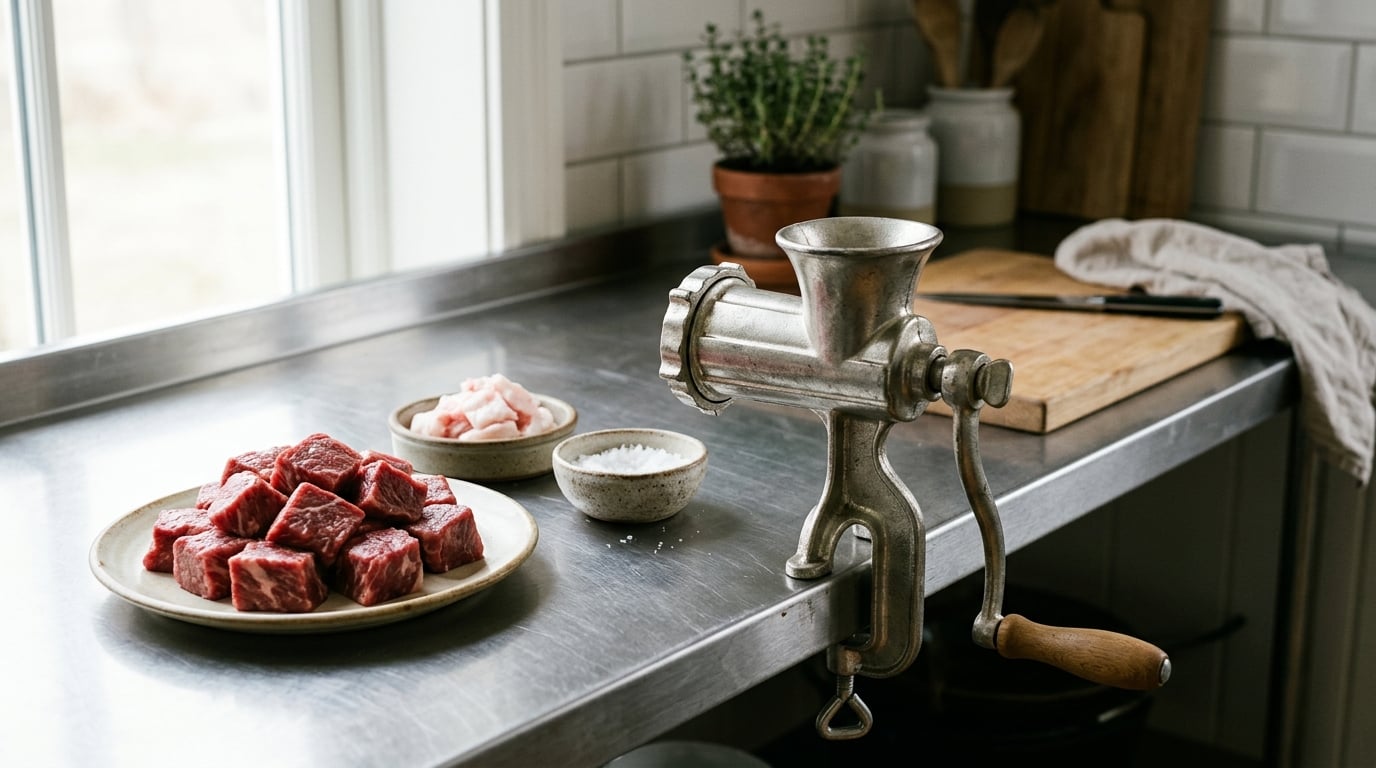
To grind your own burger meat, run whole cuts of beef through a dedicated meat grinder, a stand-mixer grinder attachment, or a food processor, aiming for roughly 20% fat. Chill everything first, cut the beef to fit the feed tube, grind it twice, and cook the patties to 160°F. The whole job takes about 30 minutes plus chill time.
The reason to do it is control. Store-bought ground chuck is fine-ground, often blended from trim, and packed tight enough that patties turn out dense. You can pick the exact cuts, hit the fat ratio you want, and skip any binder or added water. The catch is that a warm grinder will smear beef into paste, which is the single complaint that comes up most often from people learning this.
Grinding your own hamburger is worth it once you own a grinder and buy meat in bulk. Below is the process I use, followed by the mistakes that trip up first-timers and a no-grinder fallback that works fine for weeknight patties.
Table of Contents
- What You Need
- How to Grind Your Own Burger Meat Step by Step
- Common Mistakes to Avoid
- How to Grind Your Own Burger Meat Without a Grinder
- Frequently Asked Questions
- Do I have to freeze the meat before grinding it?
- What fat ratio should I use for juicy homemade burgers?
- How long can I keep ground beef I grind myself?
- Should I season the meat before or after grinding?
- Is home-ground beef better than pre-ground burger meat?
- Is it safe to grind my own hamburger meat at home?
What You Need
You need about 3 to 4 pounds of boneless beef, a grinder or food processor, a sharp knife, two plates for freezing, and paper towels. That is the whole list. Seasoning is optional at this stage and handled later.
Meat and fat to buy
- Chuck roast — the workhorse. It carries enough marbling and fat cap to keep patties juicy on its own, and it is usually the least expensive whole cut per pound.
- Sirloin tips or top sirloin — leaner, milder, good for bulking up a fatty blend without making it greasy.
- Brisket — strong beefy flavor; trim the point end away if you want a fattier mix for smash burgers.
- Beef short ribs or suet — pure fat, added in small amounts to push a lean blend up to the fat ratio you want.
Trim silver skin and thick tendon off every piece before it goes near the machine. Tendon that survives the grinder wraps around the auger and is the usual reason a grinder jams halfway through a batch.
Equipment
Any of three setups works. A hand-crank grinder gives you the most control and costs the least, but it takes arm strength. A stand-mixer grinder attachment is the fastest option if you already own a mixer, and it takes up no counter space when it is not in use. A food processor is the fallback when neither of the other two is available, though the texture is less even and you work in smaller batches.
Whichever you pick, put a coarse grind plate and a fine grind plate within reach, plus the cutting plate. A dull blade is the other cause of smearing, so sharpen yours before a big batch.
A cold, clean workspace
This is the part people skip and then wonder why the meat turned to paste. Below about 40°F the muscle fibers and fat are firm enough to shear cleanly through the plate. Once the beef warms toward room temperature, the collagen softens, the fat liquefies, and the blade just pushes it around the bowl instead of cutting it. You end up with a dense, gluey mix.
Work on a sheet pan or a stainless surface you can wipe down, and keep a bowl of ice nearby. You are not being fussy. Temperature is doing the actual work here, and every other variable is secondary.
How to Grind Your Own Burger Meat Step by Step
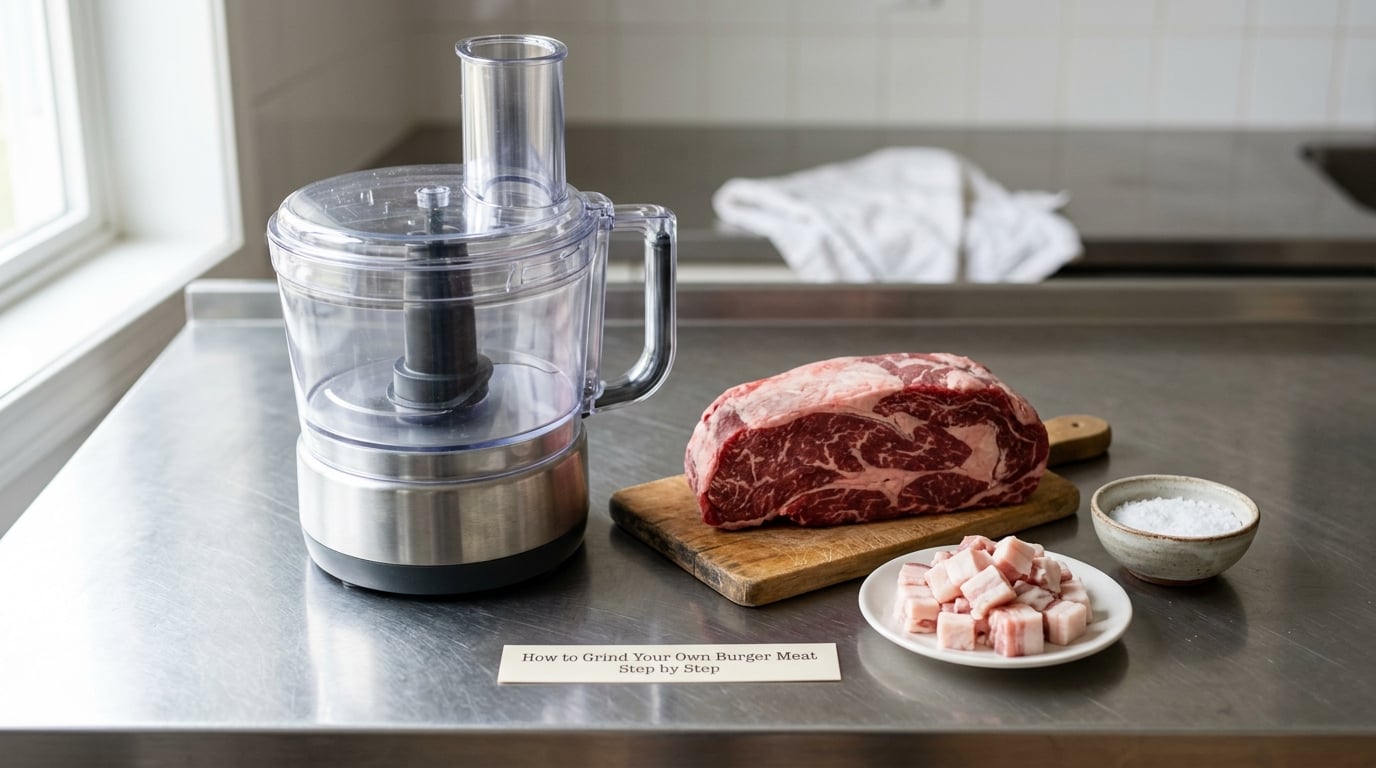
The order matters more than the technique. Chill, choose, cut, grind coarse, grind fine, form, cook. If you scramble any two of those, the meat tells you about it later.
1. Chill the Meat and Equipment
Put the trimmed beef in the freezer for 30 to 60 minutes, until it is firm to the touch but not rock solid. Hard-frozen meat shatters into chips that clog the feed tube, so if you froze it yesterday, move it to the fridge until you can press a finger into it and leave a dent.
Stash the grinder parts, the feed tube and the cutting plate in the freezer too if you have room. You will assemble the machine with cold hands, which keeps the plate from warming under friction. Then dry the meat thoroughly with paper towels. Surface moisture turns into steam and gummed-up output at the plate.
2. Choose the Right Meat and Fat for Grinding Your Own Burger Meat
Target about 80% lean to 20% fat. That ratio is the difference between a juicy burger and a dry one: fat renders during cooking and carries flavor and moisture, and 20% is enough to stay succulent without turning the patty greasy on the grill.
Working from roughly 16 ounces of meat:
- Chuck alone — often lands near 80/20 by itself. Good default.
- 12 oz chuck + 4 oz sirloin tips — a balanced pub-style mix.
- 10 oz sirloin tips + 6 oz short rib meat — a published test-kitchen ratio that produces a distinctly beefy, juicy patty.
- 14 oz sirloin + 2 oz suet or short rib — lean base, fat added back deliberately.
If you can only find pre-ground 80/20 and want a fattier burger, buy the fattiest blend available. But the whole point of grinding your own is choosing, so get whole cuts.
3. Cut the Meat into Grinder-Sized Pieces
Slice the beef into strips that slide down the feed tube without force, roughly 1 inch thick and 1 to 2 inches long. Feed tubes vary, so measure against yours rather than trusting a fixed number. The pieces should sit in the throat loosely, not wedge against the sides.
Run your knife along the seams first and pull out any long pieces of connective tissue you can see. Small flecks are fine and help the mix hold together. Long strips are not, and they wrap around the auger and stop the grind.
4. Grind in Two Passes
Start with the coarse plate, about 3/8 inch. This first pass chops the meat and distributes the fat evenly without smearing, and it tells you quickly whether your plate is sharp. If the output looks like paste at this stage, stop and fix the temperature or the blade before going finer.
Then run the meat through a 1/4 inch plate for a second pass. That gives you the loose, craggy texture most people mean when they say they want a proper burger. Go even finer only for sausage or taco meat, where a uniform texture is the goal.
Coarse grind is right for smash burgers, where you want ragged edges that crisp against the griddle. A slightly finer grind suits pub-style patties you press thin and cook through.
5. Season and Form the Burgers
Season after grinding, right before cooking, and season lightly. Salt drawn to the surface by a heavy sprinkle early on dries the outside of the meat and pulls water into your pan. If you like pepper in the blend, grind it in with a few twists of the mill so it distributes evenly.
Handle the meat as little as possible. Work it with two fingers, gather the edges in, and press gently into a patty. Overworking is the same mistake in a different step: kneading the mix develops the proteins and makes the patty tight and bouncy instead of tender. Press a shallow indent in the center so the patty lies flat and cooks evenly.
6. Cook and Check the Temperature
Cook ground beef to 160°F internal, per USDA guidance, and use an instant-read thermometer in the thickest part. Home-ground burgers are typically looser than packaged ones, so a centre indent and a firm press help them hold together while they cook.
If you are searing, give the pan a hard preheat and lay the patty down once. If the edges curl up or the middle stays grey, the patty is too thick for the heat. Press it thinner, or drop the heat and let it finish gently with a lid on.
Common Mistakes to Avoid
Every one of these is fixable, and all of them come up again and again from people grinding meat at home.
Overworking the meat
Too much kneading, or running a food processor too long, packs the meat tight and makes for a tough patty. Stop as soon as the texture looks right. You want chopped meat, not a puree.
Grinding with a warm grinder
This is the number one cause of smearing. Freeze the parts with the meat, keep batches small, and put the bowl of ground beef back on ice between passes.
Going too lean
Sirloin alone gives you a dry burger no matter how well you cook it. Add fat until the mix looks loose and slightly glossy before it hits the plate.
Clogging the feed tube
Usually the pieces are too large or the meat is hard frozen. Cut to fit the throat you actually have, and thaw rock-solid meat in the fridge rather than on the counter.
Overloading the feed tube
Feed steadily and let the grinder do the work. Forcing the handle or cranking against resistance generates heat and heat is what you are trying to avoid.
Running the blade instead of the plate
The perforated plate is what sets the texture size. If you remove it, the blade just chops and turns the meat into paste in the bowl.
Seasoning too early
Salted ground beef sitting in the fridge overnight loses moisture and tightens up. Season right before you cook, or season the whole cuts before grinding if you want the flavor to travel in.
How to Grind Your Own Burger Meat Without a Grinder
A food processor works, and for weeknight burgers the texture difference is smaller than people expect. The catch is that you can only do about 1 pound at a time, and the blade works by chopping rather than shearing through a plate.
- Chill the beef for 30 minutes so it is firm but not frozen solid.
- Cut it into 1/2 to 3/4 inch cubes, smaller than you would use for a real grinder, and leave the fat on.
- Pulse in 1-pound batches. Use short 1 to 2 second pulses and scrape down the sides between them.
- Stop at the first sign of texture. You want visible crumbles, not a smooth paste. Overprocessing is nearly impossible to undo.
- Combine the batches in a cold bowl once finished, then form patties straight away.
Expect a slightly more uniform, less crumbly texture than a plate grind. Fine for patties and taco meat; not ideal if a coarse, loose grind is the whole point.
Frequently Asked Questions
Do I have to freeze the meat before grinding it?
Not strictly, but you should. Beef that is fridge-cold rather than partially frozen grinds far more cleanly, and the output stays loose instead of smearing. Thirty to sixty minutes in the freezer firms it up nicely. If it is frozen solid, move it to the fridge until you can press a dent into it — hard-frozen meat shatters into chips that clog the feed tube.
What fat ratio should I use for juicy homemade burgers?
About 80 percent lean to 20 percent fat is the sweet spot for most burgers. The fat renders as it cooks, which is what keeps the patty moist and carries flavor. Chuck roast on its own often lands close to that ratio. Leaner blends taste better only if you add fat back deliberately, and a 70/30 mix works well for smash burgers where you cook fast over high heat.
How long can I keep ground beef I grind myself?
Refrigerate it and use it within 1 to 2 days, or freeze it right away. Press out the air and freeze in single-serve portions so you can pull out only what you need; double-bagging helps prevent freezer burn. Keep the freezer at 0°F or below, and cook straight from frozen or thaw in the refrigerator rather than on the counter. Ground beef is safe to keep frozen for several months, but quality fades after about three.
Should I season the meat before or after grinding?
Season after grinding and right before cooking. Salt sprinkled on ground beef and left to sit pulls moisture out of the meat and makes the patty tighter and drier. If you want seasoning distributed through the meat, add coarse pepper and a little salt in the bowl after grinding and mix it in with as few strokes as possible. Never knead the mix hard — that is what makes a rubbery burger.
Is home-ground beef better than pre-ground burger meat?
It is fresher, coarser, and free of any binder or added water, and you control the cuts and the fat ratio. You also know exactly which animal the meat came from, which matters to a lot of people after reading about recalls. The tradeoffs are time and equipment: store-bought is cheaper per pound for a single meal and requires nothing but a pan. For a family that grills every weekend, home grinding pays off quickly.
Is it safe to grind my own hamburger meat at home?
It is, as long as you treat the meat like any other raw product. Buy from a reputable butcher, keep the counter clean, and wash your hands and all grinder parts with hot soapy water after use. The safety question people ask most is whether bacteria get spread around by the grinding process itself. The honest answer is that cooking is what makes it safe, so cook ground beef to 160°F internal and verify with a thermometer rather than judging by color.
Start with one pound of chuck roast and a single coarse pass. Get the temperature right and the texture will take care of itself, which is the whole trick to learning how to grind your own burger meat.