
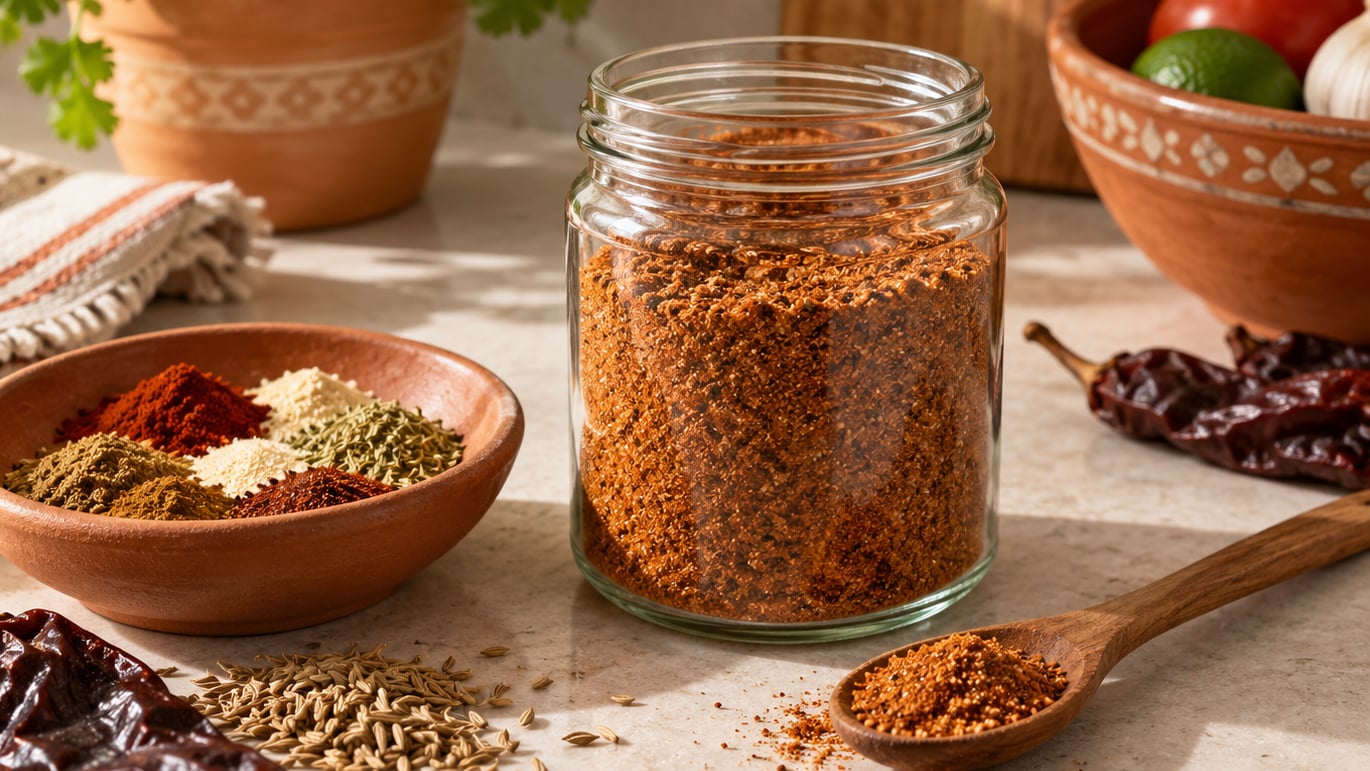
To make your own taco seasoning, combine chili powder, cumin, paprika, garlic powder, onion powder, oregano, salt and pepper in measured spoonfuls, then use about 2 tablespoons of the blend per pound of meat. The whole thing takes five minutes and yields roughly 3 tablespoons, which is exactly enough for one pound of ground beef.
The reason to mix it yourself is simple: a store-bought packet is mostly starch. Open one and you will find cornstarch, potato starch, whey, caramel color and sugar doing more work than actual spices, which is why the finished meat tastes coated and mildly sweet instead of boldly seasoned. A homemade blend is nine pantry spices, nothing else, and you control the salt and heat.
What you get is a sharper flavor too. Most home cooks who try both versions notice the cumin comes through clearly and the chile tastes like chile rather than a dusty background note, because the ground spices hit a hot pan and bloom in their own oils instead of being suspended in a starch slurry.
Table of Contents
- What You Need
- Step-by-Step: How to Make Your Own Taco Seasoning
- Common Mistakes
- Frequently Asked Questions
- Can I make taco seasoning ahead of time?
- What spices are essential for taco seasoning?
- How spicy is homemade taco seasoning compared with a store-bought packet?
- Can I use taco seasoning on ground beef, chicken, or vegetables?
- How should I store homemade taco seasoning, and how long does it last?
- Can I substitute smoked paprika for chili powder in taco seasoning?
- Conclusion
What You Need
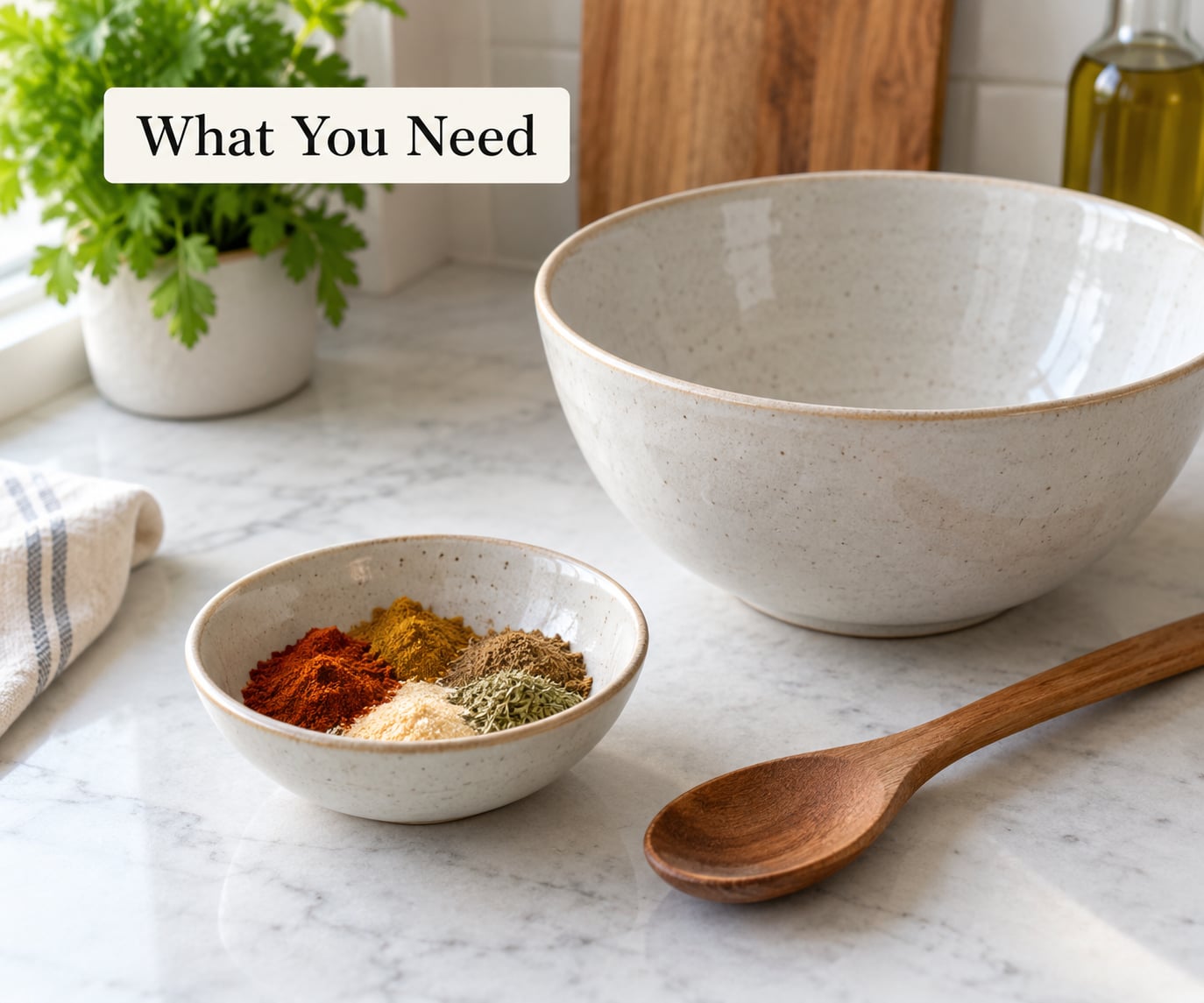
Everything comes from a standard spice rack, and the only equipment is a small bowl, a spoon or a whisk, and a jar with a tight lid. No blender, no grinder, no special salt.
The base blend, which makes about 3 tablespoons:
- 2 tablespoons chili powder
- 2 teaspoons ground cumin
- 1 teaspoon smoked paprika
- 1 teaspoon garlic powder
- 1 teaspoon onion powder
- 1 teaspoon dried oregano
- 1/2 teaspoon cayenne pepper
- 1 teaspoon salt
- 1/2 teaspoon ground black pepper
A few notes on the ingredients that trip people up. American chili powder is a blend, not a ground chile, and many brands add salt, which throws off your ratio. Buy chili powder with no added salt if you can find it, or cut the salt in the recipe when your brand is salted. The same goes for garlic powder, which also frequently comes salted.
For oregano, Mexican oregano has a sharper, almost citrusy bite that suits this blend better than the mild Italian type sold in the spice aisle most people shop.
Optional add-ins let you steer the profile without changing the core recipe: a teaspoon of chipotle powder for deeper smoke, a teaspoon of ancho chile powder for a rounder chile flavor, or 1/2 teaspoon of coriander seed if you like the citrusy note that shows up in many Mexican home kitchens. If you like heat, add red pepper flakes a teaspoon at a time so you can stop before it gets away from you.
If your cumin is whole seed rather than ground, toast a spoonful in a dry pan for about 30 seconds until it smells fragrant, then grind it. The aroma tells you it is ready, and it makes a noticeable difference in the finished blend.
Step-by-Step: How to Make Your Own Taco Seasoning
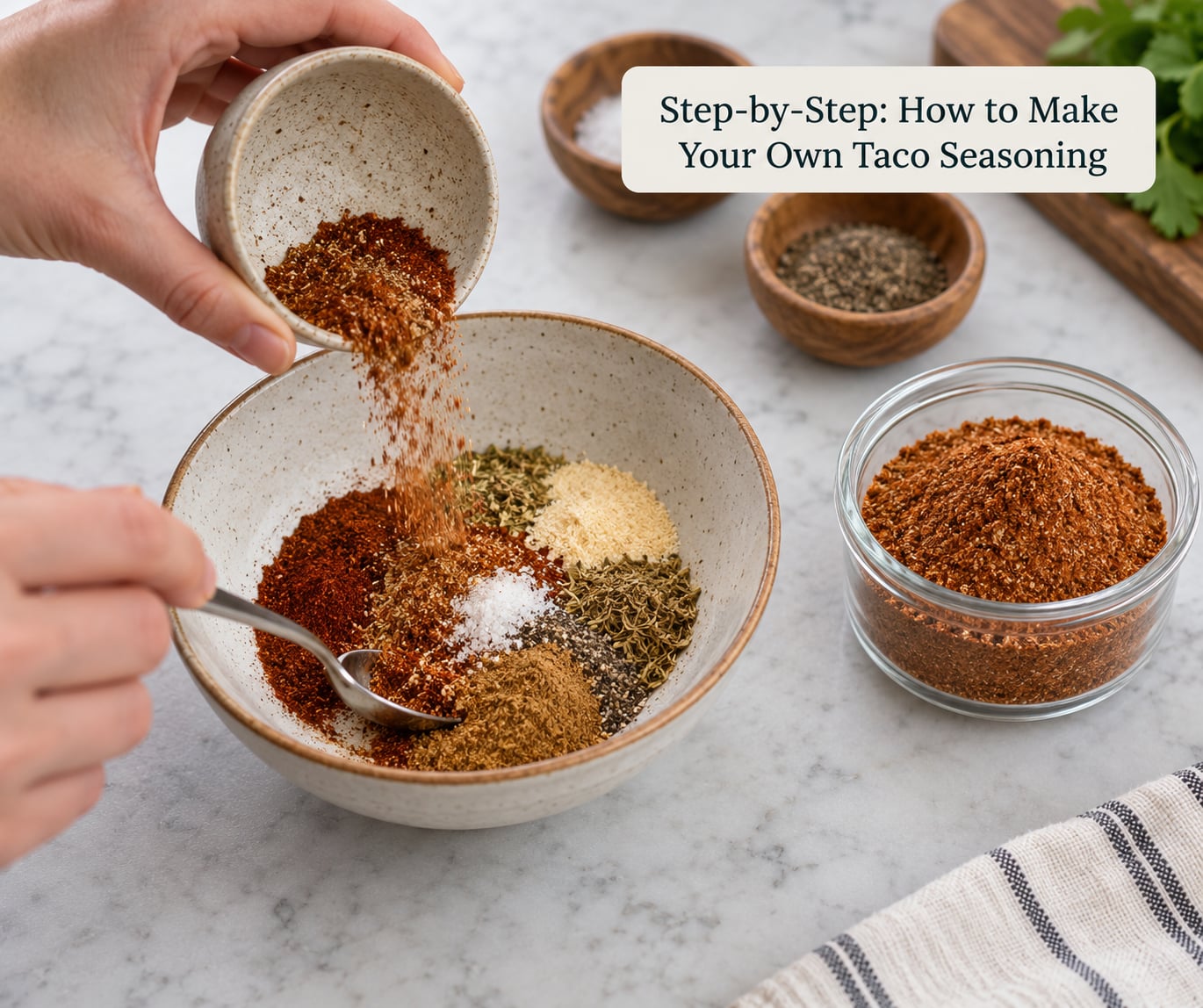
First, measure everything into a small bowl rather than straight into the jar. Adding to a jar one spoonful at a time is how you end up with two tablespoons of chili powder sitting on top of two teaspoons of cumin.
Then stir, whisk or shake to combine. You want an even reddish-brown color with no streaks of red or white left; if you see distinct colors, keep mixing. Ground spices pack down differently in a jar, so give it a good shake before every use too, not just at the mixing stage.
Taste a pinch straight from the bowl. It will taste sharper and less salty than it will in the finished dish, since the spices mellow when they cook and the meat itself adds salt, so trust the aroma more than the intensity. Adjust now, not after dinner is on the table.
Pack the finished blend into a clean, dry jar and label it with the date. Getting the jar bone-dry matters, because any moisture trapped in there dulls the aroma and shortens how long it holds.
Use 2 tablespoons per pound of meat as your starting point. From there it is a matter of taste and what you are cooking.
| Protein | Mild | Medium | Bold |
|---|---|---|---|
| Ground beef or turkey | 2 Tbsp | 2.5 Tbsp | 3 Tbsp |
| Chicken or shrimp | 1.5 Tbsp | 2 Tbsp | 2.5 Tbsp |
| Fish | 1 Tbsp | 1.5 Tbsp | 2 Tbsp |
| Roasted vegetables | 2 tsp | 1 Tbsp | 1.5 Tbsp |
Bigger, denser proteins take more seasoning per pound than delicate ones. Fish and shrimp are lean and mild, so they need less and they need it earlier in the cook, while ground meat can take a heavier hand without going muddy.
Choose Your Spice Profile
Classic is the blend above, nothing more. Smoky comes from 1 teaspoon of chipotle powder in place of half the paprika, or from doubling the smoked paprika to 2 teaspoons. For a hotter version, raise the cayenne to 1 teaspoon and add 1 teaspoon red pepper flakes.
To make it mild enough for a kid’s plate, leave the cayenne out entirely and hold the chili powder to 1 tablespoon. The blend still tastes seasoned because the cumin, garlic and onion are doing the work. For a brighter, more citrus-leaning version, add 1 teaspoon of dried cilantro and a small pinch of lime zest stirred in at the end.
One popular variation swaps the balance toward paprika rather than chile: 3 tablespoons paprika, 2 tablespoons cumin, 1 tablespoon onion powder, with the remaining spices as written. It reads as a milder, nostalgia-leaning take on the packet blends many of us grew up with.
Mix and Taste the Seasoning
If it tastes salty, you almost always have salted chili powder or garlic powder in the mix. Add a tablespoon more of the unsalted spices and retaste; you cannot take salt back out once it is in.
If it tastes flat, the problem is cumin that has lost its punch in the pantry. Ground spices fade faster than most people expect. Smell the jar, and if the cumin smells like dust rather than a warm savory note, replace it and mix again. Toasting the whole cumin seeds for 30 seconds before grinding fixes a surprising share of flat blends.
If the chile tastes like nothing at all, the amount is fine but the quality is not, and no amount of extra chili powder will fix a stale jar. Same test: smell it. Good chili powder smells sweet and warm, not musty.
Store and Use Your Taco Seasoning
Keep the blend in an airtight glass jar in a cool, dark cabinet away from the stove. Ground spices lose aroma fastest in heat and light, so a jar parked next to the range is the reason a homemade blend tastes dull by month four.
Use it within about 6 months for peak flavor, up to a year if the jar stays sealed and cool. Since most people make tacos a couple of times a week, one batch disappears fast, and doubling the recipe is worth doing immediately.
Beyond the standard ground beef, the blend works on ground turkey and chicken for fajitas, on shrimp and white fish, and stirred into taco soup, taco salad, bowls and nachos. It works as a dry rub on roasted vegetables, on sheet-pan chicken, and mixed into Mexican rice. A teaspoon stirred into scrambled eggs or a breakfast burrito bowl is a good test of whether the blend is balanced, since eggs show every imbalance immediately.
Labeling matters more than it sounds. A homemade taco seasoning jar next to a jar of chili powder looks identical from across the kitchen, and confusing the two mid-cook is an easy way to ruin dinner.
For more on cooking ahead and getting the prep out of the way, how to make appetizers you can prep ahead covers the same batch-and-store approach.
Common Mistakes
Too much salt. The most common failure, and it is nearly always the spice brand rather than the recipe. Chili powder and garlic powder both carry added salt in many brands. Use unsalted versions, or halve the salt you add yourself.
Skipping the chile entirely. A blend of cumin, paprika, garlic and oregano with no chili powder tastes like a generic meat rub. Even a mild version needs the 2 tablespoons of chili powder to read as taco seasoning.
Not checking your spices. Ground cumin and paprika lose aroma within months of opening, especially in a humid kitchen. Smell each one. If the aroma is faint, the whole blend will be flat no matter how carefully you measured it.
Adding water and expecting the packet texture. Packet seasoning thickens because it contains starch, and a homemade blend will not. Add a splash of broth or water for moisture, and if you want the sauce to cling, stir in about 1 teaspoon of cornstarch or arrowroot with the liquid. This is optional and not part of the base recipe.
Storing it near the stove. Heat and steam strip aroma out of ground spices faster than anything else. A cool cabinet keeps the blend tasting like itself much longer.
Not tasting before jarring. The fix takes ten seconds and saves dinner. Taste in the bowl, where the flavors are sharp, and remember everything mellows once it cooks.
Two more habits help. When you brown ground beef for tacos, cook it until it stops releasing water and starts to catch, then add the seasoning in the last minute of browning so it toasts rather than steams. And keep the cooked meat at 160 F or higher while it rests, per USDA guidance for ground meat.
If you are seasoning a burger patty instead, how to make burgers that stay juicy has notes on how salt timing changes the texture.
Frequently Asked Questions
Can I make taco seasoning ahead of time?
Yes, and it is one of the easiest things to make ahead. A batch takes five minutes and keeps in an airtight jar in a cool, dark cabinet for about six months at full flavor, or up to a year sealed. Double or triple the recipe next time you are already at the stove, since the blend disappears fast when tacos are a weekly habit.
What spices are essential for taco seasoning?
The essentials are chili powder, ground cumin, paprika, garlic powder, onion powder, oregano, salt and black pepper. Those eight cover the classic profile. Smoked paprika and cayenne are the usual next additions, but they are adjustments rather than requirements. If you only have three spices, start with chili powder, cumin and garlic powder.
How spicy is homemade taco seasoning compared with a store-bought packet?
Usually milder, because packets often add chile powder and red pepper flakes at levels that read as heat on paper but taste mostly starch. A homemade blend with 1/2 teaspoon cayenne per batch is close to a standard packet. Doubling the cayenne to 1 teaspoon and adding a teaspoon of red pepper flakes gets you past it.
Can I use taco seasoning on ground beef, chicken, or vegetables?
Yes, and the same scoop works across all three, though the amounts differ. Use about 2 tablespoons per pound of ground beef or turkey, 2 tablespoons per pound of chicken or shrimp, and 1 tablespoon per pound of fish. Roasted vegetables need far less, around 2 teaspoons for a full sheet pan, and salt them separately since they absorb differently than meat.
How should I store homemade taco seasoning, and how long does it last?
Store it in a sealed glass jar in a cool, dark cabinet, away from the stove and out of direct sunlight. Heat, steam and light are what strip aroma out of ground spices. Expect peak flavor for roughly six months and up to a year in a sealed jar, though it will smell flatter the whole time. Label the jar with the date so you know what you are reaching for.
Can I substitute smoked paprika for chili powder in taco seasoning?
You can, but expect a different result. Smoked paprika brings smoke and sweetness, while chili powder brings earthy chile flavor and the color that makes the blend look like taco seasoning. Substituting all of it leaves a blend that reads as barbecue rub. Swapping out up to half a tablespoon works well if you add a little extra cumin.
Conclusion
Start by measuring the nine base spices into a bowl, tasting the pinch, and adjusting the salt before anything else. Once the blend tastes right to you, jar it, label it and keep it away from the stove.
From there the only thing left is deciding how hot you want it. A simple vinaigrette that emulsifies follows the same logic: a few pantry staples in the right ratio beat anything mixed in a hurry, and the proportions are yours to adjust.