
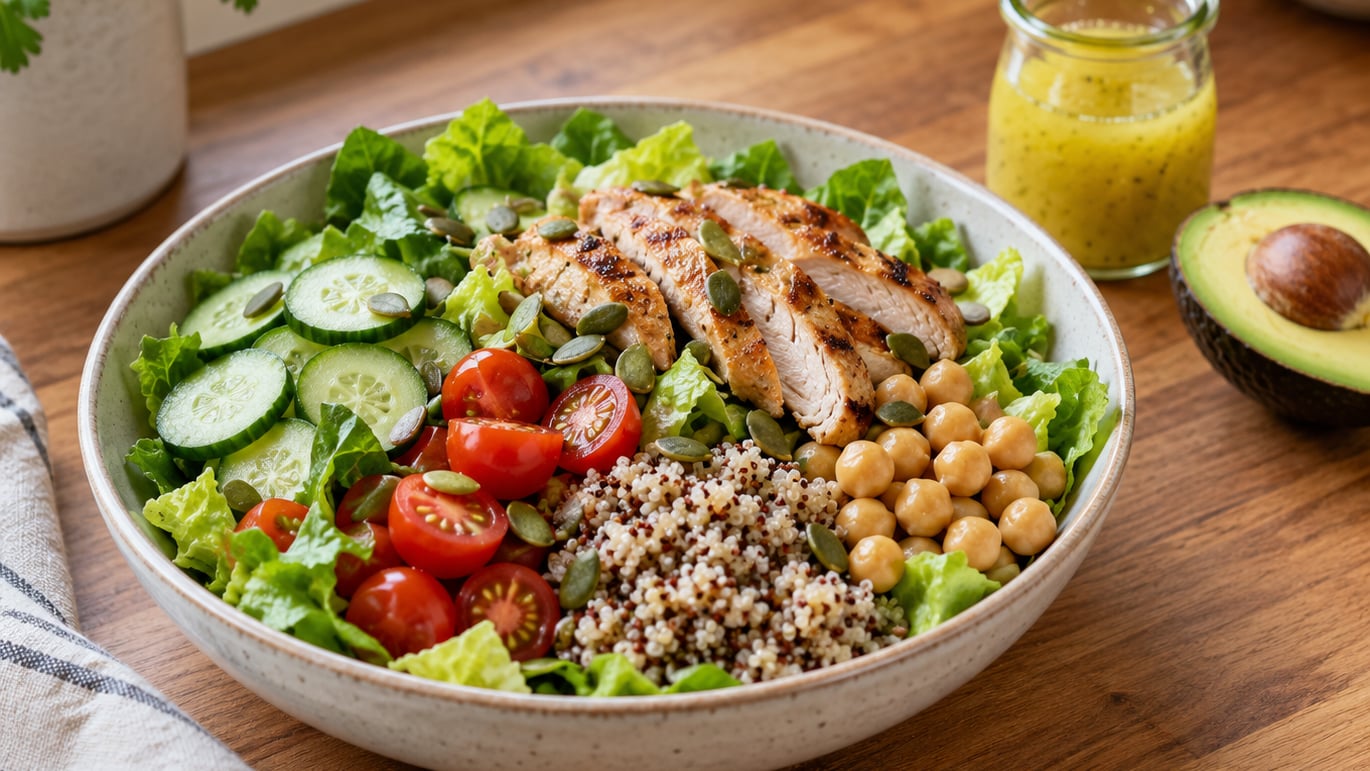
To make a salad filling enough for dinner, build it in four parts: roughly 30 grams of protein, at least 10 grams of fiber, a serving of healthy fat, and three or more cups of vegetables. Most side salads nail the vegetables and miss everything else, which is why they fade by 8 p.m.
Once you see that pattern, salad stops being a plate of raw lettuce and starts being a main course you build in five minutes. I assemble one most weeknights, and the whole thing hinges on three things: enough protein, something starchy, and dressing that is seasoned instead of heavy.
Nothing here requires special equipment or unusual ingredients. If you want a parallel path for a meal without meat, our guide to how to make a meatless dinner filling covers the same formula from a different angle.
What You Need: The Four-Part Formula for a Salad Filling Enough for Dinner
A salad becomes dinner when it carries all four of these parts. Miss any one and you get hungry again within an hour or two, no matter how many cups of lettuce are in the bowl.
- Vegetables for volume: three cups or more, roughly 150 to 200 grams, from any combination of greens, raw vegetables, roasted vegetables, or beans and legumes.
- Protein: 25 to 35 grams per plate. That is about 4 ounces of cooked chicken, one can of tuna, 3/4 cup of chickpeas, 5 ounces of firm tofu, or three large eggs.
- Fiber and starch: at least 10 grams of fiber. A cup of quinoa, a cup of cooked lentils, half a baked sweet potato, or a cup of roasted vegetables will get you there.
- Healthy fat: about a tablespoon of oil, a quarter avocado, or two tablespoons of seeds or nuts. Fat is what carries the flavor and slows digestion.
- Acid and seasoning: lemon juice, vinegar, mustard, salt, pepper, and whatever herbs or spice you already have.
On portions, I think of a dinner salad as a plate where vegetables fill about half, protein about a quarter, and the grain or starchy vegetable takes up the rest. That visual works better than grams once you are used to it, and it makes serving sizes for other people easy.
What to keep in the pantry
Good filling salads are mostly built from things that keep. Canned beans and lentils, jars of olives, jars of artichoke hearts, cooked grains you make on a Sunday, eggs, cheese, a bag of frozen edamame, and a decent olive oil cover roughly two weeks of dinners without a special shop.
Fresh items matter, but they are the top of the salad rather than its backbone. If you only have iceberg lettuce, cucumber, and bottled dressing, that is a starting point, not a dinner. Add beans from a can, some leftover grain, and a boiled egg and you have a real meal.
Equipment
A wide bowl, a chef’s knife, a cutting board, and a jar or small whisk for dressing are genuinely all you need. A salad spinner helps with washed greens, a microplane makes quick work of citrus zest, and tongs keep the dressing distribution honest. None of it is required.
Vegetarian, dairy-free, and pantry-only swaps
Dairy-free eaters can swap feta for crumbled tofu or olives, and Greek yogurt dressings for tahini or cashew cream. Vegetarians can lean on beans, lentils, eggs, and halloumi. Vegan cooks can use baked tofu, tempeh, chickpeas, and seeds generously, and combine them so no single ingredient has to carry the whole plate.
Step-by-Step: Build a Filling Dinner Salad
1. Choose a Generous Vegetable Base
Start with three cups of vegetables, measured before you start tossing. Volume is doing real work here: a full bowl stretches the stomach and slows how fast you eat, and it is the cheapest way to add volume.
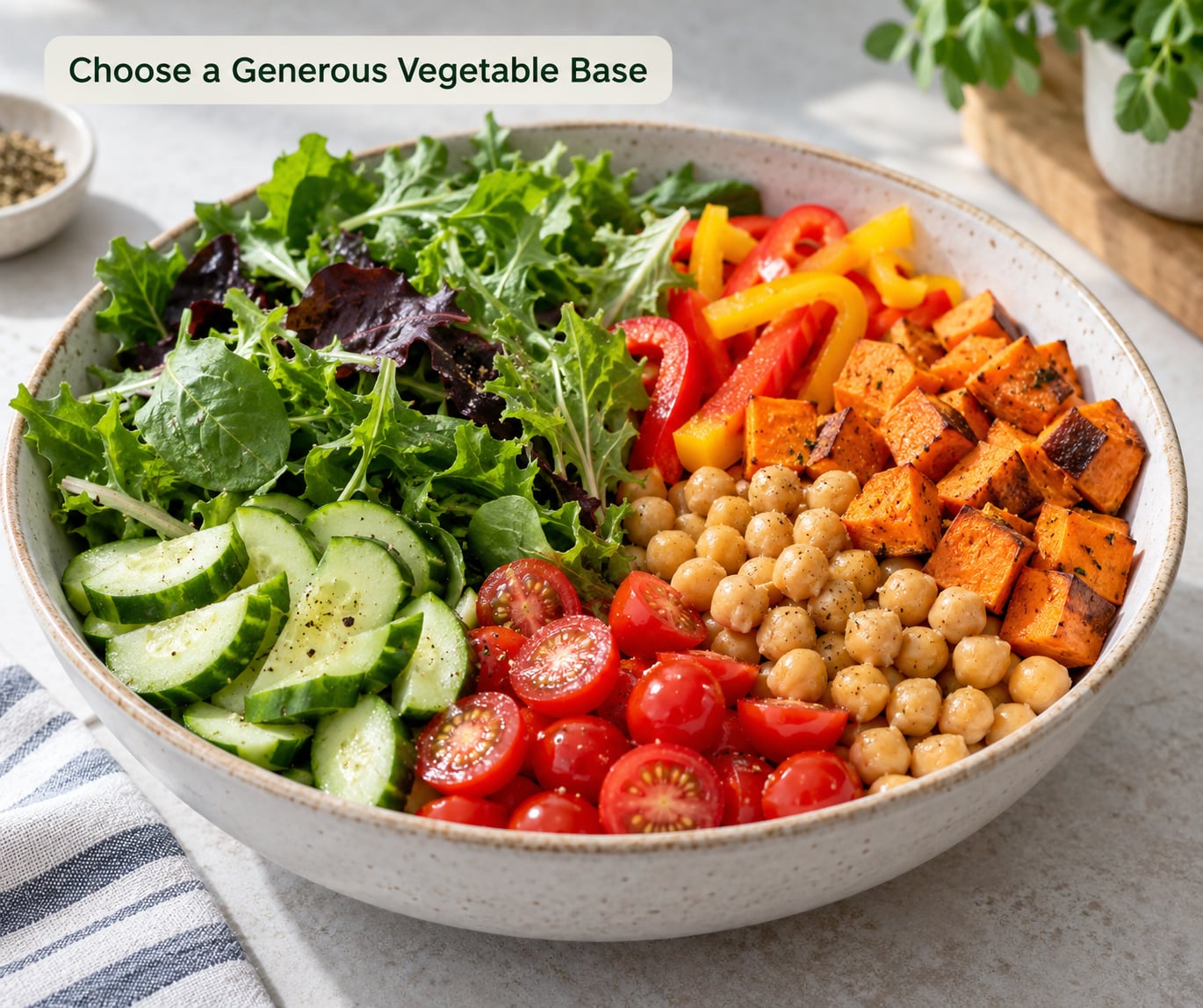
Different bases behave differently in the bowl, and the texture is what changes:
- Sturdy greens: romaine, kale, arugula, and iceberg hold up under heavy dressing and stay crisp overnight.
- Tender greens: spinach, butter lettuce, and baby greens are mild but wilt fast, so add them last and dress lightly.
- Raw vegetables: cucumber, bell pepper, celery, radish, and tomatoes add water and crunch. Salting them in advance pulls out liquid, which is why undressed chopped salad turns swampy by the second hour.
- Roasted or grilled vegetables: sweet potato, broccoli, zucchini, cauliflower, and peppers carry more flavor and fiber than their raw versions, and they cool down to room temperature without wilting.
- Beans and legumes: chickpeas, white beans, black beans, and edamame are base and protein at once, and they make a salad feel substantial in a way greens alone never do.
My default base is romaine plus cucumber plus cherry tomatoes plus a cup of chickpeas, with roasted sweet potato when I have it. That combination survives a lunchbox and still tastes like dinner at the table.
2. Add Protein That Makes the Salad Filling Enough for Dinner
Protein is what turns a side dish into a meal. It is the part most home cooks underdo, and it is usually the difference between finishing the bowl and going to find a second meal an hour later.
Aim for 25 to 35 grams on the plate. Here is what that looks like in practice:
- Chicken or turkey: 4 ounces cooked, sliced or diced. A store rotisserie chicken cut into a bowl of greens is a five-minute dinner.
- Fish: 4 to 5 ounces of salmon, tuna, sardines, or white fish, flaked or cubed.
- Tofu and tempeh: 5 to 6 ounces, pressed and pan-seared or baked, which firms up the texture and takes on dressing flavor.
- Beans and lentils: three-quarters to one cup of chickpeas, black beans, lentils, or edamame, rinsed and well drained.
- Eggs: two or three large eggs, boiled, sliced, or chopped. A batch of a dozen keeps protein in reach all week.
- Cheese and dairy: feta, halloumi, goat cheese, or a spoon of cottage cheese. Cottage cheese works as both protein and a creamy dressing base.
On safety, cook poultry to a minimum internal temperature of 165°F, ground meat to 160°F, and fish and whole cuts of meat to 145°F. Use a thermometer, rest the meat briefly, and refrigerate what you do not eat within two hours.
3. Include a Filling Whole Grain or Starchy Ingredient
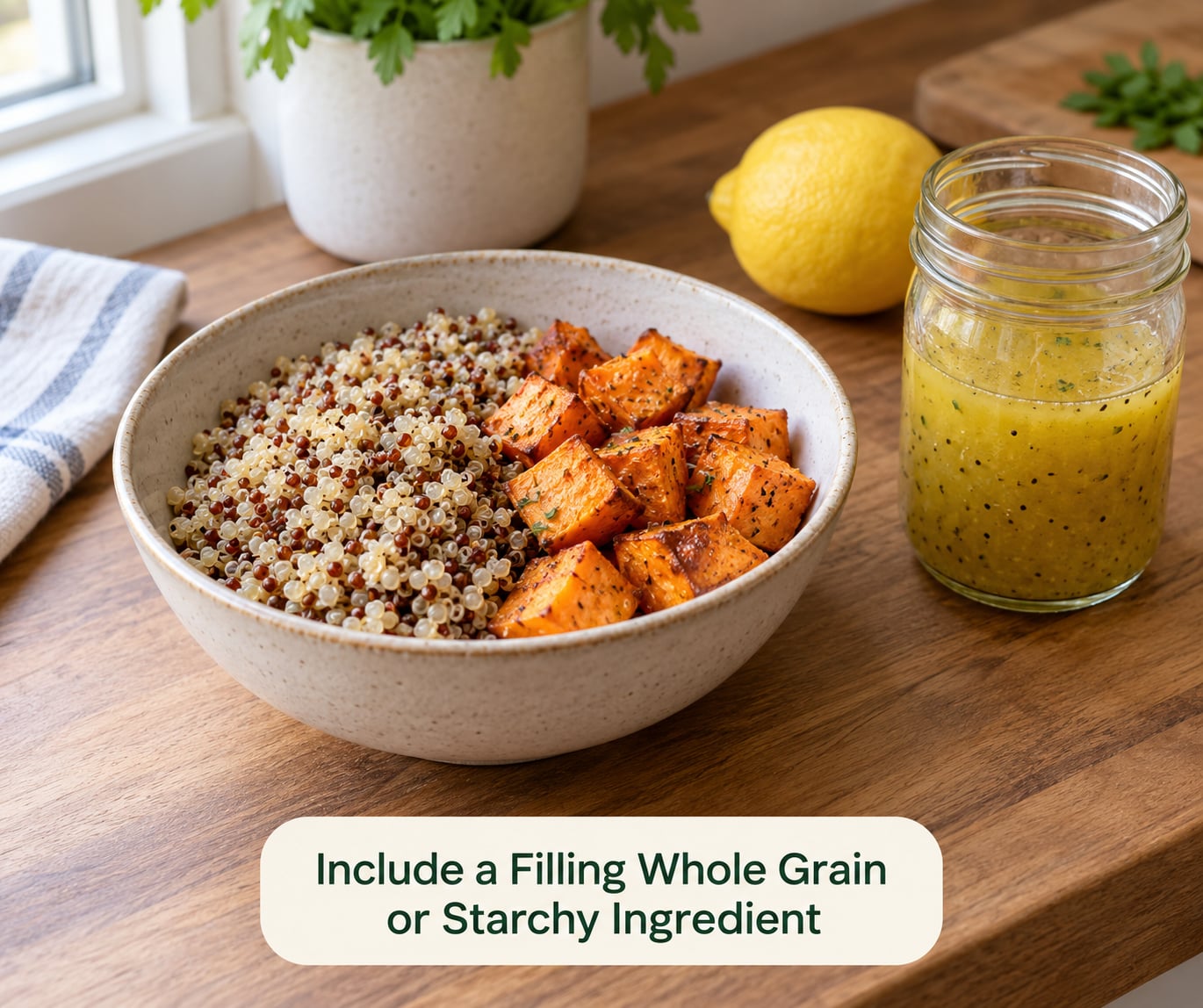
Starch is the part people argue about, and it is the part that makes a salad feel like dinner. It adds fiber, it adds staying power, and it gives the bowl a base that greens and grilled chicken never have on their own.
Good options, roughly one cup cooked unless noted:
- Quinoa: about 5 grams of protein and 2.5 grams of fiber per cup, and it drinks up vinaigrette without turning to mush.
- Brown rice, farro, or whole wheat pasta: chewier and more filling than their white versions, cooled before they go in.
- Barley or couscous: couscous is a ten-minute cook and works especially well with Mediterranean-style combinations.
- Legumes: lentils and white beans bring protein and fiber together, which is useful on a vegetarian plate.
- Starchy vegetables: a half baked sweet potato, corn, or a scoop of plain mashed potato. This is the grain-free route.
Cook grains in salted water, spread them on a tray to cool quickly, and toss them with a little oil so they do not clump in the fridge. Quinoa cooks in about 15 minutes; couscous in 5; a big pot of brown rice or farro will carry you through four or five dinners.
If you like bowls with more structure, our grain bowl guide for dinner uses the same components in a warmer, layered form.
4. Finish with Healthy Fat and Crunch
Fat is what people cut out of salads, and it is exactly what was missing. A tablespoon of oil or a quarter of an avocado slows how quickly the meal leaves your stomach, and it gives fat-soluble vitamins something to attach to.
Use one or two of these:
- A tablespoon of olive oil, avocado oil, or toasted sesame oil drizzled over the top.
- A quarter of an avocado, sliced or cubed right before serving so it does not go brown and mushy.
- Two tablespoons of seeds or nuts: pumpkin, sunflower, sesame, almonds, walnuts, or pistachios.
- A tablespoon of tahini or a spoon of pesto for creamy fat and a lot of flavor at once.
- A small handful of olives or marinated artichoke hearts.
For crunch, think in three textures: crisp raw vegetables, something toasted such as nuts, seeds, or croutons, and something soft such as avocado, beans, or roasted squash. A salad with all three survives more than one bite, which is most of the battle with a repeated chicken-cucumber-tomato routine.
Add crunch last so it stays crisp, and if you are packing the salad for later, keep toasted elements in a separate small container.
5. Dress the Salad So It Stays Balanced
Dressing should flavor the salad, not bury it. The reliable starting point is three parts oil to one part acid, plus salt and an emulsifier so it holds together instead of separating in the jar.
My everyday formula: 3 tablespoons olive oil, 1 tablespoon lemon juice or red wine vinegar, 1 teaspoon Dijon or honey mustard, a pinch of salt, and a few grinds of pepper. Shake or whisk it, then taste it on a piece of lettuce before it touches the bowl.
Add dressing in two stages. Toss the protein, grains, roasted vegetables, and sturdy greens first, since they hold up, then add the tender greens, fresh tomatoes, and cucumbers with a lighter second pass. You will use less dressing and the salad will taste cleaner.
Three easy variations:
- Creamy: Greek yogurt or cottage cheese thinned with lemon juice and a little water, with garlic and dill.
- Green: olive oil, lemon juice, a handful of parsley or basil, and a spoon of pesto.
- Nutty: tahini, soy sauce, lime juice, and a splash of water to thin it until it pours.
Avoid bottled dressing as the base of a meal salad. Most are heavy on sugar and oil, and you have no idea how much goes on a fork. If you want a shortcut, a single ingredient like salsa, hummus thinned with water, or guacamole works far better as a whole salad dressing than a bottled pour does.
6. Add Flavor, Then Eat the Right Amount
Season in layers rather than all at once. Salt the grains while they cook, salt the protein, add acid to the dressing, then taste the assembled bowl and adjust. Most salads that taste flat are missing acid, not salt, and a squeeze of lemon fixes it faster than anything else.
Layering in flavor also means using more than one kind of it:
- Fresh herbs for brightness: parsley, chives, basil, dill, cilantro, or mint.
- Something spicy: cracked pepper, chili flakes, pickled jalapenos, or a little mustard in the dressing.
- Something savory: feta, grated parmesan, olives, corn, or a spoonful of grated cheese on top.
- Something sweet in small amounts: dried cranberries, raisins, pomegranate seeds, or a few pieces of pear or apple.
Before serving, look at the bowl and ask two questions: is there visible protein, and is there a starchy component? If either answer is no, add it. If both are yes and the bowl looks generous, you have a plate that will cover the evening.
One more habit pays off: use leftovers from dinner instead of treating salad as a from-scratch project. Yesterday’s roast, a scoop of grain, a handful of beans, and a sliced egg on top of greens is a complete dinner with no recipe at all.
Common Mistakes That Leave Dinner Salads Disappointing
Almost every disappointing salad I have eaten traces back to one of a handful of predictable gaps.
Too little protein. This is the most common mistake by far. A bowl of lettuce, tomato, and light dressing might carry 5 to 10 grams of protein, which is not nearly enough to keep you comfortable for hours. Fix it by adding one clear protein source in a real portion, roughly a cup of beans, four ounces of chicken or fish, or three eggs, and giving it room on the plate.
No starch. A salad built only on vegetables and protein often still disappoints, because the meal is missing the carbohydrate that your brain and muscles expect. A cup of quinoa, lentils, or roasted sweet potato fixes it in one scoop.
Overdressing. Heavy dressing is the fastest way to turn a filling salad into a heavy one. Start with half what you think you need, toss, taste, and add more. Three parts oil to one part acid is the ratio most home vinaigrettes get right, and an emulsifier such as mustard keeps it from separating in the jar.
Only watery vegetables. Cucumber, iceberg, celery, and tomato are refreshing but low in fiber and calories per bite, so they fill the bowl without filling you. Pair them with something substantial: beans, roasted vegetables, avocado, corn, or whole grains.
No fat at all. Fat-free salads digest fast. A tablespoon of oil, a few nuts, or a quarter avocado changes how long the meal stays with you.
Seasoning only once, at the end. If you salt and dress the greens alone and then dump in undressed chicken and grains, the bowl tastes uneven. Season each component as you cook it, then balance the whole bowl at the end.
Forgetting texture. A salad of soft leaves, soft beans, and soft tomatoes is dull by the second bite. Add one crisp element and one toasted element, and keep them out of any dressing until serving time.
Meal prep strategy: keep components separate
Packing a dressed salad for later is where most weeknight plans collapse. Layering solves it: dressing on the bottom, then dense vegetables and protein, then grains, with tender greens on top and nothing wet near the leaves.
A sturdier approach is to pack everything but the dressing and the crunch, and carry the dressing in a small jar. Assemble at the table in about ten seconds.
How long components keep in the refrigerator:
- Dressed sturdy salads such as kale, cabbage, or chopped salads: about 3 days before the leaves soften noticeably.
- Undressed chopped vegetables stored separately: 3 to 4 days.
- Cooked grains, roasted vegetables, and beans: 4 to 5 days.
- Cooked chicken, fish, or other protein: 3 to 4 days, refrigerated promptly and kept under 40°F.
- Hard-boiled eggs in their shells: up to a week.
If you want dinner on the table fast, most of that chopping can happen earlier in the day. Our guide to cooking dinner in under thirty minutes covers the other ways to shave time off the evening.
Swaps that keep the formula intact
- Out of grains: use roasted sweet potato, corn, white beans, or extra chickpeas for the starchy and fiber role.
- Out of dairy: use tahini, cashew cream, olives, or avocado for richness and a plant protein for the anchor.
- Out of fresh greens: use shredded cabbage, chopped romaine, or roasted vegetables as the base.
- Out of fresh herbs: dried herbs in small amounts, or a spoonful of pesto or salsa for the same bright note.
- Out of fresh fruit in the bowl: dried cranberries, raisins, or quick-pickled onion for the sweet-sour element.
Frequently Asked Questions
Why am I still hungry after eating a salad?
Most salads that leave you hungry are low in protein and starch. A side salad often carries 5 to 10 grams of protein and almost no fiber or carbohydrate, which clears faster than a mixed meal. Add 25 to 35 grams of protein, a cup of a grain or legume, and a tablespoon of healthy fat, then reassess.
How much protein should a dinner salad have?
Roughly 25 to 35 grams per plate is a practical target for a salad meant to stand as dinner. That is about 4 ounces of cooked chicken, one can of tuna, three-quarters to one cup of beans or lentils, five to six ounces of tofu, or three large eggs. Larger people and active people usually need more.
Can you make a salad filling without grains?
Yes. Replace the grain with a starchy vegetable or a legume: half a baked sweet potato, a scoop of corn, a cup of roasted squash, or an extra cup of chickpeas or white beans. Those options still supply fiber and energy, which is what the grain was contributing.
How do you meal prep salads without soggy greens?
Keep components separate and layer them so wet ingredients stay away from the leaves. Pack dressing in a small jar, put dense vegetables, protein, and grains at the bottom, and tender greens on top, then add dressing and any crunch at the table. Sturdy greens such as kale, cabbage, and romaine hold up better than spinach.
Is it okay to eat salad for dinner?
Yes, as long as the salad is built as a complete meal rather than a side dish. Vegetables, protein, fiber, and a little fat together make it satisfying and nutritionally balanced. People who want a broader plate can use the same components in a warm format, as in our guide to making a grain bowl for dinner.
Start with tonight: three cups of vegetables, one palm-sized protein, one cup of grain or beans, a tablespoon of oil, and a dressing you taste before you pour. That is the whole method behind how to make a salad filling enough for dinner, and once it is automatic, the combinations take care of themselves.