
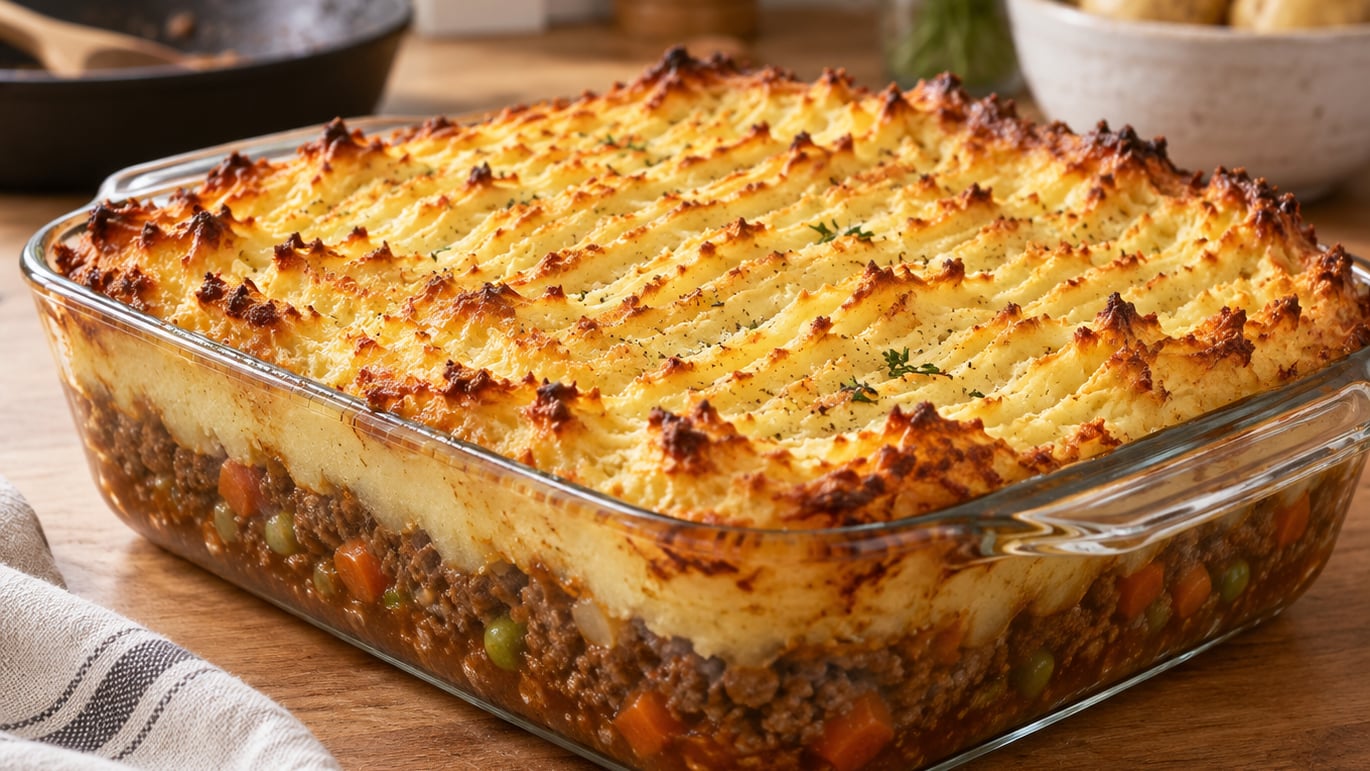
To make shepherds pie with ground beef, brown 1.5 pounds of beef in a skillet, cook it down with onion, carrots, tomato paste and beef broth until the gravy is thick, then top it with creamy mashed potatoes and bake at 400°F until the top is golden. It takes about an hour from start to finish and feeds six to eight people.
One naming note, since people ask constantly: shepherd’s pie technically takes lamb, and the ground beef version is properly called cottage pie. Home cooks use the names interchangeably, so nobody is going to correct you at dinner.
Prep: 20 minutes · Cook: 40 minutes · Total: about 1 hour
Serves: 6 to 8 · Oven: 400°F (200°C)
Pan: 9×13-inch casserole dish
Table of Contents
- What You Need
- Step-by-Step
- Common Mistakes
- Frequently Asked Questions
- Can I make shepherds pie ahead of time?
- Can I use turkey or chicken instead of ground beef?
- What can I use instead of mashed potatoes on top?
- How long does leftover shepherds pie keep, and how do I store it?
- How do I keep the mashed potato topping from turning watery?
- Can I freeze shepherds pie after baking it?
- Conclusion
What You Need
The whole thing comes together in one skillet and one baking dish. If you own a wooden spoon, a wide skillet and a potato masher, you have everything it takes.
Equipment
- Large skillet with high sides, 12-inch or bigger
- 9×13-inch (23×33 cm) glass or metal casserole dish
- Rimmed baking sheet, so a bubbling filling does not drip in the oven
- Potato masher or ricer
- Colander for draining the potatoes
- Instant-read thermometer for the beef
Meat filling
- 1.5 pounds (680 g) lean ground beef, 90/10 works well
- 1 large yellow onion, diced
- 2 carrots, diced (about 1 cup)
- 2 cloves garlic, minced
- 1 cup (150 g) frozen peas and corn, thawed
- 2 tablespoons all-purpose flour
- 2 tablespoons tomato paste
- 1 tablespoon Worcestershire sauce
- 1 cup (240 ml) beef broth, plus more if needed
- 1 teaspoon dried thyme and 1 teaspoon chopped fresh rosemary
- 1 tablespoon cooking oil or butter for the skillet
- Salt and black pepper to taste
Potato topping
- 2 pounds (900 g) russet or Yukon Gold potatoes, peeled and cubed
- 4 tablespoons unsalted butter
- 1/2 cup (120 ml) warm whole milk
- 1/4 cup (60 ml) sour cream, optional, for extra tang
- Salt and pepper to taste
- 1 cup (115 g) shredded cheddar, optional, for the top
Ground beef must reach 160°F (71°C) internally before it goes anywhere near the filling, according to USDA guidance for ground meat. Use a thermometer and check the thickest part of the meat, not the edge of the pan.
What size pan do I need, and how long does it bake?
- 9×13-inch casserole: 25 to 30 minutes at 400°F (200°C), serves 6 to 8
- 9×9-inch square pan: 20 to 25 minutes, serves 4 to 6
- 8×8-inch square pan: 20 to 25 minutes, serves 4
- Four 4-ounce ramekins: 20 to 25 minutes, 4 single servings
All of those times assume an assembled, unbaked pie going into the oven cold. A frozen pie needs much longer, which is why the tips further down list separate times for it.
A deeper dish traps steam and keeps the topping pale, so a 9×13 works better than a deep 9×9 for this recipe. If you only have an 8×8 square pan, that is fine, just watch the last few minutes closely because the edges will brown faster.
Two substitutions worth knowing. Russet potatoes give you a drier, fluffier topping, and Yukon Gold gives you a creamier one; both work. Instant mashed potato flakes also work as a shortcut, and the rule of thumb is about 1.5 cups of prepared instant mash for every 8 ounces of cooked potato, spread thinner than you would for scratch.
Step-by-Step
1. Cook the Vegetables
Heat 1 tablespoon of oil or a knob of butter in your skillet over medium heat. Add the diced onion and carrots and cook for 6 to 8 minutes, stirring every couple of minutes, until the onion is translucent and the carrots have lost their raw edge and look slightly soft.
That texture change is the cue. If the onion is still sharp and the carrots are crunchy, they need another couple of minutes. Add the garlic and thyme for the last 30 seconds, stirring, so the garlic browns without burning.
Tip: if you like planning ahead, our guide on how to grocery shop with a meal plan keeps the frozen-vegetable and potato portion sizes on your list before you shop.
2. Brown the Ground Beef
Push the vegetables to one side and add the ground beef to the hot side of the skillet. Leave it alone for two full minutes so it can crust, then break it up with the back of your wooden spoon and cook until the pieces are deeply browned, roughly 6 to 8 minutes total.
Browning is where most of the flavor comes from, and this is the step people rush. Gray beef means undercooked beef. When the color is even and there is no pink left, check the thickest part with your thermometer and confirm 160°F (71°C).
Tilt the skillet and spoon off the excess fat. For 90/10 beef there is not much to drain; for 80/20 you will leave a surprising puddle behind, and leaving it in is the number one reason a shepherd’s pie turns greasy in the middle.
3. Make the Savory Filling
Sprinkle the flour over the browned beef and stir it in, cooking for about a minute so it loses its raw flour taste. Stir in the tomato paste and Worcestershire sauce and let them cook for another minute, until the mixture turns a deep brick red and starts to smell sweet and savory at once.
That tomato paste step is the answer to what the secret ingredient is. It adds umami and body that plain seasoned beef just does not have.
Pour in the beef broth and stir to scrape up every browned bit on the bottom of the skillet. Add the cooked vegetables and the thawed peas and corn, then lower the heat and simmer for 8 to 10 minutes, stirring now and then.
Turn the heat off and drag a spoon across the pan. If it leaves a clean path that stays clean for a few seconds, the filling is thick enough. If the path fills back in immediately, simmer it two more minutes.
4. Prepare the Potato Topping
Put the cubed potatoes in a pot, cover them with cold salted water by an inch, and bring to a boil. Cook for 15 to 20 minutes until a knife slides into a piece with no resistance.
Drain them well and let them sit for a few minutes. Too wet and the mash turns gluey, so give them time in the colander. Then mash with the butter until the potatoes are broken up, add the warm milk a little at a time, and finish with the sour cream, salt and pepper.
Stop mashing once it looks right. Overworking releases starch, and gluey potatoes are the second most common complaint about this dish after the watery filling. Stop while the mash still has some texture.
Peel the skins and you get the creamiest result. Leave them on, or use a ricer, and you get a rustic, slightly lumpy top that browns beautifully.
5. Assemble Shepherds Pie With Ground Beef
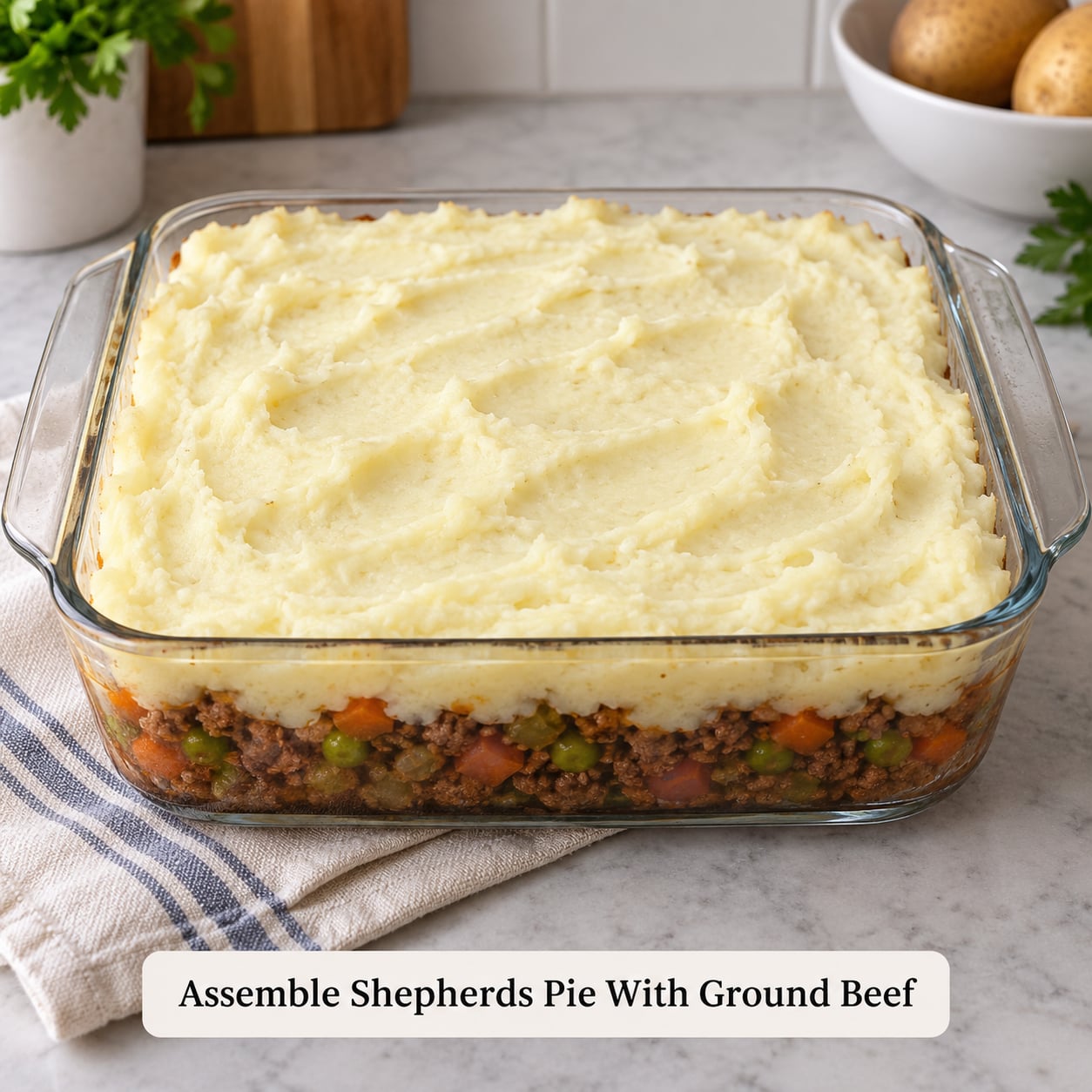
Scrape the thickened filling into your baking dish and spread it into an even layer, about an inch and a half deep. Spoon the mashed potatoes over the top and push them all the way to the edges so there is no gap where you can see the filling.
Use the back of a fork to score the surface in rows, or to make a crosshatch pattern. Those little ridges are what turn pale mash into a golden, crisp top. A little melted butter or a sprinkle of grated cheddar over the surface helps too.
6. Bake Until Golden and Bubbly
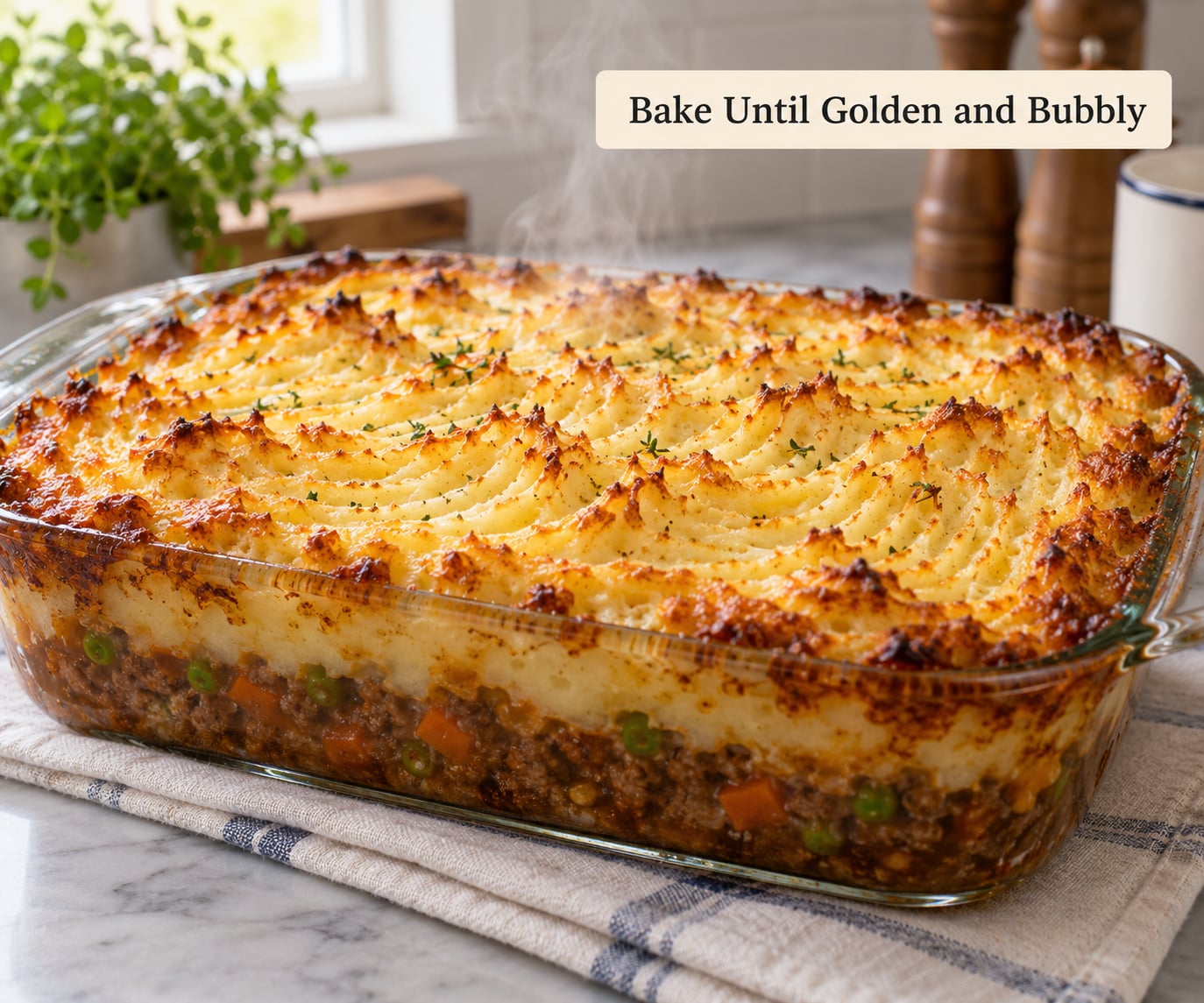
Set the dish on a rimmed baking sheet and slide it into a 400°F (200°C) oven. Bake uncovered for 25 to 30 minutes for a 9×13 dish, or 20 to 25 minutes for a 9×9.
It is done when the potato top is light golden brown and crisp at the edges, and you can see the filling bubbling up at the sides when you nudge the dish. If the top is still pale after the minimum time, give it another five minutes under the broiler, watching it closely.
Let it rest 10 to 15 minutes before you cut in. The filling is molten, and a short rest lets it thicken just enough to hold a clean slice on the plate.
Common Mistakes
The filling leaks out and the bottom of the dish is soggy. Two causes usually. Either the gravy was not thick enough before you topped it, or the dish sits on the oven rack instead of a baking sheet, so the liquid has nowhere to go. Simmer until a spoon leaves a clean path, and always set the dish on a rimmed sheet.
Already baked and still watery? Pull it out and scoop out the topping carefully, keeping it in one piece. Return the dish to the oven for 10 minutes and the liquid will reduce. If the filling is thin rather than loose, mix a tablespoon of cornstarch with a cold tablespoon of water, stir it in and bake for another 10 minutes. The oven does the work either way, and the dish comes out worth eating.
The mashed potatoes are gluey or dense. You mashed too much, or they were waterlogged before mashing. Next time drain hard and mash gently, or push the potatoes through a ricer for a light, even texture.
The topping comes out pale. Either the dish was too deep or you covered it with foil. Bake it uncovered, and use a shallow pan. Scored ridges and a little cheese or butter on top help the heat catch it.
The filling tastes bland. Almost always under-seasoned. Salt the beef after browning, taste the gravy before it goes in the dish, and remember that the potato topping is a lot of unsalted starch sitting on top of it, which flattens everything underneath.
The edges are dry and hard. Too long in a hot oven, or a small pan with tall sides. Check at the 20-minute mark on smaller dishes.
Rosemary flavor overtakes everything. A real one in home kitchens. Use a teaspoon, crush it between your fingers first, and skip it entirely if you are feeding kids.
Making it ahead, freezing and reheating
Assemble the pie up to three days ahead and keep it covered in the fridge. Set it on the counter for 20 minutes, then bake at 400°F (200°C). It usually needs 10 minutes longer than a fresh pie because it starts cold.
Freeze it unbaked if you want the mash to stay light. Wrap the dish tightly in plastic wrap and foil, label it with the date, and keep it for up to three months. Bake from frozen at 350°F (175°C) for 60 to 75 minutes, covered with foil for the first 50 minutes, then uncovered to brown.
Refrigerated cooked shepherd’s pie keeps for 3 to 4 days. Reheat a single serving in the microwave for 2 to 3 minutes, or cover a slice loosely and warm it at 350°F (175°C) for about 20 minutes. Reheat the whole dish covered at 350°F for 30 to 40 minutes.
Reheating leftovers raises them to 165°F (74°C) before serving. Twice is the limit: once at home, once at work, and not more. If you will only eat part of the pan, portion it into ramekins before freezing so you pull out one at a time. Ramekins freeze well, and go from frozen at 375°F (190°C) for 30 to 35 minutes, until the center is hot and the tops are golden.
For the vegetable side of a pie night, roasted root vegetables use the same oven and the same 30 minutes, and any extra carrots or peas can go into a frittata made from leftover vegetables the next morning. If you are serving a big meal instead, our tips for stuffing that stays crisp cover the other half of the table.
Frequently Asked Questions
Can I make shepherds pie ahead of time?
Yes, and it is one of the reasons this dish works so well for a busy week. Assemble everything except the bake up to three days ahead, cover tightly and refrigerate. Take it out about 20 minutes before baking so it does not go straight from fridge to hot oven, then add 10 minutes to the bake time. Freeze it unbaked if you need longer than three days.
Can I use turkey or chicken instead of ground beef?
You can, and the method stays the same. Ground turkey is leaner, so add a tablespoon of oil to the pan and season the filling a little more heavily to compensate for the missing fat. Ground chicken also works well. Bear in mind the USDA safe minimum internal temperature stays at 165°F (74°C) for poultry, compared with 160°F (71°C) for ground beef.
What can I use instead of mashed potatoes on top?
Several options work well. Mashed sweet potato adds sweetness and needs no extra salt. Cauliflower mash is the lightest choice and browns in about the same time. For a different texture, cover the filling with a layer of shredded cheese and a crumb or biscuit topping and bake until it crisps. Keep in mind that a thin layer bakes faster, so check it ten minutes early.
How long does leftover shepherds pie keep, and how do I store it?
Refrigerated in a covered container, cooked shepherd’s pie keeps for three to four days. Let it cool before you put the lid on, because sealing a warm dish traps condensation and softens the potato topping. For longer storage, freeze it in a rigid container or foil-wrapped dish for up to three months and reheat at 350°F (175°C) until the center reaches 165°F (74°C).
How do I keep the mashed potato topping from turning watery?
Drain the boiled potatoes thoroughly and let them steam dry in the colander for a few minutes before you mash. Any water clinging to them goes straight into your mash and makes it loose. Add the milk gradually in warm increments rather than all at once, and mash only until the texture looks right, since heavy mashing releases starch and turns the topping gluey.
Can I freeze shepherds pie after baking it?
Yes, and it reheats well from frozen. Cool the pie completely, wrap the dish in plastic wrap and foil, label it with the date and freeze for up to three months. Thaw in the fridge overnight if you have time, or bake straight from frozen at 350°F (175°C) for 60 to 75 minutes with foil over the top for most of that time, then uncover to brown.
Conclusion
Start where most people go wrong: get real browning on the beef before anything else goes in the pan, and drain off the fat. Then simmer the gravy until a spoon leaves a clean path, because that thick filling is the whole difference between a good pie and a soupy one.
Give the dish 10 to 15 minutes to rest once it leaves the oven. The top will be crisp and golden, the filling will be bubbling at the edges, and the slice will hold together on the plate.