
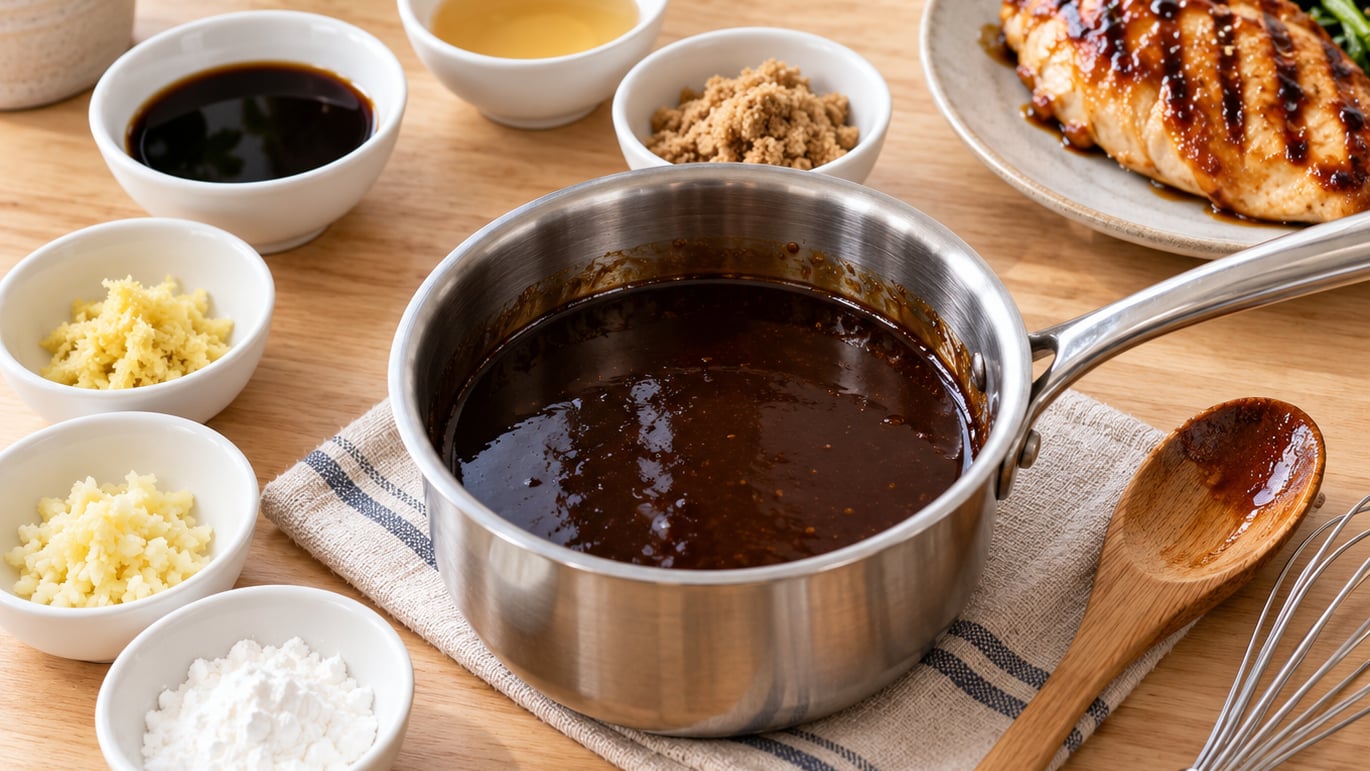
Teriyaki sauce from scratch takes about 15 minutes and needs five pantry ingredients: soy sauce, mirin, brown sugar, fresh ginger and garlic. You simmer them together, then stir in a cornstarch slurry for that glossy glaze that sticks to chicken. No thickener at all if you prefer the thinner, more traditional version.
I make a batch most Sundays and it disappears by Wednesday. The glaze goes on teriyaki chicken, salmon, steak, shrimp, tofu, broccoli, and it turns plain brown rice into lunch. If you have never made it, the whole process is one pot and one spoon.
What You Need
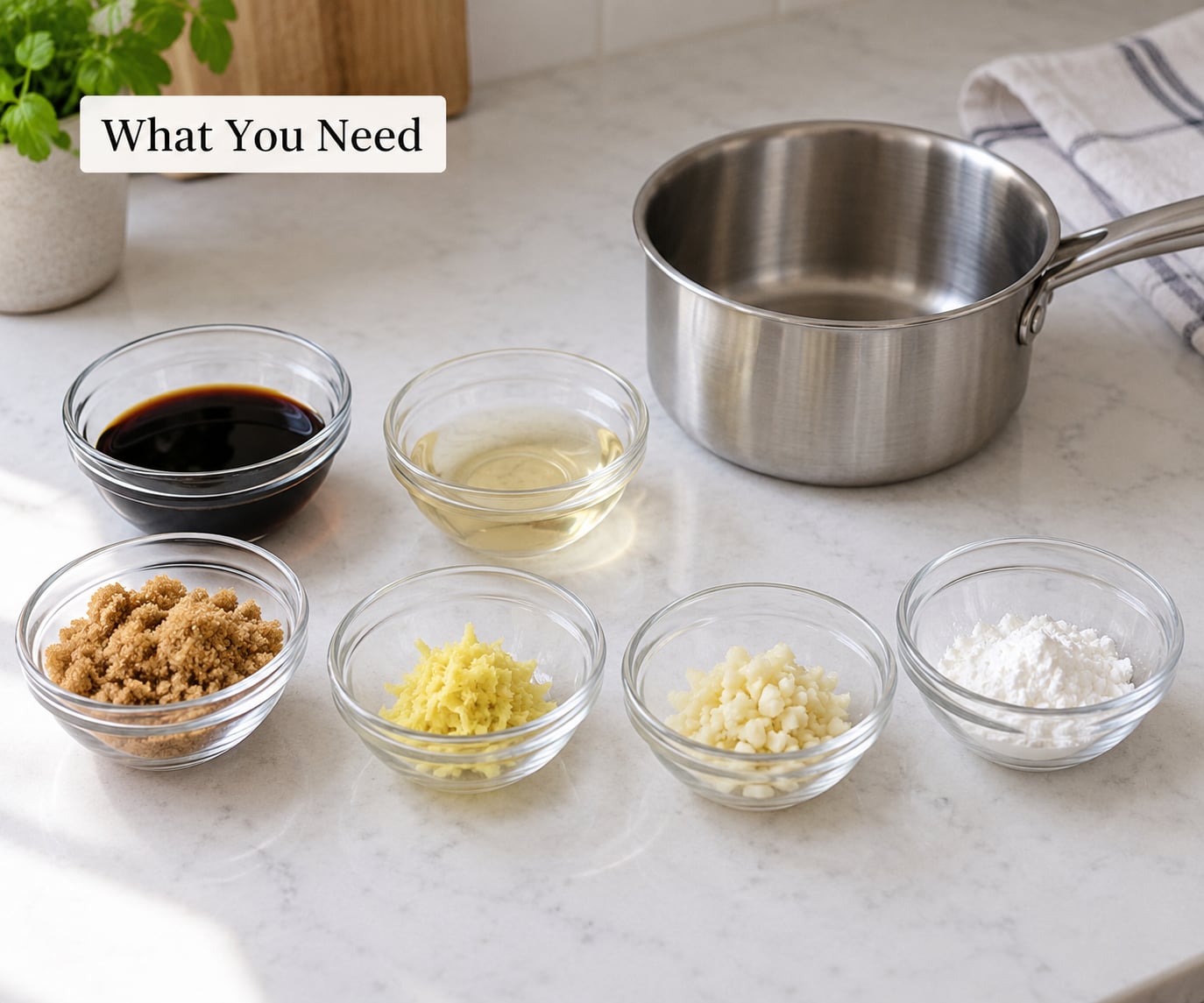
This is the base recipe. It makes roughly three-quarters of a cup of glaze, enough for about a pound and a half of chicken.
- 1/2 cup low-sodium soy sauce
- 1/4 cup mirin, or 1/4 cup sake plus 1 teaspoon extra sugar
- 2 tablespoons brown sugar
- 1 inch fresh ginger, finely grated or thinly sliced
- 2 cloves garlic, minced
- 1 teaspoon toasted sesame oil, optional
- 1 to 2 tablespoons cornstarch and 2 tablespoons cold water, for the slurry
Soy sauce carries the salt and the umami, and it is the one ingredient you do not scale back. Low-sodium soy works and is the version I buy, because reducing regular soy sauce concentrates the salt along with the flavor and the result is hard to balance. Mirin is sweetened rice wine and supplies most of the sweetness in a traditional sauce. Brown sugar rounds it out and caramelizes slightly as it reduces. Ginger and garlic are aromatics, and their flavor comes out during the simmer rather than from raw heat.
Tools are minimal. A small saucepan with a heavy bottom gives you an even simmer and resists scorching. A whisk is better than a spoon for the slurry, since it breaks lumps in a second. A microplane or the back of a spoon handles the ginger, and measuring spoons matter here more than usual, because the balance between salt, sugar and starch is where homemade sauce wins or falls apart.
Substitutions are easy. Rice vinegar works in place of mirin, though it is sharper, so add 1 extra teaspoon of sugar. Dry sherry is the nearest non-Japanese stand-in. Tamari is a wheat-free soy sauce, and coconut aminos is a lower-sodium option that is milder but also less salty, so season with a pinch of salt at the end. Agave syrup or honey can stand in for the sugar, one for one, and honey will brown faster so watch the heat.
Plan on using the sauce right away, or cool it fully and refrigerate it. A thickened glaze is more useful across a week of meals than a thin one, because it works as a dip, a marinade and a pan sauce without thinning out.
Step-by-Step: How to Make Teriyaki Sauce From Scratch
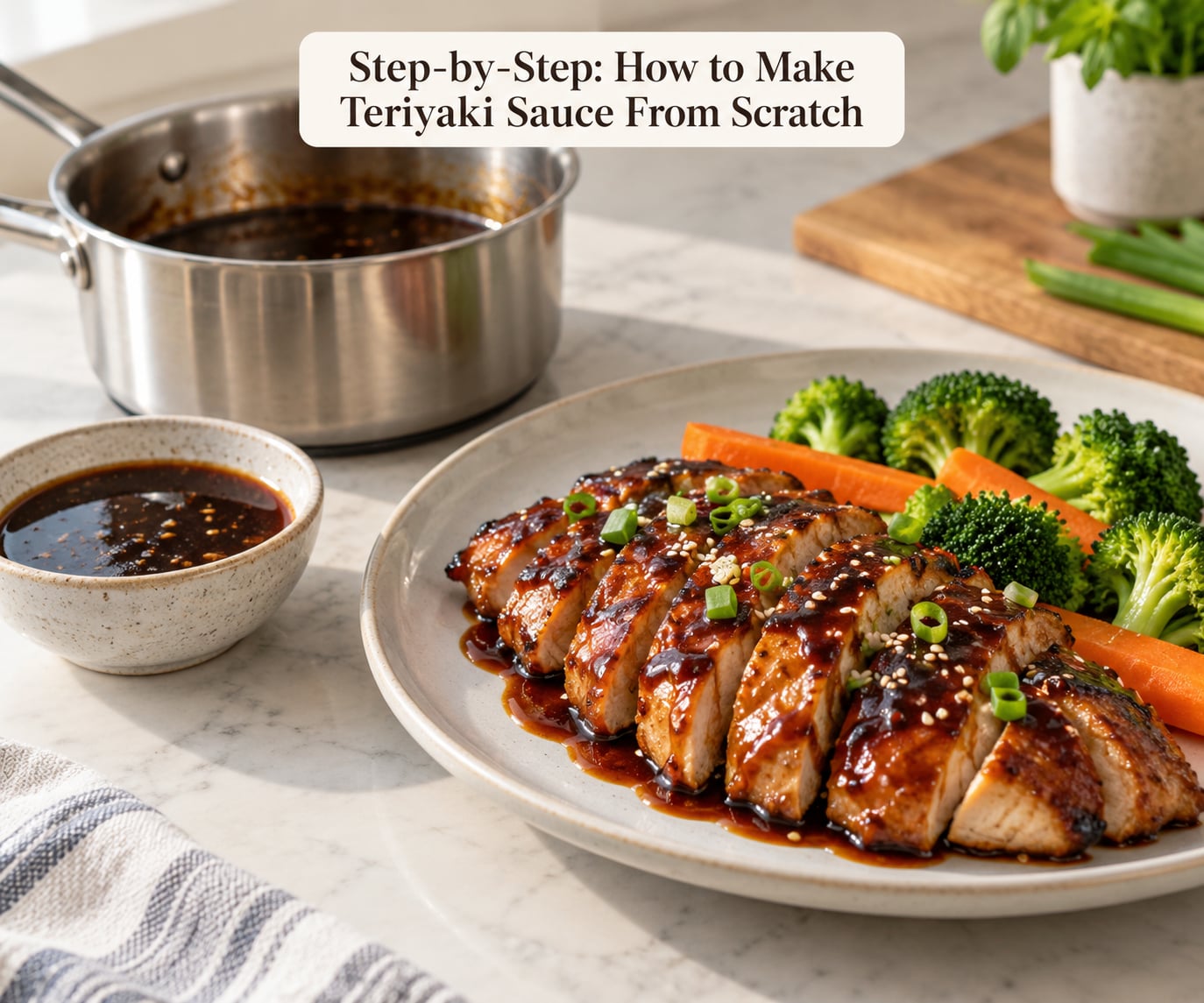
1. Cook the aromatics for 30 seconds
Warm 1 tablespoon of oil in the saucepan over medium heat. Add the ginger and garlic and cook until fragrant, about 30 seconds, without letting them color. If you brown the garlic, the sauce turns bitter and no amount of simmering will take that edge off.
2. Whisk in the soy sauce, mirin and sugar
Pour in the soy sauce, then the mirin, then add the brown sugar. Whisk until the sugar dissolves completely, which takes about 20 seconds at medium heat. Add 1/4 cup of water if you want a looser sauce, or swap in chicken stock for a rounder body. Bring the mixture to a full boil, stirring, and scrape the bottom of the pan.
3. Simmer and reduce for 5 to 8 minutes
Drop the heat to medium-low so the sauce bubbles steadily without a hard rolling boil. Simmer for 5 to 8 minutes, stirring occasionally, until the surface looks shinier and small bubbles move more slowly. You want it reduced by about a third, not halved. Half is where the sauce turns gluey and hard to rescue.
4. Whisk the slurry and stir it in
Mix 1 tablespoon of cornstarch with 2 tablespoons of cold water in a small bowl until no lumps remain. Return the sauce to a simmer, pour in the slurry while whisking, and stir for 60 to 90 seconds until it turns glossy and coats the back of a spoon. Add the second tablespoon of cornstarch only if you want a glaze that clings like a restaurant one.
5. Kill the heat and rest it
Take the pan off the burner, stir in the sesame oil if using, and let the sauce sit for 2 minutes. It thickens further as it cools, so judge the consistency while it is still warm rather than after it reaches room temperature.
How to make teriyaki sauce from scratch for chicken means using it in two stages. Reserve a third of the sauce before cooking, toss it with raw chicken, vegetables or tofu, and let it sit for 20 to 30 minutes. Cook the marinated protein, then add the reserved sauce to the hot pan for the final 2 to 3 minutes, spooning it over the pieces as it reduces and coats them. Cook poultry to 165°F (74°C) before the sauce has reduced enough to glaze. Thickening the pan sauce with a splash of the reserved liquid is a nice way to loosen whatever sticks to the skillet.
How to Make Teriyaki Sauce Thicker or Thinier
The canonical ratio is 1 to 2 tablespoons of cornstarch per 1/4 cup of cold water, and cold water matters because warm water cooks the starch into lumps before you can stir them out. Whisk the slurry until it looks like thin milk, pour it in at a simmer, and keep the heat moving for a full minute so the starch finishes cooking and loses its raw taste.
For a glaze that clings to a skewer, use 2 tablespoons. For a drizzle that runs over rice or vegetables, use 1 tablespoon. For a dipping sauce thin enough to coat a spoon lightly, skip the cornstarch entirely and reduce the liquid a little longer instead. If a batch goes too far and turns gluey, whisk in warm water a tablespoon at a time until it loosens. You cannot thicken your way back, but you can always thin it.
How to Adjust the Flavor
To make it sweeter, stir in an extra teaspoon of brown sugar or honey at the end rather than at the start, so you can taste as you go. To make it saltier, add a splash of reduced soy sauce or a pinch of salt; the same rule applies to low-sodium soy, which needs more salt than regular. For more sharpness, add a teaspoon of rice vinegar or a squeeze of lime. For heat, minced fresh chili or red pepper flakes go in with the garlic, and a teaspoon of chili garlic sauce added at the end gives more heat with less fuss.
More aroma comes from grated fresh ginger and an extra garlic clove, not from simmering the aromatics longer. A quarter teaspoon of toasted sesame oil stirred in off the heat deepens the flavor without making it taste like sesame. For a gluten-free sauce, use tamari and skip the soy-based slurry thickener. No MSG is needed; the soy sauce and the browning from the reduction supply plenty of savory depth on their own.
Common Mistakes
- The sauce runs off the food. Not enough reduction, or the slurry was too thin. Simmer 2 more minutes, or add another tablespoon of cornstarch mixed with two tablespoons of cold water.
- The sauce is gluey and gummy. You reduced it too far before the slurry went in. Whisk in warm water a tablespoon at a time, then simmer 1 minute.
- Teriyaki chicken is cloyingly sweet. There was too much mirin and sugar relative to soy sauce. Add a tablespoon of low-sodium soy and a teaspoon of rice vinegar, then simmer 1 minute.
- The sauce is too salty. Regular soy sauce reduced down, or more slurry than liquid. Stir in warm water and unsalted stock until it tastes balanced, then re-thicken if needed.
- It tastes bitter or scorched. Garlic or sauce burned on the pan bottom. Start over; no amount of stirring fixes a burned sauce.
- It boiled over on the stove. The heat was too high while reducing. Use medium-low, a wider pan, and stir more often.
- The slurry went lumpy. Cornstarch hit the sauce straight from the packet, or the water was warm. Whisk the slurry in cold water first and pour it in while whisking.
Measure everything before the heat goes on. A tablespoon heaped and a tablespoon level are different sauces entirely, and the difference shows up once you reduce a half cup of soy sauce. Keep the heat at a steady simmer rather than a boil, and stir the bottom corners every 30 seconds, which is where reduction actually happens.
For storage, cool the sauce in the pan, then transfer it to an airtight container. Refrigerated, it keeps about two to three weeks, and the container type matters more than people expect, since a jar with a gasket holds longer than a bowl under plastic wrap. Freeze it in small portions in a silicone ice cube tray or a freezer bag for up to three months, then thaw a cube in the pan for two minutes. Thawed sauce thickens again on low heat with a splash of water. A larger home cook who wants to batch this alongside a big dinner can double the recipe, but the reduction time stays roughly the same, since the same heat is working on twice the volume in the same pan. If you are building a full menu, our guide to how to make chicken stock from bones makes a useful base for a thinner pan version, and the sauce pairs naturally with a chicken grain bowl for dinner.
Frequently Asked Questions
What are the ingredients of a teriyaki sauce?
A basic teriyaki sauce uses soy sauce, mirin or sake, brown sugar, fresh ginger and often garlic. Some versions add sesame oil, a splash of water or rice vinegar, and a cornstarch slurry for thickness. Five ingredients is enough for a traditional sauce, and every one of them is a pantry staple or a fresh knob of ginger.
Can you make teriyaki sauce without sake and mirin?
Yes, and the sauce still tastes good. Rice vinegar is the most common stand-in, paired with an extra teaspoon of sugar to mimic mirin’s sweetness. Dry sherry also works. Swap the same volume one for one and keep the soy sauce and sugar where they are, since the sweetness comes mostly from those.
Will cornstarch thicken up teriyaki sauce?
Yes, and it is the fastest way to get a restaurant-style glaze. Mix 1 to 2 tablespoons of cornstarch with 2 tablespoons of cold water, whisk it smooth, then pour it into a simmering sauce while stirring. It thickens in about 60 to 90 seconds and keeps thickening as the sauce cools, so start with less than you think.
How do I tone down sweetness in teriyaki sauce?
Stir in a tablespoon of low-sodium soy sauce and a teaspoon of rice vinegar, then simmer for a minute to integrate them. If the sauce is already thick, add a little warm water first so the new liquid spreads through. Starting with less mirin next time is the cleaner fix, since honey and brown sugar can be pulled back more easily than wine.
Is there MSG in teriyaki sauce?
Not in a homemade version, and you do not need to add any. Soy sauce, the browning during reduction and a little grated ginger supply the savory depth that MSG provides. Commercial bottles vary, so read the label if that matters to you. Tamari and coconut aminos are both MSG-free and gluten-aware options for a homemade sauce.
How long does homemade teriyaki sauce last?
In an airtight container in the refrigerator, a homemade batch keeps about two to three weeks. Cool it in the pan first and refrigerate it within two hours of cooking. For longer storage, freeze it in single-serving portions for up to three months and thaw a cube in the pan over low heat before using it.
What To Do First
Measure the soy sauce, mirin and sugar before you turn on the burner, then simmer for five minutes instead of ten. That is the whole difference between a sharp thin sauce and a balanced glaze that sticks. Once it tastes right, make a double batch and freeze half; the next time you are mid-week with chicken and no plan, you are three minutes from dinner. If you are plating rather than glazing, our guide to a sauce swoosh on a plate shows how to put a thinner version down cleanly.