
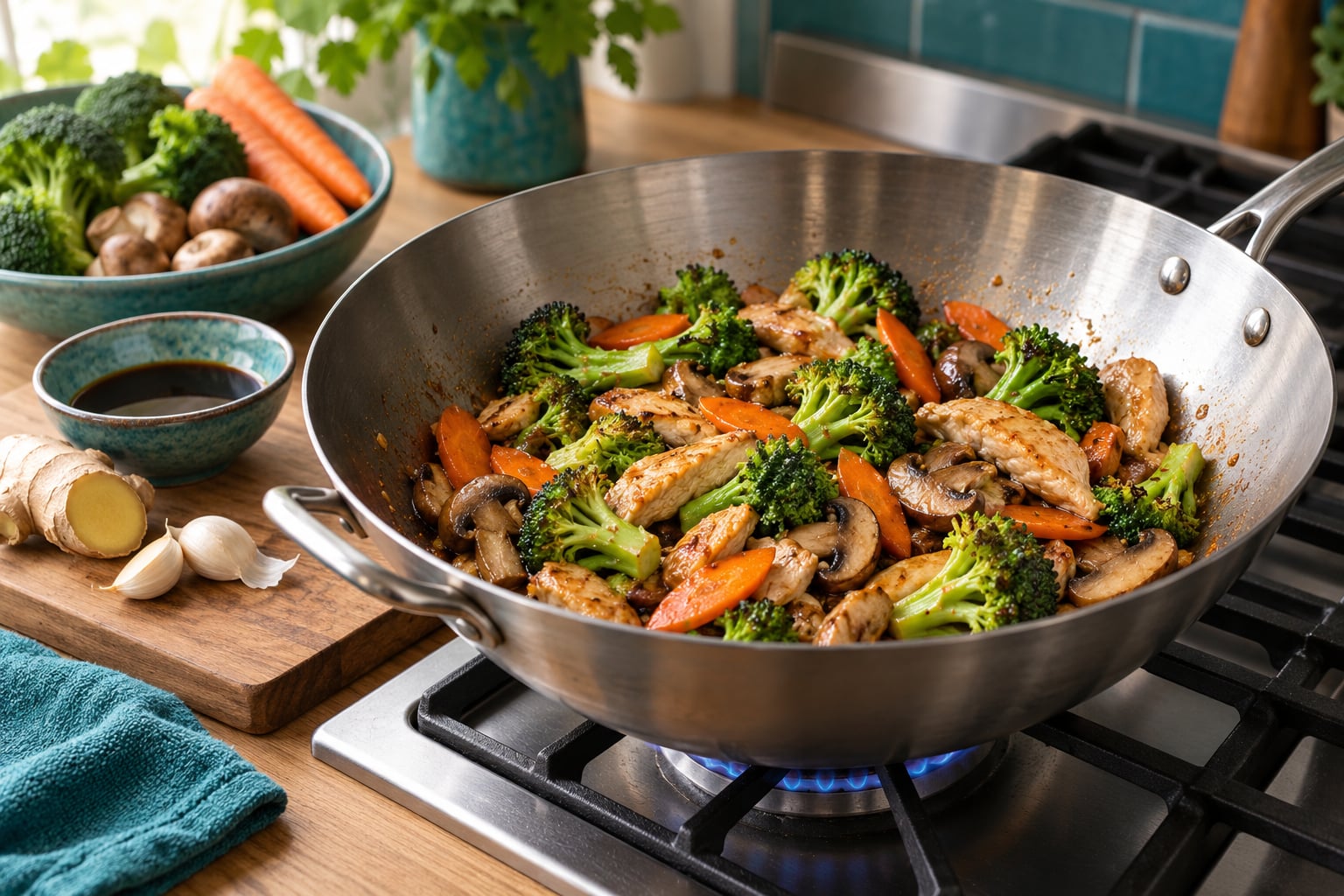
A stir fry turns soggy when moisture enters the pan faster than the heat can evaporate it, so the food boils in its own liquid instead of searing. If you learn how to make a stir fry that is not soggy, you are really learning to control four things: how dry your ingredients are, how hot the pan is, how much food is in it at once, and when the sauce goes in.
Most home pans run cooler than a restaurant wok, so nearly every soggy stir fry comes down to one of those four. The whole method takes about 25 minutes including prep, and the technique works in a skillet as well as a wok.
Table of Contents
- What You Need
- Step-by-Step: How to Make a Stir Fry That Is Not Soggy
- Common Mistakes
- Frequently Asked Questions
- Why does my stir fry turn out soggy?
- How can I make vegetables crisp in a stir fry?
- Is it better to use a wok or a skillet for stir fry?
- Can I use frozen vegetables without making the stir fry soggy?
- How do I thicken stir-fry sauce without making it gluey?
- What oil is best for making a stir fry less soggy?
- Conclusion
What You Need
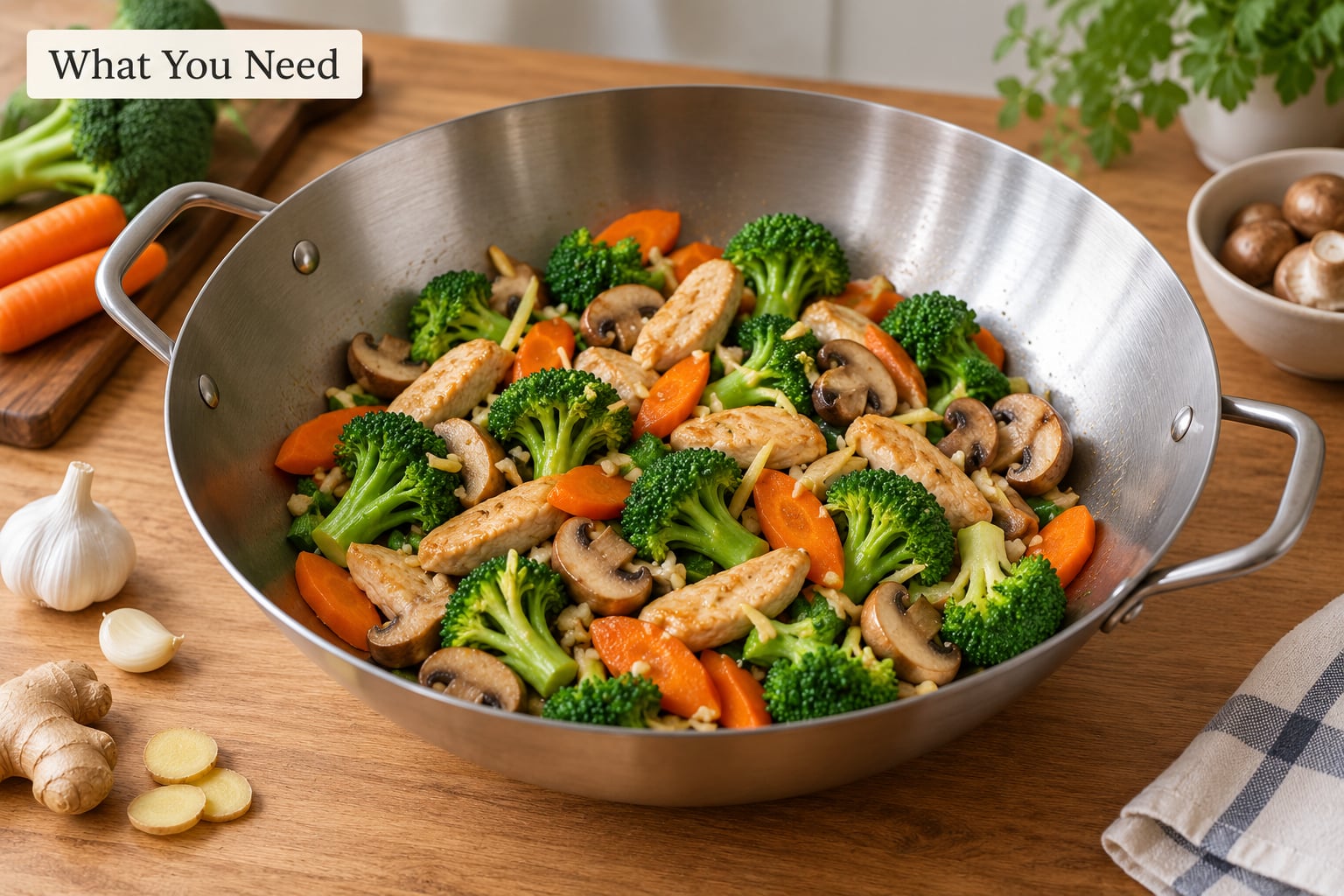
Start with a wide, flat-bottomed wok or a large skillet, roughly 12 to 14 inches across. The width matters more than the material, because you need open space between the pieces so hot oil can reach all of them.
Beyond the pan, you need:
- A high smoke point oil such as peanut, canola, grapeseed, or avocado for the actual frying.
- Toasted sesame oil, added off heat at the very end for flavor.
- A lean protein: chicken breast or thigh, shrimp, sliced beef, or firm tofu.
- Three to six vegetables cut into similarly sized pieces, so everything finishes at the same time.
- Aromatics: garlic, ginger, and scallion whites, minced or sliced.
- Sauce ingredients: soy sauce, rice vinegar, a teaspoon of sugar, and a spoonful of water or broth.
- Cornstarch for a slurry, plus salt and white pepper.
A wire whisk or chopstick for the slurry, and a salad spinner or clean towel for drying vegetables, both matter more than any gadget you could buy.
Step-by-Step: How to Make a Stir Fry That Is Not Soggy
1. Prep the ingredients so your stir fry is not soggy
Wash your vegetables first thing, before you cut them or turn on the heat. Water sitting on a cut surface soaks into the exposed flesh, and every extra drop has to boil off in the pan.
Dry them properly. A salad spinner followed by a pat with a clean towel is the difference between crisp and limp, and for mushrooms or blanched greens, blot each piece rather than just shaking the colander.
Cut everything to the same size. A carrot slice the width of a coin cooks at the same rate as a broccoli floret of the same thickness, while a fat chunk of stem next to a thin slice leaves you with one piece raw and one piece mush.
Two more prep notes that people miss:
- Salt late. Salting vegetables while they sit, whether you seasoned them at prep time or the sauce goes on early, pulls water out of the cells by osmosis. That water pools in the pan and becomes the puddle you are trying to avoid. Season at the sauce stage instead.
- Drain your protein. Thawed chicken that still carries freezer water, or shrimp sitting in a puddle of their own liquid, will dump that water straight into a hot pan.
Tofu is the worst offender, since the pressing step exists purely to squeeze out water. Our guide to cooking tofu so it is not soggy covers the pressing and drying routine in detail.
2. Make a thin sauce instead of a thick one
Restaurant stir fry sauce is looser than most home recipes suggest, because it gets reduced in a huge wok and it has to coat rather than puddle. A good starting point for two to three servings is 3 tablespoons soy sauce, 1 tablespoon rice vinegar, 1 teaspoon sugar, a teaspoon of toasted sesame oil, and 2 to 3 tablespoons water or broth.
Mix it in a bowl before the pan is hot. Sauce assembled at the stovetop is always a little too much, and it means you are measuring with half your attention on the pan.
If you want a thicker glaze, whisk 1 tablespoon cornstarch with 2 tablespoons cold water and add it to the sauce. Always use cold water and always whisk the slurry separately, because pouring cornstarch straight into liquid leaves lumps and pouring hot water in breaks the suspension.
3. Heat the wok until it is very hot
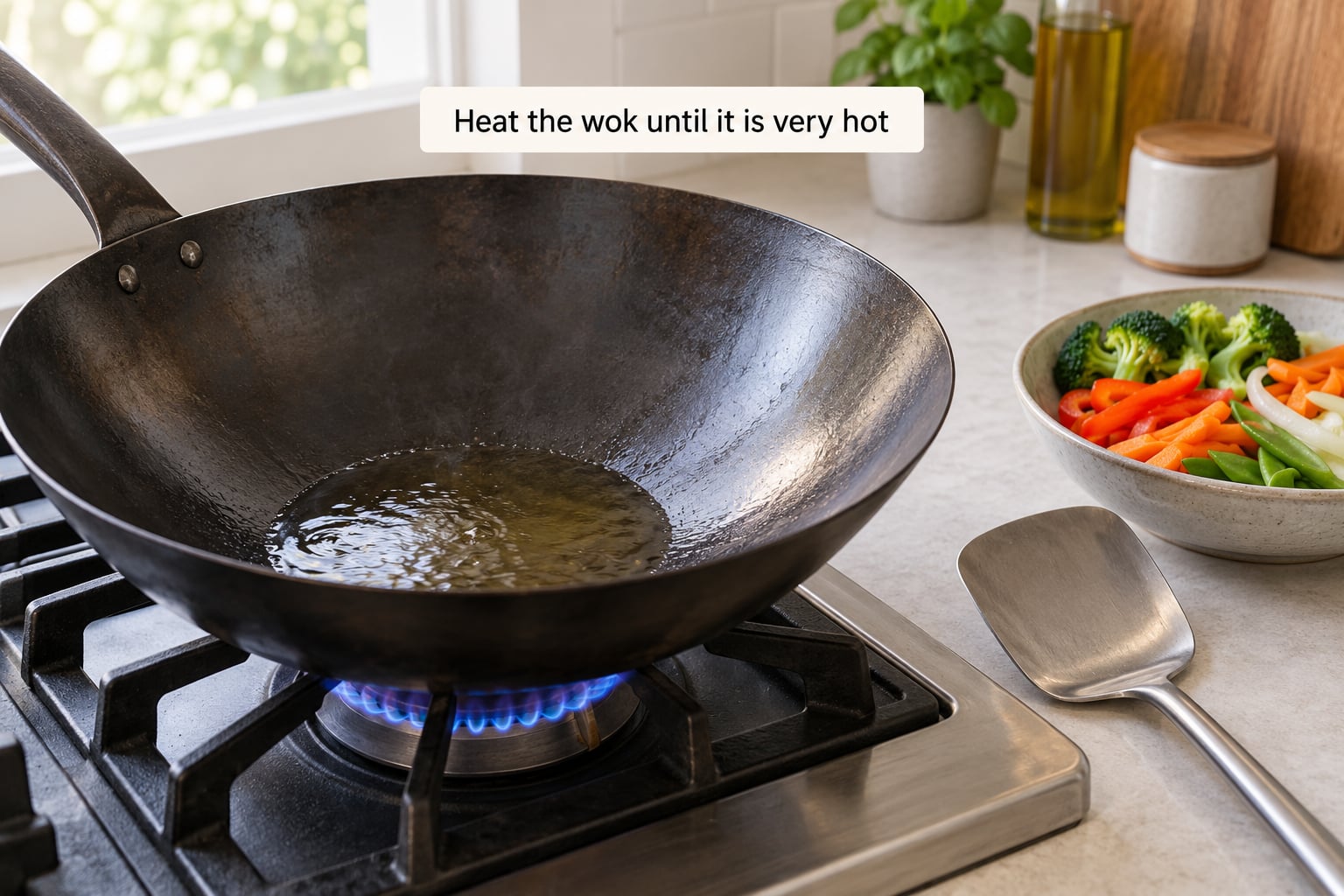
Aim for a preheated surface of roughly 400 to 450F (204 to 232C). On a stove, that means medium-high to high with a two-minute preheat, and on an electric coil or induction burner, closer to three to four minutes because the element climbs slowly and then dumps heat all at once.
Add 2 to 3 tablespoons of high smoke point oil and wait. The oil should shimmer and flow like water, and if you flick a drop of water in, it should sizzle and skate across the surface instead of sitting and bubbling slowly.
The reasoning behind the heat is simple. Water boils at 212F (100C), so a pan that never gets past that temperature can only ever boil your food. Above roughly 350F the surface water flashes off in seconds, which is what lets the Maillard reaction start and brown the food. That browning is where the flavor and the wok hei come from.
If your burner is weak, compensate rather than hope. Use a smaller batch, give the pan a longer preheat, and spread the food in one loose layer instead of piling it.
4. Cook the protein first and remove it if necessary
Protein goes in first because it needs the longest cooking time and because it releases water. Slice it thin, about a quarter inch, so it finishes alongside the vegetables instead of sitting in the pan.
For tender chicken and beef, velvet it first: toss the slices with 1 to 2 teaspoons of cornstarch and a splash of soy sauce, then let them sit for 15 minutes. The coating holds moisture in the meat instead of letting it leak into the pan.
Timings and safe temperatures, roughly:
- Chicken, sliced thin: 2 to 3 minutes in a screaming-hot wok, cooked to 165F (74C) internally. Thigh meat is fatter and slower.
- Shrimp: 45 to 60 seconds per side, opaque and just firm, with the tails off.
- Ground meat: 3 to 4 minutes, broken up, to 160F (71C).
- Beef or pork tenderloin: 90 seconds to 2 minutes for thin slices, to 145F (63C).
- Fish: 2 to 3 minutes, to 145F (63C).
- Firm tofu: 4 to 5 minutes, turning only when each side has set and browned.
Pull the protein out at about 80 percent done and put it on a plate. That keeps the pan from getting crowded, stops the meat from overcooking while you work through the vegetables, and gives you a clean hot pan for the next stage. The same idea applies to burgers and other proteins if you want the same crisp-sear logic; our method for juicy burgers covers the rest-and-return step.
5. Add vegetables in the right order
Add vegetables by density, from most to least dense, so the tough ones get time to cook and the delicate ones do not dissolve. Work down this order:
- First, 3 to 4 minutes: carrots, broccoli stems, cabbage, onions, mushrooms.
- Next, 2 to 3 minutes: broccoli florets, bell peppers, snap peas, zucchini.
- Then, 30 to 60 seconds: bok choy, spinach, kale, bean sprouts.
- Last, 20 to 30 seconds: garlic, ginger, scallion whites.
Two habits keep vegetables crisp. First, leave them alone for 30 to 40 seconds at a time so the bottom can brown, instead of stirring constantly, which keeps everything wet and moving. Second, do not cover the pan; a lid traps the steam you just worked to evaporate.
If your pan looks full, it is full. Stir fry in two batches rather than piling it. A crowded pan drops to a simmer almost instantly, and that simmer is exactly what turns crisp broccoli into grey mush.
6. Add the sauce at the end and toss once
Return the protein to the pan, pour in the measured sauce, and toss once or twice with a spatula. It should coat everything and look glossy, not sit in a puddle, and it usually needs 20 to 40 seconds, no more.
Then take the pan off the heat immediately. A stir fry keeps cooking from its own residual heat, and it carries on releasing water as it sits, which is why a stir fry that was perfect in the wok can be watery 20 minutes later on the table.
One counterintuitive step: if the pan runs dry before the sauce goes in and starts sticking, add a splash of water or broth. A brief hit of steam deglazes the pan, and that is what restaurant wok cooking does all night. Dry is a different failure from soggy, and it usually shows up because the recipe’s sauce volume was cut for a bigger pan.
Common Mistakes
Almost every soggy stir fry traces back to heat, crowding, or moisture timing. Here is what goes wrong and what fixes it.
Crowding the pan. One layer of food, not a mound. If everything would not fit in a single loose layer, cook it in batches.
Wet vegetables. A rinse that gets no towel after it is the most common cause of all. Wash early, dry hard, then keep the cut vegetables on a towel, not a flat board.
Salting before cooking. Salt draws water out of vegetable cells before they reach the pan. Save seasoning for the sauce stage.
A heavy sauce. Reduce the recipe’s sauce volume by about a third when the pan is smaller than the recipe assumes, and keep the cornstarch slurry separate until the last 30 seconds.
Adding the sauce too early. Sauce poured in at the start floods the pan, and you end up simmering your vegetables instead of searing them.
Covering the pan with a lid. A lid holds steam against the food. Stir fry is a dry, uncovered method.
Medium heat. Medium is fine for browning meat in a home oven-baked dinner, but a crowded medium-heat pan steams. High heat with smaller batches beats medium heat with one big batch.
Overcooking. Once vegetables are limp, the cells rupture and release their water, which makes the puddle worse. Sogginess is often a symptom of cooking too long, not of heat that was too low.
Stirring constantly. Food needs to sit against hot metal to brown. Stir every 30 seconds or so, not every two seconds.
If your stir fry is dry instead of soggy
The mirror problem is common too, and it usually means the sauce was cut too far or the pan was dry before the sauce went in. Add a splash of water or broth during cooking, loosen the sauce at the start, and serve it right away rather than letting it sit and reduce.
Can you fix a stir fry that is already soggy?
Yes, usually. Drain off excess liquid, return the food to a hot pan for a minute to drive off surface moisture, then add a fresh slurry of 1 tablespoon cornstarch to 2 tablespoons cold water and toss until it re-thickens. It will not return to first-sear crispness, but the sauce stops pooling.
Stir-fried noodles are a different problem
Noodles go soggy faster than vegetables, and the cause is water in the noodles rather than in the pan. Cook them, then drain and rinse under cold water to stop the cooking, spread them on a tray to dry for a few minutes, and toss with a little oil before they hit the wok. Same hot pan, same late sauce, but the noodles get dry first.
Why does a make-ahead stir fry turn watery?
Sauce continues to thicken and loosen as it sits, and vegetables keep releasing water, so a lunch portion made in the morning will be soupier than when you packed it. Store the sauce separate, cool the stir fry fast, and reheat in a hot pan with a splash of water rather than a microwave. It will not be quite as good as fresh, but it will not be a puddle either.
Frequently Asked Questions
Why does my stir fry turn out soggy?
Sogginess means moisture entered the pan faster than the heat could evaporate it, so your food boiled instead of searing. That happens when the pan is not hot enough, when it is crowded, when the vegetables came in wet, or when the sauce went in early. Dry the ingredients, preheat the pan to 400 to 450F, cook in one loose layer, and add a thin sauce at the end.
How can I make vegetables crisp in a stir fry?
Dry them first with a salad spinner and a towel, cut every piece to the same size, and salt them only when the sauce goes in. Add by density so broccoli and carrots get more time than spinach, and leave the vegetables undisturbed for 30 seconds at a time so the bottom can brown. No lid, high heat, and serve right away.
Is it better to use a wok or a skillet for stir fry?
A wide flat-bottomed wok heats faster and holds more in one layer, which is the main advantage. A large cast iron or stainless skillet works nearly as well, and a nonstick skillet is fine for beginners because nothing sticks on the way to the right temperature. Use the widest pan you own and keep the batch size down if it looks full.
Can I use frozen vegetables without making the stir fry soggy?
Yes, and frozen is often better than old fresh produce because it is flash-frozen at peak moisture. Thaw in the refrigerator overnight rather than in warm water, then pat the vegetables completely dry before they go in the wok. Any water that thawed on the packaging needs to go, or it will steam in a hot pan.
How do I thicken stir-fry sauce without making it gluey?
Whisk 1 tablespoon of cornstarch with 2 tablespoons of cold water, then add it during the last 30 seconds of cooking and toss constantly until it just coats the food. Using cold water keeps the slurry smooth, adding it in stages prevents a gluey paste, and thickening it at the end keeps the vegetables from absorbing water.
What oil is best for making a stir fry less soggy?
Use a high smoke point oil for the frying itself, such as peanut, canola, grapeseed, or avocado oil, so it can take the heat without breaking down and smoking. Butter burns at stir-fry temperatures because of its milk solids. Add toasted sesame oil off the heat at the end, where it adds flavor without losing its aroma.
Conclusion
If your stir fry keeps turning soggy, change these four things first: dry every piece of vegetable, preheat the pan until the oil shimmers, cook in a single loose layer or in batches, and pour a thin sauce in only at the end.
Everything else is detail. Salt late, keep the lid off, leave the food alone long enough to brown, and plate it the second it leaves the heat, because a stir fry keeps releasing water the entire time it sits. Once you get that sequence down, the crisp vegetables and glossy sauce take care of themselves.
Next time you cook, try serving the leftovers as a grain bowl for dinner the following day so you can see how much the serve-immediately step actually matters.