
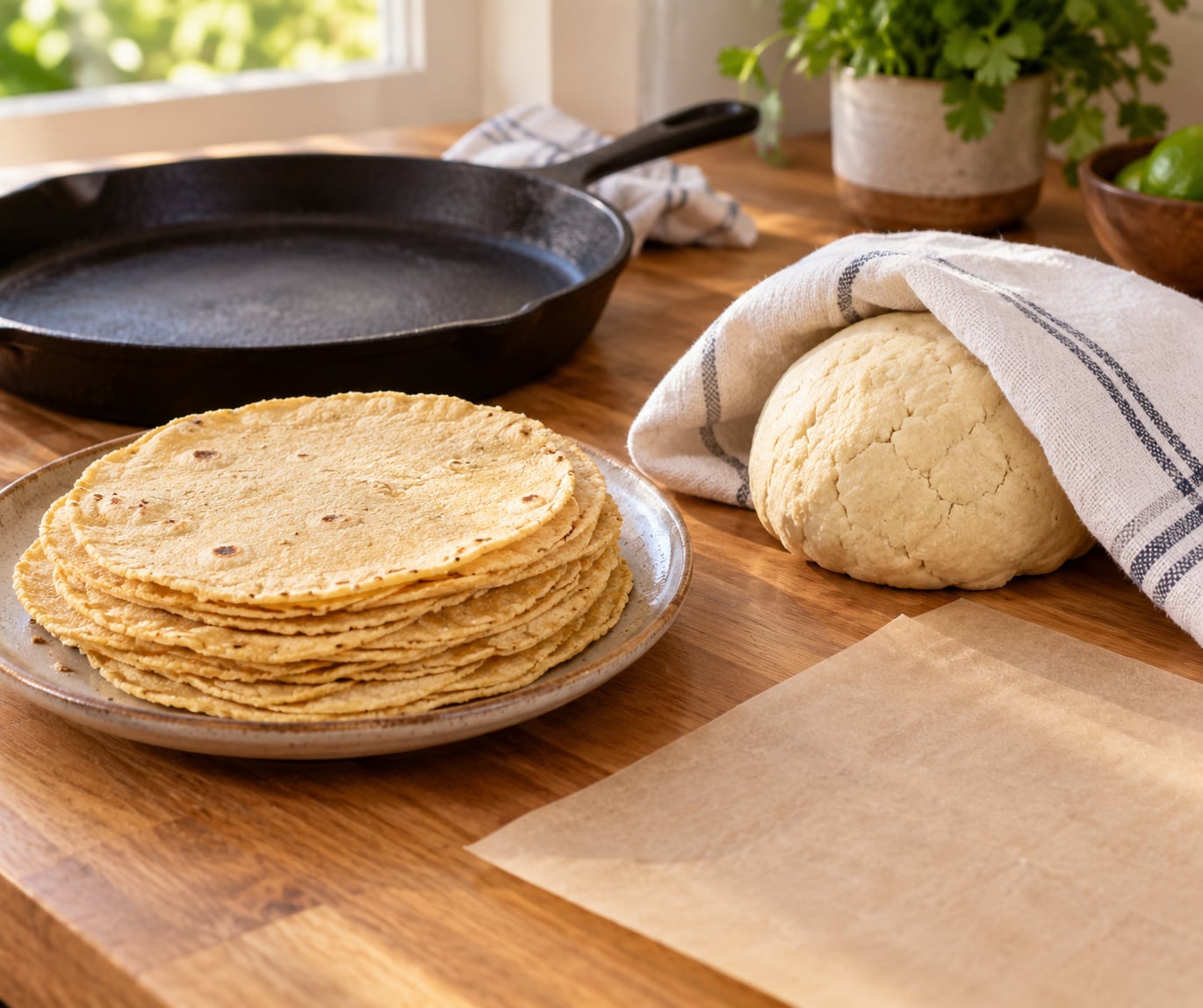
Yes, you can skip the press entirely. Put a dough ball between two sheets of plastic wrap or parchment, flatten it with any heavy, flat-bottomed object such as a cast iron skillet, a pie plate, a glass baking dish or a thick book, then cook it on a hot, dry pan. The whole thing takes about 40 minutes and costs pennies.
A tortilla press does one job: it applies even downward pressure between two flat plates. A heavy pan sitting on top of a wrapped dough ball does the same thing, and the plastic is what keeps sticky masa from bonding to your tool instead of the dough.
Most people who skip the press still own a rolling pin, and a rolling pin is genuinely enough. This guide also covers the no-rolling-pin case, because plenty of kitchens have neither tool and still want fresh tortillas for taco night.
Corn and flour tortillas are different doughs, different thicknesses and different cook times, so pick your lane first. I have both below, and both work press-free.
What You Need
The ingredient lists are short. The equipment list is the part that trips people up, so here is everything, including what to use when you have nothing but a counter.
For corn tortillas
- 2 cups (about 250 g) masa harina, the flour milled from nixtamalized corn. Plain cornmeal is not a substitute, because the alkaline treatment that makes masa workable is what gets cooked off the cob.
- 1.5 cups (355 ml) warm water, plus up to a quarter cup more for adjusting
- 1/2 teaspoon salt
- 2 tablespoons neutral oil or lard, optional but it makes the dough easier to handle
For flour tortillas
- 3 cups (360 g) all-purpose flour, not bread flour. Extra gluten makes tortillas tough and chewy when they cool.
- 1 teaspoon salt
- 1.5 teaspoons baking powder, which is what gives flour tortillas their slightly puffy, pliable texture
- 3 tablespoons neutral oil, melted if you prefer
- about 2/3 cup (160 ml) warm water
Equipment you need, none of it a press
- A heavy, flat-bottomed object for flattening: cast iron skillet, pie plate, glass baking dish, or a hardcover book wrapped in plastic
- Two sheets of plastic wrap or parchment paper
- A rolling pin for finishing and evening out thickness, optional
- A clean damp kitchen towel or a tortilla warmer
- A dry skillet or griddle, medium, plus a spatula and a small bowl of water for your finger
A kitchen scale helps more than people expect. Dough balls of 30 to 40 g give you tortillas that all cook in the same amount of time, and weighing is faster than eyeballing once you have a feel for it.
Step-by-Step: How to Make Homemade Tortillas Without a Press
How to make homemade tortillas without a press comes down to three things: dough hydrated just right, flattened thin and even, and cooked on a hot enough dry surface. The steps below handle both corn and flour doughs; the only difference is the mixing stage and the cook time.
Step 1: Choose Your Tortilla Type and Mix the Dough
Corn dough is roughly two parts masa harina to one and a half parts water by volume. That is about 2 cups of masa harina to 1.5 cups of warm water, and the water should feel like bathwater, not hot. Pour it in about half at a time, mixing with a spoon, then with your hand until the dough holds together.
Flour dough is about three parts flour to one part water, with oil and baking powder folded in. Mix the dry ingredients first, add the melted oil, then add the warm water a little at a time until the dough looks shaggy and comes together in your hand.
Neither dough should be sticky after mixing, and neither should be dry and crumbly. A dough ball that leaves residue on your palm is too wet; one that cracks when you squeeze it is too dry. Aim for the middle: it holds a shape, and a fingerprint pressed into it slowly fills back in without splitting the surface.
Step 2: Knead and Rest the Dough
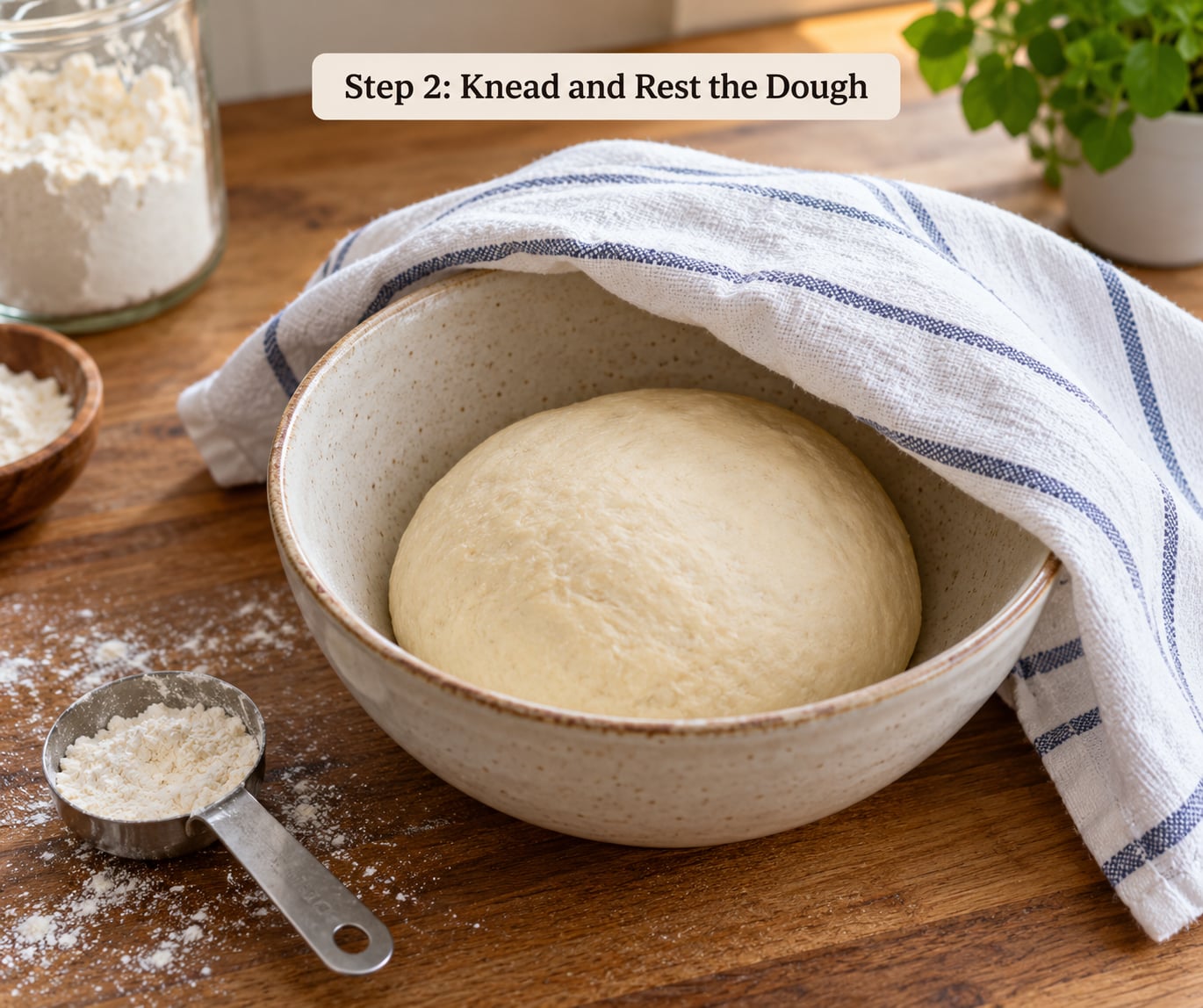
Knead corn dough for 2 to 3 minutes until it feels smooth and slightly tacky, like firm play dough. Then do the palm-slap test: flatten a small piece in your palm, pick it up, and tap the underside against the counter. If it holds together and leaves a faint mark of texture, the dough is ready. If it crumbles into pieces, knead longer; if it smears and sticks to your palm, add a spoonful of water.
Flour dough needs longer, around 5 to 8 minutes, because gluten has to develop enough to stretch without snapping back. It should feel smooth and elastic, and the surface should look slightly dull rather than shaggy.
Rest both doughs under a clean damp towel for at least 20 minutes, and up to an hour if you have time. Resting is what lets the flour dough relax so it rolls without springing back at you, and what lets the corn dough hydrate evenly so it flattens without cracking at the edges.
Corn dough keeps well covered in the fridge for up to three days. Flour dough keeps about two days at room temperature before it goes sour.
Step 3: Portion and Shape the Tortillas Without a Press
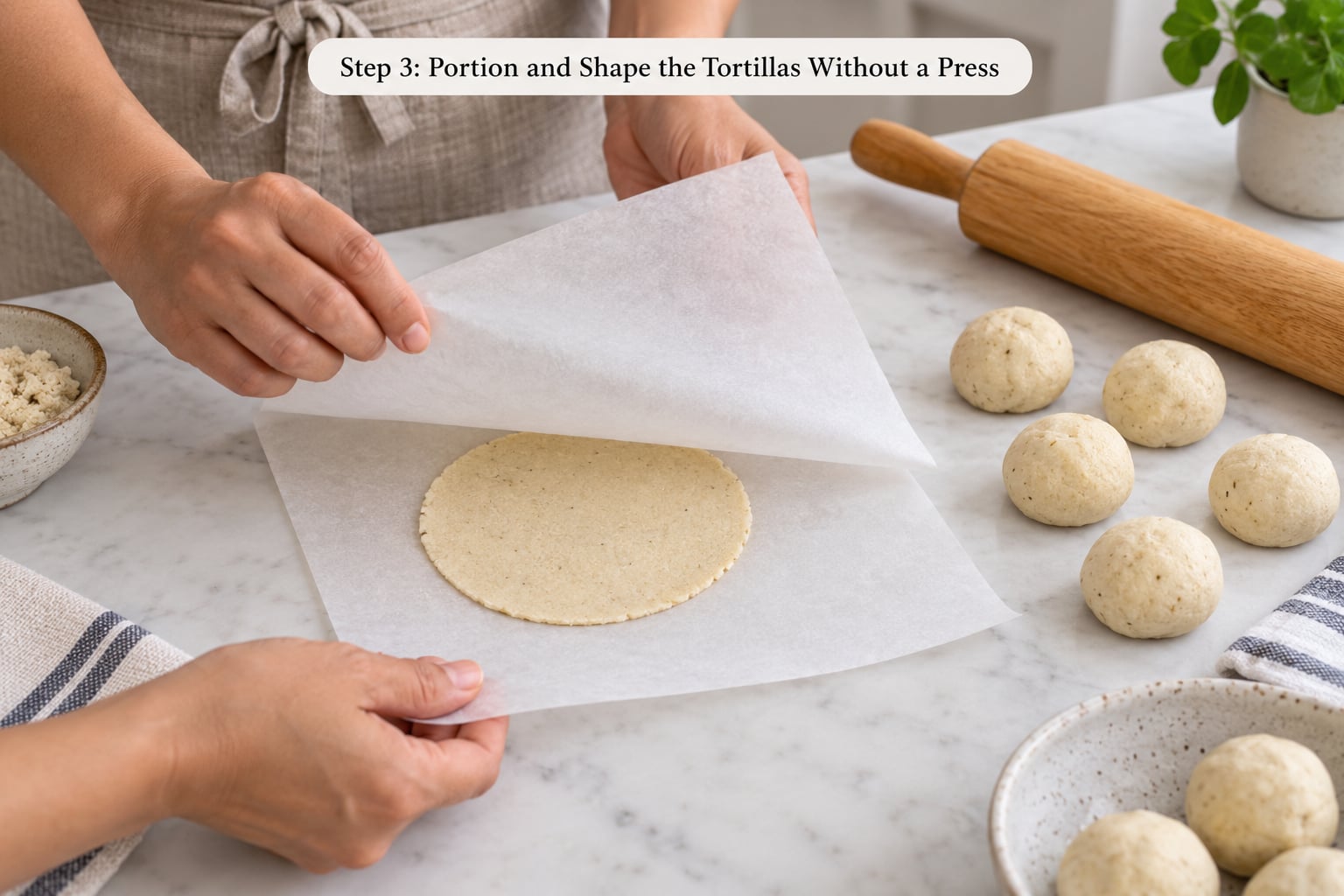
Cut the dough into 30 to 40 g pieces for corn, or about 60 g pieces for flour, and roll each one into a ball. Roll the balls in your cupped palms so they are smooth, because cracks almost always start on a rough surface.
Set one ball on the counter, lay a sheet of plastic wrap or parchment over it, and add a second sheet on top. Now flatten. A cast iron skillet is the best stand-in because it is heavy and perfectly flat, and pressing it straight down with both hands gives even pressure. A pie plate or glass baking dish works nearly as well, and a thick hardcover book does the job in a pinch.
Push down and slightly outward, rotating a few degrees between presses so the circle stays round. You want a disk roughly 5 to 6 inches across, or closer to 8 to 9 for flour tortillas.
Flip the stack over, peel back the top sheet, and lift the tortilla by the paper. If it tears, the dough is too dry; press a few drops of water into the ball, knead it again, and let it sit for 10 minutes. If it sticks badly to the paper, your dough is too wet and needs a couple more minutes of kneading rather than more flour.
With no rolling pin at all, keep using the skillet and just work from the center outward, pressing thinner each pass. With one, peel the tortilla onto the counter, give it a few light passes, and nudge the edge back to a circle instead of pulling it.
Another trick from bakers is to roll two tortillas together under one layer of plastic, which gets you closer to even thickness faster. They separate cleanly at the edges. Lift each one off and go straight to the pan, since the heat on your palm starts to relax the dough.
Step 4: Cook the Tortillas
Heat a dry skillet over medium-high and put a drop of water on it. When the water sizzles and skitters across the surface rather than sitting there, the pan is ready. Wipe the water off, lay a tortilla down, and do not touch it again for 45 to 60 seconds.
Corn tortillas cook longer than flour ones. Look for the edges to release slightly from the pan and for a few tan freckles to appear, then flip and cook the second side for another 45 to 60 seconds. A well-cooked corn tortilla puffs into a small balloon, and it usually inflates within 20 to 30 seconds of hitting the pan.
Flour tortillas move fast. Cook them 15 to 20 seconds per side, flip when you see the first bubbles along the top edge, and pull them out while they still look pale. They will keep cooking from residual heat and finish with a soft, pliable texture.
Stack the finished tortillas directly on top of each other in a towel-lined bowl, a small stack wrapped in a clean kitchen towel, or a tortilla warmer. Cover them. Corn tortillas do best with a very slightly damp towel, flour tortillas with a dry one, since a damp towel makes flour tortillas gummy in an enclosed stack.
Step 5: Keep Them Warm and Check the Texture
A finished tortilla should flex easily when you lift an edge and should not crack when you fold it. If it breaks along the fold, it was either rolled too thick or cooked too fast on the outside, which leaves the middle raw and it dries out as it cools.
Store cooked tortillas in a resealable bag or airtight container with a damp paper towel, and use them within 3 to 4 days. Flour tortillas freeze well for up to 2 months, laid flat in a freezer bag; corn tortillas freeze decently for about 3 to 4 weeks. Reheat straight from frozen in a dry skillet for 20 to 30 seconds a side.
If you are making a large batch, the work goes much faster as a line: portion all the balls first, then flatten one while the last is cooking, then cook, then repeat. A tortilla warmer or an inverted foil pan with a damp towel inside keeps the finished pile soft through the whole run.
Common Mistakes and How to Fix Them
Almost every bad press-free tortilla traces back to one of six things. Here is the symptom, the cause and the fix.
The edges crack while flattening. Usually the dough is too dry, it has rested so long the surface dried out, or it was under-kneaded. Add warm water a teaspoon at a time, knead again, and cover the dough while it rests so the surface does not skin over.
The dough welds itself to the paper or counter. That is a hydration problem, not a plastic problem. Too wet means knead longer, and dust the counter with a little masa harina or flour. Too dry also sticks, oddly enough, so check the squeeze test before reaching for more flour.
The tortillas are thick and chewy. You stopped pressing too early. Keep going with the skillet until you can almost see light through the dough, and finish with a rolling pin. For a very large tortilla, split the portion in two rather than fighting to stretch a little more.
The tortillas come out crispy. Two causes: the pan was too hot for the type, or the tortilla was too thick. Drop to medium heat and give flour tortillas the full 15 to 20 seconds rather than rushing them. Corn tortillas need 45 to 60 seconds per side at medium-high, and no oil in the pan unless you are deliberately making them crisp.
Corn tortillas never puff. Pressure from a press is not what makes a tortilla balloon, so do not chase it. It is steam, and steam needs a hot cooking surface. People on cast iron forums are consistent on this point: a pan that is properly hot puffs the tortilla, and a pan that is merely warm will not. Dry surface, medium-high, and give it time to sit undisturbed before the flip. Adding baking soda or lard to the dough does not help; masa harina is already nixtamalized.
They harden as they cool. They dried out on the counter, or the stack was left uncovered. Move finished tortillas to the towel-lined stack immediately, cover the whole pile, and do not put a hot skillet straight on a cold surface. A tortilla that goes rigid usually means it cooked on the outside long before the inside was done.
Tips for Better Tortillas Without a Press
Weigh your dough balls if you can. Equal portions cook evenly, and a tortilla that is 60 g next to a 35 g one is always the one that burns or stays raw.
Work in small batches of three or four. Every tortilla you flatten before cooking begins drying at the edges, so a short queue beats a long one, especially for corn dough.
Use parchment for corn and plastic for flour if you have a preference, and slide the tortilla off the paper onto the hot pan by the paper itself. Lifting it with your fingers is how you tear the first one.
Flour dough springs back when it is cold, so if it fights you, rest it 20 minutes rather than adding more flour. Warm dough rolls; cold dough snaps.
Turn a flat pan lid, a foil pan or the bottom of a heavy pot into a second press station once you have one going. Two stations beats one every time when you are cooking for more than two people.
Make one test tortilla and cook it before you portion the rest. A minute spent on that one tells you everything about your pan’s real temperature.
Frequently Asked Questions
Can I really make tortillas without a tortilla press?
Yes. A rolling pin, the flat side of a cast iron skillet, a pie plate or your palm can all replace a press. What matters is even pressure and thin dough, not the tool. Put the dough ball between two sheets of plastic wrap or parchment, press down with something heavy and flat, then finish with a rolling pin if you have one.
What is the easiest way to shape tortillas without a press?
Sandwich a dough ball between two sheets of parchment paper and press down with the heaviest flat object you own, rotating the stack a few degrees between presses to keep it round. Peel the top sheet off, lift the tortilla by the paper, and slide it onto the hot pan on the paper. That single habit stops most tearing.
Why do my tortillas crack when I flatten them?
Cracking almost always means the dough is too dry, has rested too long uncovered, or was not kneaded long enough. Add warm water a teaspoon at a time, knead until the surface is smooth and slightly tacky, and always cover the dough while it rests. Under-kneaded flour dough is the other common cause, and it needs a full 5 to 8 minutes.
How thick should homemade tortillas be without a press?
Aim for roughly 1/16 to 1/8 inch, and judge by feel rather than a ruler. Flour tortillas should be thin enough to fold without cracking. Corn tortillas run a little thicker, closer to 1/8 inch. If your tortilla puffs like a balloon when it hits the pan, the thickness is right, since trapped steam needs room.
Why will my corn tortillas not puff up?
Puffing comes from steam, not from pressure, so a press is not the answer. You need a hot, dry cooking surface: medium-high heat, no oil, and at least 45 seconds on the first side before you flip. A pan that is only warm will cook a tortilla flat. Do not add baking soda or lard to the dough, since masa harina is already nixtamalized.
How long do homemade tortillas stay good?
Cooked tortillas kept in an airtight container with a paper towel stay soft for 3 to 4 days. Flour tortillas freeze well for up to 2 months when laid flat in a freezer bag, and corn tortillas freeze for about 3 to 4 weeks. Revive them in a dry skillet for 20 to 30 seconds a side rather than microwaving, which dries the edges.
Start with the corn version if you are new to this, because the three ingredients and the 30 g dough balls leave you nowhere to hide a mistake. Mix with 1.5 cups of warm water, knead until the palm-slap test passes, rest the dough covered for 20 minutes, and press each ball under a cast iron skillet between two sheets of parchment. Cook it 45 to 60 seconds a side on a hot dry pan and stack it under a damp towel. Once that one tortilla puffs, everything else is repetition.