
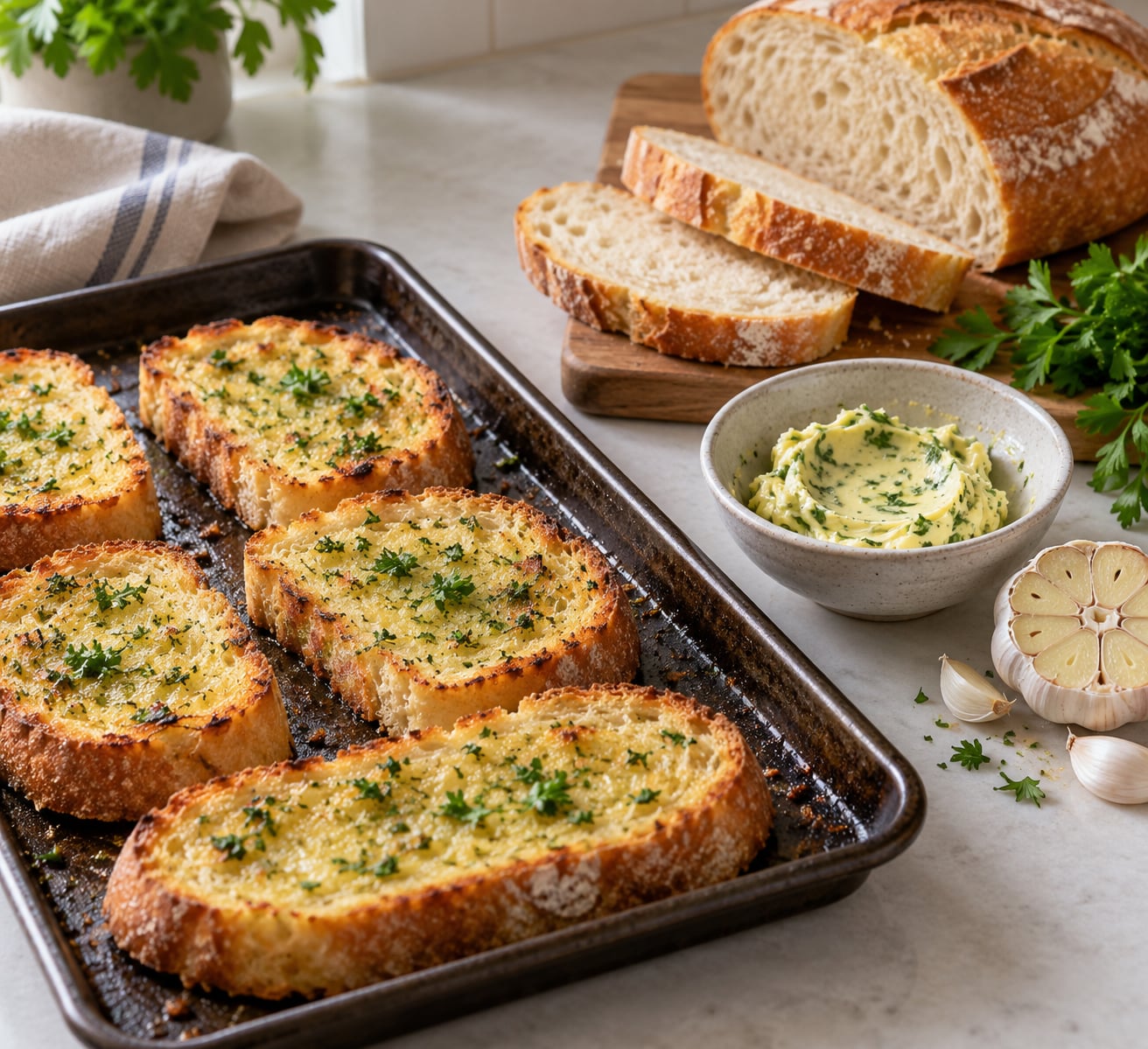
Yes, you can absolutely make garlic bread from regular bread. Soften 4 tablespoons of butter, stir in 1 teaspoon of garlic powder or 1 to 2 minced cloves plus a teaspoon of parsley, spread it on both sides of your slices, and broil at 425 F for about 3 minutes per side until the edges are golden. No dough, no yeast, no rising time.
The whole thing takes about 15 minutes start to finish and works on white, whole wheat or sourdough. It is the version I make on a weeknight when a pasta pot is already on the stove and there is no reason to buy a French loaf first.
Some people call this poor man’s garlic bread, and the name is fair. It is not the crackling, oil-slicked loaf from an Italian restaurant. It is buttery, garlicky and crisp around the edges, which is plenty when you are standing at the stove at 6pm trying to get dinner done.
What You Need for Garlic Bread From Regular Bread
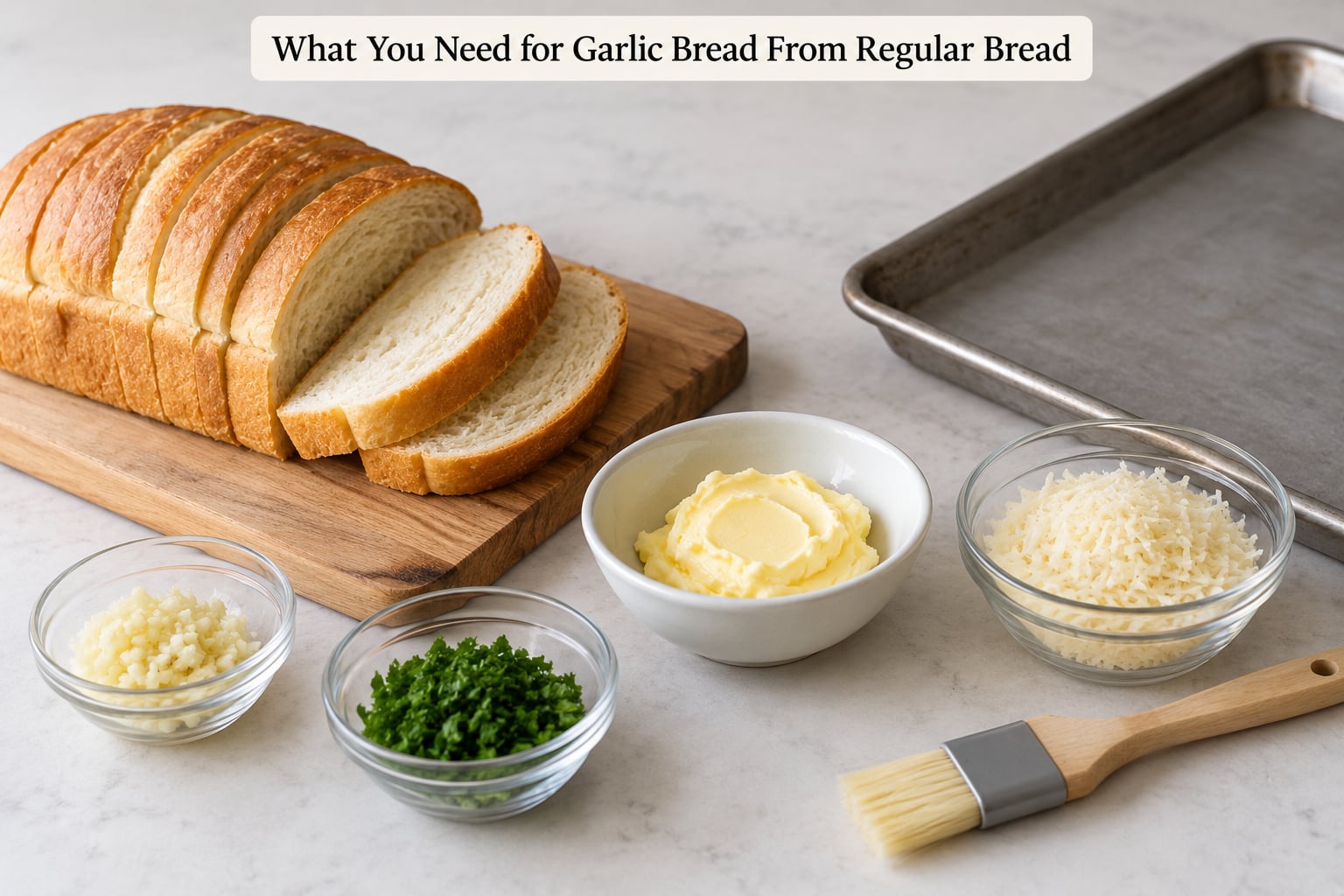
The ingredient list is short enough that you probably have everything except the parsley. Buy nothing special.
- 4 to 8 slices of regular sandwich bread, about half an inch thick
- 4 tablespoons unsalted butter, softened at room temperature for 20 to 30 minutes
- 1 teaspoon garlic powder or 1 to 2 fresh garlic cloves, minced or grated
- 1 teaspoon dried parsley or 1 tablespoon chopped fresh parsley
- A pinch of salt and a few grinds of black pepper
- Optional: 2 tablespoons grated Parmesan or shredded mozzarella, 1 teaspoon Italian seasoning, a pinch of sugar or honey
As far as tools go, a baking sheet lined with parchment or a silicone mat is what you want. A small pastry brush helps push the butter into the crumb, but the back of a spoon works fine if you do not own one.
Which regular bread works best
Sourdough is my first pick. Its open crumb catches the garlic butter and its crust goes properly crisp under the broiler, and it holds together when you pick it up. Any sturdy loaf works, and a slightly stale loaf is better than a fresh one, so day-old sandwich bread is an asset rather than a problem.
Regular sliced white bread works too, which is the point of this method. Just toast the slices on the baking sheet for 3 to 4 minutes before spreading the butter. That pre-toast firms up soft sandwich bread enough that it will not tear or fall apart when you spread or flip it.
Whole wheat is the best of the soft breads because the bran gives you a nuttier edge against the garlic. Multigrain is fine but the seeds make it chewy and they brown before the bread does. Very thin deli-style bread is the one to skip, since it goes from pale to black under the broiler faster than you can react.
Step-by-Step
- Soft the butter. Cut 4 tablespoons of butter into cubes and leave them on the counter for 20 to 30 minutes until they dent under a spoon but still hold their shape. If you are impatient, cut the butter into small pieces and microwave them for 5 seconds at a time, checking each round.
- Make the garlic butter. Stir 1 teaspoon of garlic powder or 1 to 2 minced garlic cloves into the soft butter, then add 1 teaspoon of parsley, a pinch of salt and a few grinds of pepper. Mix with a rubber spatula until the mixture is uniform and no streaks of plain butter remain.
- Toast the slices first. Lay your slices on the lined baking sheet and bake at 350 F for 3 to 4 minutes if the bread is soft sandwich bread. Skip this step for sourdough or a crusty loaf.
- Spread on both sides. Use the back of a spoon or a pastry brush to work a thin, even layer of garlic butter onto both sides of each slice. Thin and even is the goal. A thick layer melts and slides off into the oven.
- Broil. Move the rack about 4 inches from the broiler element and set the oven to broil. Bake 2 to 3 minutes, watch it constantly, then flip and repeat until both sides are golden with a few darker freckles.
- Add cheese if you want it. Scatter grated Parmesan or shredded mozzarella over the slices during the final 2 minutes of broiling and watch it closely, since cheese goes from melted to scorched in seconds.
Do not walk away during step 5. A broiler does not toast bread gradually, it browns whatever is closest to the element first, and thin slices can go from pale to char in under a minute.
If you have never made bread from scratch, you do not need to. That is a longer project with yeast, kneading and a proofing step. For an easy comparison, our guide to how to make pizza dough at home walks through what that extra work involves, and it is a very different evening from the 15 minutes this recipe takes.
How to Make Garlic Butter
Garlic butter is the whole recipe, so it is worth doing it properly. Room temperature butter is the non-negotiable part; melted butter soaks into the crumb and leaves the surface dry and greasy rather than evenly seasoned.
Grating the garlic on a microplane gives you a paste that disappears into the butter with no chunks left behind. A pinch of sugar or honey, about 1/8 teaspoon, rounds out the sharp edge that some people find harsh in garlic powder. It tastes like a secret ingredient because nobody can identify it.
Two things to skip. Do not run the butter and parsley through a food processor, because the blades bruise the leaves and turn the mixture green and bitter. Fold the herbs in by hand instead.
If the butter keeps sliding off the slice as you spread, that is the bread being too soft, not the butter being wrong. Chill the slices for 15 minutes or pre-toast them, and spread with a light hand.
How to Toast Regular Bread Until Crisp
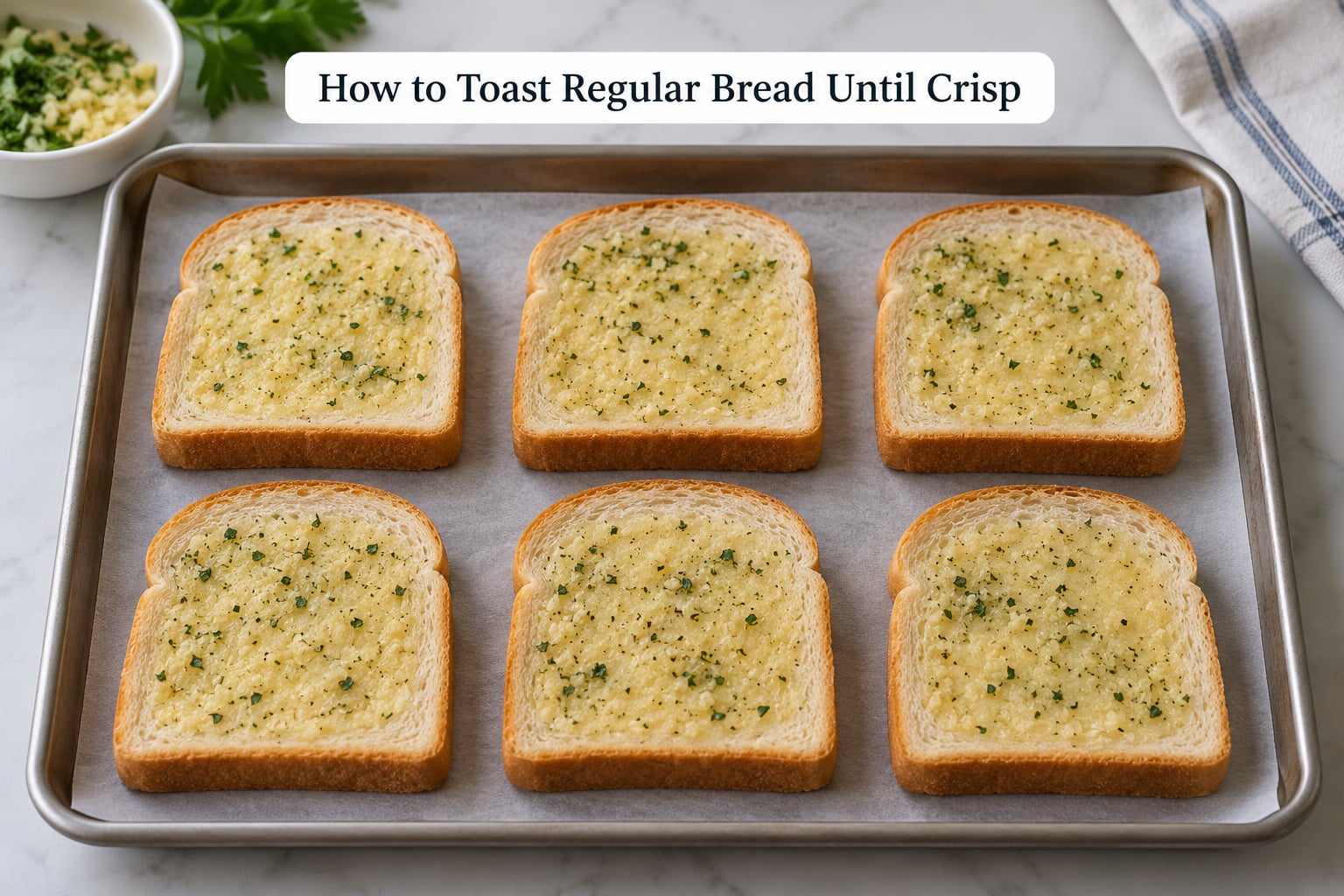
Spacing matters more than anything else here. Leave a finger’s width between slices so hot air reaches the edges. Crowded slices steam each other and go soft in the middle while the outer edges brown.
For a gentler result that is easier to control, bake at 350 F for 10 to 12 minutes instead of broiling, then finish under the broiler for 60 to 90 seconds if you want deeper color. Plenty of home cooks prefer this route because the slower bake cooks the middle through before the top burns.
The result you are aiming for is golden brown with a crisp, dry crumb, not pale with butter sitting on it. If the slices come out chewy rather than crisp, they needed another 2 minutes, and if they are blackened at the edges, the broiler was too close.
How to Make Garlic Bread Without an Oven
A skillet is faster than an oven and gives you more control. Warm a tablespoon of olive oil or butter in a heavy skillet over medium heat, lay the buttered slices in, and cook 2 to 3 minutes per side until golden. Pressing them flat with a spatula helps the soft sandwich bread keep contact with the pan. You get the same result in about 8 minutes.
In an air fryer, set it to 375 F and cook the slices for 4 minutes, flip, then 3 more minutes. Check early, since air fryers run hot and the butter can go dark before the bread crisps. Lay the slices in a single layer and do not crowd them.
How to Add Cheese Without Burning It
Add cheese for the final 2 minutes of cooking, never at the start. Parmesan browns fast and turns acrid if it sits under the broiler for 6 minutes, and shredded mozzarella goes from melty to rubbery in about that long.
Parmesan gives sharp, salty flavor and browns in under a minute, so it goes on last and stays close to the heat. Mozzarella melts smoother and browns slower, so it can go on with about 3 minutes left. Provolone and mozzarella together make the closest thing to the restaurant version.
If the top is browning faster than the cheese is melting, tent the sheet loosely with foil for a minute, then uncover it. You can also pull the pan out for 20 seconds to slow the broil down, which is often easier than adjusting anything.
Common Mistakes
Garlic bread that burns under the broiler. This is the most common failure, and it is always the same cause: thin bread plus unattended heat. Move the rack down 2 inches, cut the broil time by half, and stand at the oven door. If you are cooking for a crowd and cannot watch it, use the 350 F bake method.
Soggy bread in the middle. Too much butter and not enough heat is the pairing that causes it. Spread a thinner layer, space the slices out, and give them the full 10 to 12 minutes at 350 F. Wrapping the finished slices in foil while they sit traps steam, which makes the crust soft again.
Garlic that tastes bitter or harsh. Garlic goes from raw to bitter fast once it starts browning, and garlic powder scorches almost instantly. Pull the bread the moment the surface is golden, use a moderate heat, and remember that garlic keeps developing flavor as it sits, so a slightly light toast ends up stronger after a few minutes.
Bread that falls apart when you pick it up. Soft sandwich bread has no structure. Pre-toast it, use a thinner layer of butter, and lift slices with a wide spatula rather than your fingers. Sourdough and any crusty loaf mostly avoids this problem on its own.
Cheese that separates or strings oddly. Cold cheese plus a hot pan gives you uneven melting. Grate it from a block rather than using pre-shredded, which carries anti-caking powder, and add it to hot bread so it melts on contact.
For serving, run the slices under the broiler for 30 seconds at the last minute so the cut edges char slightly. Garlic bread belongs next to pasta, soup, chili and stew, or standing on its own with antipasti. It is also the thing that turns a can of soup into dinner when you cannot face cooking a second dish.
For leftovers, let the slices cool uncovered on a wire rack, then store them in an airtight container at room temperature for up to two days. Do not refrigerate them, since the starch firms up in the cold and the slices turn hard and leathery. Reheat in a 350 F oven for 5 to 7 minutes rather than the microwave, which makes the crust soft. Any slices that go past their best still make excellent croutons, and we have a method for how to make croutons from stale bread.
You can also do the whole thing ahead. Roll the leftover garlic butter into a log, wrap it in parchment, and freeze it for up to three months; scoop off one-centimeter slices as needed. Or assemble the buttered bread, freeze it flat on the tray, then transfer it to a bag and keep it for a month, ready to broil straight from frozen with two extra minutes.
Frequently Asked Questions
What kind of regular bread is best for garlic bread?
Sourdough is the best regular bread for garlic bread because its open crumb holds the garlic butter and its crust turns properly crisp. Stale sliced white bread works well too, especially after a 3 to 4 minute pre-toast that firms it up. Whole wheat is the strongest of the soft sandwich breads, and multigrain works if you do not mind the seeds. Skip very thin deli bread, which browns before it toasts.
Can I make garlic bread in a toaster oven?
Yes, a toaster oven handles this recipe well because it heats fast and puts the slices close to the element. Broil for about 2 minutes per side, watching the whole time, or bake at 350 F for 8 to 10 minutes for a gentler result. Keep an eye on it, since a toaster oven runs hotter than the oven above the setting suggests and soft sandwich bread can scorch in under a minute.
How do I keep garlic bread from getting soggy?
Spread a thin, even layer of garlic butter instead of a thick one, space the slices a finger’s width apart so hot air reaches the edges, and make sure the crumb cooks all the way through, which takes 10 to 12 minutes at 350 F. Do not cover finished slices with foil while they rest, since trapped steam softens the crust. Cool them uncovered on a wire rack before storing them in an airtight container.
Should I add cheese before or after toasting the bread?
Add cheese for the final 2 minutes of cooking, once the bread is already golden underneath. Parmesan browns in under a minute, so it goes on last and stays near the heat, while shredded mozzarella can go on with about 3 minutes remaining because it melts slower. Adding cheese at the start is the usual reason cheesy garlic bread tastes scorched before the middle is hot.
Can I make garlic bread without butter?
Yes. Olive oil works and lets the garlic flavor come through more sharply, which suits a tomato-topped version. Melt the oil first and stir in the garlic powder, or garlic, parsley and salt, then brush it on both sides. You can also melt a little butter into the oil for a middle ground. The timing stays the same, though oil browns faster than butter, so watch the slices closely under the broiler.
How long does homemade garlic bread stay crispy?
It is best within the first two hours, and it will stay acceptable in an airtight container at room temperature for up to two days. Refrigerating it is the mistake, since the starch firms up in the cold and the slices turn hard and leathery. To bring back the crust, reheat in a 350 F oven for 5 to 7 minutes, or briefly in a toaster, instead of using the microwave, which softens the crust.
Start by softening the butter properly, since that single step separates good garlic bread from greasy bread, and everything else takes 15 minutes. For a comparison of how bread behaves in a different pan, our how to make grilled cheese with crisp bread guide covers the same pre-toast trick in more depth.