
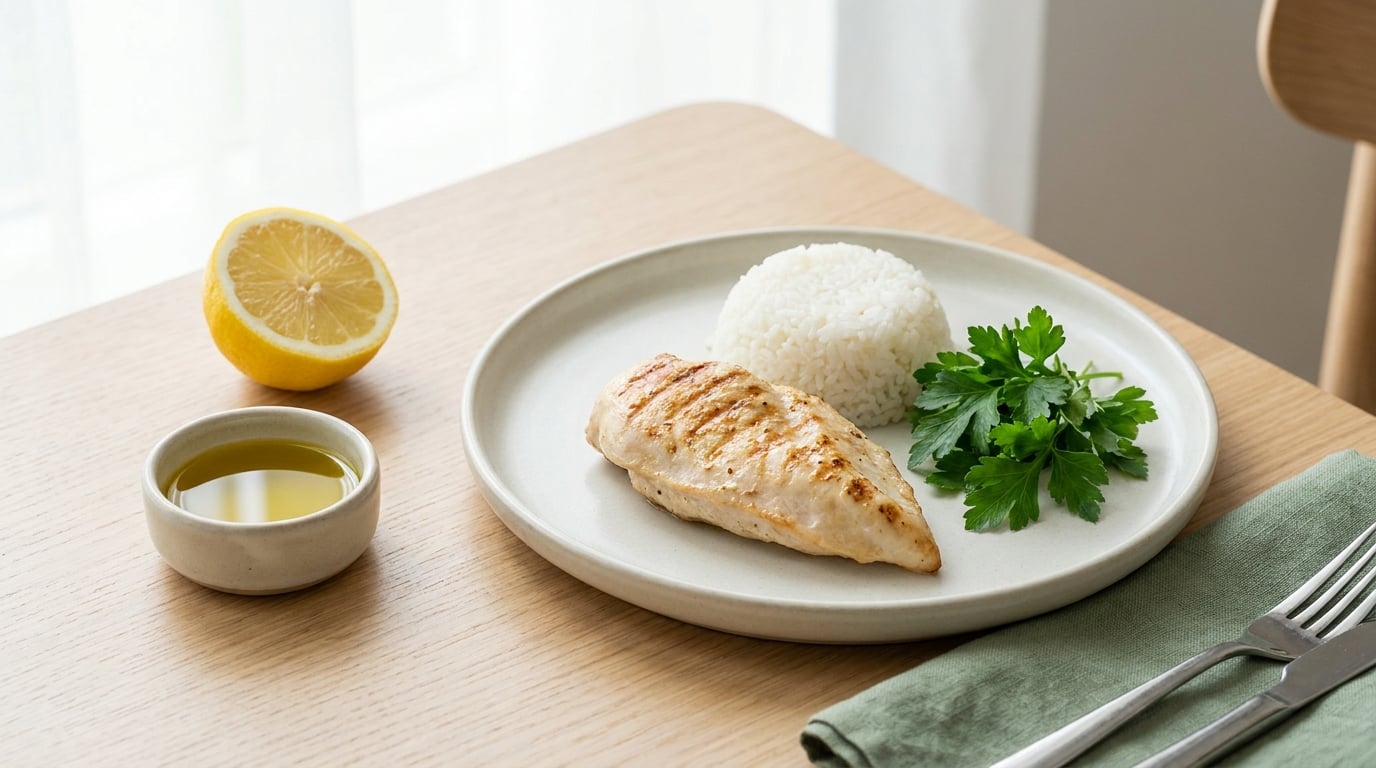
To garnish a dish without overdoing it, add one finishing element that supplies a single point of contrast: a color, a crunch, or a fresh note of flavor. The whole job takes about thirty seconds and no special equipment, and it works best when the garnish covers a small fraction of the food and the main ingredient stays the thing your eye lands on first.
I learned this the slow way. For years I treated plating as decoration, so every plate ended up carrying scallions, herbs, sesame seeds, chili flakes and a lemon wedge at once. The food underneath was good. The plate looked busy enough to be apologizing for it.
What changed my habit was a simple distinction. A garnish is the small finishing touch on the plate. An accompaniment is a side of vegetables in its own bowl. A decoration is something the diner pushes aside. The moment I could tell those three apart, deciding what to add took about five seconds instead of five minutes.
What You Need to Garnish a Dish Without Overdoing It
You need one garnish element, not a collection of them, and the cheapest categories cover almost every dish you cook at home. Fresh herbs, citrus zest or a wedge, shaved or pickled vegetables, toasted nuts or seeds, a finishing oil or sauce, and a small pinch of flaky salt or chili flakes are enough for nearly everything.
Tools are optional. A microplane or zester for citrus, a small squeeze bottle for a controlled drizzle, chopsticks or kitchen tweezers for precise placement, and a piping bag for a clean dot all help, but a sharp paring knife, a spoon and your fingers will carry you through most weeknight cooking.
Here are the seven rules that keep the restraint consistent. They apply to a home dinner and a dinner party alike.
- One element, one job. Choose a single garnish and ask what it contributes: color, crunch, or a bright fresh note. If it is doing two of those at once you already have a second garnish, and the second one is usually the one that makes the plate feel crowded.
- Ten percent of the food. A useful ceiling is roughly a tenth of the visible food area. Scattered herbs, a squeeze of zest, a few seeds. If the garnish covers more than that, the balance has tipped and the main ingredient starts reading as a topping.
- Pick it off-center. Center-plating is fine for a single composed item, but for a plate with a main and a side, set the garnish beside the main or at the far edge of the food. Off-center placement gives the eye a place to rest and makes the plate look designed rather than assembled.
- Protect the rim. A clean ring of plate around the food reads as intentional. Wipe the rim with a damp cloth before serving and take sauce off the edge with a spoon held low, not drizzled from height.
- Contrast once. A soft dish takes a crisp garnish, a rich dish takes acid, a pale dish takes color. One contrast is enough. Two colors that clash pull attention away from the food in a way that reads as effort, not as care.
- Make it edible. Everything on the plate should be something a diner can pick up and eat, or eat around comfortably. Anything inedible has to come off before the plate leaves the kitchen, which means it was never a garnish, only a prop.
- Add it last. Herbs wilt, greens collapse, crisp things go soft and sauces bleed into the plate. Prepare the garnish in advance, then place it in the final two minutes before the food goes to the table.
The tenth-percent rule is the one I repeat to myself most. It is easy to remember, it works on any plate size, and it answers the question home cooks ask most often: how much is too much.
If you are cooking for a group rather than a family, the same restraint matters more, not less. Timing and serving logistics are where plating goes wrong, and a plate that was finished in a rush is usually the plate that ends up over-garnished.
Step-by-Step
Garnish in six moves: settle on one idea, match it to the dish’s flavor and texture, prepare it cleanly, use color as a guide, add height without hiding the food, then taste and plate in the final minutes. Each step takes seconds once you know what you are looking at.
1. How to Garnish a Dish Without Overdoing It: Start With One Idea
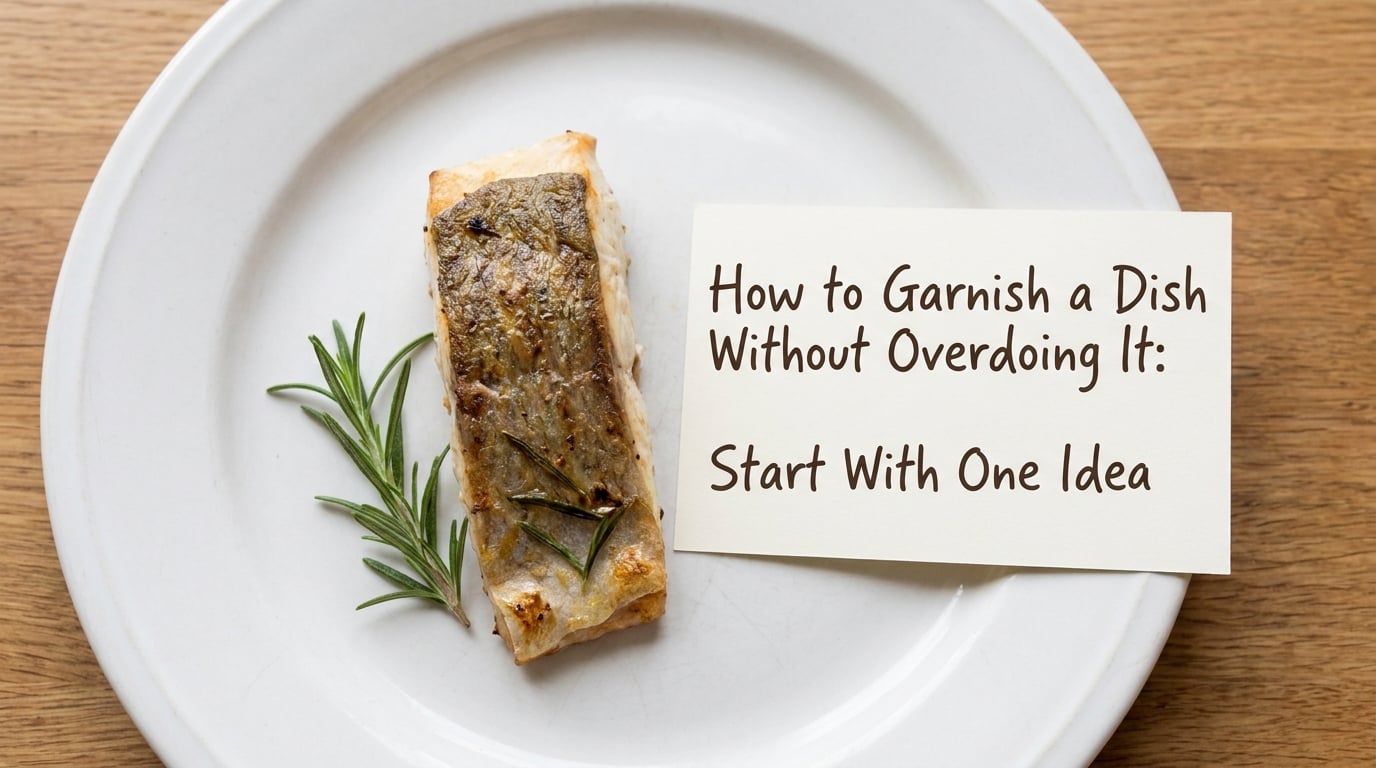
Start with one dominant garnish that reinforces the dish instead of competing with it. On a savory plate of grilled chicken with rice, a small cluster of chopped parsley or scallions is enough. On a rich braise, a fine shower of lemon zest cuts the fat and adds brightness without adding bulk. On a creamy bowl, a teaspoon of toasted seeds supplies crunch and color in one move.
Work backward from the main ingredient rather than forward from the pantry. Ask what the dish is missing, not what you happen to have. A plate is not short of ingredients, and adding another one is not the same as improving it.
The test is simple enough to run before you commit. Picture the plate without any garnish at all. If the dish already looks finished in your mind, add nothing and serve it that way. Most plates that need work are missing exactly one thing, and it is usually a fresh green note or a clean crunch rather than a fourth element.
2. Match the Garnish to the Dish’s Flavor and Texture
Match the garnish to the dish by deciding whether it should complete the flavor or cut against it. A rich, fatty or heavy dish wants acid: lemon, lime, a pickled onion, a sharp vinegar. A bland or creamy bowl wants crunch: toasted breadcrumbs, nuts, seeds, or raw shaved vegetables.
Spice is easy to overcorrect. If a curry or chili dish already has heat, reach for something cooling and fresh such as a spoonful of yogurt, a mint leaf, or cucumber, rather than adding more chili. Sweet dishes usually want contrast too: a little salt, a lemon zest, or a berry coulis over a cream-based dessert.
Texture works the same way. Crunch against soft, crisp against creamy, raw against cooked. A garnish that repeats the texture of the dish adds almost nothing visually, so when the main component is already crisp, choose something soft or leafy, and vice versa.
3. Prepare One Clean, Edible Garnish
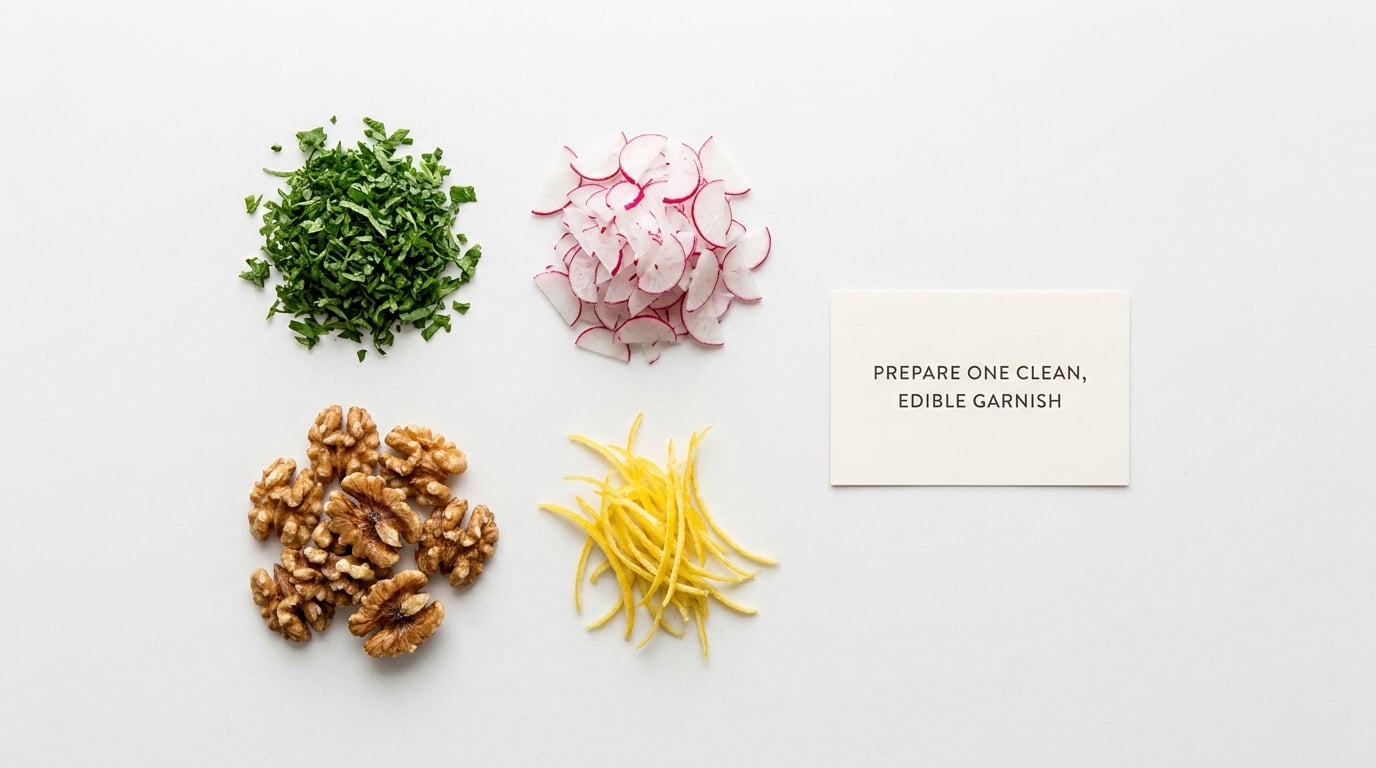
Prepare the garnish clean, dry, and cut small enough to eat in one bite. Wash herbs and spin or pat them dry, because surface water carries herbs to a limp pile in minutes. Slice chives on a sharp bias, chiffonade parsley and basil by running the leaves through several stacked slices, and shave firm vegetables such as radish or fennel with a peeler for paper-thin slices.
Zest citrus only on the colored outer layer, then take a light pass with the back of a spoon to lift the bitter pith. Toast nuts and seeds in a dry pan until they smell nutty, and cool them before they go on the plate; hot nuts need only a minute or two to overcook and turn bitter.
Portion as you go rather than plating by eye. A small pinch bowl beside the pan makes the quantity obvious and repeatable, which is the whole point. Keep the prepared garnish in a damp cloth or a covered container in the fridge until you need it.
Keep inedible items out of the dish entirely. Plastic picks, inedible flowers and dyed decorations have to come off before serving, so leave them out from the start.
4. Use Color as a Guide, Not a Rule
Use color as a guide rather than a rule: one contrasting color is what makes a plate look finished. A beige plate of rice and chicken goes from flat to considered with a small green scatter, and a brown stew gains depth with a pale cream or a bright herb. White, brown and beige plates are the ones that most often need help.
Place it with one of three methods. The one-third method puts a small cluster beside the main item. The one-sixth method tucks a lighter accent at the far side of the plate. The dot method places three or five small pinches in a loose line, which reads as deliberate because odd numbers rarely look accidental.
More colors do not automatically make a dish look better. Three garnishes in three different colors is not vibrancy, it is a plate that no longer has a focus.
5. Add Height and Contrast Without Hiding the Food
Add height and contrast with the food you already have rather than with extra ingredients. Lean sliced vegetables against the side of a mound instead of spreading them flat. Stack two or three components that belong together. Stand a wedge of lemon upright in a small pile of coarse salt.
A short vertical drizzle, a single sweep of sauce across the plate, or a scatter of a few larger pieces all add movement without covering anything. Just check that nothing tips over when the plate reaches the table, since an unstable garnish is a garnish the diner has to fix.
Keep the focal ingredient visible. If the garnish is taller than the main item and covers it from above, the plate reads as a salad with something buried in it.
6. Taste, Adjust, and Plate the Last Minute
Taste, adjust, and plate in the last minutes. Before the garnish goes on, taste the dish and ask whether it needs a final note of acid or a small pour of finishing oil. Add it a little at a time, tasting as you go, because the goal is a plate that tastes finished, not a plate that looks busy.
Run a quick visual check on each plate as it leaves the kitchen. The garnish should cover no more than about a tenth of the food, sit off-center or at the edge of the composition, leave the rim clean, and keep the main ingredient visible. Moisture matters too: blot any pooling sauce so the plate does not flood, and make sure the garnish looks crisp rather than wilted.
Plate to order where you can. If you are serving a group, a brunch spread for a crowd works far better when the finishing happens at the last moment for each plate rather than all at once on a counter that fills up.
Common Mistakes
Over-garnishing usually comes down to seven or eight repeatable mistakes, and each one has a quick fix. The pattern is consistent: the garnish is added to signal effort rather than to improve the dish.
Overcrowding the plate. Leave visible plate between the components. If the food has touched into one mass, spread it out and give the rim room before you garnish at all.
Letting the garnish compete with the main. Pull anything off that is equal in size to the main ingredient. The garnish should be a supporting note, not a co-star.
Using unrelated ingredients. A flavor that is not in the dish reads as random. Use something already present in the sauce, the pan, or the ingredient list.
Adding too many colors. Pick the one contrast the plate actually needs and remove the rest.
Using oversized pieces. A whole mint sprig, a lemon half, or a large wedge makes the diner do work. Cut garnishes to one-bite size.
Garnishing with something inedible. Flowers, plastic picks and dyed decorations must come off before the plate is served, so skip them from the start.
Piling everything in the center. A mound in the middle buries the food. Set the garnish beside or at the edge of the main component.
Decorating too early. Everything plated in advance wilts, softens or bleeds. Finish each plate just before it goes out.
A few habits cover most of it. Prepare one garnish and place it well rather than preparing four and placing them badly. Wipe the rim. Taste the dish before the plate leaves your hands. And remember that a plate with visible negative space reads as confident, not unfinished.
Frequently Asked Questions
What is the best garnish for a dish?
The best garnish is the one that adds something the dish is genuinely missing, usually a contrast in color, texture or flavor. There is no single best garnish for every plate. A heavy braise usually wants acid such as lemon or a pickle, a creamy bowl wants crunch, and a pale dish on a pale plate wants a green herb. If the garnish does not fix a specific shortfall, leave it off.
How much garnish should I put on a plate?
As a rough ceiling, a garnish should cover about ten percent of the visible food area. In practice that means a small pinch of chopped herbs, a few shavings of zest, or three or five dots of something small. If you are unsure, add half of what you think you need and look again from arm’s length. A plate usually looks better with less than the cook expected.
Should garnish be edible or decorative?
A garnish should be edible. Inedible items have to be removed by the diner before they start eating, which is awkward at a table and means the decoration was only ever for the photograph. This includes plastic picks, dyed items, and flowers that are not certified food safe. Everything left on the plate should be something a guest can pick up and eat comfortably.
When should I add the garnish?
Add the garnish in the final two minutes before the plate reaches the table. Herbs wilt, greens collapse, crisp crumbs soften and sauces bleed into the food if they sit. You can prepare everything in advance: wash and dry the herbs, zest the citrus, toast the nuts, and mix the finishing sauce. Just hold off on placing it until the food is on the plate and heading to the table.
How can I make a plate look more colorful without adding too much?
Choose one contrasting color and repeat it in small quantities rather than adding several colors at once. A beige or brown plate usually needs green herbs, a lemon wedge or a pickled vegetable. A white plate benefits from a single bright accent, and a green-heavy plate is best finished with something warm-toned. One color, used twice or three times, reads as designed.
What foods work well as simple garnishes?
The easiest garnishes are the ones that need no knife skills: a lemon or lime wedge, flaky salt, chili flakes, a pour of olive oil, a spoonful of yogurt, and torn herbs straight from the stem. Slightly more effort buys chopped chives, citrus zest, toasted seeds or nuts, shaved radish, and quick pickles. All of these are fast, cheap and easy to add in a restrained amount.
A Simple Rule for Every Plate
Choose one garnish that improves the flavor, the texture or the color, then use the smallest amount that does the job. If you keep to about a tenth of the food area, place it off-center, wipe the rim, and add it in the last two minutes before serving, the plate will look considered without hiding what you actually cooked.
Start there, then adjust. Some plates need nothing at all, and that is a perfectly good result. The test is simple: if a guest would notice the garnish, it is doing its job; if they would notice its absence, you used too much.