
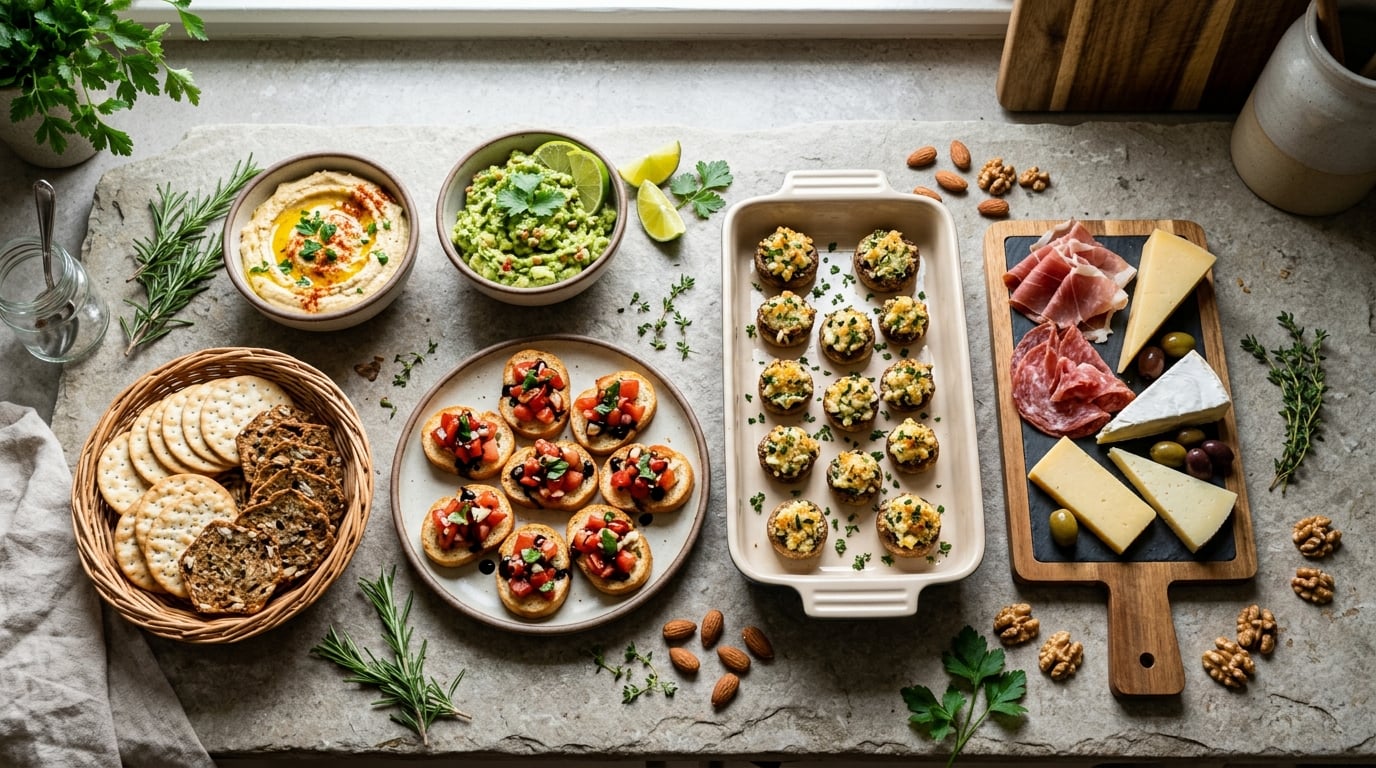
Learning how to make appetizers you can prep ahead comes down to picking dishes that taste better after a night in the fridge, then splitting the work across two evenings instead of one frantic afternoon. Dips, spreads, marinated meatballs, stuffed bites and no-cook roll-ups all hold their flavor for days and mostly need a garnish and a bowl at the end. The whole plan takes about an hour and a half of actual work, spread over two days, and it leaves you in the room with your guests instead of at the stove.
The mistake most hosts make is trying to build an entire spread the day of the party. Pick three dishes instead of six, and only one of them needs any heat at all.
More people search for this than you’d think, mostly ahead of holidays, game days and wedding receptions. One thread that surfaced while I was researching this had a host planning the appetizers for a backyard wedding for 60 people, and what she wanted wasn’t forty recipes — it was a do-ahead plan she could execute.
Table of Contents
- What You Need
- Step-by-Step
- Common Mistakes
- Frequently Asked Questions
- What appetizers can be made two days ahead?
- How long can make-ahead appetizers stay in the refrigerator?
- Should I transport make-ahead appetizers cold or hot?
- What can be prepped ahead without making it soggy?
- How do I keep appetizers warm until guests arrive?
- Can I make-ahead appetizers for a picnic or outdoor party?
- Conclusion
What You Need
You don’t need much beyond what a normal kitchen already has. The difference between a calm party-morning and a stressful one is almost entirely about containers and cold space.
- Airtight containers in a range of sizes. Snap-lid deli containers for dips, shallow ones for cut fruit and marinated items, and one big bowl or sheet pan for anything you plan to serve family-style.
- Parchment or wax paper sheets. Layering prevents sliced bread, crackers and flatbread from steaming themselves soft inside a closed container.
- A half-sheet pan and a cooling rack. Most rolled and baked items need to cool completely on a rack before they can be stacked and chilled.
- Labels and a marker. A dot of masking tape and a sharpie saves you from opening three containers blind at midnight to find the deviled eggs.
- An ice tray or shallow baking dish. Fill it with ice and you have a cold platter base for anything perishable sitting out.
- A small refrigerator thermometer. If your fridge is running warm, you will not notice it by smell, so a thermometer left in there is worth having before a two-day spread.
- Serving platters, small bowls and tongs. Dips need their own bowls and their own utensils so nobody double-dips.
On the food side, buy for overlap rather than variety. Two kinds of crackers, two shapes of bread, and three dips in the same flavor family eat better than seven unrelated items and cost less effort.
Step-by-Step
1. Choose Appetizers That Hold Up Well
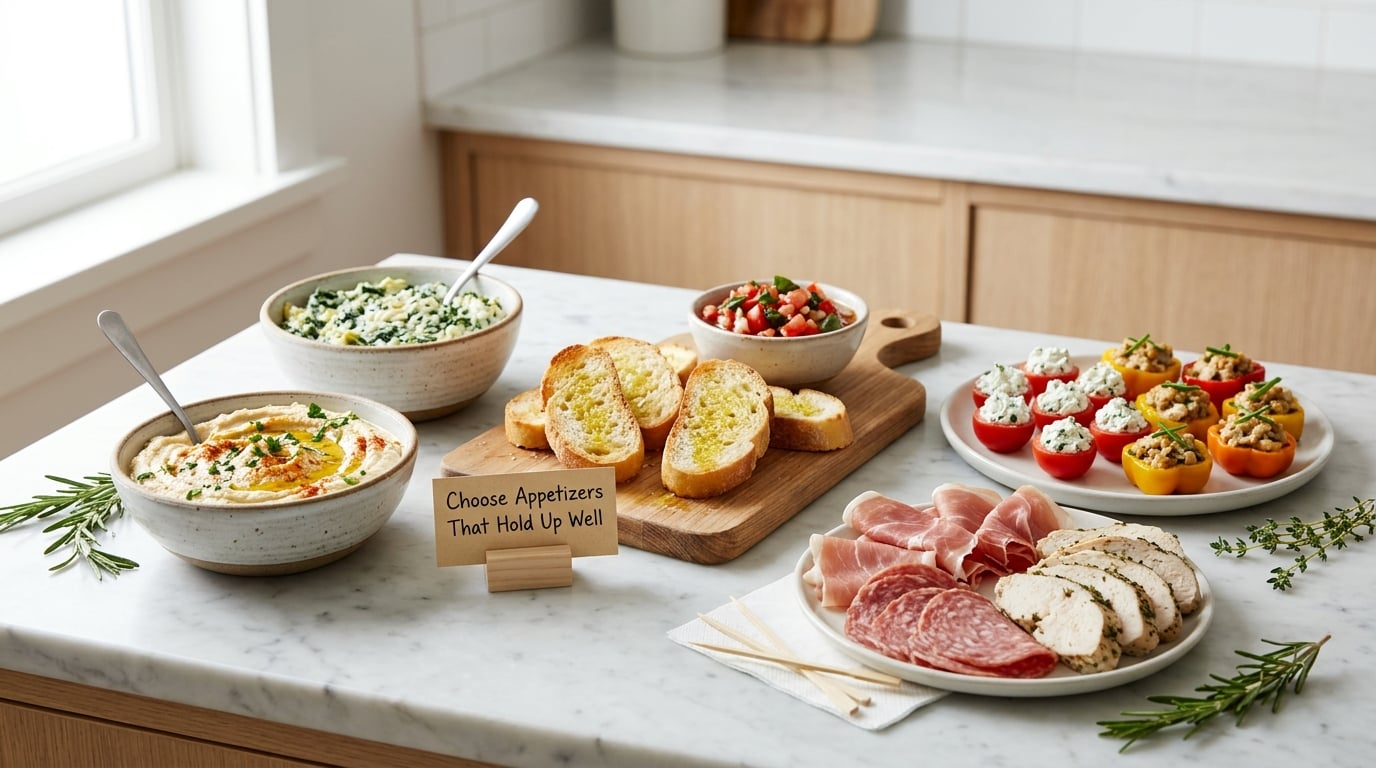
Good make-ahead appetizers share five traits: they taste fine cold or at room temperature, they have no crisp element that a lid will ruin, they improve with marination, they travel without falling apart, and they can be finished with something fresh in five minutes.
Dips are the safest bet. Hummus, guacamole, baba ganoush, spinach-artichoke dip and salsa verde all get better overnight as the flavors meld. Spreads and cheese balls follow the same path.
Bruschetta toppings are the one exception to the fresh-ingredient rule. Chopped tomato, basil and garlic can be made a day ahead and refrigerated together — it’s the bread that has to wait until the last ten minutes. Marinated meatballs and marinated olives are practically made for this, since the marinade does the flavor work while they sit.
Stuffed bites such as deviled eggs, pinwheels, stuffed mushrooms and bacon-wrapped dates assemble flat and stack neatly. Roll-ups made with tortillas or puff pastry hold for a day or two without any problem.
If you want guidance on matching the menu to the rest of the evening, planning a dinner party menu a week ahead is worth a look before you shop.
2. Make a Simple Prep Schedule
Work backward from when guests arrive, not from when you feel like cooking. A two-day schedule leaves the party morning almost empty.
| When | What to do |
|---|---|
| Two days out | Shop. Choose three or four dishes. Make anything that freezes, including cookie-based crusts and puff pastry pinwheels, and freeze flat on a sheet pan before bagging. |
| Two days out, evening | Make the dips and spreads. Cool them fully, lid them, label and refrigerate. |
| One day out | Cook and assemble everything else: meatballs, roll-ups, stuffed bites, marinated olives and skewers. Cool on racks, then store. |
| One day out, evening | Set out the platters, bowls, labels and tongs so nothing needs hunting for. Measure out garnishes into small bowls. |
| Party morning | Only the baking items. Preheat the oven, bake in one batch while you set up the cold table, then cool on racks. |
| 30 to 60 minutes out | Move cold platters to the fridge or onto ice, portion dips, add herbs, oil, nuts and crackers, and reheat the one hot item if you have one. |
Once you have a headcount, the quantities decide how much of this you need. How many appetizers per person for a dinner party covers the math, and the short version is three or four pieces per person before dinner, six to eight if the spread is the whole event, and eight to twelve for a grazing table.
3. Prep the Components in Batches
Do all your chopping first, in one pass, and put each finished component in its own container. Then cook, then mix, then portion. Working this way means you touch each ingredient once instead of three times.
A practical order: chop and slice all the raw produce, cook the proteins and let them cool on a rack, mix the dips and spreads, then portion everything into the containers you’ll actually store it in. Label as you go rather than at the end.
Portioning matters more than it sounds. Twenty-four deviled eggs in one bowl get picked over unevenly, and nobody wants the last guest to find broken whites. Twelve in a container with a lid travels better and keeps its shape.
4. Store Each Appetizer for Maximum Freshness
How long an appetizer keeps depends on three things: how much moisture is trapped with it, whether the container is airtight, and how cold the fridge actually is. Here is the working reference I use.
| Appetizer | How far ahead | How to store | Finish on the day |
|---|---|---|---|
| Dips and spreads (hummus, guacamole, baba ganoush, queso) | 1 to 2 days | Airtight container, refrigerated; press plastic wrap onto the surface of the guacamole | Drizzle with olive oil, scatter herbs or paprika, add a fresh bowl |
| Deviled eggs, pinwheels, stuffed mushrooms, roll-ups | 1 day, up to 2 | Single layer if possible, parchment between layers, airtight container | Garnish with paprika, chives or sesame; add crackers at the table |
| Meatballs and marinated olives | 2 to 3 days | With their sauce or marinade in a sealed container, refrigerated | Warm gently in the sauce, or serve at room temperature |
| Assemble-ahead baked items (pigs in a blanket, puff pastry straws, sliders, bruschetta) | Assemble up to 1 day ahead, bake the day of | Bake items refrigerated on a sheet pan; keep bruschetta toppings separate from the bread | Bake at 425F for 10 to 15 minutes; add toppings to bruschetta after baking |
| No-cook skewers, caprese, ceviche, antipasto platters | 1 day | Layered airtight container; cheese and cured meat on the bottom | Add basil, olive oil, cracked pepper and a drizzle of balsamic |
| Cheese ball, crostini, crackers | 1 to 3 days | Cheese wrapped in plastic wrap in the fridge; crostini stored with parchment, never stacked bare | Roll the ball in nuts or herbs, add crackers to the platter last |
Two rules cover most of the rest. Cool food completely before you lid it, because steam trapped under a lid is what makes bread and crackers turn soft and leathery. And keep perishable food at 40F or below, hot food at 140F or above.
If you cook in the morning of the party and chill it for later service, cool it uncovered in the refrigerator first. Food safety guidance from the USDA puts cooked poultry at 165F, ground meat at 160F, and whole cuts and fish at 145F as safe minimum internal temperatures.
Freezing works well for a few things: puff pastry pinwheels, cookie-based crusts, meatball mixtures, and crostini. Freeze them flat and unwrapped on a sheet pan first, then bag them once they’re solid, and thaw them in the refrigerator overnight rather than on the counter.
5. Do the Final Assembly Ahead
You can build most of the spread the night before and simply move platters around on the day. Cold bites, dip bowls and boards can be fully arranged ahead.
Line platters with parchment or a clean towel so you can lift the food off in one motion later. Put sturdy items at the edges, where they won’t get knocked, and build the tallest items in the center where they read from across the room.
Portion the dips into their serving bowls and cover each with plastic wrap, then put the bowls in the fridge. Scoop the dip out at the table rather than trying to serve it neat from the container.
Keep every crisp or crunchy component in its own bag or container until the last few minutes. This is the single change that makes the biggest difference between a spread that looks fresh and one that looks like leftovers.
If a cheese board is part of the plan, building a beginner cheese board takes about ten minutes and the cheese and crackers can be brought to room temperature right before guests arrive.
6. Add Fresh or Crispy Finishes Before Serving
Some things cannot be done in advance, and now is when you do them. Chopped parsley, basil and mint go on at the last minute because herbs wilt and darken within hours. A drizzle of good olive oil goes on cold food just before it leaves the fridge, not a day ahead, where it dulls the surface.
Toasted nuts, fried shallots and crispy onions belong in a small bowl that you empty over the platter at the table. Grated cheese goes on warm items right out of the oven, when it melts instead of sitting as a cold blanket.
Crackers, crostini and baguette slices are the classic trap. If you plate them hours early, the condensation from the room softens them. Set them out in a basket at the last minute and refresh stale ones in a 350F oven for five minutes.
7. Set Up a Simple Appetizer Table
Group by type rather than by recipe. Dips in one zone, cold bites in another, skewers and roll-ups standing up in jars, and crackers in a basket or on a board so nothing gets crushed.
Give every dip its own bowl and its own serving utensil. It is a small courtesy that prevents the most common complaint at any party.
Label anything bold or spicy, and label dietary items clearly enough that a guest can identify them from a few feet away. If you’re including a nut dish, say so on the label rather than hoping people notice.
Set cold platters over ice, and keep hot items to one or two at most. A slow cooker on low or a chafing dish holding meatballs or saucy wings will outlast anything you reheat twice.
As the night goes on, refill from the refrigerator rather than topping up the platter. Adding fresh food to a warm tray is what turns a nice spread into a food-safety question.
Common Mistakes
Making everything the day of. The cure is schedule, not effort. Most of the flavor work belongs to the night before, and the party morning should be reserved for baking items and nothing else.
Stacking crisp items against moist ones. Sliced meat and cheese next to bread or crackers, covered, will soften both within hours. Parchment between layers and separate containers fix it.
Lidding food while it’s still warm. Trapped steam is the direct cause of soggy flatbread, limp crackers and mushy pastry. Cool uncovered on a rack first.
Forgetting labels. With three or four lookalike containers in the fridge, nobody wants to sniff a bowl of egg filling at midnight. A strip of masking tape and two words does the job.
Overfilling containers. A packed container cools slowly and gets handled more. Leave headspace, and use a second container instead of stacking one on top of another.
Serving perishable dips at room temperature for hours. The rule of thumb is two hours unrefrigerated, or one hour if it’s above 90F. Set the bowl out in small batches and swap in a chilled one when the first runs down.
Serving fresh garnishes hours early. Herbs, diced tomato and cucumber wilt and release water. Keep them in a covered container in the fridge and add them as the platter leaves the kitchen.
Letting hot items sit in the slow cooker from morning until party time. Any sauce with dairy, cream or sugar in it scorches after a few hours on low. Set it up an hour before guests arrive instead.
A few habits cover most of it: cool everything before storing, label everything, taste the dips again the next day since salt levels shift as flavors settle, and keep one no-cook item in reserve in the fridge for a late arrival that runs you short.
Frequently Asked Questions
What appetizers can be made two days ahead?
Most dips and spreads are excellent two days ahead: hummus, guacamole, baba ganoush, spinach-artichoke dip, queso and salsa verde all benefit from extra time. Marinated meatballs and marinated olives also hold well that long. Assembled cold bites such as deviled eggs, pinwheels and stuffed mushrooms generally keep one to two days. Skip anything crisp or fried, and make your bread and crackers on the day.
How long can make-ahead appetizers stay in the refrigerator?
Most cooked or assembled appetizers keep three to four days refrigerated in airtight containers, though quality starts dropping after two. Dips and marinated items are the most forgiving. Deviled eggs, stuffed mushrooms and anything with mayonnaise-based fillings are at their best within a day. Raw or dressed salads do not keep at all, and fried items lose their crust within a few hours even under cover.
Should I transport make-ahead appetizers cold or hot?
Cold, every time. Cold food travels far more safely and reliably, and most make-ahead appetizers are meant to be served cool or at room temperature anyway. Transport dips and cold bites in a cooler with ice packs, keep hot dishes in an insulated carrier with a heat source, and never put both in the same bag. If you must reheat something on arrival, ovens and chafing dishes handle meatballs and saucy dishes well.
What can be prepped ahead without making it soggy?
Anything stored dry or in a sauce rather than a dressing. Cheesy dips, bruschetta toppings, meatball sauces, fillings for roll-ups and dips like guacamole with a plastic-wrap seal all travel through refrigeration without texture problems. The items to avoid are crackers, crostini, fried bites, stuffed pastry, and anything sitting in a mayonnaise or vinaigrette dressing, which releases liquid as it sits.
How do I keep appetizers warm until guests arrive?
Use a slow cooker or chafing dish on low and set it up about an hour before guests arrive rather than in the morning. A warm oven at 170F to 200F works for a short window if you have one. Be aware that cream, cheese and sugar-based sauces scorch after a few hours, so starchy and tomato-based dishes hold best. Tightly covered pans in an insulated carrier also work for a 30-minute trip.
Can I make-ahead appetizers for a picnic or outdoor party?
Yes, and outdoor parties reward advance prep more than indoor ones. Make ahead what travels well: pinwheels, deviled eggs, caprese skewers, bruschetta toppings, sandwiches and dips, plus sturdy crackers and cheese. Pack dips in sealed containers surrounded by frozen gel packs, and skip anything that needs heat. Bring a small insulated carrier for a hot item, and keep perishable food out longer than two hours, or one hour above 90F.
Conclusion
Pick two or three dishes instead of six, choose the ones that improve overnight, and get them done the night before. Keep the crisp, fresh and crunchy things for the final ten minutes, label everything you put in the fridge, and hold perishable food at 40F or below.
When 2026 arrives, the party itself takes about an hour of work — mostly baking one batch and arranging platters — and you spend none of it with a dish towel in your hand.