
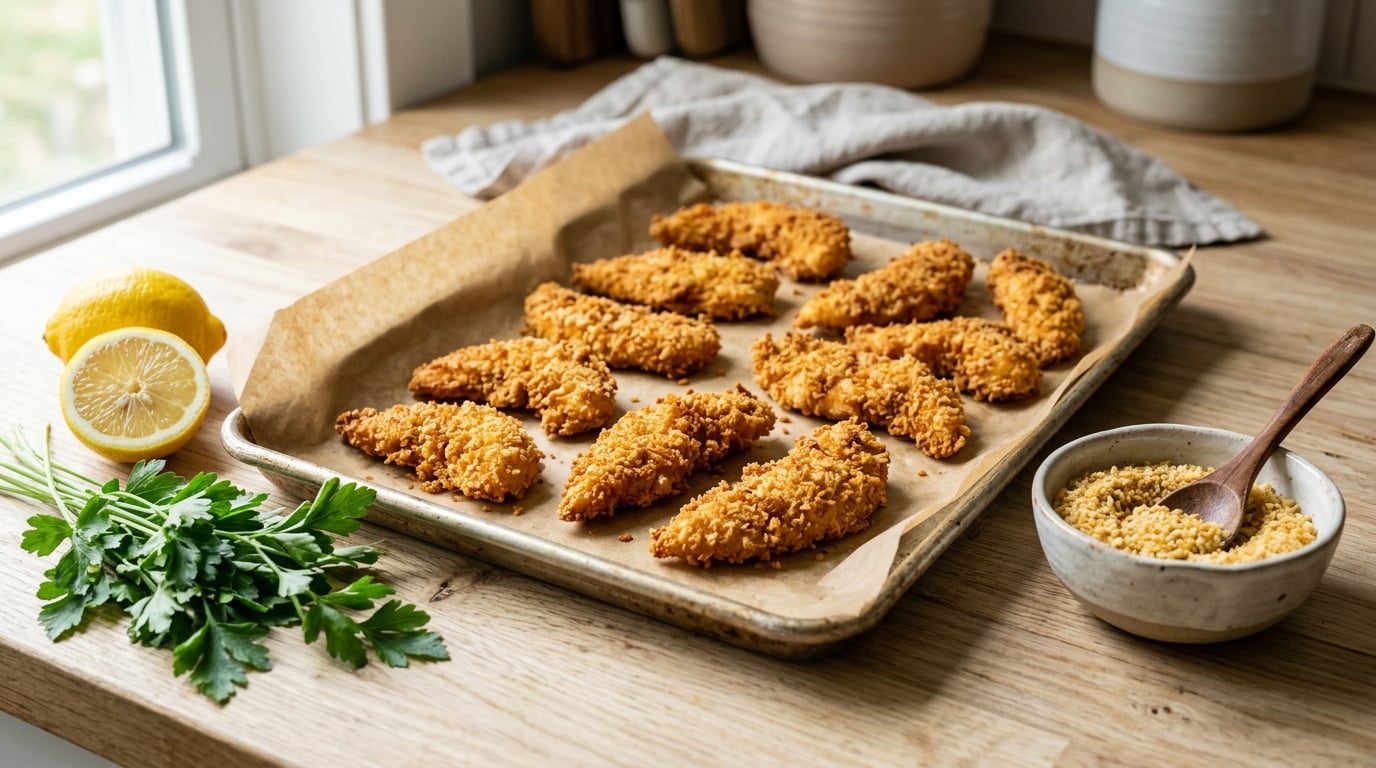
Bake chicken tenderloins at 400°F / 200°C for 15 to 20 minutes, until the thickest tender reads 165°F / 74°C on an instant-read thermometer. That is the whole method, and it works every weeknight because tenders are small, lean and quick. The coating is optional, so the same tray gives you naked juicy tenders one night and panko-crisp tenders the next.
Total time is about 30 minutes, most of it in the oven. The part that takes real care is not the cooking, it is the prep: patting the chicken dry, keeping the pieces in a single layer, and trusting the thermometer instead of the clock.
Table of Contents
What You Need
For a pan of about 1.5 pounds (680 g) of raw chicken tenderloins, this is the base list. Quantities are given US first, metric second.
- 1.5 lb (680 g) chicken tenderloins, patted dry
- 1 to 2 tbsp (15 to 30 ml) olive oil or avocado oil
- 1 tsp garlic powder
- 1/2 tsp onion powder
- 1/2 tsp smoked paprika
- 1 tsp Italian seasoning
- 1 tsp kosher salt, plus more to taste
- 1/2 tsp black pepper
Add these for the crispy coating, set up as three shallow bowls. Flour first for grip, egg for glue, panko for crunch.
- 1/2 cup (65 g) all-purpose flour
- 2 large eggs, beaten with 1 tbsp water
- 1.5 cups (75 g) panko breadcrumbs
A half sheet pan is the piece of equipment that matters most. Parchment paper or a silicone mat keeps the tenders from sticking, and a wire rack set on top of the pan gives air underneath so the bottom browns instead of steaming. A spray bottle of avocado oil and an instant-read thermometer round out the list.
One swap worth knowing: panko beats standard breadcrumbs here because the coarse crumbs hold up to heat. Plain dry bread crumbs brown faster and can go dark before the chicken is done.
Step-by-Step
How to Make Chicken Tenders in the Oven: Prep the Sheet
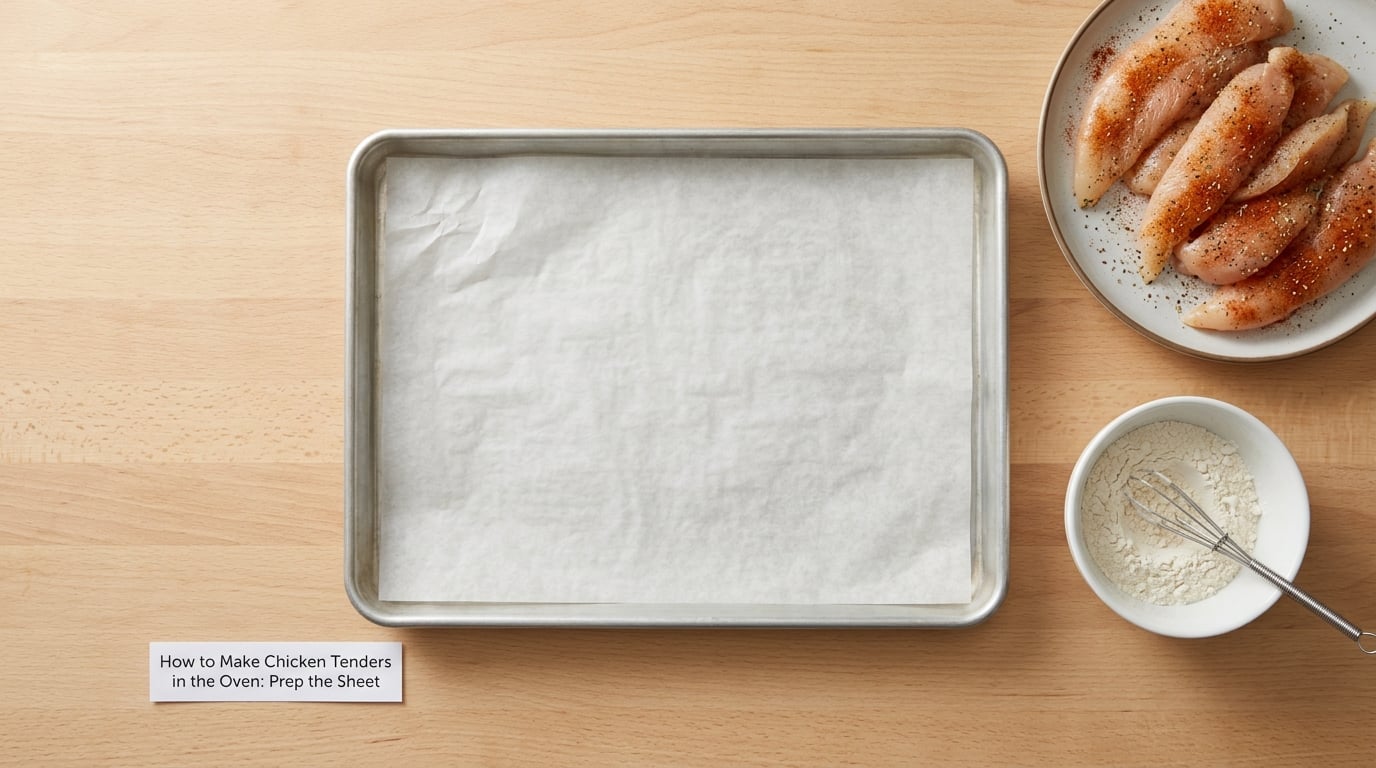
Preheat the oven to 400°F / 200°C and set a rack in the middle. Middle racks cook more evenly than the top or bottom, which matters for a short cook. While the oven heats, line a half sheet pan with parchment and give it a light spray of oil.
Tenderness comes down to two prep moves. First, take the white tendon off each tender: grip it with a paper towel, slide a fork under the middle, and pull it toward the narrow end. Second, pat the chicken dry with paper towels. Wet chicken steams instead of browns, and it will not hold breading.
Season the Chicken
Toss the tenders with the oil, garlic powder, onion powder, paprika, Italian seasoning, salt and pepper. Use your hands and make sure the underside gets seasoned too, since the tender side sits closest to the pan.
For a quick marinade, let the seasoned chicken sit 30 minutes at room temperature, or up to 4 hours in the refrigerator. If you use soy sauce or tamari for the marinade, keep it to 1 tbsp per pound and do not leave it for hours. Readers on cooking forums report that a tablespoon per pound marinated overnight turned the chicken inedibly salty, and soaking it in lemon water afterward is a lot less fun than just using less.
For Buffalo-style tenders, swap the paprika and Italian seasoning for 1 tsp cayenne and a pinch of sugar, and toss the cooked chicken with buffalo sauce and a splash of ranch right before serving.
Build the Crispy Coating
Set up three bowls in order: flour, then beaten egg, then panko seasoned with a pinch of salt. The order is what makes the breading cling. Drag each tender through the flour and press it in so the flour covers the wet surface, shake off the excess, then into the egg, then into the panko, pressing the crumbs on with your fingertips.
Pressing rather than tossing is the difference between a full, even coat and bare patches. Lay the breaded tenders on the prepared sheet with a finger’s width between them and give the tops a light spray of oil. Spray it lightly, not heavily. A soaked crust browns fast and can scorch before the center cooks through.
Want to skip the eggs? Combine 1/3 cup light mayonnaise with 1 tsp Dijon or yellow mustard, use that as the binder instead, and coat straight into the panko. It is a good shortcut and it makes a thinner, more tender crust.
Bake Until Golden and Juicy
Bake at 400°F / 200°C for 15 to 20 minutes. Start checking at 15 minutes. The visual cues are the crumb color going light golden and the juices at the edges turning opaque, not running pink and watery.
Naked tenders cook faster than breaded ones, usually 12 to 16 minutes. Breaded tenders need 15 to 20. If your tenders are thick, give them another 3 to 4 minutes. If they are slim, pull them a couple of minutes early.
Here is how the temperature changes the outcome. Times assume 1.5 lb of tenders on a middle rack.
- 350°F / 175°C, 22 to 28 minutes. Gentlest on the meat, the softest crust. Breading stays pale and a little soft unless you broil it at the end.
- 400°F / 200°C, 15 to 20 minutes. The dependable middle. Even browning, a tender center, and it holds moisture best.
- 425°F / 220°C, 18 to 22 minutes. Crispier coating, still juicy on a normal-sized tender. A good choice if you want crunch without a broiler finish.
- 450°F / 230°C, 10 to 14 minutes. Fastest and crispest, and the least forgiving. Use it for thin tenders and watch the clock.
Published times are only a starting point. A thermometer that reads low, a dark sheet pan, or a kitchen above 5,000 feet will all push a tender toward 25 minutes or more. The way to bake chicken tenders in the oven well is to treat the time as a hint and the temperature as the fact.
For extra crunch, move the pan under the broiler for 2 to 4 minutes at the end, watching it the whole time. It browns fast, and breading goes from golden to burnt in under a minute.
Confirm Chicken Is Fully Cooked
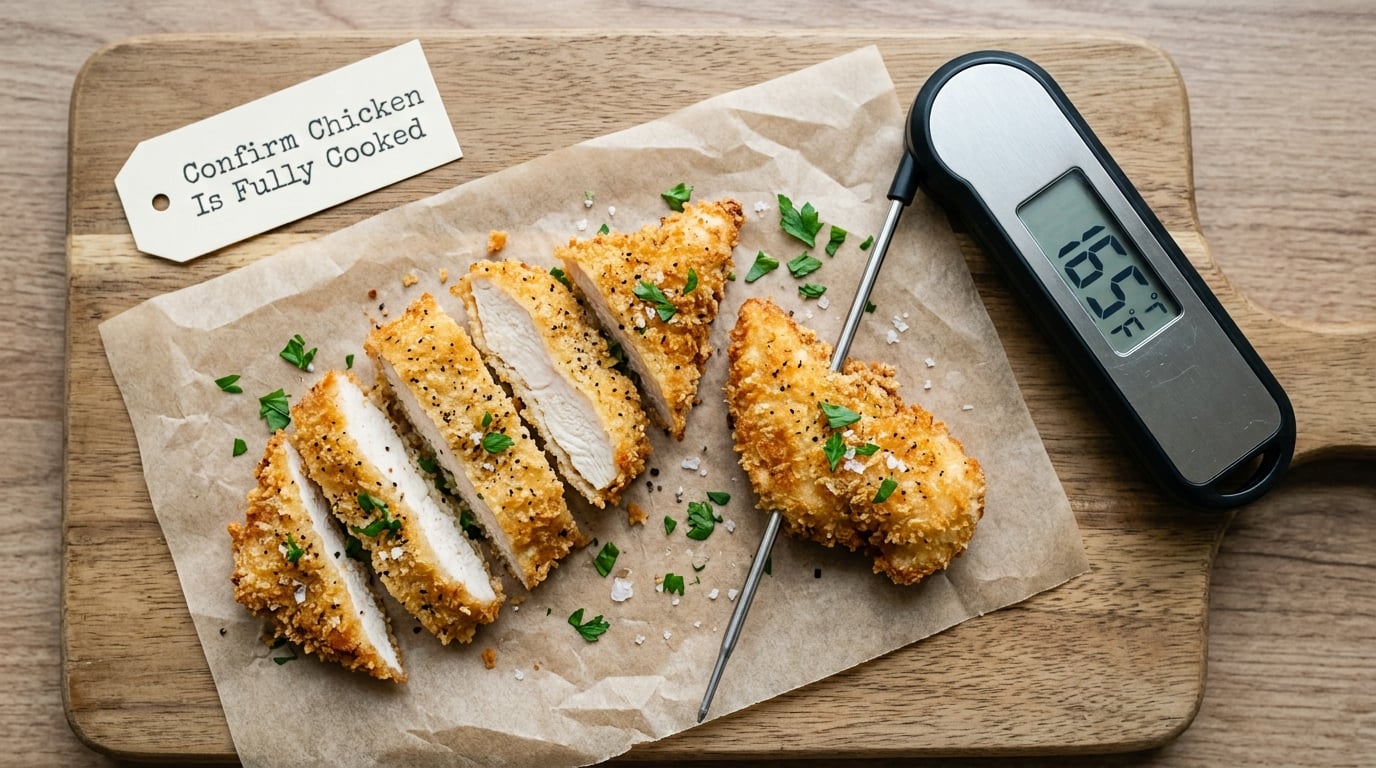
The USDA safe minimum internal temperature for poultry is 165°F / 74°C, and that is the only doneness test that matters. Take the pan out, slide the thickest tender to the cutting board, and push the probe into its center without touching the board. It should read 165°F / 74°C.
You do not need to cut into every piece. Thick tenders take longer than thin ones, so testing the one biggest piece covers the batch. If it reads 160°F, give the pan another 3 to 4 minutes rather than guessing from the color.
Clear juices running out of the meat are a decent sign, but color alone is not. A pale tender can still be under 165°F, and browned breading tells you nothing about the center.
Rest and Serve
Rest the tenders 3 to 5 minutes on the pan or a wire rack. Resting lets the juices settle back into the meat instead of running out the moment you cut in, which is the difference between tenders that taste juicy and ones that feel dry on the second bite.
Drizzle the pan juices over everything at the end. That liquid is seasoned fat and starch and it makes a good light sauce over rice. Alongside, I like how to make restaurant style mashed potatoes at home, or a scoop of grain bowls and chopped salad. Hot honey, ranch, bleu cheese dressing and a garlic yogurt dip all work without hiding the chicken.
Store cooked tenders in an airtight container in the refrigerator for up to 3 to 4 days. Reheat on a baking sheet in a 375°F / 190°C oven for 8 to 10 minutes rather than in a microwave, so the coating stays crisp instead of turning soft. Sliced leftovers also make a fast breakfast hash alongside how to make an omelet that does not stick.
Common Mistakes
Crowding the pan. Tenders touching each other steam and never brown on the underside. Two pans or a second batch beats a single crowded one every time.
A wet chicken. Moisture is why the breading peels off and the outside stays pale. Pat the tenders dry before seasoning, and again if you marinated them.
A dirty or dark sheet pan. The dark bits on an old pan scorch the breading long before the chicken finishes. Use a rimmed half sheet pan and a fresh piece of parchment each time.
Uneven sizes in one batch. A pound of tenderloins can run from 7 thick pieces to 10 slim ones. Pull the thin ones early and let the thick ones finish, or cut the big ones in half so everything cooks on the same clock.
Checking too early. Opening the oven door in the first five minutes drops the temperature and lengthens the cook. Give it a full 15 minutes before the thermometer comes out.
Overcooking past 165°F. Tenders are lean and small, so they go from done to dry in a few minutes. Once you hit 165°F, pull the pan.
Frequently Asked Questions
What temperature should I use for oven-baked chicken tenders?
400°F / 200°C is the best all-around temperature for oven-baked chicken tenders. It browns the coating in 15 to 20 minutes while keeping the lean meat juicy, and it is forgiving enough for a first attempt. Drop to 350°F / 175°C if you want the softest possible result, and rise to 425°F / 220°C for a crispier crust. Whatever you choose, pull the pan at 165°F / 74°C internal.
How long do chicken tenders take to bake at 400°F?
Naked chicken tenderloins take 12 to 16 minutes at 400°F / 200°C, and breaded ones take 15 to 20 minutes. Thick tenders need another 3 to 4 minutes. Start checking at 15 minutes and stop on internal temperature, not color. A cold pan, a dark sheet or a kitchen above 5,000 feet will all stretch the cook closer to 25 minutes.
Can I bake chicken tenders without breadcrumbs?
Yes, and the plain version is the juiciest of all. Skip the flour, egg and panko, then toss the tenders in oil with salt, pepper, garlic powder and paprika and bake at 400°F / 200°C for 12 to 16 minutes. Without a coating to insulate them, check the temperature early because they dry out faster than breaded tenders. The pan juices at the end make a quick sauce.
Can I cook frozen chicken tenders in the oven?
You can bake frozen tenders straight from the freezer with no thawing, but they need more time and a higher temperature. Space them on a lined sheet pan, spray with oil, and bake at 425°F / 220°C for 25 to 30 minutes, turning once halfway. Confirm 165°F / 74°C internal before serving. Never microwave frozen chicken first, because the edges start cooking before the center thaws.
How do I keep baked chicken tenders crispy?
Give the breading a light spray of oil before it goes in the oven, keep the tenders in a single layer so they do not steam each other, and broil for the last 2 to 4 minutes. Serve them straight off the pan rather than holding them under a heat lamp. If you must hold them, set them on a rack instead of a plate, so steam escapes from underneath instead of softening the bottom.
What to Do First
Heat the oven to 400°F / 200°C, pat the tenderloins dry, remove that tendon, and space them on a lined sheet pan. Season, bake 15 to 20 minutes, and pull the thickest piece at 165°F / 74°C. Everything after that, breading, broiling or dipping sauce, is a detail on top of that one number.