
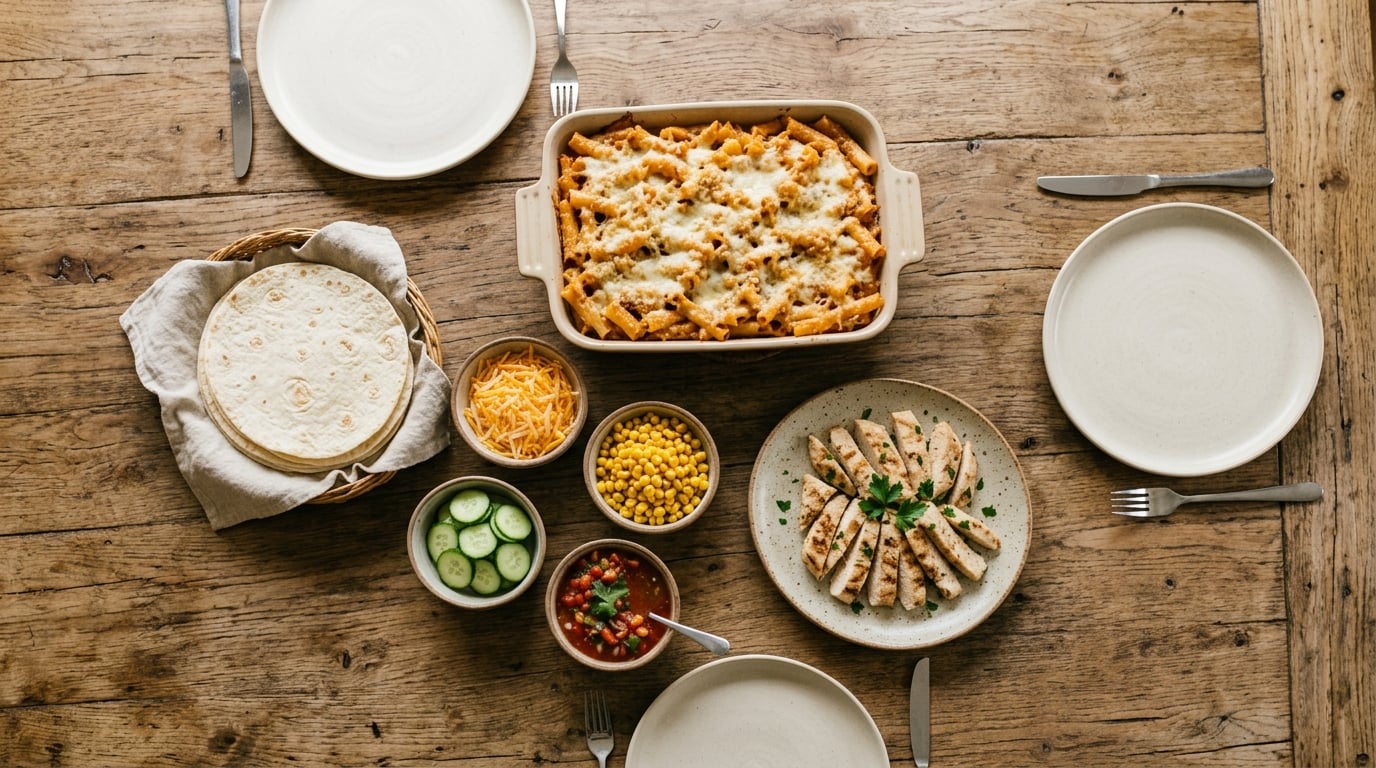
The trick to cooking one meal the whole family eats is to stop planning one dish and start planning one set of components. Cook a familiar base, put the sauces, toppings and sides in separate bowls, and let everyone build a plate. One cook, one dinner, no short-order cooking.
It takes about 40 minutes for most weeknight versions, and it is beginner-friendly. The hard part is not the cooking. It is deciding in advance what goes on the table and what stays optional.
Table of Contents
- What You Need
- Step-by-Step: How to Cook One Meal the Whole Family Eats
- 1. Start with a familiar, flexible base
- 2. Plan the menu around preferences, not vetoes
- 3. Choose one familiar flavor direction
- 4. Prep the shared and customizable parts
- 5. Cook the base to safe doneness
- 6. Add toppings, sauces, and sides buffet-style
- 7. Serve the meal without pressure
- 8. Save and reheat leftovers safely
- Common Mistakes
- Frequently Asked Questions
- What is the best meal to cook when everyone has different tastes?
- How do you make one dinner appeal to picky eaters and adventurous diners?
- How can I cook one meal for the whole family with different dietary needs?
- What foods can I serve as a base everyone can customize?
- How long should I keep leftovers from a family dinner?
- Conclusion
What You Need
Gather these before you start, and the dinner practically assembles itself.
- A familiar anchor. One food at least three people already eat without complaint. Plain pasta, rice, tortillas, baked potatoes, grilled chicken or eggs.
- One or two familiar flavor directions. Italian, Mexican, Mediterranean or Southwestern works well because each has a sauce people recognize.
- Sauces and toppings. At least two sauces, one mild and one with kick, plus two or three toppings that can be added or skipped.
- An optional vegetable or starch. Roasted vegetables, a salad bowl or a second starch that sits on the side rather than mixed in.
- Basic tools. A large pot or skillet, a sheet pan, a cutting board, knives, and a food thermometer.
- A way to keep substitutions separate. A labeled container for allergy-safe portions, cooked before the shared items go out, using clean utensils.
Keep the shopping short. Most of what you need overlaps with what you already buy, and one base feeds a family of four to six without doubling your work.
Step-by-Step: How to Cook One Meal the Whole Family Eats
1. Start with a familiar, flexible base
Pick a base that at least three people genuinely enjoy, then keep the menu fairly neutral so it can carry different toppings. Chicken strips, plain pasta and rice are the easiest because they accept sweet, savory or plain treatment.
Write the base down before you shop and stick to it. When you pick a base out of indecision, you end up planning two dinners by accident.
2. Plan the menu around preferences, not vetoes
List allergies first, then textures, disliked ingredients and dietary restrictions. Write each one as a line item rather than as a reason to abandon the shared meal.
One shared component meets most needs when sauces, toppings and sides are handled separately. A gluten-free diner can take the same roasted chicken and vegetables onto a separate plate of rice, which is the same dinner rather than a different one.
3. Choose one familiar flavor direction
A single dominant flavor makes separate toppings feel like one meal instead of a pile of unrelated food. Keep the rest of the menu in that lane and you cut your shopping list by a third.
- Italian: baked pasta or chicken, with tomato sauce, Alfredo, shredded mozzarella and grated Parmesan.
- Mexican: seasoned rice or tortillas with beans, mild salsa, shredded cheese, corn and sour cream.
- Mediterranean: baked potatoes or pita with lemon chicken, cucumber, tomatoes, olives and tzatziki.
Resist adding a second cuisine. Two directions work. Three turns dinner into a buffet of strangers.
4. Prep the shared and customizable parts
Do your mise en place before the heat goes on. Cook the base first, wash and cut the vegetables, measure sauces into small bowls, and set out toppings with their own serving spoons.
If someone in the house has an allergy, prepare that portion first with clean utensils, plate it, and cover it before the shared items go out. Wash your hands and swap cutting boards afterward. Keep raw meat, poultry, seafood and their utensils away from everything that will be served uncooked.
5. Cook the base to safe doneness
Use a food thermometer instead of guessing. Check the thickest part, away from bone.
- Poultry and leftovers: 165°F internal temperature.
- Ground meat: 160°F.
- Whole cuts of beef, pork, lamb and fish: 145°F, with a three-minute rest.
Visible cues help as a backup: chicken juices run clear, ground meat loses all pink, fish flakes and turns opaque at the thickest point.
For the protein anchor, our how to cook a steak in a cast iron skillet method gives you a reliable sear and an internal temperature worth trusting.
6. Add toppings, sauces, and sides buffet-style
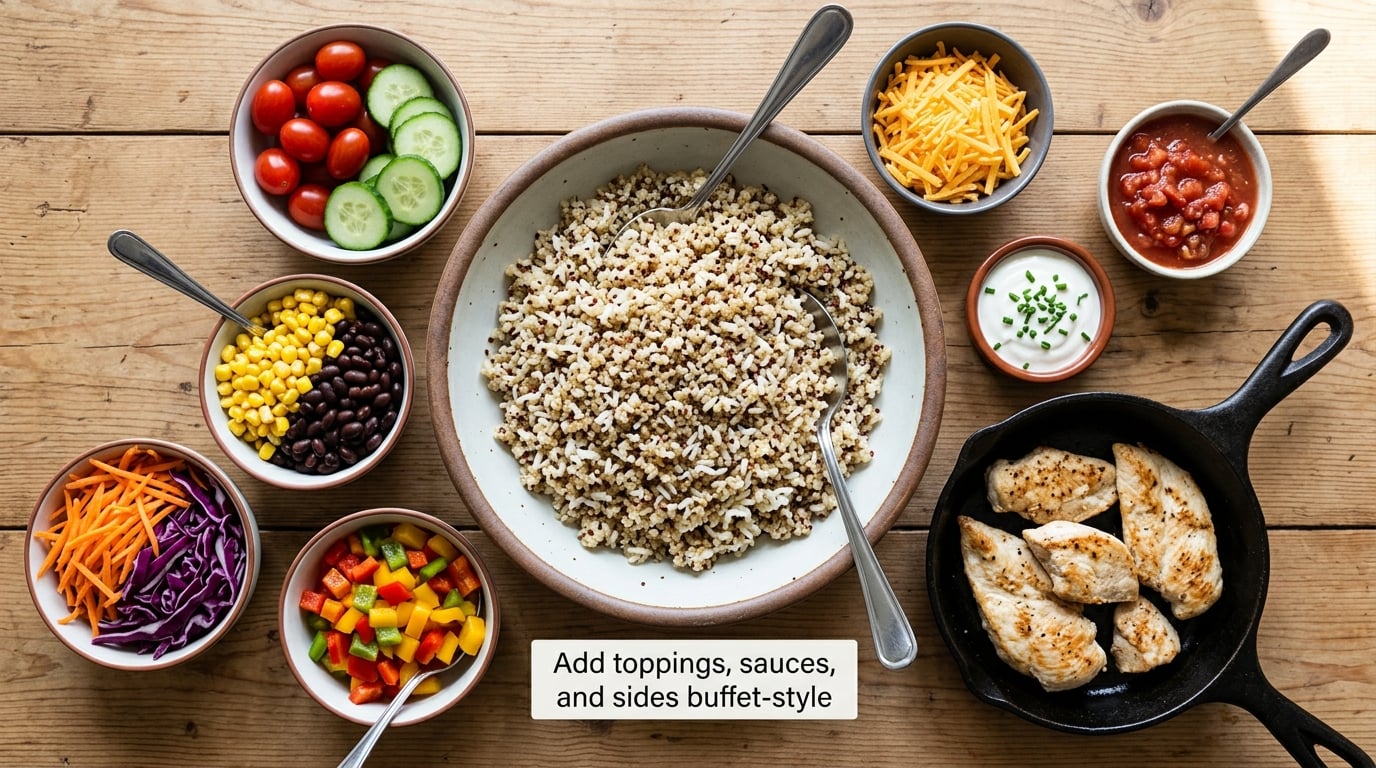
Put everything in the middle of the table in separate dishes and let people serve themselves. Picky eaters assemble only what they recognize, while the adults season the same base with the stronger sauce.
This is what keeps the plan working. One dish leaves the kitchen, and each plate is customized without a second cooking job. Children who refuse mixed food will happily take the same rice from its own bowl that they reject folded into a casserole.
7. Serve the meal without pressure
Put the safe foods on the table first and let seconds be normal. Start selective eaters with a small portion and refill on request, since a large plate is a hard no on its own.
Invite a taste, never demand a finish. Pressure at the table reliably teaches kids that the interesting foods are the ones worth arguing about, and most of the time one unpressured taste turns into a second helping on its own.
Keep the mood ordinary. This works for most families most weeks. It is not a method that removes every conflict, and anyone selling you that is selling something.
8. Save and reheat leftovers safely
Refrigerate food within two hours of serving. Use shallow airtight containers so the center cools fast, and use refrigerated leftovers within three to four days.
Reheat to 165°F and stir once halfway through. Keep crisp toppings such as fried onions, tortilla strips and raw vegetables in a separate container and add them after reheating so they stay crunchy.
Common Mistakes
Planning too many unfamiliar dishes
Four new recipes in one week guarantees resistance. Fix: introduce one stretch item at a time, surrounded by foods that already work.
Hiding vegetables in the food
Finely grated zucchini in muffins gets found, and being caught ends the trust you were trying to build. Fix: serve vegetables plainly on the side so eating them stays voluntary.
Forgetting allergy cross-contact
The shared spoon is the whole problem. Fix: cook the allergy-safe portion first with clean utensils, cover it, and keep it out of the shared space.
Cooking every component to one texture
One texture for the whole plate means one bad texture for the whole plate. Fix: keep vegetables crisp-tender, proteins tender, and let people skip either one.
Forgetting sauce and side options
A plain base with nothing to add is bland, and bland gets rejected. Fix: put out two sauces every time, one mild and one with heat.
Serving overly large portions
A heaped plate reads as a demand. Fix: start small, serve the rest family-style, and let seconds happen without comment.
Making separate meals by default
Cooking for each person separately means the weeknight takes three times as long and nobody eats together. Fix: one base, everything else on the side.
Assuming one dinner has to fix everything
Trying to solve allergies, two adult preferences and a picky eater in a single Tuesday night leads to cooking nothing. Fix: cook the shared meal well and use the allergy-safe portion and side dishes for the rest.
A few serving habits pay off more than any recipe. Set the table before anyone sits, put the safe foods closest to the youngest eater, and let everyone fill their own plate. Adults who model eating the vegetable usually get further than adults who comment on it.
Frequently Asked Questions
What is the best meal to cook when everyone has different tastes?
A build-your-own base works best: plain pasta, rice, baked potatoes or plain grilled chicken with every topping served separately. Pick a flavor direction such as Italian or Mexican, offer two sauces, one mild and one with heat, and let each person assemble their own plate. The kitchen cooks once, everyone eats the same dinner, and nobody is stuck with a dish they refuse.
How do you make one dinner appeal to picky eaters and adventurous diners?
Cook the plainest version of a flexible base, such as unsalted pasta or unseasoned chicken, then let adults add stronger flavor at the table. Keep vegetables in a separate bowl rather than mixed in, and cut protein into small pieces, which raises acceptance noticeably. Add one new or different item per meal on a side plate, unpressured, so the adventurous diner gets novelty without anyone else being forced.
How can I cook one meal for the whole family with different dietary needs?
Use a neutral base everyone can eat, such as rice, potatoes or corn tortillas, then handle restrictions at the edges. Cook an allergy-safe portion first with clean utensils, plate it and cover it before shared food goes out. Offer dairy-free, gluten-free or lower-sodium versions as separate sauces and sides on the same table, which keeps everyone at one dinner rather than cooking three.
What foods can I serve as a base everyone can customize?
The most flexible bases are plain pasta, white or brown rice, baked potatoes, flour or corn tortillas, and plainly grilled or roasted chicken. Each is mild, familiar and easy to portion, and each accepts sweet, savory or plain additions. Sheet-pan chicken strips, one-pot pasta and slow-cooked pulled pork all work the same way, with sauces and toppings kept in separate bowls.
How long should I keep leftovers from a family dinner?
Use refrigerated leftovers within three to four days and refrigerate them within two hours of serving. Store food in shallow airtight containers so it cools quickly and does not warm the fridge. Reheat to 165°F, stirring once halfway through, and keep crisp toppings such as fried onions or raw vegetables in a separate container until serving time so they do not turn soft.
Conclusion
Before your next grocery run, write down the foods each person reliably eats and circle the most flexible one. That is your base. Then prep the toppings and sauces separately, put everything in the middle of the table, and let the plates differ while the meal stays one.