
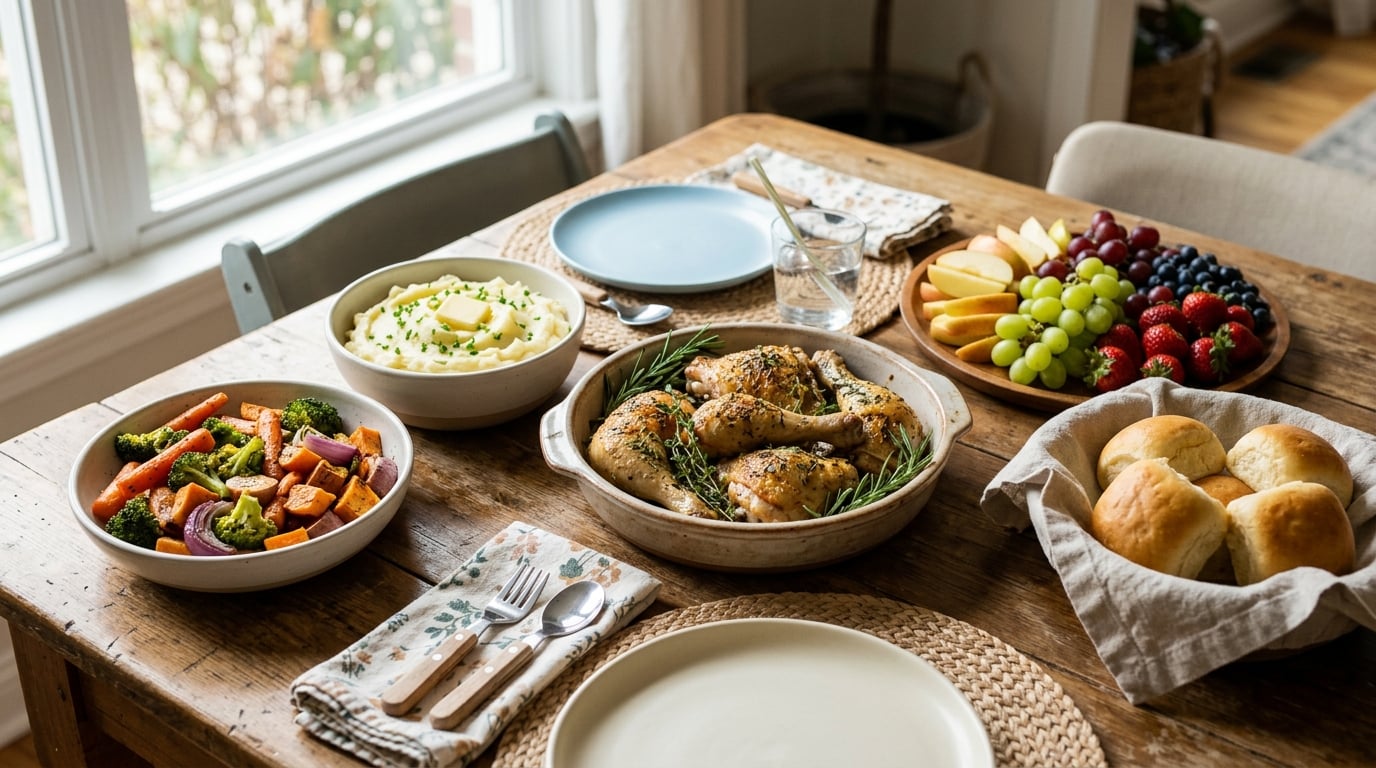
A kids menu for a dinner party is a small, simple version of the meal built from foods children already recognise, portioned so they can eat it on their own while the adults get something more grown-up from the same grocery run. If you know how to make a kids menu for a dinner party, you avoid the two things that derail most family gatherings: a table of unfamiliar food and a host stuck at the stove.
Most of the work happens days before, in a phone call and a notebook. What lands on the table is the easy part.
Updated for October 2026.
What You Need
The list starts with information, not food. Before you pick a single dish, write down the age of every child coming, plus any allergies, intolerances or religious restrictions. A seven-year-old with a peanut allergy and a two-year-old who still eats everything need very different plans.
Then gather the practical bits. You need serving dishes that can go in the oven or on a warming tray, a low table or a stable step stool so small guests can reach the food, and shallow containers for the fridge. If the menu is nut-free, check labels on crackers, bread and dips before they go in the basket.
Work out your kitchen space too. If you are cooking one main and relying on make-ahead sides, you need a clear counter. If you are hosting eight children and four adults, count your oven racks before you commit to baking anything at the last minute. Our guide to how to plan a dinner party menu a week ahead covers the timing side of this in more detail.
Finally, decide how the food will be served: family-style on the table, or a buffet line along a sideboard. A buffet works better with older children. Toddlers eat better when food sits in front of them.
How to Make a Kids Menu for a Dinner Party
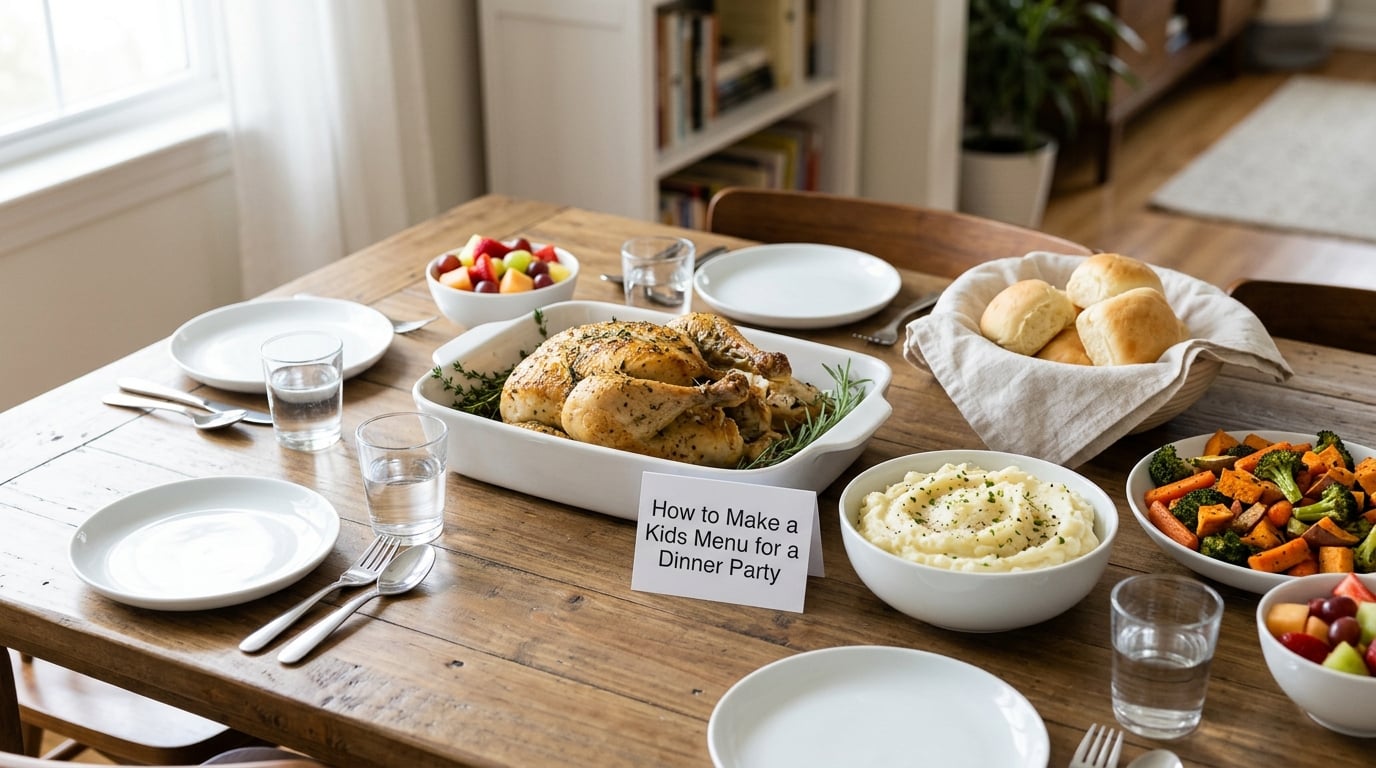
Build the menu in this order: a familiar main, one or two comforting sides, a vegetable that doubles as a dip vehicle, a light snack for early arrivals, and one dessert you can finish the night before. Keep seasoning mild and put every sauce on the side.
Step 1: Ask About Ages, Allergies, and Preferences
Send one message to the parents and ask four things: how old is your child, any allergies or intolerances, any foods you already know they eat, and anything you would rather avoid. That single message removes most of the guesswork.
Treat the answers by group. A selective eater who survives on three foods needs you to include one of those three, plainly and without comment. A child with a medical dietary need needs separate preparation, not a substitute dish at the same table. Babies and toddlers may need softer, chopped or pureed versions, which take ten minutes in a separate bowl.
You are not obliged to redesign the party around one child’s restrictions, but you are responsible for knowing what they are before the day arrives.
Step 2: Choose a Familiar Main Dish
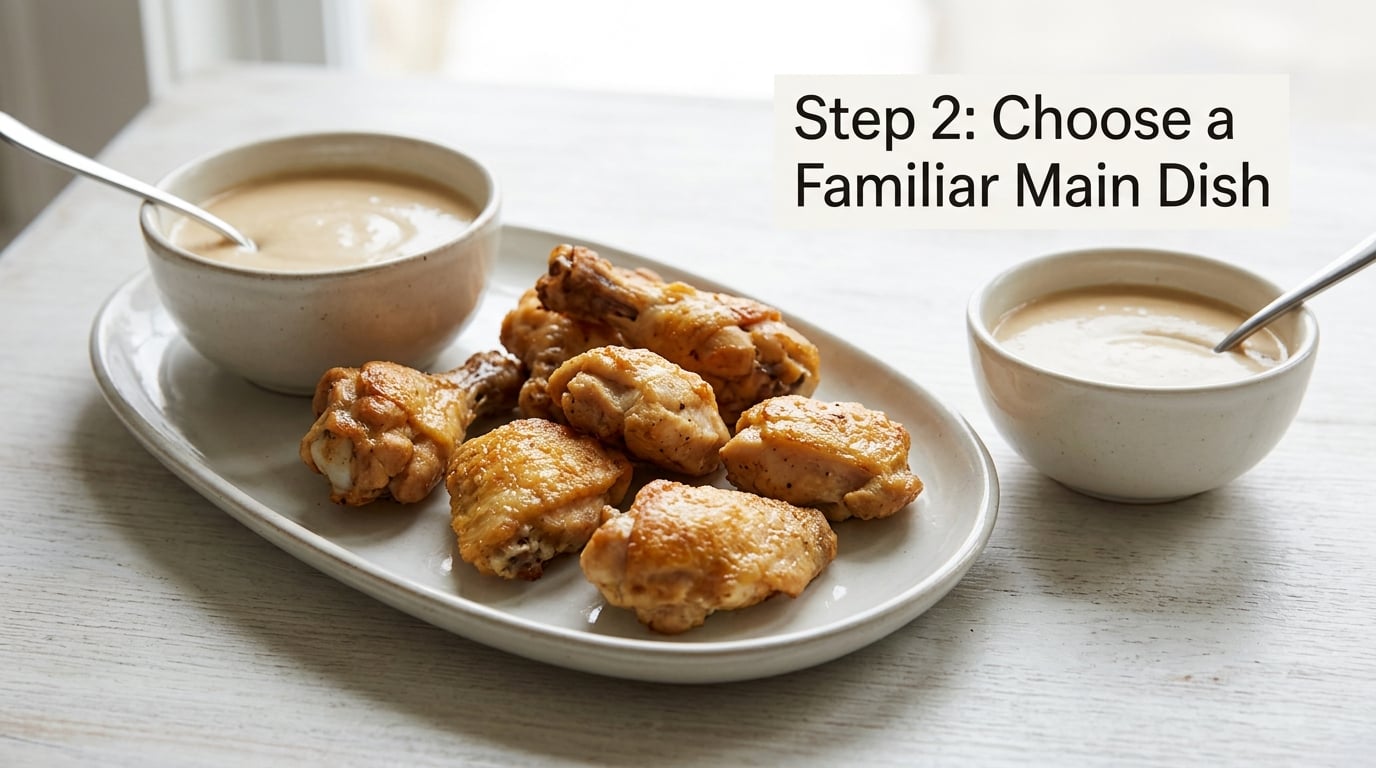
The main should be mild, easy to cut and easy to pick up. Baked chicken, pasta with a simple tomato sauce, fish fillets with a lemon wedge, mini meatballs or a vegetarian grain dish all work. Mini formats of adult food, like small sliders or mini quesadillas, solve portioning and appeal at the same time.
Cook it to a safe internal temperature and check with a thermometer rather than guessing. Poultry reaches 165°F, ground meat 160°F, and whole cuts or fish 145°F. Rest chicken a few minutes before serving so it is not tough, and put a plain dipping sauce in a small bowl rather than pouring anything over the top.
Step 3: Add Comfortable Sides and a Vegetable
One starch and one vegetable is plenty. Good starches are mashed potatoes, rice, plain pasta, soft bread rolls and couscous. Good vegetables are roasted sweet potato, corn, carrots, cucumber sticks, broccoli florets and mild salad with dressing on the side.
The vegetable should be able to do two jobs. Cucumber and carrot sticks with hummus or ranch give a child something to pick up and something to dip, which keeps them at the table longer than a plated side would.
Season everything on the mild side. If the adults want heat, put chilli flakes, chilli oil or a hot sauce on the table in a separate bowl and let the children decide. If you are cooking a more layered meal, the approach in how to build a three course dinner menu at home is easy to scale down.
Step 4: Plan a Flexible Snack or Starter
Children arrive hungry and eat slowly, so give them something before the main. Fruit, cheese cubes, crackers, vegetable sticks with dip, mini quesadillas and plain popcorn all take five minutes.
Keep this item deliberately light. A heavy appetiser kills their appetite for dinner and leaves you with a half-eaten main. A snack that can be eaten standing up, without a plate, saves you a washing-up round at the worst moment of the evening.
Step 5: Choose an Easy Make-Ahead Dessert
One dessert beats a table full. Fruit with yogurt, a sheet-pan shortbread, decorated cupcakes, chocolate milk or frozen yogurt can all be finished the night before.
Sheet-pan shortbread and frosted cupcakes are the safest make-ahead choices because both travel well and hold their texture overnight in a sealed container at room temperature. Refrigerate anything with dairy, whipped cream or mousse, and take it out about 20 minutes before serving so it is not too cold.
Serve one sweet and one piece of fruit, and let the children build their own plates. It cuts the sugar load without anyone noticing.
Step 6: Prep, Serve, and Keep Food Safe
Two days out, shop and make a written list of everything that can be chopped, cooked or assembled. One day before, do most of the cooking, refrigerate it shallow and covered, and set the table. On the day, finish only what needs to be fresh.
Keep hot food above 140°F and cold food below 40°F. Anything perishable that sits out longer than two hours goes in the fridge, not back on the table. Serve in small batches and refill as needed so nothing sits for an hour before anyone eats it.
For the layout, put the children at a low table with their own plates, cups and napkins, and keep the main dishes within their reach rather than across the room. Our piece on how to set a table for a casual dinner party has a few ideas for a layout that survives a room full of children.
Common Mistakes
Serving only new food. If nothing on the table is recognisable, the meal ends with crackers and a tantrum. Fix: at least half the items should be foods the children already eat at home.
Seasoning the kids food like the adults food. Chilli, strong cheese and salty sauces are not exciting at six years old, they are a reason to stop eating. Fix: keep sauces and heat on the table in separate bowls.
Oversized portions. A full adult plate on a small plate looks enormous and often gets refused. Fix: serve smaller amounts and let children ask for seconds, which most will.
Ignoring allergies until someone arrives. Cross-contact happens on shared boards, shared toasters and shared spoons. Fix: if a serious allergy is in the group, prepare that plate first, in a clean area, with separate utensils.
Leaving food sitting out. Grazing food and room temperature do not mix. Fix: cold dishes go on ice or into the fridge, hot dishes go into a low oven, and leftovers are refrigerated within two hours.
Cooking everything on the day. You cannot supervise children and watch a stove at the same time. Fix: push as much as possible into the day-before list and keep the day-of list to three or four short tasks.
Pressuring a child to finish. Clean-plate rules and using food as a reward or punishment reliably end with a hungry, unhappy child. Fix: put the food down, talk about something else, and clear the plate when they leave the table.
Frequently Asked Questions
How do you serve kids of different ages at the same dinner party?
Plan around the youngest child, then add one or two items older children enjoy. A baked main, a familiar starch and a dip-able vegetable covers toddlers through eight-year-olds at once. Give babies and toddlers a separate soft or chopped portion in a small bowl, and put age-appropriate extras such as sliders or a cheese plate where the older guests can reach them.
How do you handle a picky eater at a dinner party?
Include one of the three or four foods they reliably eat, served plainly, and say nothing about it. Add a neutral option such as plain pasta so they have something that requires no courage to try. Avoid pressure and clean-plate rules, which usually end with the child eating nothing. Present small portions and ignore the plate while the meal happens.
How do you plan a kids menu when a guest has a nut allergy?
Ask the parent exactly which nuts and whether cross-contact is a concern, then check labels on bread, crackers, dips and any packaged sweets. Keep peanut butter well away from the food children will handle. For a severe allergy, cook that child’s portion first, in a clean area, with separate utensils and boards, and serve it separately rather than as a swap on the shared buffet.
What can I make the day before a kids dinner party?
Most of it. Sheet-pan shortbread, frosted cupcakes, a pasta salad, a tray of chopped vegetables with dips in sealed containers, and a slow-cooked main such as baked chicken all hold overnight. Refrigerate anything with dairy or cream, keep hot items above 140°F when reheating, and leave only quick fresh jobs, like slicing fruit or warming bread, for the day itself.
What portion size should I serve a child at a party?
Less than most adults expect. For ages three to six, three or four of any finger food or a small cup of a main is plenty, and seconds are normal. For ages one to two, offer a small amount on their own plate and let them ask. Serving smaller amounts in a child-sized bowl rather than a large plate tends to reduce refusals as well as waste.
Conclusion
Start with a single message to the parents: ages, allergies, and what their child already eats. From there, pick one familiar main, add a simple side and a dip-able vegetable, and choose a dessert you can make the night before. Everything else on the kids menu is decoration, and it can wait.