
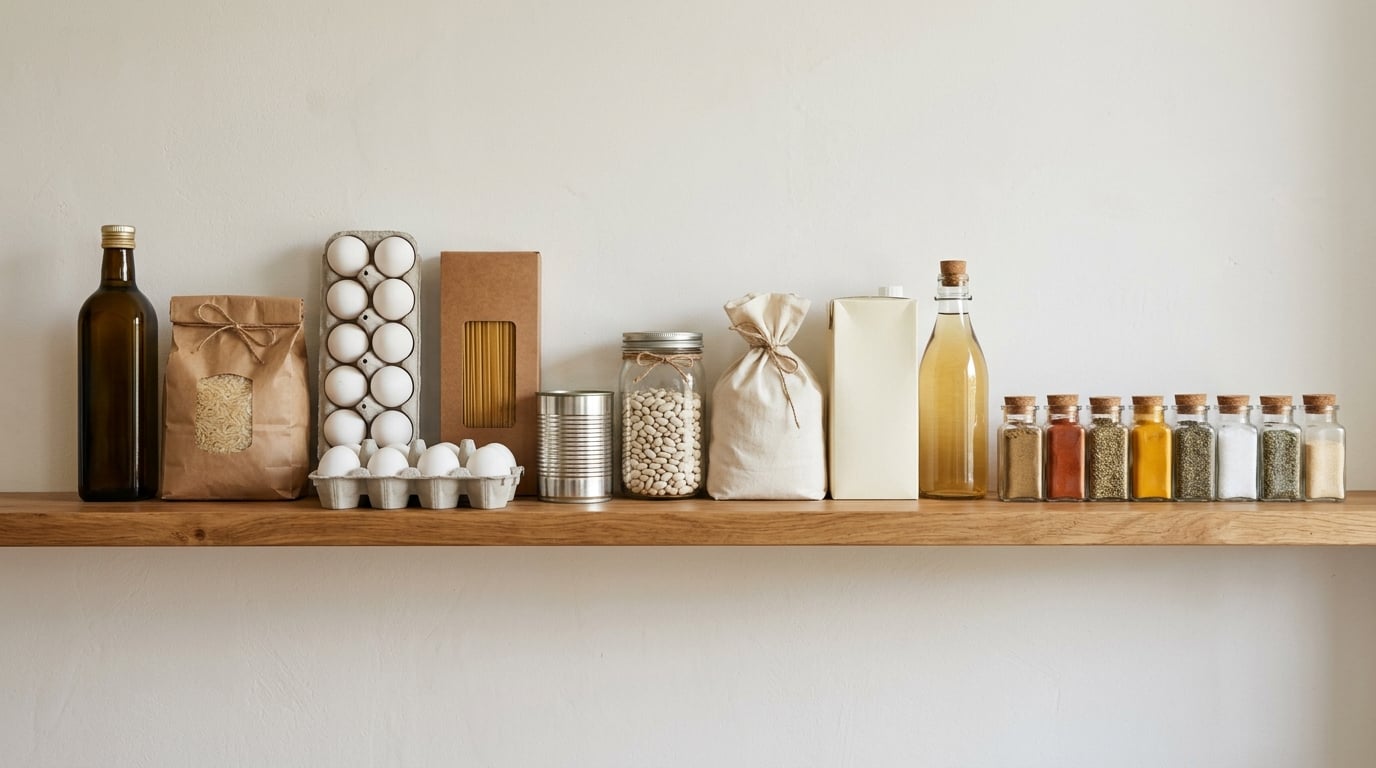
A pantry staple is a shelf-stable ingredient that does more than one job, so a can of tomatoes, a bag of rice or a jar of vinegar can turn into dinner when the fridge is bare. These are the pantry staples every home cook should have, picked for how many meals each one unlocks rather than for how impressive it looks on a shopping list.
Nothing below is specialty, and nothing requires a recipe to be useful. Every item earns its space because it keeps for weeks or months, costs little per use, and works whether you are a confident cook or someone who has burned rice more than once.
The order below is roughly the order I would build a kitchen in: fats and acids first, then eggs and baking basics, then grains, canned goods and spices. If your cupboard is genuinely empty, work down the list and stop when your weeknight needs are covered.
Table of Contents
- Pantry Staples Every Home Cook Should Have at a Glance
- 1. Extra Virgin Olive Oil
- 2. Unsalted Butter
- 3. Eggs
- 4. All-Purpose Flour
- 5. Granulated Sugar
- 6. Long-Grain Rice
- 7. Dried or Long-Cooking Pasta
- 8. Canned Tomatoes
- 9. Canned Beans
- 10. Low-Sodium Chicken or Vegetable Stock
- 11. Distilled White or Red Wine Vinegar
- 12. A Small Set of Whole and Ground Spices
- Frequently Asked Questions
- What are the most important pantry staples to buy first?
- How should I organize pantry staples to prevent waste?
- How long should dry pantry staples and canned ingredients last?
- What can I buy instead of specialty ingredients when cooking from scratch?
- Which pantry staples are most useful for quick weeknight dinners?
- What minimum internal temperatures should home cooks use for food safety?
- Conclusion
Pantry Staples Every Home Cook Should Have at a Glance
Here is the short version. The table shows the role each staple plays, the form worth buying, roughly how long it keeps once opened or canned, and the meals it supports.
| Staple | Best culinary role | Form worth buying | Typical shelf life | Everyday meals it supports |
|---|---|---|---|---|
| Extra virgin olive oil | Finishing fat, salad dressings, pan sauces | Dark glass or tin, harvest date on label | 6-12 months open, 1 year sealed | Roasted vegetables, pasta, eggs, fish, vinaigrette |
| Unsalted butter | Richness, flaking, baking fat | Unsalted, in foil or paper | 1-2 weeks refrigerated, months frozen | Pan sauces, baking, toast, eggs, greens |
| Eggs | Protein, binding, emulsifying | Carton with a date code, or loose graded eggs | 3-5 weeks in the carton, 1 week hard-boiled | Breakfasts, omelets, frittatas, custards, quick suppers |
| All-purpose flour | Thickening, dredging, baking structure | Unbleached or bleached, standard brand | 6-12 months at room temperature | Pancakes, cookies, quick breads, breading, pan sauces |
| Granulated sugar | Sweetening, preserving, balancing acidity | Plain white granulated | About 2 years airtight | Sauces, marinades, jams, cookies, sorbets |
| Long-grain rice | Dependable base grain | Long-grain white first, then brown | 18-24 months sealed | Stir-fries, pilafs, soups, side dishes, meal prep |
| Pasta | Fast neutral base for sauce | Spaghetti, penne or rigatoni, standard brand | 1-2 years sealed | Weeknight pasta, one-pan dishes, cold salads, soups |
| Canned tomatoes | Acid and body for sauces | Crushed, plus whole or diced | 2-3 years sealed, about 5 days open | Marinara, chili, shakshuka, soups, curries, braises |
| Canned beans | Protein, fiber, texture, bulk | Black, chickpeas, cannellini, kidney, no-salt-added | 2-3 years sealed, 3-4 days open | Chili, tacos, salads, soups, curries, one-pan dinners |
| Low-sodium stock | Building flavor in liquid form | Carton chicken or vegetable, reduced-sodium | About 4-6 months sealed, 3-4 days open | Soups, sauces, risotto, deglazing, braises |
| Distilled vinegar | Bright acid and cleaning | White distilled plus one red wine vinegar | 1 year or more, sealed | Dressings, marinades, pan sauces, cleaning, pickling |
| Starter spices | Seasoning, browning, heat | Black pepper, chili powder, cumin, paprika, cinnamon, oregano | 6-12 months ground, longer whole | Roasting, chili, curries, tomato dishes, desserts |
1. Extra Virgin Olive Oil
Olive oil goes near the top of any working kitchen list because it does three different jobs: fat for searing, liquid for a quick pan sauce, and a finished flavor you taste directly. A peppery bottle drizzled over roasted vegetables at the end of cooking is a different ingredient from a neutral-tasting bottle you reach for in a hot pan.
Buy a dark glass or tin bottle with a harvest date rather than a clear plastic one, and buy a size you will use inside a few months. Heat and light both push olive oil toward rancid, and once it tastes like crayons or old nuts it is finished, no matter how much is left.
Why olive oil leads the pantry staples every home cook should have
It is one of the few staples where spending a little more is usually worth it, because a poor bottle is bland and a good one changes a dish on contact. Keep it away from the stove, and expect roughly six to twelve months of open life before you should buy a replacement, more if you use it often.
Everyday uses: green beans and potatoes roasted with oil instead of butter, a lemon and oil dressing, a pan sauce made by deglazing with a tablespoon, and a raw drizzle over beans, soups or grilled fish. Two tablespoons of oil is all most dinners need, so a small bottle often outlasts a large one.
2. Unsalted Butter
Butter brings dairy fat and flavor that olive oil cannot fake, and it does jobs oil is bad at: creaming into cake batter, thickening a sauce through a flour roux, and browning into a nutty finish.
Keep unsalted butter for baking and pan sauces, where you want to control the salt yourself. Salted butter is perfectly fine for cooking and for toast, and if you bake often, a stick of salted butter is the better buy because it stays usable across more recipes.
Storage matters more with butter than most people expect. Butter picks up odors from the fridge, so keep it sealed and away from raw onion and strong cheese; when the shop is out, a freezer keeps it for months and a short burst of the food processor brings a frozen stick back to workable softness.
3. Eggs
Eggs are among the most economical proteins in the kitchen and the most flexible. They turn into a ten-minute omelet, a plate of soft scrambled eggs over leftover rice, a week of frittata slices, or the custard that thickens a tart filling.
When buying, choose a carton with a sell-by or pack date if you plan to keep them past the week, because a dated carton tells you what the retailer knows and loose eggs do not. Grade matters far less than freshness, and the difference between large and extra large rarely changes a recipe that does not specify.
Store eggs in the original carton on an inner fridge shelf rather than the door, keep the box unopened, and cook to 160°F for dishes where eggs are not cooked all the way. The water-glass test settles most arguments: an egg that floats on a bowl of water is old enough that I would not trust it for a soft scramble.
4. All-Purpose Flour
All-purpose flour is the general-purpose pantry flour: it thickens a gravy, gives dredged fish a crisp shell, and handles pancakes, cookies, muffins and most quick breads without adjustment. It is the workhorse, and buying a standard brand is usually the right call.
You need something else for specific jobs. Bread flour has more protein for chewier loaves, cake flour is lower protein for tender crumb, and nut or gluten-free flours change the ratios enough that they are their own category rather than a swap.
For a slightly better loaf or cookie, replace about a fifth of the all-purpose flour with whole wheat. Store flour airtight in a cool, dry cupboard for six to twelve months, and freeze it if your kitchen is warm or humid; frozen flour bakes exactly the same, and a scoop straight from the freezer works fine.
5. Granulated Sugar
Plain white granulated sugar deserves a bigger place than most kitchens give it, because it does more than sweeten. It balances the acid in a tomato sauce, thickens a lemon curd, keeps a cake tender by holding moisture, draws moisture out of a fruit for a better jam, and feeds a caramel you cannot make any other way.
Skip the drawer of specialty powders for now. Brown sugar, powdered sugar and turbinado each have their uses, but the recipes that need them are recipes you will look up anyway, while the recipes that need plain sugar are the ones you cook from memory.
Keep it airtight in a dry cupboard, away from stovetop heat and humidity. It is stable for roughly two years, and any lump that has hardened can be broken up and dried in a low oven or broken with the flat of a spoon.
6. Long-Grain Rice
Long-grain rice is the base that never fails. Because the grains stay separate rather than clumping, it is forgiving of almost anything you throw on it: stir-fry vegetables, broth and herbs, a pan of peas, or a tray of roasted vegetables and chicken on the same sheet.
Start with standard long-grain white rice, which cooks in about 15 minutes, and add long-grain brown once you have the habit down. Brown needs roughly 40 minutes and a good lid, and it improves noticeably when it is toasted dry in the pan for a minute before liquid goes in.
The ratio that removes guesswork is one part rice to two parts water by volume. Salt the water, keep the lid on low heat, and let the pot stand off the heat for ten minutes at the end. Store rice sealed in a cool cupboard for the best part of two years, and cool cooked rice fast in shallow containers before it goes anywhere near the fridge.
7. Dried or Long-Cooking Pasta
Pasta is the fastest pantry staple to a plate. Keep two or three shapes rather than six: one long (spaghetti), one tube or penne for chunky sauces, and one shape you enjoy on its own. Standard brands are durable and cook evenly, so a mid-priced box is not a downgrade.
Match the shape to the sauce rather than the other way around. Tubes and ridged shapes hold chunky sauces and meat, long strands take light oil or butter sauces and seafood, and flat ribbons suit a creamy or brown sauce better than anything else in the drawer.
Cook it in salted boiling water until just firm, then finish it in the sauce with a splash of the starchy water, which is what makes restaurant pasta cling instead of sit. Sealed dry pasta keeps one to two years; once opened, roll the box or transfer it to a jar so it cannot go stale.
8. Canned Tomatoes
Crushed tomatoes are the default: even texture, no chunks, and the right consistency for a sauce that thickens on its own. Diced tomatoes, which hold their shape, belong in a salsa or a stew. Whole peeled tomatoes, hand-crushed with your fingers, give a rustier, brighter sauce that blended ones do not.
Read the label for two things. If sodium is a concern, a no-salt-added or low-sodium can lets you season to your own taste, and an ingredient list that is only tomatoes, tomato juice and citric acid means a cleaner base than one with sugar and a heavy salt load added at the plant.
What they buy you in a week: marinara in a pot with onion, garlic and a long simmer; chili that starts from a can instead of a soak; shakshuka or a baked dish when the oven is already on; a curry base where the can stands in for an hour of simmering. Once opened, refrigerate in a covered container and eat within about five days, or freeze in single portions.
9. Canned Beans
Canned beans bring protein, fiber and texture to a dinner for almost no cooking time, and most people buy one can when they should buy two. Keep black beans, chickpeas, cannellini or kidney beans on hand, and a fourth variety only if you actually cook that kind of food.
Draining and rinsing canned beans lowers their sodium noticeably, and the surface starch that comes off in the rinse is what makes mashed beans taste smooth instead of pasty. An unseasoned can also means you control the salt, which matters if you are cooking for anyone watching it.
The uses run from chili and taco filling to a three-ingredient soup, a salad with onion and vinegar, a curry where the beans cook down with coconut milk, or a sheet-pan dinner with vegetables that all roast together. Opened beans keep in the fridge about three or four days and freeze well, which means a spare can is cheaper than a can of spoilage.
10. Low-Sodium Chicken or Vegetable Stock
Stock is flavor you can add in a single pour, and it earns its shelf space in soups, sauces, risotto, grains, and the moment you deglaze a pan after searing. Reduced-sodium cartons give you a base you can still season yourself, and vegetable stock keeps a meatless weeknight tasting deliberate rather than thin.
Homemade is not automatically better or even different in nutrition, so this is the one staple where the carton is a completely reasonable choice most days of the week. When you do make a big batch, cool it fast, freeze it in two-cup containers, and treat it like a fresh ingredient rather than an endless supply.
A carton lasts roughly four to six months sealed. After opening, move the remainder into the fridge within two days and use it within three or four, or pour it into ice cube trays and freeze, which is what I do because the half-measures nobody measures are the ones that go off.
11. Distilled White or Red Wine Vinegar
Two vinegars cover the vast majority of home cooking. Distilled white vinegar is the sharp, clean acid for dressings, pickling, cleaning, and brightening a sauce that tastes flat. Red wine vinegar is the softer, rounder one for vinaigrettes, marinades for meat, and a pan sauce where a drop at the end makes everything else taste more like itself.
Having only those two is not a compromise. Specialty vinegars are wonderful, but they are also where most home cooks end up with a cupboard of half-used bottles they never find a recipe for, so add them only when a specific dish calls for one.
Everyday uses: a tablespoon in a beans-and-greens pot; oil, vinegar, mustard and a little sugar whisked into a salad dressing; a splash in a tomato sauce to pull the sweetness back; wine and vinegar added to a marinade for chicken; and vinegar straight from the bottle on a cutting board or stovetop wipe. Because acidity is its own preservative, sealed vinegar keeps a year or more, but a label prevents the mystery-bottle problem later.
12. A Small Set of Whole and Ground Spices
Six jars earn their shelf space in nearly every kitchen: black pepper, chili powder, cumin, paprika, cinnamon and dried oregano. Together they season roasted vegetables, tomato dishes, chili, curries, egg and potato meals, and desserts, which is most of what a home kitchen actually cooks.
Buy pepper and oregano as whole peppercorns and dried leaf oregano if you can, and buy the rest ground, because the flavor of a spice that is ground to order in small batches is genuinely different. A small tin of cinnamon and a jar of cumin are worth having long before the specialty chili flakes and smoked paprika.
Storage decides how long they last. Heat, air, moisture and light strip the oils that carry flavor, so keep jars in a cupboard away from the stove, not in a hanging rack over the cooktop, and grind or shake what you need rather than spooning directly from the jar. Ground spices peak within a year of opening, whole ones hold two to three, and a broken-in grinder or a faded label is your cue to replace.
One trick that buys you months: toast whole cumin, peppercorns or cinnamon in a dry pan for a minute until fragrant, then grind. The heat releases the oils into the grinder and the finished spice smells like the jar you remember, not like cardboard.
Frequently Asked Questions
What are the most important pantry staples to buy first?
Buy in this order: olive oil, unsalted butter, eggs, all-purpose flour, granulated sugar, long-grain rice, pasta, canned tomatoes, canned beans, and a box of distilled white vinegar. That covers frying, baking, a base grain, a fast starch, sauce and chili starts, and acid. If you are starting from a truly empty kitchen, the first three purchases will get you real meals fastest, and the rest of the list fills in over a month.
How should I organize pantry staples to prevent waste?
Group by how often you cook, not by type. Put everyday items at eye level and the ones you buy occasionally above them, and place the oldest product in front so you use it first. A FIFO box of the same item each time is the whole system. Label home-bought spices and flours with the month and year, and re-buy only what you actually cook with, not what sounds interesting on a list.
How long should dry pantry staples and canned ingredients last?
Unopened dry goods such as rice, pasta, flour, and sugar stay good for one to two years, and canned tomatoes and beans are safe for two to three years. Vinegar keeps a year or more. Once opened, the clock changes: canned beans and tomatoes last three to five days refrigerated, and ground spices lose their punch within about a year. Write the year on anything you grind or pour yourself, because you will not remember.
What can I buy instead of specialty ingredients when cooking from scratch?
Most specialty bottles have a plain substitute. Swap red wine vinegar for distilled white with a drop of honey, tahini for any nut butter thinned with oil, and specialty chili flakes for chili powder plus a pinch of red pepper. A single-font pantry is not a downgrade, because the acid and the heat still do their job. Add a specialty jar only after a recipe you genuinely want to make twice asks for it.
Which pantry staples are most useful for quick weeknight dinners?
Canned tomatoes, canned beans, pasta, rice, and stock do the most work on a weeknight. A pot of tomato sauce, a pot of beans with onion, and cooked pasta are three dinners you can assemble in under half an hour, and rice turns leftover vegetables into a full meal. Eggs sit alongside them as the fastest protein available, and olive oil and vinegar are what make the vegetables taste like dinner rather than like a side.
What minimum internal temperatures should home cooks use for food safety?
Use a thermometer rather than guessing, and do not let color stand in for doneness. Poultry should reach 165°F / 74°C, ground meat 160°F / 71°C, and whole cuts of meat and fish 145°F / 63°C with a three-minute rest. Take chicken out of canned beans, chili, and soups before reheating from the can, and cool leftovers in shallow containers within two hours.
Conclusion
Buy the first five, cook them twice each, then buy the next five. Most people who say they have no idea what to cook are short an olive oil, a bag of rice, and a couple of cans, not short a spice called Urfa biber.
The pantry staples every home cook should have are deliberately plain, and the discipline that keeps a kitchen working is adding only what you have cooked at least twice. Specialty oils, vinegars, and flavored salts are easy to fall for and easy to let expire in the back of a cupboard.
Keep the original containers, write a year on anything you open, and rotate the oldest to the front. A short shelf you actually finish beats a long list every time.