
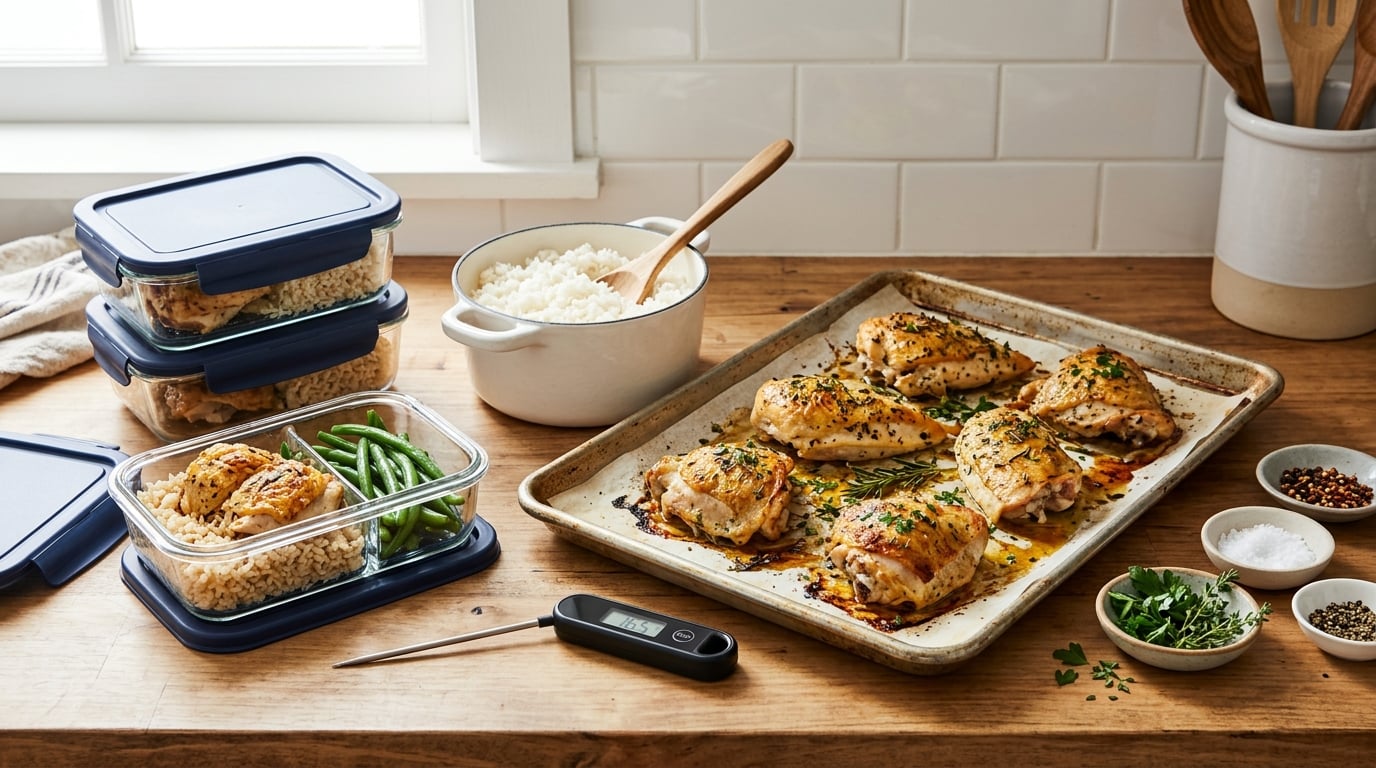
Batch cooking proteins means cooking one large batch of chicken, turkey, beef, pork, fish, eggs, tofu, or beans at the start of the week, then portioning it into servings you can turn into meals later. Learning how to batch cook proteins for the week turns a 90-minute Sunday session into roughly 10 minutes of assembly on a Wednesday, and it gives every meal in the week the same protein base to build on.
The method is simple once you have a rhythm: plan the quantities, cook each protein to its safe internal temperature, cool it quickly, portion by weight, and refrigerate the first few days while freezing the remainder. Everything below is built around that loop, with the safety numbers that matter and a realistic timeline.
What You Need
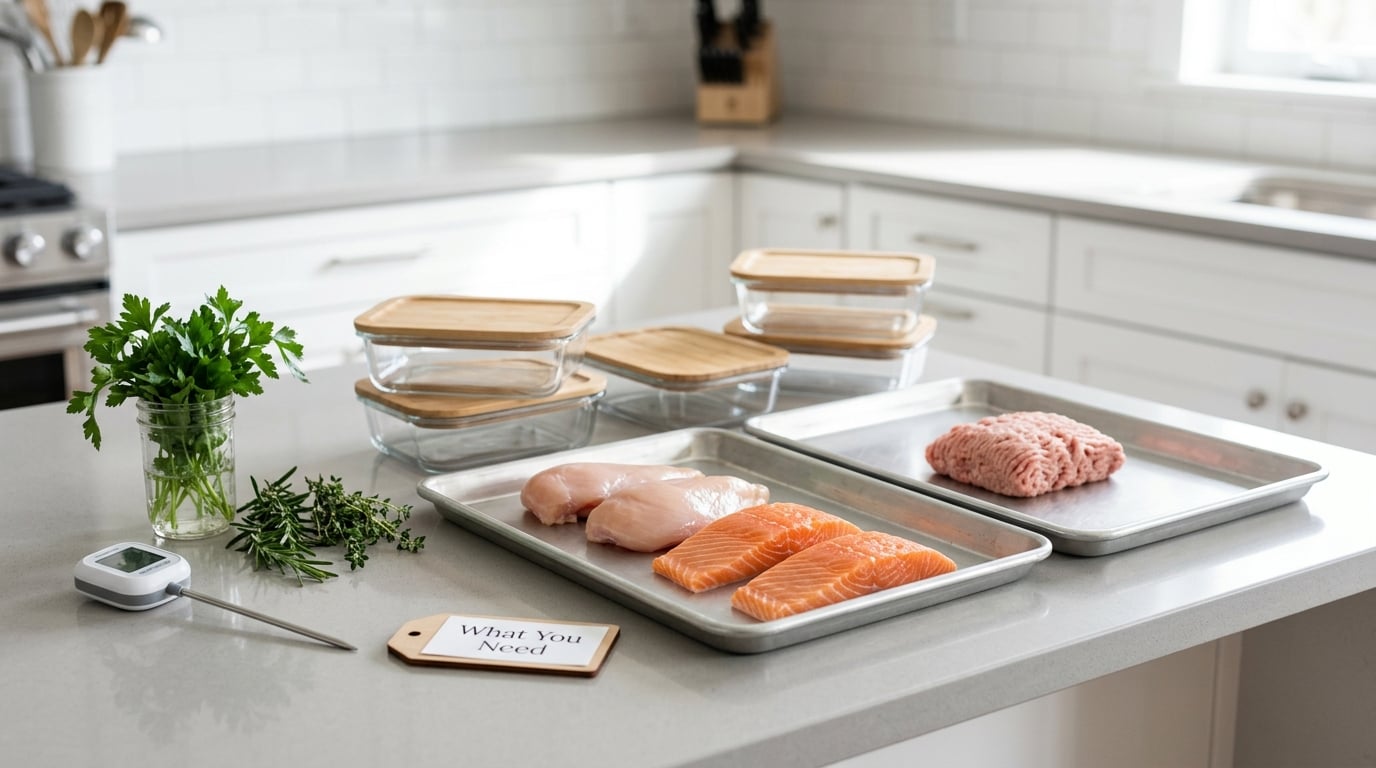
You do not need a specialty kitchen. A rimmed sheet pan, a digital thermometer, and a set of airtight containers cover almost everything, and the same method works whether you are cooking chicken, ground turkey, salmon, hard-boiled eggs, baked tofu, lentils, or a pot of cooked grains.
The proteins
Pick two or three, not six. Two is enough for variety, and three only works if one of them is nearly hands-off, like a pot of lentils or a tray of roasted vegetables that will become part of a grain bowl.
- Chicken thighs — the most forgiving option, since they stay moist through reheating.
- Chicken breast — highest protein per calorie, and the one most often overcooked.
- Ground beef or turkey — cooks fast and portions into taco and nacho formats all week.
- Pork tenderloin — lean, quick, and easy to slice thin after chilling.
- Salmon or another firm fish — reheat gently or use it cold.
- Eggs — boil a dozen and you have breakfast handled for half the week.
- Tofu, tempeh, or lentils — for plant-based rotations that hold texture well.
The equipment and storage
- Rimmed baking sheet or a second pan so nothing touches.
- Digital thermometer — the single tool that changes your results most.
- Cooling rack set over a tray for fast, even cooling.
- Glass or clear airtight containers in a size you will actually eat from, so portioning matches the container.
- Freezer bags or a flat tray for freeze-flat storage.
- Masking tape and a marker for dating each container.
- Cutting board and a second board, or do raw protein first, wipe down, then move to vegetables.
Step-by-Step: How to Batch Cook Proteins for the Week
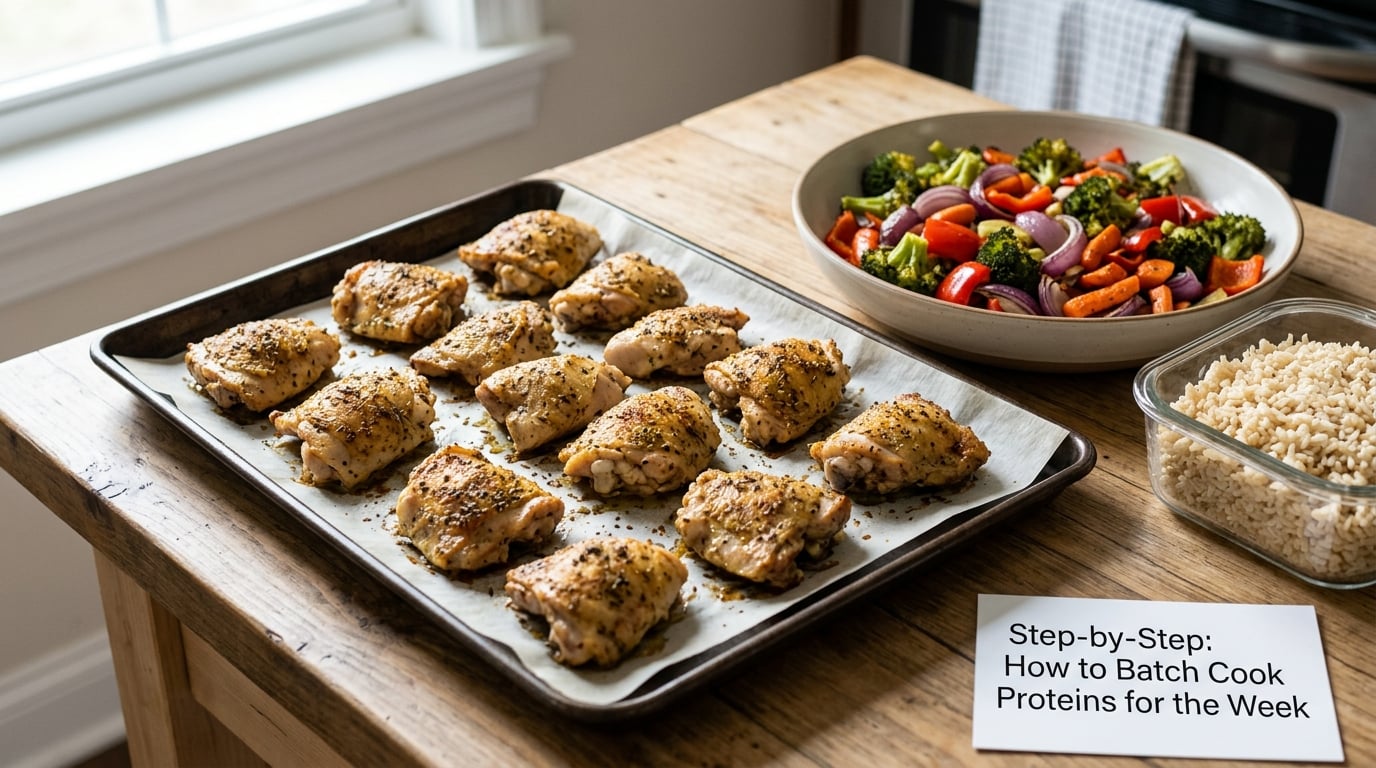
Here is the full process in order. Expect 60 to 90 minutes total for a two-protein batch, most of it oven or stovetop time you can use to chop vegetables or cook grains in parallel.
Plan Your Protein Rotation
Count the meals you actually eat in a week, breakfast included, then divide by the number of times you want that protein to appear. Three lunches and three dinners for one person is six servings; a family of four eating the same dinner is sixteen.
Raw meat loses roughly a quarter of its weight to water during cooking, so plan on about 25 percent more raw weight than cooked weight you want to eat. A target of 120 to 170 grams of cooked protein per meal works for a lot of adults, and higher for anyone training hard or trying to hit a daily protein goal.
Split the batch before you cook, not after. Fridge the servings you will eat in the first three or four days, freeze the rest flat in freezer bags, and write the date on both. This one decision is what makes a seven-day plan safe without freezing everything into food you end up ignoring.
Prep and Season Before Cooking
Before any heat goes on, trim proteins so pieces are close to the same size. Uneven pieces are why a batch comes out with dry edges and raw centers, and it is the most common reason a home cook decides meal prep is not worth it.
Pat meat dry with paper towels and season it while the oven heats. Salt and a neutral oil work on everything; add garlic powder, smoked paprika, or cumin depending on what you plan to build with the protein later. A short marinade of 20 minutes is enough for surface flavor, and a long one risks mushy texture on thin cuts.
Keep raw protein cold and separate. Do not leave it sitting on the counter while you finish seasoning the rest, and use one board for raw meat and a different one, washed and dried, for anything that will go in the container raw.
Space pieces at least an inch apart on the sheet pan. Crowding drops the pan temperature, traps steam, and gives you pale, steamed surfaces instead of browned ones, which is usually the difference between food people look forward to and food they eat out of obligation.
Cook Each Protein to a Safe Temperature
Temperature, not time, is the test. Use the probe thermometer in the thickest part of the piece, away from bone, and pull each protein at its safe minimum:
- Poultry — chicken and turkey, whole or ground: 165°F / 74°C.
- Ground meat — beef, pork, and lamb patties or crumbles: 160°F / 71°C.
- Whole cuts and fish — steaks, chops, roasts, salmon, and other fish: 145°F / 63°C, with a 3-minute rest.
- Eggs — cooked through, no pink in the yolk.
Rest whole cuts 5 to 10 minutes before slicing. The rest is what keeps the juices in the meat instead of on the cutting board, which matters more for a batch you will eat all week than it does for a dinner served immediately.
For chicken breast specifically, pull it at 160°F and let carryover heat finish the job. For salmon, stop the moment the center turns opaque and flakes at the thickest point. For firm tofu, press it down under something heavy for 20 minutes first, then bake or pan-fry until the edges brown.
Cool, Portion, Store, and Reheat
Do not put a steaming sheet pan straight into a sealed container. Food cools faster spread out on a rack or in a single layer of shallow containers, and the USDA guidance is to refrigerate within two hours of cooking. Deep, warm, sealed containers are where bacteria like to grow.
Portion by weight, not by eyeball. An inexpensive kitchen scale is the cheap fix for the most common meal prep complaint: container one looks like a serving, container two looks like a feast, and by Thursday you are skipping lunch.
Refrigerated cooked protein is generally good for three to four days at or below 40°F / 4°C. Freeze anything beyond that window. Frozen cooked protein keeps quality for roughly two to three months, and fish is the one item most cooks find disappointing after freezing — salmon turns soft and watery, so plan to eat that batch early or use it cold.
Reheat only what you are about to eat, and heat it to 165°F / 74°C. A damp paper towel in the container helps, and so does a splash of water or broth in the bottom. Microwave on 70 percent power in one-minute bursts so it heats without drying out.
Common Mistakes
Nearly every abandoned meal prep plan fails for one of seven reasons. Each has a straightforward fix.
Crowding the pan. Pieces touching steam each other instead of browning. Use a second sheet pan or cook in two rounds. Fifteen extra minutes is cheaper than a tray of pale chicken you will not want to eat.
Mixed sizes in one batch. Trim everything to a similar thickness, or separate small pieces from large ones so they finish together.
Overcooking to be safe. Once a piece hits 165°F, more heat only dries it out. Pull on temperature and trust it.
Reheating too long or too hot. A microwave on full power for five minutes is the single most common reason people think batch cooking tastes bad. Low power, short bursts, and a lid or damp paper towel fix it.
Storing everything in one deep container. Shallow containers cool faster and stack better in the fridge, which also makes grabbing one lunch less of a dig.
Letting food sit out for days. If you are not eating a portion within three or four days, freeze it on the day you cook it.
Eating the same protein seven days running. Two proteins plus a rotating sauce and a changing grain or vegetable is the usual fix, and we cover that below.
Tips for Using Your Protein Batch
A cooked batch only gets interesting if you change the context around it. Keep the protein plain when you cook it, and add flavor at the table.
- Salads and grain bowls — chicken, chickpeas, or tofu over rice or quinoa with a hot sauce and something crunchy. Store the dressing separately so nothing wilts.
- Tacos and nachos — ground beef or turkey with pickled onion, and a second version with beans and corn so the week is not a repeat.
- Sandwiches and wraps — sliced chicken thigh or pork tenderloin, a yogurt or mayo spread, and crunchy vegetables. These need no reheating at all.
- Pasta and stir-fry — any shredded protein tossed with a jarred sauce and frozen vegetables straight from the freezer, six minutes in a skillet.
- Sheet-pan dinners — leave the protein unsauced and reheat on a hot pan with fresh vegetables, so nothing steams twice.
- Soups and curries — shredded chicken or pork added at the end of cooking, plus beans in place of meat for a lighter version.
- Breakfast — hard-boiled eggs alongside, or leftover chicken folded into eggs for a quick morning scramble.
Two habits keep this from turning into a punishing routine. First, freeze half of a double batch on your first prep day, so a bad week is a backup plan rather than a restart. Second, keep prep blocks to 60 to 90 minutes; the cooks who stick with it are the ones who stop trying to do the whole month in one sitting.
Frequently Asked Questions
Can I meal prep meat for 7 days?
You can cook once and eat for a week, but not everything should sit in the fridge that long. Refrigerated cooked protein keeps about three to four days at or below 40°F, so freeze the portions you will eat on days five through seven. Freeze them flat in labeled bags on the day you cook, and thaw overnight in the fridge rather than on the counter. Frozen cooked protein stays good for about two to three months, which covers a weekly prep routine with room to spare.
Is meal prepping for 7 days safe?
It is, as long as you split the batch between the fridge and freezer. Refrigerate the portions you will eat within two hours of cooking, in shallow containers so they cool fast, and keep your fridge at or below 40°F. Anything past day four belongs in the freezer, not the crisper drawer. Cooked protein that has sat at room temperature for more than two hours gets discarded rather than refrigerated.
How much protein should I prep per person per meal?
Most adults do well with 120 to 170 grams of cooked protein per meal, and higher targets make sense if you train hard or are working toward a daily protein goal. Plan on raw weight being about 25 percent higher than cooked weight, since protein loses water during cooking. So for six servings of 150 grams cooked, buy roughly 1.1 to 1.2 pounds of raw chicken breast. Scale by meals, not by people: a family of four eating dinner only needs half what a family of four eating breakfast, lunch, and dinner does.
How do I keep reheated chicken breast from drying out?
Thighs are the simpler answer, since they stay moist through reheating. For breast, a few things matter: pull it off the heat at 160°F and let carryover heat finish it, refrigerate it in its own sauce or a small amount of broth, and reheat on low power in short bursts with a lid or damp paper towel. A skillet over medium heat for a couple of minutes per side reheats more gently than a microwave on full power for five minutes, which is where most of the dryness comes from.
Which proteins freeze best for meal prep?
Ground beef, ground turkey, and whole cuts like chicken thighs and pork tenderloin freeze well and reheat without much complaint. Cooked grains and lentils also hold up, which makes them a useful freezer base. Salmon and other fish are the ones most cooks dislike frozen, since the texture turns soft and watery, so plan to eat that batch in the first few days or use it cold in salads. Deli-style sliced turkey and cooked salad vegetables should be bought fresh, not frozen.
How far in advance can I batch cook?
Up to two to three months in the freezer, though quality is best well before that mark. For the fridge, three to four days is the window for cooked protein, and that limit is what most people forget when they cook on Sunday and plan to eat on the following Friday. If you want a full two weeks of coverage, cook two smaller batches a week apart instead of one large batch, or freeze the surplus immediately and thaw portions overnight as you need them.
Conclusion
Start with one action this weekend: pick two proteins, count the meals, and cook a batch to temperature with a thermometer in your hand. Cool it promptly, portion it by weight into containers that match how you eat, and label each one with the date it was cooked before combining it with grains, vegetables, and sauce. Update the plan as you go, and this is updated for 2026.