
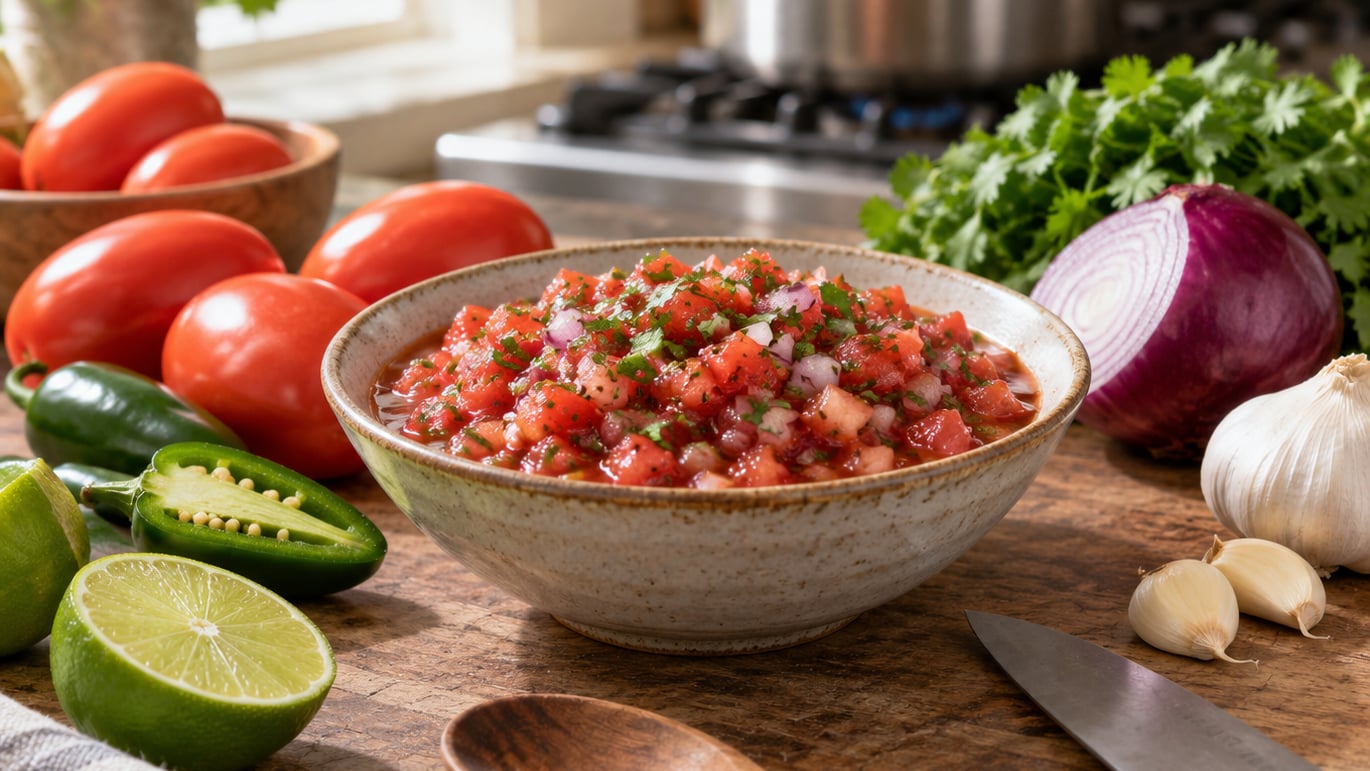
This is how to make salsa from fresh tomatoes: ripe tomatoes, a hot chile, a squeeze of lime, and salt. Blanch the tomatoes for 30 to 60 seconds to slip the skins off, dice everything into even pieces, then toss it with lime and salt and let it sit for 30 minutes. Total hands-on time is about 25 minutes, and the finished yield is roughly 3 cups.
The resting part matters more than people expect. Salt and acid pull liquid out of the diced tomatoes, and that liquid is where the flavor ends up. If you drain it, you have salsa water. If you keep it, you have salsa.
What You Need
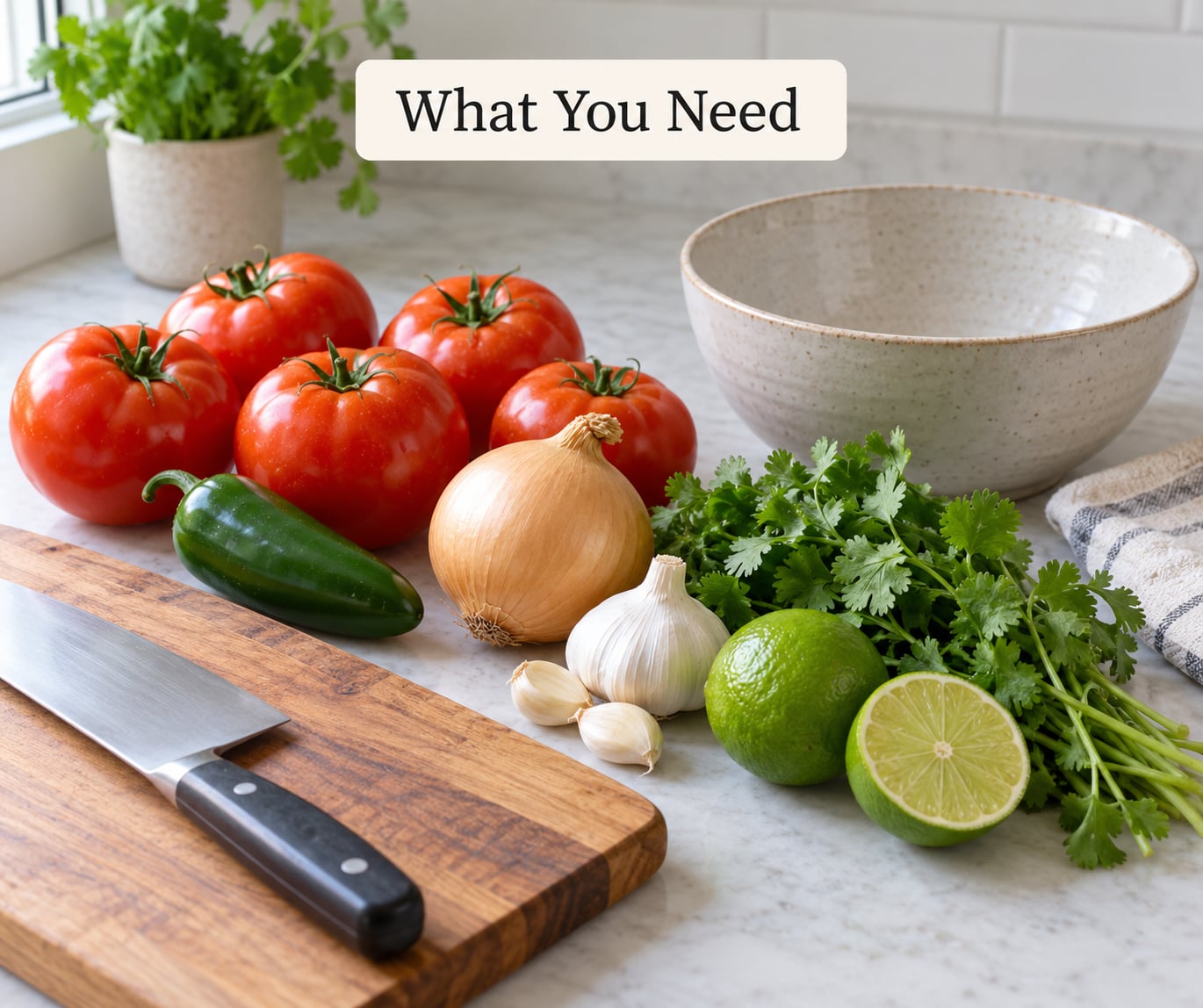
Prep time: 15 minutes. Blanch time: 5 minutes. Resting time: 30 minutes. Yield: about 3 cups, roughly 8 servings as a dip.
- 3 pounds ripe tomatoes (about 6 large). Roma or plum tomatoes work best because they carry less water.
- 1 to 2 jalapeños, seeded for mild, seeds and ribs left in for hot.
- 1/2 cup diced red onion, or 3 green onions, whites and tops both.
- 1 garlic clove, minced.
- 1/4 cup chopped fresh cilantro, plus extra leaves for garnish.
- 2 tablespoons lime juice (lemon works too).
- 1 teaspoon kosher salt, plus more to taste.
- 1/4 teaspoon ground cumin (optional).
Every tomato variety works, but they behave differently in the bowl:
| Tomato | Moisture | Flavor | Best for |
|---|---|---|---|
| Roma / plum | Low | Sweet, mild | The default. Salsa stays thick and even. |
| San Marzano | Very low | Rich, low acid | Smoother, more cooked-tasting salsa. |
| Heirloom | High | Deep, complex | Best flavor, but drain or mash first. |
| Cherry / grape | Medium | Bright, sweet | Fast raw salsa, no blanching needed. |
To control the heat, change one thing: the seeds and ribs. Removing them from a jalapeño drops the heat a lot; leaving them in makes it hot. A serrano, habanero, or a pinch of cayenne takes it further.
Tools are optional. A sharp knife and a bowl work. A food processor gives you speed and texture control, and a microplane makes quick work of the garlic. If you like a slight edge on onion and pepper, prep-ahead appetizer technique pays off here too.
Step-by-Step: How to Make Salsa from Fresh Tomatoes
Prepare and Blanch the Tomatoes
Bring a large pot of water to a boil and fill a second bowl with ice water. Make a single shallow slit through the stem end of each tomato, just deep enough to pierce the skin.
Drop the tomatoes in and boil for 30 to 60 seconds, until a small piece of skin peels back where you scored them. Move them straight to the ice bath for two minutes, then peel. The skins will slip off with your thumb. Any tomato that resists is fine raw, or leave it unpeeled for a rustic texture.
Finely Chop the Tomato and Pepper Ingredients
Cored and peeled, the tomatoes go on a cutting board and get diced into roughly a quarter-inch pieces. Keep the pieces even. Uneven chunks mean some bite is watery and the next one is almost solid.
Scoop out the seed pockets if the tomatoes taste sour or watery, and leave them in if they are sweet and firm. Halve the jalapeños, remove the seeds for mild salsa, then mince. Dice the onion the same size as the tomato.
Add the Flavorings
Combine the tomatoes, jalapeños, onion, garlic, cilantro, cumin, and salt in a large bowl. Pour the lime juice over the top and mix it in with your hands, gently. Squishing a few pieces as you go is fine, and it helps the flavor come together faster.
Add a pinch of sugar if your tomatoes are sharp rather than sweet. The sugar is not there to make the salsa sweet; it rounds the acid so the lime reads as fresh instead of sour. Skip the cumin for a purer, more Mexican-plain salsa.
Mash or Blend for Your Preferred Texture
For restaurant-style chunky salsa, mash the mixture with a potato masher, using light strokes so you crush rather than purée. For a softer pico de gallo, pulse in a food processor three to five times, then stop and check. Ten-plus pulses turns it into a purée, which is the single most common mistake.
Cherry tomatoes need no processor at all. Quarter them, toss with the rest, and let the salt do the breaking down.
Season, Taste, and Let the Salsa Rest
Taste now and again after 30 minutes, because the flavor changes as the salt draws out juice. Adjust salt first, then acid. If it tastes flat, add salt. If it tastes sharp, add another squeeze of lime or a pinch of sugar.
Let it sit covered at room temperature for about 30 minutes, then refrigerate. The flavors keep melding for several hours, so salsa made in the afternoon tastes better at dinner. Give it a stir before serving and add a little fresh cilantro at the table. If you like the acidity of a dressed salad, a quick emulsified vinaigrette follows the same acid-plus-fat logic.
Common Mistakes
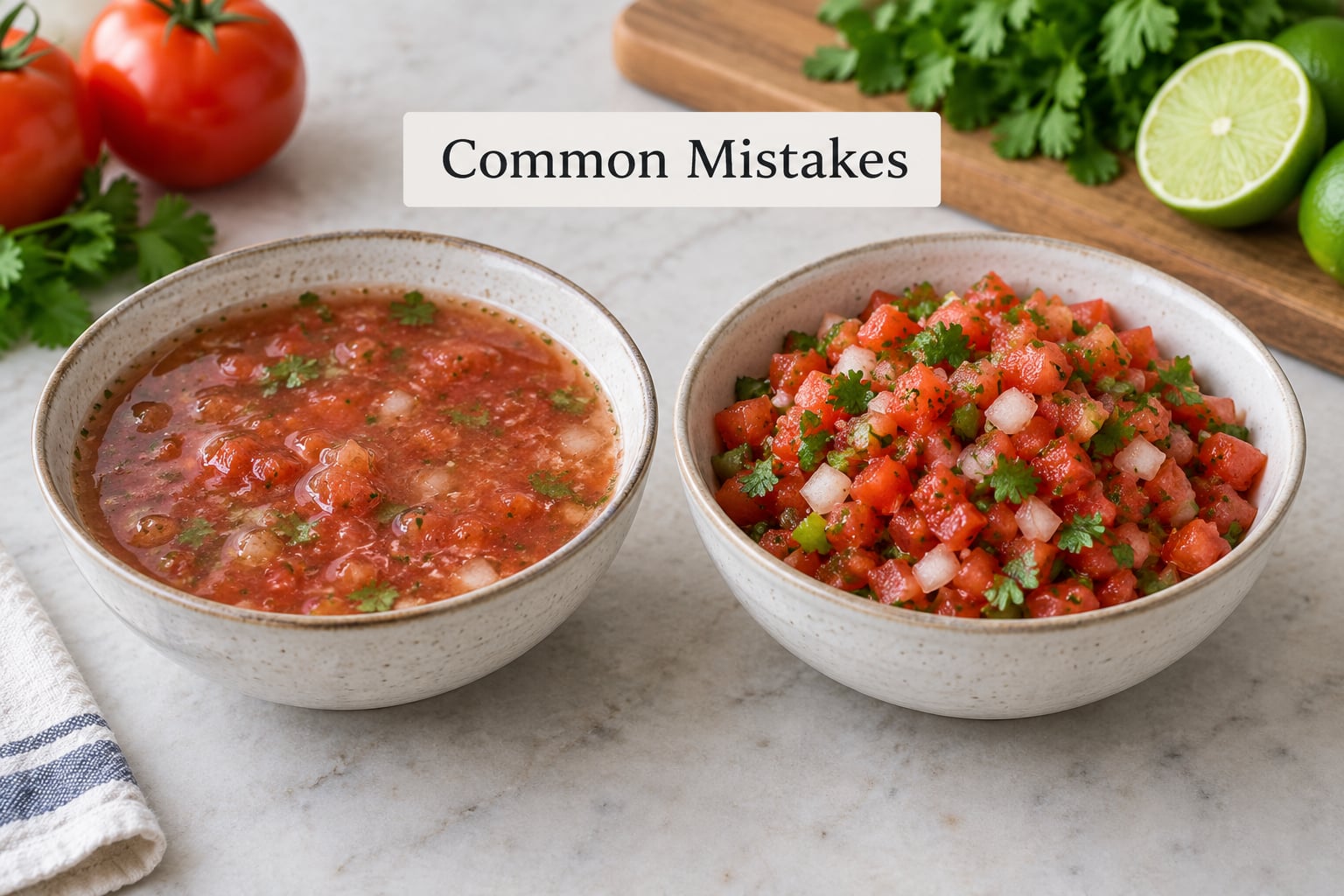
Watery salsa. Most thin salsa comes from high-moisture heirlooms or from draining the bowl after salting. Use Roma tomatoes, skip the draining, and mash instead of blending. Chilling before serving thickens it further.
Bland flavor. Underseasoned salsa usually means it was tasted before the salt had time to work. Salt at the start, wait 10 minutes, then taste again. A spoonful of the tomato liquid at the end also helps, since all the flavor is sitting in it.
Too much heat. The heat is in the seeds and ribs, not the flesh. Remove them from the jalapeños, add more tomato and onion to dilute, or serve lime and extra salsa on the side.
Stringy papery skins. Cold, raw skins that got blended into the mix turn into visible fibers. Either blanch and peel, or leave the skins on and hand-chop so nothing gets pulverized.
Baby-food texture. Over-processing is almost always the cause. Pulse fewer times, mash with a masher, or just accept a coarse chop. You can always go smooth, but you cannot un-purée.
Overly acidic or harsh salsa. Underripe tomatoes make sharp salsa. A pinch of sugar, a second spoon of cilantro, and a little more salt will round it out. Vinegar does the same job but pushes the salsa toward pickled rather than fresh.
Two habits keep salsa ahead of the rest of the meal. Salt it early and taste late, and never throw away the liquid in the bottom of the bowl. The same rule holds for a batch of coleslaw that stays crunchy all day, since the dressing pulls water out of the cabbage the same way salt pulls it out of tomatoes.
Frequently Asked Questions
Do you need to peel tomatoes when making salsa?
No, peeling is optional. Blanching for 30 to 60 seconds and an ice bath gives you skins that slide off in seconds and a cleaner, brighter color. Leaving the skins on gives a more rustic, thicker texture, but they must be hand-chopped, never blended, or they turn into papery strings.
What is the secret ingredient in homemade salsa?
Acid plus sugar balance, and most home cooks are missing it. Lime juice sharpens the tomato, and a small pinch of sugar rounds the sharpness without making the salsa taste sweet. Resting the salted mixture for 30 minutes so the tomato releases its juices into the bowl is the other half of the secret.
What are the ingredients in a 3-ingredient salsa recipe?
Three ingredients is all it takes: ripe diced tomatoes, diced onion, and cilantro. Salt and lime juice are not counted because they are seasoning rather than ingredients. Add jalapeño and garlic only when you want heat or depth.
How long do tomatoes need to boil for salsa?
Only 30 to 60 seconds, just until a small piece of skin lifts where you scored them. Anything longer starts to cook the flesh and turn the salsa into a stew. Transfer them straight to an ice bath to stop the cooking and lock in the color.
How long does fresh homemade salsa last?
Stored in an airtight container in the refrigerator, fresh tomato salsa keeps for about four to five days at or below 40 degrees Fahrenheit. It also freezes well for two to three months, though the texture softens slightly after thawing. Leave it out of the counter for more than two hours.
Can you safely water-bath can homemade salsa?
Tomatoes are a low-acid food, which makes home canning genuinely risky. Do not improvise a water-bath recipe or can plain tomato salsa at home, even with added vinegar. Use only a tested recipe from the National Center for Home Food Preservation and follow the altitude adjustment times, or refrigerate or freeze the batch instead.
Conclusion
Start with the tomatoes: pick ripe Roma or plum types, score a small slit in each stem end, and boil them 30 to 60 seconds before an ice bath. That is how to make salsa from fresh tomatoes that tastes like the tomatoes instead of the blender.
Then dice everything to the same quarter-inch size, salt it early, and add lime. Mash it rather than blend it, let it rest 30 minutes, and taste it once more right before serving. That last taste is where you fix the salt, the acid, and the heat to suit the people at your table.