
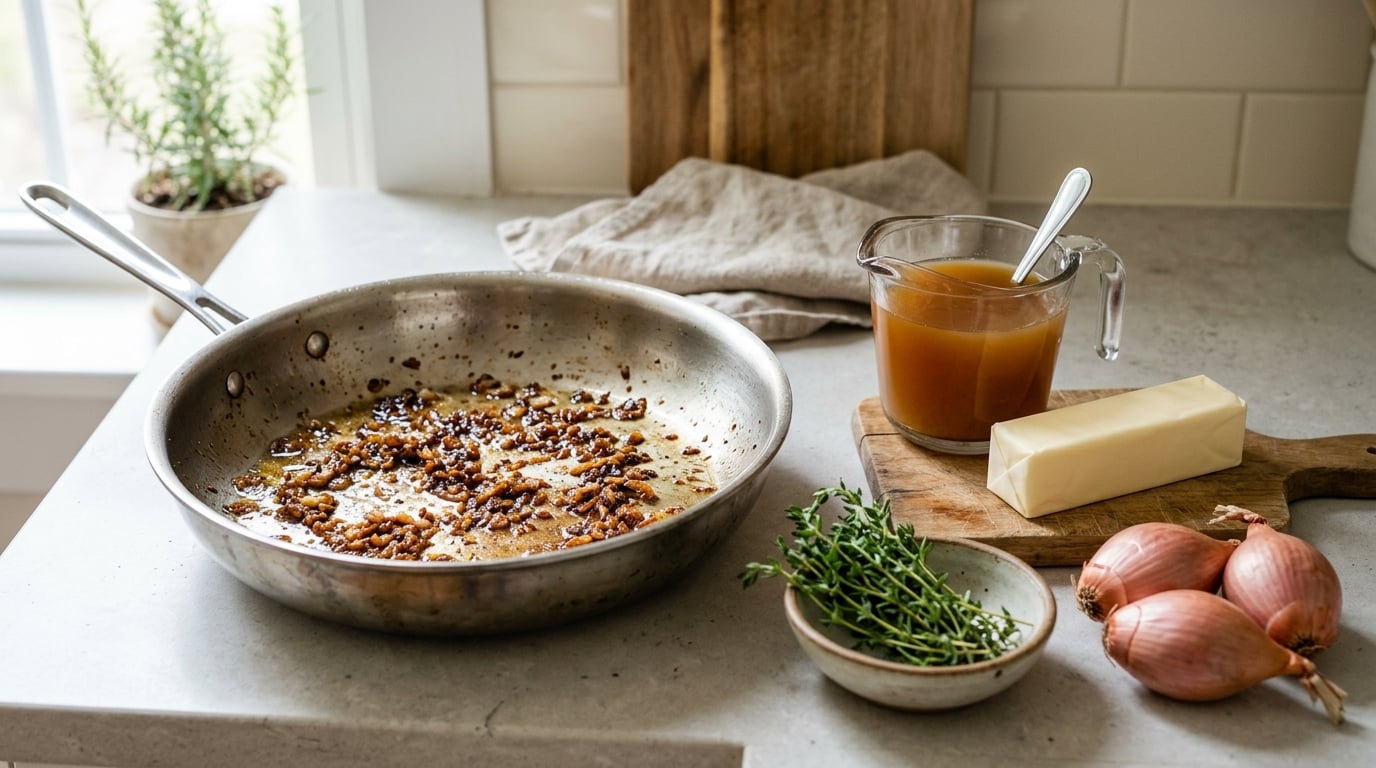
A pan sauce is a sauce built in the same skillet right after you sear, from the browned bits stuck to the pan. You dissolve those bits with a splash of wine, stock, or vinegar, simmer the liquid down, and finish it with cold butter until it turns glossy and coats a spoon. The whole thing takes about 8 to 10 minutes, and none of it happens while the meat is in the pan.
That last part is the trick. Learning how to make pan sauce after searing meat is less about adding ingredients and more about timing your skillet. The sauce gets built during the rest window, so the meat is still hot and the fond is still soluble when it hits the plate.
Table of Contents
- What You Need
- Step-by-Step: How to Make Pan Sauce After Searing Meat
- Common Mistakes
- Frequently Asked Questions
- What is the best liquid to deglaze a pan for pan sauce?
- Can you deglaze a pan with just butter or water?
- Is dark fond safe to eat, or is it bitter?
- How thick should a pan sauce be when it is done?
- My pan sauce broke and looks greasy. How do I fix it?
- Do you put the meat back in the pan to finish it in the sauce?
What You Need
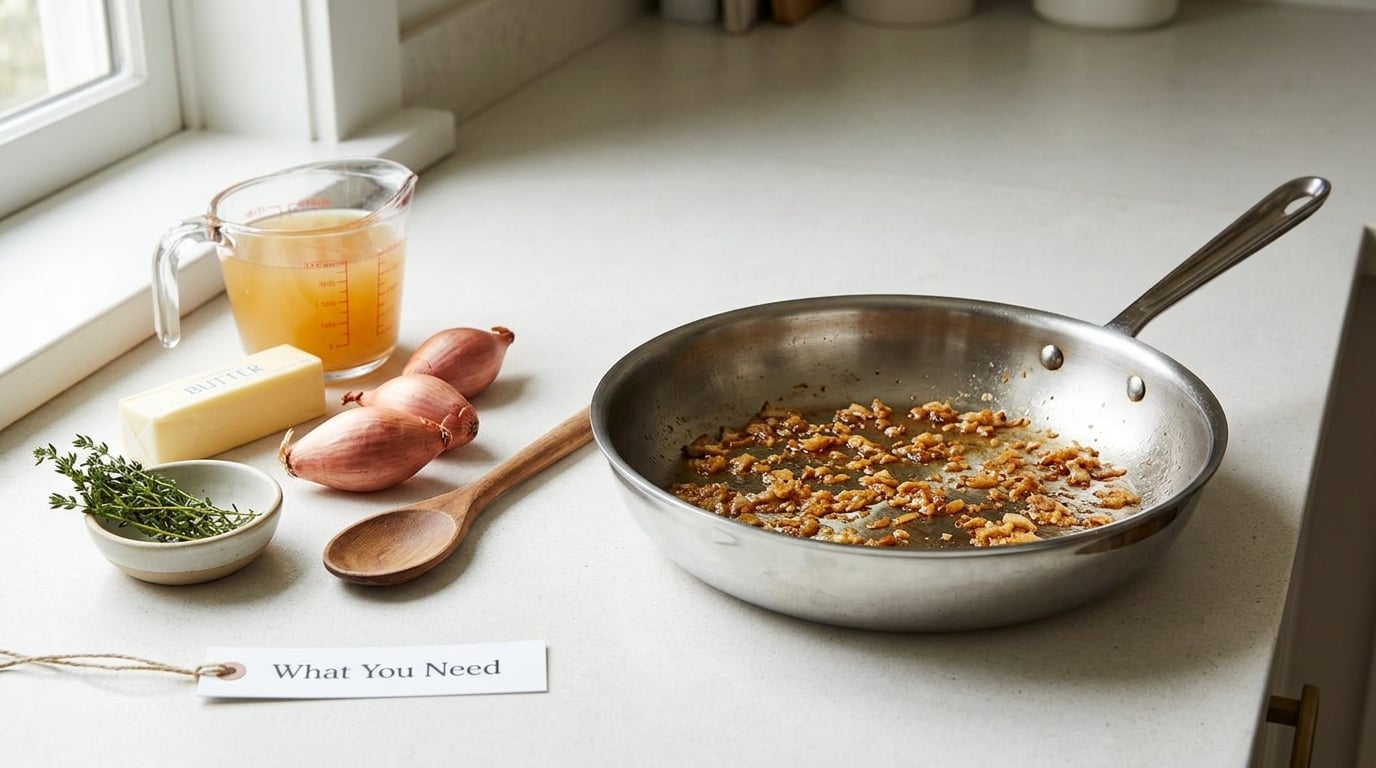
Almost everything is already in the pan or in your fridge. Here is the short list.
- Heatproof liquid: 120 to 180 ml of dry red wine, dry white wine, or the stock you used for the meat. This is what lifts the fond.
- Unsalted butter: 2 to 4 tablespoons, cubed and kept cold. It does two jobs: it carries flavor and it makes the emulsion.
- Aromatics: 1 small shallot, minced, or 2 garlic cloves, thinly sliced. Both are optional; shallot is the more restaurant choice because it sweetens without turning sharp.
- Acid: 1 teaspoon lemon juice, cider vinegar, or sherry vinegar. A tiny amount at the end keeps a heavy sauce from tasting flat.
- Seasoning: flaky salt, black pepper, and a pinch of sugar or a Dijon mustard if the sauce tastes flat rather than salty.
- Herbs: a few thyme leaves, or a spoon of chopped parsley at the very end.
How much liquid? A rough rule is about 30 ml of liquid per tablespoon of fond. A steak seared in a 30 cm skillet leaves a heavy layer, so give it a full wine pour. Sear a single small chicken breast in a small pan and 60 ml is plenty. Too much liquid wastes time reducing, too little leaves you scraping at a dry crust that never dissolves.
Use a stainless steel or cast iron pan for this. You need fond, and fond needs a surface that browns.
Step-by-Step: How to Make Pan Sauce After Searing Meat
1. Rest the Meat and Protect the Fond
Pull the meat onto a warm plate and leave it alone. Resting lets the juices settle so they run out when you cut instead of flooding the plate. Most steaks need 5 to 8 minutes, a whole pork chop 8 to 10.
Leave every brown speck in the pan. If there is a big pool of rendered fat sitting over the fond, spoon off all but about a tablespoon, because a thin layer of fat is what you want to start with. Anything more and the sauce turns greasy. Wiping the pan clean, or dropping it in the sink, throws away the best flavor in the dish.
2. Control the Heat Before Adding Liquid
Drop the heat to medium. A pan sitting at searing temperature will scorch fond and burn wine the second liquid hits it, and the bitterness sticks to everything you make after.
Add another tablespoon of butter if the pan looks dry, then your shallot with a small pinch of salt. Sweat it, do not sear it, for 2 minutes until it turns translucent and sweet. Add garlic for the last 30 seconds only, since it burns quickly.
3. Deglaze and Scrape the Browned Bits
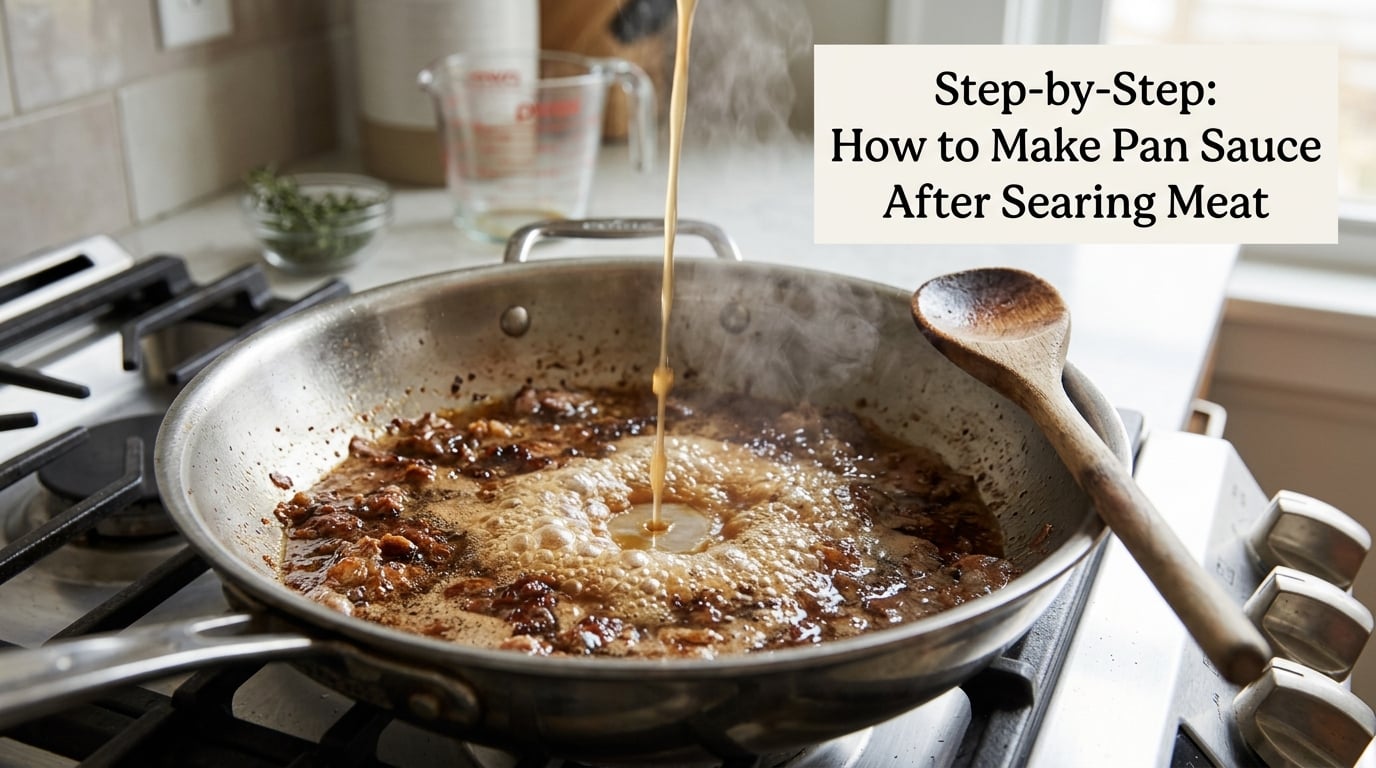
Pour the liquid in and let the pan do the work for 15 seconds. The fond will loosen on its own as the liquid bubbles. Then scrape the bottom with a wooden spoon or a silicone spatula, working from the edges toward the center, until the pan is clean and the liquid is the color of gravy.
Add more liquid in stages if the pan dries out before everything lifts. This is the highest-value 60 seconds in the whole method: those bits are the Maillard reaction, caramelized protein and sugar, and they are the reason the sauce tastes like more than salt and butter. If you want to know how to make pan sauce out of fond, this is the whole answer. Scrape every last piece.
4. Reduce the Sauce to the Right Consistency
Let it simmer, not boil, and stir every 20 to 30 seconds. Reduction is mostly water leaving, so give it 3 to 5 minutes and watch it, not the clock. Boiling hard shoves flavor out of the pan and makes the sauce reduce unevenly.
You are looking for a coat. Drag a spoon across the bottom of the pan and watch the exposed metal: the streak should stay clear for a second or two, and a film of sauce should coat the back of the spoon evenly. If it runs off in a curtain, keep going. If it leaves a thick, gummy stripe, you went too far and should add a splash of hot stock to loosen it.
5. Emulsify the Sauce for Body
Take the pan completely off the heat. Yes, off. Add the cold butter one cube at a time and whisk constantly until each piece has melted and disappeared before the next goes in. Add two tablespoons, taste, and decide if it needs more.
What you are making is an emulsion: butterfat held in the sauce rather than floating on it. The pan must be off the heat because fat and water only bind in a small temperature window, and a boil will drop the fat straight out of the sauce, which is the single most common reason a pan sauce turns greasy. A cool pan works just as well if the sauce seems thin.
Roughly two tablespoons of butter per 120 ml of reduced liquid is the usual ratio. It is also a useful comparison if you have ever had trouble holding fat in an emulsion before, in the same way that hollandaise comes apart for the same reason and gets fixed the same way.
6. Balance and Finish the Pan Sauce
Taste before you salt. It usually needs more salt than you expect, plus a small squeeze of lemon or a teaspoon of vinegar to wake it up. If it tastes flat and slightly dull, a teaspoon of Dijon or a pinch of sugar fixes it.
Now add the resting juices. Spoon them in and swirl, tasting again, because they are concentrated and salty, and a splash goes further than you think. Slice the meat against the grain, plate it, and spoon the sauce over the top. The sauce has been resting on the heat for minutes, so serve it within a minute of finishing.
Common Mistakes
Almost every bad pan sauce traces back to one of six things. Cooks on cooking forums hit the same handful repeatedly.
Cold liquid into a screaming-hot pan
The pan is still at searing heat, so the liquid flashes to steam, the fond burns, and you get acrid bitterness that no amount of butter will hide. Turn the heat to medium and wait 20 seconds before pouring.
Wiping or washing the pan
It feels tidy and it throws away the entire reason for the sauce. Pour off the excess fat, keep the brown crust, and move on.
Reducing too hard
Once the fond is dry and the pan bottom is exposed, the sauce scorches and turns acrid. Stir, keep the simmer gentle, and pull it the moment it coats a spoon.
Adding all the butter at once, on the heat
Too much fat too fast, or a hot pan, and the emulsion breaks into an oily pool. Off the heat, a cube at a time, whisking until each one vanishes.
Seasoning with salt but no acid
Salt is not the only thing that makes a sauce taste finished. If it is flat and dull rather than underseasoned, the answer is a teaspoon of vinegar or lemon, not another pinch of salt.
Pouring off all the fat
With almost no fat in the pan the sauce seizes and turns grainy, and there is nothing to emulsify. Keep about a tablespoon of rendered fat to start, and let the cold butter at the end do the rest of the work.
One more: black fond. Deep brown fond is exactly what you want and it is entirely safe to eat. Genuinely black flecks mean the sugar burnt, and those are bitter. Scrape them out and start the reduction with what is left.
Frequently Asked Questions
What is the best liquid to deglaze a pan for pan sauce?
Stock is the most forgiving choice because it adds body as it reduces, and it makes the sauce forgiving when the fond is light. Dry red wine is the classic move for beef, lamb, and venison, and a dry white wine or dry vermouth suits chicken, pork, and fish. Add it in enough to cover the fond by about a half centimetre, and use enough that you can see a thin film of liquid across the pan bottom after you scrape.
Can you deglaze a pan with just butter or water?
Butter works, but only for a short, rich sauce. Add a tablespoon of butter to the pan off the boiling point, swirl it into the fond, then add a splash of water or stock to keep it from burning. Plain water is the weakest option: it lifts flavor without adding any, and the resulting sauce tastes thin. It is a rescue option, not a plan.
Is dark fond safe to eat, or is it bitter?
Deep brown fond is safe and it is the best flavor in the pan. It is caramelized protein and sugar, and it dissolves into the liquid when you deglaze. Fond that is truly black, almost charcoal, has had its sugars burned past saving and it will taste bitter in the finished sauce. Scrape those flakes out before you add liquid.
How thick should a pan sauce be when it is done?
It should coat the back of a spoon in an even film and hold a line for a second or two when you drag a spoon across the pan bottom. Thinner than that and it runs off the meat. Thicker than that and it goes gummy and clings to the plate instead of draping. When in doubt, stop one step early and loosen with a splash of hot stock at the end.
My pan sauce broke and looks greasy. How do I fix it?
Most of the time a broken sauce can be saved. Take it off the heat, whisk in a tablespoon of cold butter a cube at a time, and the oil will fold back in. If it is still loose, whisk in a small amount of cold water or stock to bring the temperature down and let the fat re-emulsify. If the sauce is split badly, it usually means too much heat or too much butter at once.
Do you put the meat back in the pan to finish it in the sauce?
Rarely. Returning the meat to the pan over heat will undo the crust you spent minutes building and can overcook a steak that was already rested perfectly. Plate the sliced meat and spoon the sauce over it at the last second. The only exception is a small piece of meat you want basted in the sauce for its final minute, like a thin chicken breast or a prawn.
Start with the first move, because it is the one that makes the rest work: pull the meat out, keep the fond, and turn the heat down to medium before anything goes in. If you get that right, the rest of how to make pan sauce after searing meat is just a pour, a three-minute simmer, and cold butter off the heat while you slice. Once the timing clicks, you can run the same routine on any protein you like, and it works just as well in a good nonstick pan for the plates that do not sear deep enough for much fond.