
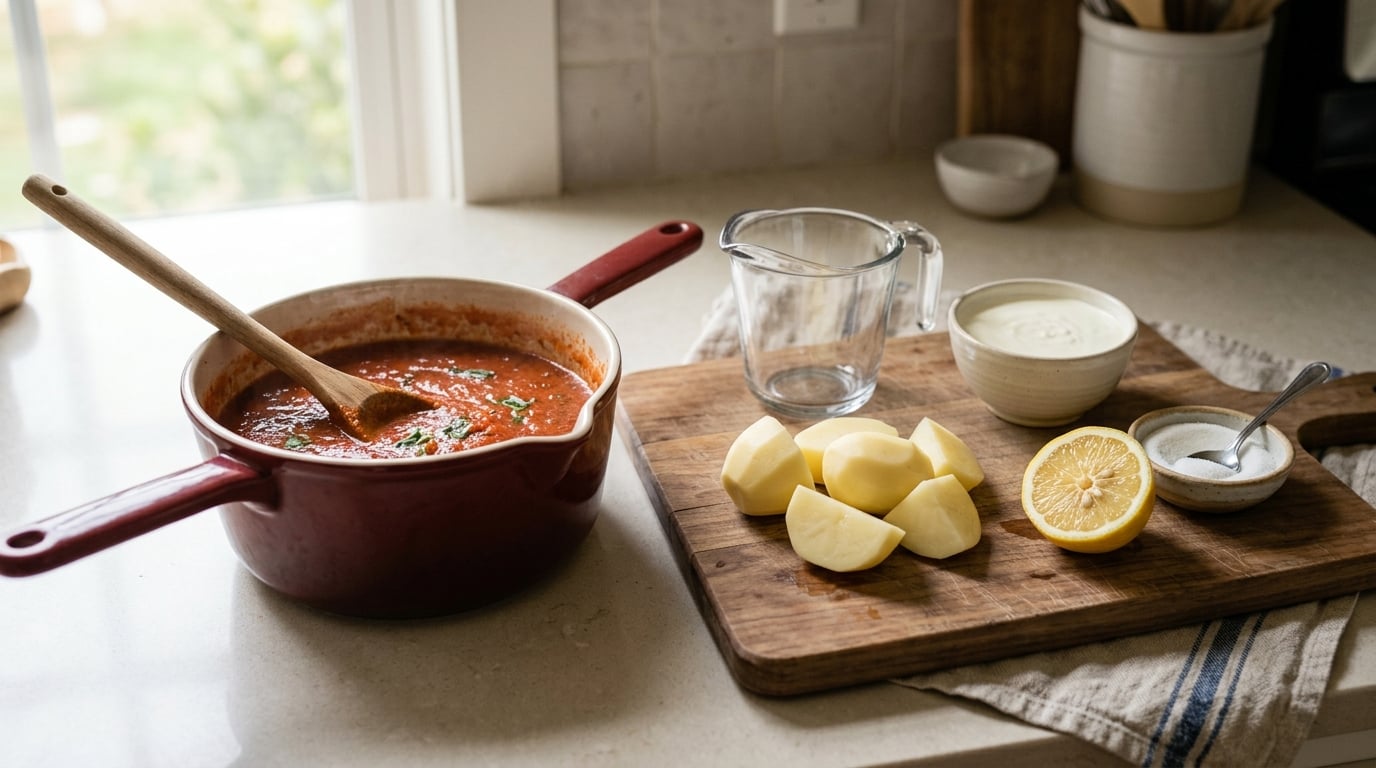
Most oversalted sauce is salvageable. How to fix a sauce that is too salty comes down to two moves: dilute it with an unsalted liquid, then balance it with acid, fat or a little sweetness. Salt that has already dissolved cannot be lifted back out, only spread thinner or softened on the tongue. Both moves take about five minutes.
The order matters more than the ingredient. Diluting first and adjusting flavor after gets you a sauce that tastes right instead of one that tastes thin. Here is the rescue, from triage to a finished pot.
What You Need
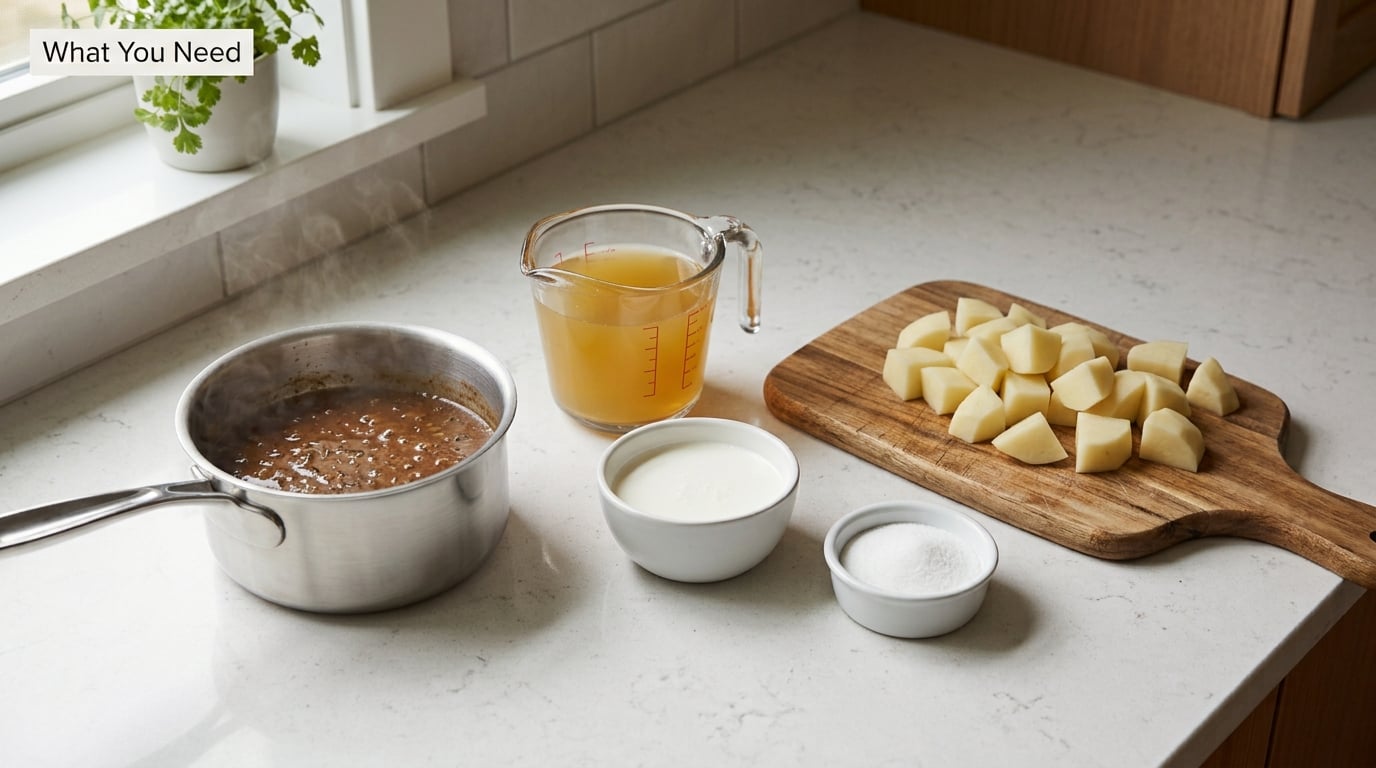
You do not need a special kit. Most kitchens have everything the job requires, and the only rule is that every liquid you add must be unsalted.
- Unsalted liquid: water, homemade stock or broth, dry white or red table wine, unsalted tomato purée or passata, unsalted vegetable juice.
- Dairy and fat: heavy cream, whole milk, sour cream, unsalted butter, neutral oil, a mild soft cheese such as ricotta or goat cheese.
- Sweetener: granulated sugar, a spoon of honey, maple syrup or a pinch of powdered sugar.
- Absorbent starch: a peeled raw potato cut into 1.5 to 2 inch chunks, cooked rice, torn bread, uncooked pasta or instant potato flakes.
- Acidity: lemon or lime juice, red wine vinegar, white wine vinegar, champagne vinegar, apple cider vinegar, or citric acid if you want acid without changing the volume.
- Tools: a clean tasting spoon, measuring spoons and a second saucepan in case you decide to build a fresh batch.
Check labels before you pour. Jarred stock, canned beans, prepared mustard, most Worcestershire-style sauces and salted butters all bring sodium with them, which is exactly the problem you are trying to solve.
Step-by-Step: How to Fix a Sauce That Is Too Salty
Taste the Sauce and Identify Its Base
Before adding anything, put a clean spoon into the sauce and taste it on its own. Note the salt level, then the body: is it thin, glossy and tomato-colored, thick and dairy-white, clear and reduced, or sharp and soy-dark?
That single question decides your rescue. A tomato sauce takes wine or purée, a cream sauce takes cream or milk, a reduction takes water plus a rebuilt body, and a soy-based glaze takes rice vinegar and sugar. Knowing the base also tells you how much room you have before the sauce turns thin.
Dilute the Sauce Gradually
Dilution is the only method that actually lowers the salt concentration. It works because saltiness is concentration, not a flavor stuck to the food, so adding more unsalted volume spreads the same amount of salt through more liquid.
Add a tablespoon of unsalted stock, broth, water or wine, stir it through over medium heat, and taste again. Repeat in the same small increments until the salt is where you want it. For a typical dinner plate of sauce, you are looking at roughly a quarter to a half cup of added liquid per cup of sauce, almost always less than most people pour in a panic.
Match the liquid to the sauce rather than defaulting to water. Tomato and red sauces take dry red table wine or unsalted purée. Broths and soups take unsalted stock. Cream and béchamel take cold heavy cream or whole milk, which adds body as it thins. Vinaigrettes take more oil and acid. A glaze reduced from scratch takes water, then a simmer to bring the thickness back.
If a cream sauce loosens, do not just serve it thin. Simmer it gently for a few minutes to drive off water, or whisk a slurry of 1 teaspoon starch with 1 tablespoon cold water and stir that in. An emulsified sauce is more fragile than most people expect, and cold milk or a hard boil can split it outright, which is a different repair job from salt. Worth knowing if you enjoy how to make hollandaise sauce that does not break.
Cooks who work with this problem daily tend to say the quiet part out loud: water is the only truly reliable rescue, and you pay for it in body. Build that body back deliberately and the trade-off disappears.
Use Dairy, Fat, or Sugar to Soften the Salt
Once the salt is diluted, you can make the sauce taste rounder without changing its concentration. These ingredients compete with salt on the taste buds instead of reducing it, so they work best as a finishing step in small doses.
- Acid: 1 to 2 teaspoons of lemon or lime juice, or vinegar, per cup of sauce. Stir it in off the heat so the aroma does not cook away, then taste. Cooks making Mexican and Latin American food reach for lime and sour cream for exactly this reason, and it works well.
- Fat: 1 tablespoon of butter, cream or neutral oil per cup. Fat coats the tongue and blunts the sharp edge of salt without making the sauce taste heavy.
- Sugar: 1/2 teaspoon per cup, stirred in and tasted before any more. Sugar rounds out salt in tomato sauce, barbecue glaze, glazes and many curries, where the dish is expected to have a sweet shoulder.
There are sauces where these do not belong. A delicate butter or fish sauce should not turn sweet, and a sharp mustard vinaigrette will go sour fast. When a sauce would never be served sweet or sour, reach for fat or more unsalted volume instead. One warning from the cooking forums: balancing does not rescue something that was bland to begin with, so add a little of the missing savory flavor, not just the contrast.
Absorb Excess Salt With a Starch
The raw potato is the most repeated tip in the comments under every article on this subject, and it comes with conditions people usually leave out. The starch does not pull salt out of the sauce on contact; it works while the sauce is hot and moving, and it needs time in the liquid.
Peel a potato, cut it into chunks about 1.5 to 2 inches across, and drop them into a sauce that is still simmering. Leave them for 10 to 15 minutes, until a piece feels cooked through when you lift it out, then discard the potato and taste. Pull it early and it will not have done enough, which is the single most common way people conclude the trick does not work.
On a sauce that has already come off the heat and cooled, the method is not worth the effort. People who defend it in online threads say the same thing back to back: it only works while you are still cooking. Treat it as a simmer-time tool, not a rescue for a finished pot.
Rice, torn bread, uncooked pasta and instant potato flakes do the same job, and potato flakes are the fastest of the four because they dissolve instead of sitting in the pot. Any of them will thicken the sauce, which is a bonus in a gravy or a stew and a problem in a thin glaze. Be honest with yourself about the myth: the salt ends up in the potato, and professionals argue about how much it really removes. It softens a sauce, it does not transform one.
Adjust the Rest of the Seasoning
A diluted sauce tastes flat before it tastes right, because you have spread out everything, not just the salt. Put the flavor back deliberately, and never reach for the salt you already overdid.
Build depth with aromatics that are not salty: garlic, onion, shallot, ginger, chili, fresh herbs added at the end, toasted spices, a spoonful of tomato paste or roasted mushroom paste for umami. Then re-check the salt from a plain spoon, because a sauce with more acid in it tastes saltier than it is.
Serving is a rescue tool too. A corrected sauce over plain rice, toast or a mild, unseasoned protein distributes the salt across the whole plate instead of concentrating it in every bite. If you want the same idea as a side, a simple omelet that does not stick gives you a bland, neutral landing for the sauce without adding more salt.
If you save the sauce, cool it within two hours, refrigerate it covered, and reheat only the portion you need to 165°F. Capped and reheated, a diluted sauce often tastes flatter than it did the first night, so keep a little acid or cream back for the final minute of reheating.
Common Mistakes When Fixing a Salty Sauce
Two things trip people up mid-rescue. The first is volume, because a timid tablespoon fixes more than a heroic pour: you can always add more liquid, but you can never take it back, and a thin sauce chased with salt lands you somewhere worse. The second is sequence. Acid, fat and sugar only do their job after the salt has been diluted, so the moment you reach for the lemon or the sugar is the moment the sauce should already taste close to right. Keep the order and taste between every addition, and the pot almost always comes back.
Common Mistakes
Adding the liquid all at once. You cannot un-dilute, and you end up chasing the original flavor with salt. Add a tablespoon, taste, repeat.
Using stock or wine that is already salted. Homemade stock salted to taste will make it worse. Cooking wine is a particular trap, because salt is often added to it for keeping. Use a dry table wine and read the label.
Reaching for more soy sauce, Worcestershire or fish sauce. All three are salt in a bottle. For a soy-based glaze, use rice vinegar, a little sugar and water, or a fresh unsalted batch stirred in.
Treating sugar as a universal fix. It works in tomato, barbecue, glaze and curry sauces. In a cream sauce, a Alfredo or a beurre blanc, it makes the dish simply sweet.
Discarding the potato too early. Cut it large, simmer it 10 to 15 minutes, cook it through, then take it out.
Skipping salt and flavor out of fear. A sauce rescued into blandness is still a failed dinner. Once the salt is diluted, rebuild with aromatics, herbs, acid and fat, and keep tasting.
A couple of habits stop the problem before it starts. Salt in layers rather than all at once, and season at the end of cooking so you taste the sauce as it will be served. Remember the hidden sodium: bouillon cubes, jarred sauce, canned tomatoes, anchovies, cured meat, cheese and soy. Most oversalting comes from a salty component nobody counted.
One more worth knowing: a tablespoon of kosher salt and a tablespoon of table salt are not the same amount of salt, because the grains differ in size. Cooking with volume and iodized table salt is the usual reason a recipe that tasted right last time oversalts this time.
Choosing a method by sauce type keeps this simple. Tomato and barbecue take wine, purée and sugar. Cream sauces take cream or milk and never plain water without a reduction. Soy glazes take rice vinegar and dilution. Gravy and stew take unsalted stock, a starch, or both. Vinaigrette takes more oil and acid instead of any liquid at all.
Frequently Asked Questions
Can I fix a sauce that is too salty with water?
Yes, and it is the only method that genuinely lowers salt concentration. Add water a tablespoon at a time, stirring and tasting between each addition. The catch is body, because water carries no flavor and no thickness. Use unsalted stock, dry wine or purée instead when the flavor suits the dish, and simmer afterward if the sauce needs its viscosity back.
How do I fix tomato sauce that is too salty?
Stir in unsalted tomato purée, dry red table wine or water, a tablespoon at a time, tasting as you go. Once the salt is diluted, a small amount of sugar rounds out what is left, and tomato sauces handle sweetness well. Avoid cooking wine, which is usually salted, and avoid jarred marinara, which will push the problem further.
What is the best way to dilute a creamy sauce?
Use cold heavy cream or whole milk, added gradually while the sauce simmers, since dairy thins without stripping flavor. Plain water works but leaves the sauce flat and can loosen the emulsion further. If it gets too thin, simmer it down or stir in a starch slurry of 1 teaspoon starch to 1 tablespoon cold water.
Will adding sugar make a salty sauce taste better?
Often, yes, in tomato sauce, barbecue glaze, glazes and many curries, where a sweet edge belongs. Sugar competes with salt for the same receptors and rounds the flavor out. It is not a universal answer. Add 1/2 teaspoon per cup, taste, then decide. In a butter sauce, an Alfredo or a delicate fish sauce, sweetness will just make the dish unpleasant.
Does a raw potato really absorb salt from a sauce?
Partly, and only under the right conditions. The potato needs a sauce that is still hot and simmering, chunks of about 1.5 to 2 inches, and 10 to 15 minutes in the liquid before you take it out. Cooks who defend the method say the same thing twice: leave it in until fully cooked, and use it only while you are still cooking.
How much vinegar or lemon juice should I add to a salty sauce?
Start with 1 teaspoon per cup of sauce, stir it in off the heat and taste before adding more. You are looking for balance, not sourness, and 2 teaspoons per cup is usually the ceiling for a savory sauce. Citrus aroma fades during a long simmer, so add lemon or lime at the end. Rice vinegar suits soy glazes, while red wine vinegar suits tomato and barbecue.
So start with a tablespoon of unsalted liquid and a taste, not with the whole bottle of vinegar. Dilute first, then balance with one acid, one fat or a small pinch of sugar, and taste between each. Most sauces come back within a few minutes.