
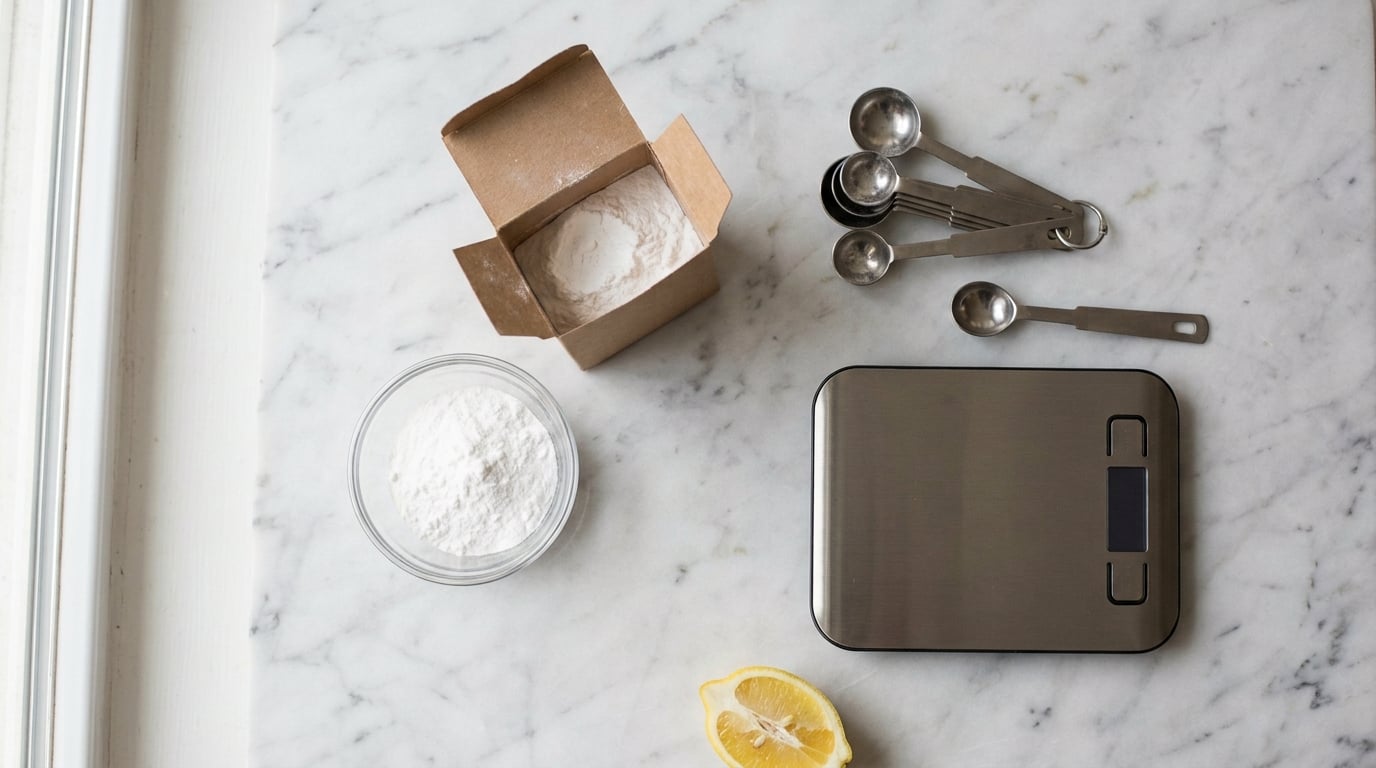
To substitute baking powder for baking soda, use three times as much baking powder as the baking soda your recipe called for, then cut the added salt by at least half and take a close look at how much acid is already in the batter. One teaspoon of baking soda becomes three teaspoons of baking powder; one tablespoon becomes three tablespoons. The swap works in cakes, quick breads, muffins, pancakes, and cookies, and the whole thing takes about two minutes of measuring. It is still the standard rule in 2026, because nothing about the chemistry has changed.
One thing to settle before you start, because it trips up half the people searching this: baking soda and baking powder are not the same ingredient in either direction. Baking soda is pure sodium bicarbonate, and it does nothing on its own. It needs an acidic ingredient to release the carbon dioxide that makes a batter rise. Baking powder already has that acid mixed in, along with a starch filler to keep the two dry parts separate.
So this guide covers both directions. If your recipe wants baking soda and all you have is baking powder, that is the 3x rule above. If your recipe wants baking powder and all you have is baking soda, the answer is different: you need to add an acid, usually cream of tartar, and the ratio drops to about a quarter. Getting the direction right is the whole job.
Table of Contents
- What You Need
- Step-by-Step
- Common Mistakes
- Frequently Asked Questions
- Can I use baking powder instead of baking soda in cookies?
- How much baking powder replaces 1 teaspoon of baking soda?
- Do I need to reduce the liquid when using baking powder?
- Why does my cake taste bitter after I substitute baking powder?
- Can I use this substitution in muffins, cakes, quick breads, and pancakes?
- How do I know whether the substituted recipe will rise properly?
- Conclusion
What You Need
Baking soda, also called bicarbonate of soda, is a pure alkaline leavening agent. On its own it sits in your batter doing nothing. The moment it meets moisture and something acidic, like buttermilk, brown sugar, molasses, honey, cocoa, yogurt, or vinegar, it reacts and gives off carbon dioxide bubbles that inflate the batter in the oven.
Baking powder is baking soda pre-mixed with a dry acid, usually cream of tartar, plus cornstarch as a filler. Most commercial baking powder is double-acting, meaning it works once the batter hits liquid and again when the heat arrives. That built-in acid is why baking powder rises on its own and baking soda never does.
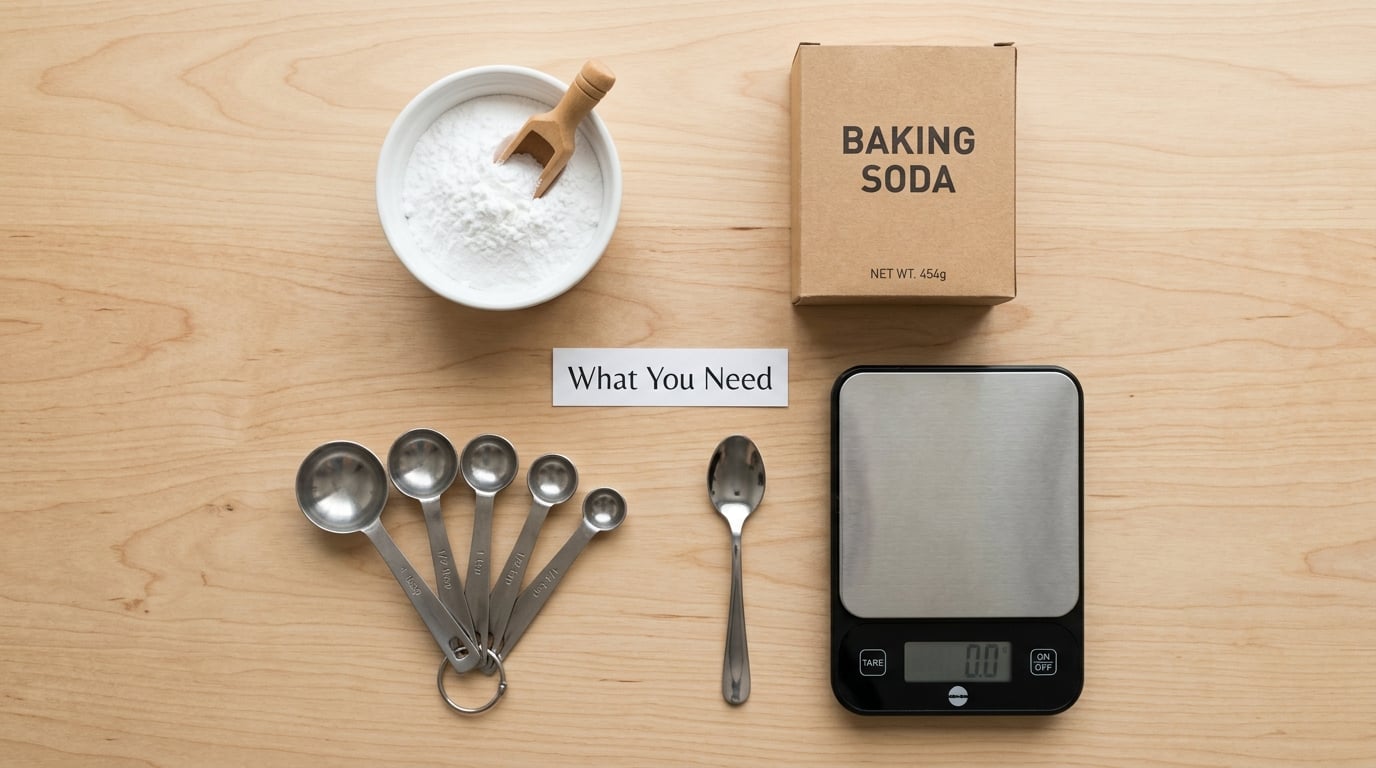
Before you measure anything, put these in front of you: the recipe printed in front of you, a set of measuring spoons you can level with a finger or a knife edge, and whatever leavener is actually in your cupboard. A small kitchen scale makes the 3x arithmetic cleaner, but it is not required.
Also grab the full ingredient list and read it. You need to know how much baking powder, salt, and acid are already in there before you add anything, because the substitution is rarely just one number changing.
Step-by-Step
How to Use the 1:3 Baking Powder Ratio
Multiply the baking soda by three, and that is your baking powder figure. One-quarter teaspoon of baking soda becomes three-quarters teaspoon of baking powder. Half a teaspoon becomes one and a half teaspoons. One teaspoon becomes three teaspoons, one tablespoon becomes three tablespoons, and a cup becomes three cups.
That is the whole calculation, and it holds because baking powder carries roughly a third of the leavening power per volume of the sodium bicarbonate it contains. Scoop and level your baking powder the same way you would scoop and level flour, and do not pack the spoon down, because a packed teaspoon holds noticeably more than a level one.
There is a middle option worth knowing. If the full 3x reads as too salty for a sweet batter, use double the baking soda amount and treat the bake as slightly under-leavened, which for a quick bread usually means a tighter, denser crumb rather than a failure. Some home bakers take this compromise on purpose in chocolate recipes, where extra leavener flattens the flavor.
Check the Rest of the Leavening Ingredients
Now read the recipe for anything else that lifts or acidifies. If the recipe already calls for baking powder, subtract what is already there before you add the 3x, otherwise you end up with a doubled leavening system and a bake that rises fast, collapses, and tastes bitter.
Look specifically for cream of tartar, molasses, brown sugar, honey, cocoa powder, buttermilk, sour milk, and plain yogurt. Each one supplies acid. If the batter is already loaded with two or three of those, you can be a little more relaxed about adding a full 3x, since some of the soda’s job is already being handled.
Coffee is another quiet acid source in chocolate cakes, and so are tomato paste and vinegar in savory batters. Once you know the acid load, the substitution stops being a guess.
Adjust for Flavor and Texture
Cut the added salt by at least half, and consider dropping it entirely. Baking powder is noticeably saltier than baking soda, and the 3x quantity makes that worse, not better. Cookies, muffins, and quick breads tolerate a full removal; biscuits and scones keep a pinch so they still taste like biscuits.
Trim or replace the acid when you have a lot of it. If a recipe pairs baking soda with a cup of buttermilk, do not keep both the full buttermilk and the 3x baking powder. Use buttermilk with the baking powder and leave out any lemon juice or vinegar, or use the milk plain.
Watch for a soapy, metallic, or alkaline note. That is the signature of baking soda with no acid to neutralize it, and no amount of extra baking powder will cause it, because baking powder adds acid rather than base. If you taste it, the fix is more acid, not more leavener.
If you are working from scratch rather than substituting, you can build your own double-acting-style powder from one part baking soda, two parts cream of tartar, and one part cornstarch. That blend is single-acting, so mix the dry ingredients first, add liquid last, and get it into the oven without sitting around.
Test the Batter or Dough
Good sign: the batter puffs slightly and holds a ribbon that stays on the surface for a few seconds. A properly leavened dough feels aerated and springs back slowly when you poke it.
Warning sign: a thin, watery batter that runs off the spoon in a flat stream, or a dough that feels slack and sticky, usually means the 3x pulled in more liquid than the recipe expected. Warning sign two: foam that builds instantly and collapses, which points to acid meeting base before the oven ever gets involved. Either way, a small test batch in a ramekin takes 12 minutes and saves the whole tray.
Common Mistakes
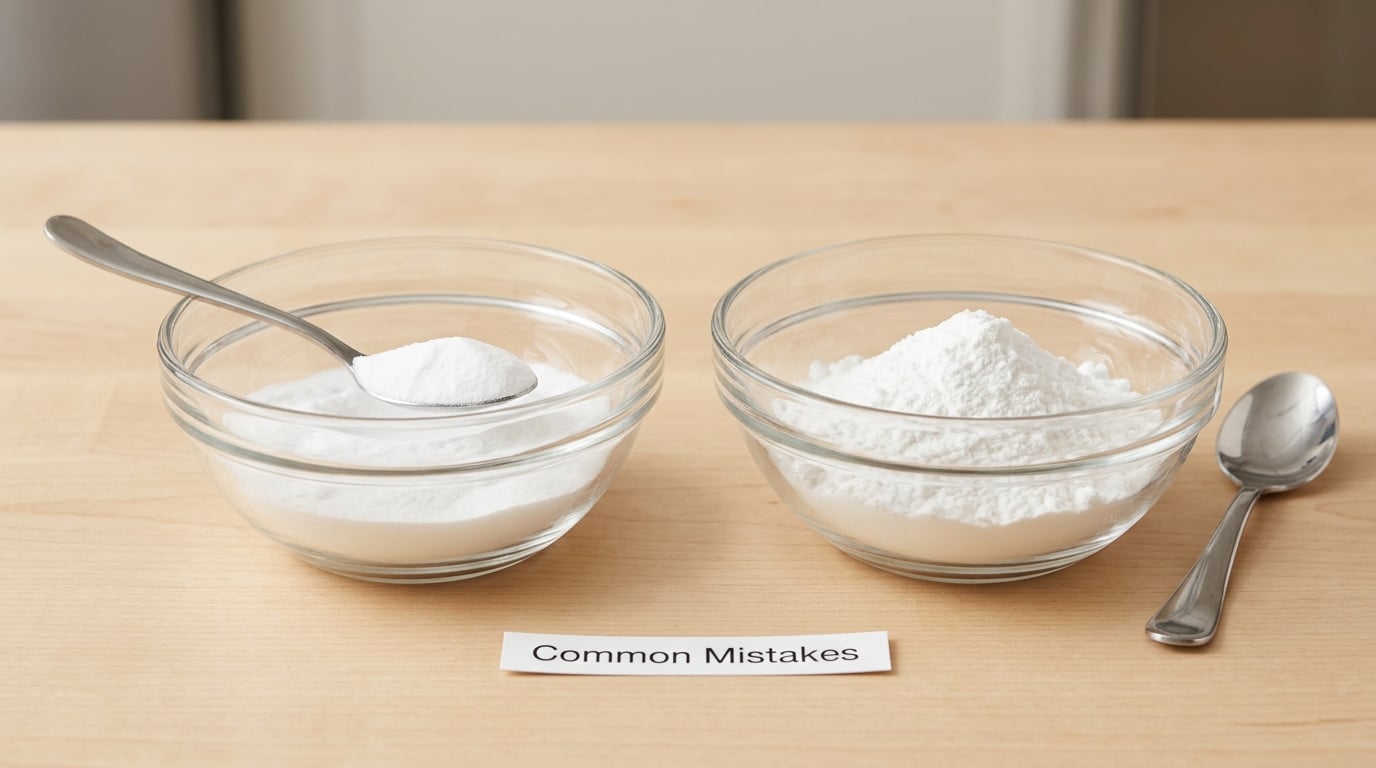
Swapping one for one. A teaspoon for a teaspoon gives you a dense, tight bake with a bitter edge. The 3x rule exists because the two products are not equivalent by volume.
Mixing up the powders. Baking soda in a cake with no acid produces a flat loaf and a soapy aftertaste. Baking powder used where soda was called for, without the 3x, simply under-rises. Know which powder you are holding before you start.
Changing liquid and leavener at the same time. Cutting milk and doubling the leavening in one move leaves you unable to tell which change caused the problem. Make one adjustment, bake, taste, then decide.
Expecting the swap to stop cookies from spreading. This comes up constantly and the leavener is almost never the culprit. Chilled dough holds its shape; warm dough slumps. On the r/AskBaking threads about runaway spread, the fix that worked was resting the dough overnight in the fridge rather than touching the baking powder. Swap first, chill second.
Skipping the test batch. One small scoop of batter in a greased cup, 12 minutes at the recipe temperature. It tells you about rise and flavor in the time it takes to make coffee.
One more to keep in mind: if you have neither leavener, you are not stuck. Self-rising flour carries its own baking powder, so you can drop the measured leavener and reduce the flour by 2 teaspoons per teaspoon of leavener called for. Whipped egg whites handle meringue-style cakes, and club soda works in thin batters like pancakes and fritters, though it gives up its gas early, so those batters need to go straight into the pan.
Frequently Asked Questions
Can I use baking powder instead of baking soda in cookies?
Yes, and cookies are one of the safest bakes for this swap. Use 3 times the baking powder called for in place of the baking soda, then cut the added salt in half or leave it out entirely. For a chocolate chip cookie that calls for 1 teaspoon of baking soda, use 3 teaspoons of baking powder and skip the extra salt. Texture shifts slightly toward cakier, but the spread stays largely the same.
How much baking powder replaces 1 teaspoon of baking soda?
Three teaspoons of baking powder replace 1 teaspoon of baking soda. The same 3x rule holds at every measurement: a quarter teaspoon of soda becomes three-quarters teaspoon of powder, and a tablespoon of soda becomes three tablespoons of powder. Scoop and level both, and remember that the extra powder brings its own salt, so reduce the added salt in the recipe by at least half.
Do I need to reduce the liquid when using baking powder?
Only when the 3x amount feels loose. Baking powder pulls in more liquid than baking soda because of the cornstarch it contains, so if your batter runs thin or your dough feels slack, trim the milk, water, or buttermilk by a tablespoon or two at a time. If the dough already feels right, change nothing. A wet batter is the one real texture risk of this substitution.
Why does my cake taste bitter after I substitute baking powder?
Bitterness almost always means too much baking soda left unneutralized, not too much baking powder. Baking soda needs an acidic ingredient to finish reacting, and without one it leaves a metallic, soapy note. Add an acid such as cream of tartar, buttermilk, or a spoonful of lemon juice, or reduce the soda. Baking powder itself brings acid, so a properly measured swap should not taste bitter.
Can I use this substitution in muffins, cakes, quick breads, and pancakes?
Yes, in all four, and 3x baking powder for 1x baking soda is the right call each time. Cakes and quick breads such as banana bread handle the swap cleanly because they already carry molasses, brown sugar, or cocoa. Muffins work with the added salt reduction. Pancakes are the easiest of the group, since the batter is thin and the acids are already present in the buttermilk or egg.
How do I know whether the substituted recipe will rise properly?
Bake a small test portion first: one scoop of batter in a greased cup at the recipe temperature for about 12 minutes. A good result domes up, feels springy, and tastes balanced. A flat, dense cup means the leavening was too weak, which happens when baking powder was swapped one for one. A cup that rises fast and then sinks means the leavening doubled up somewhere in the recipe.
Conclusion
Multiply the missing baking soda by three, and that is your baking powder. Read the ingredient list so you know how much powder and how much salt are already in there, cut the added salt by at least half, check that the batter has enough acid, and bake. If the batter feels looser than it should, trim the liquid by a spoonful and give the oven a few extra minutes. That is the whole procedure, and it works in every bake that already has an acid in it.