
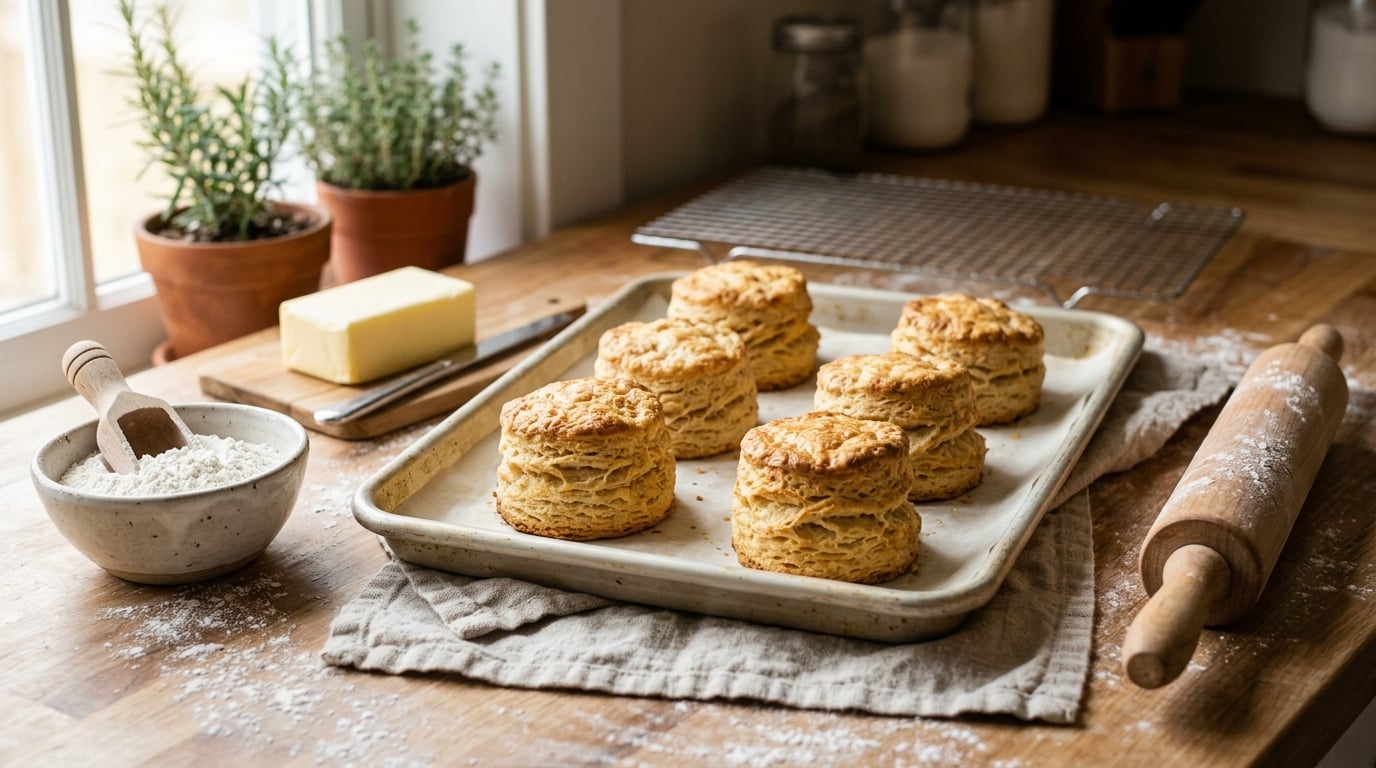
Tall biscuits come down to four things: very cold butter, mixing that stops while the dough still looks shaggy, dough rolled to about 1 inch thick, and a fully preheated oven at 425°F or hotter. Get those right and a biscuit roughly doubles in height and flakes into distinct layers. Miss one and the same dough bakes up flat, dense, and pale.
From counter to oven takes about 35 minutes, and nearly all of the deciding happens in the ten minutes before they go in. Here is how to make biscuits that rise tall, followed by the specific mistakes behind most flat batches.
What You Need
The ingredient list is short and cheap. What decides the height is the state of the fat and the color of the pan underneath the dough.
- All-purpose flour, 2 cups (about 250 g) — spoon it into the cup and level it. Packed flour is the quiet reason dough spreads and bakes up heavy, and a lower-protein flour gives a more tender crumb.
- Baking powder, 1 Tbsp per 2 cups of flour. Double-acting is what you want for height, and freshness matters more than the brand.
- Baking soda, 1 tsp — only in a recipe that includes buttermilk, whose acid is what sets the soda off.
- Very cold unsalted butter, 6 Tbsp (85 g) — cut into pea-size cubes, or freeze the stick and grate it on a box grater. Lard or shortening behaves the same way.
- Buttermilk, 3/4 cup, straight from the fridge. No buttermilk? Use 3/4 cup milk with 1 Tbsp lemon juice and let it stand 5 minutes.
- Salt, 1 tsp, plus 1 Tbsp sugar if you like the sweeter Southern version.
- A light-colored rimmed baking sheet. A dark pan pulls heat out of the dough and browns the bottoms before the centers set.
- Parchment or a silicone mat, a bench scraper, a rolling pin, a 2-inch round cutter, and an oven thermometer.
The last two items are the ones people skip. Without a thermometer you are guessing, and a 25°F shortfall is enough to cost you the rise. A bare heavy sheet also draws more heat from the dough bottom than a mat does, so line it if you can.
Step-by-Step: How to Make Biscuits That Rise Tall
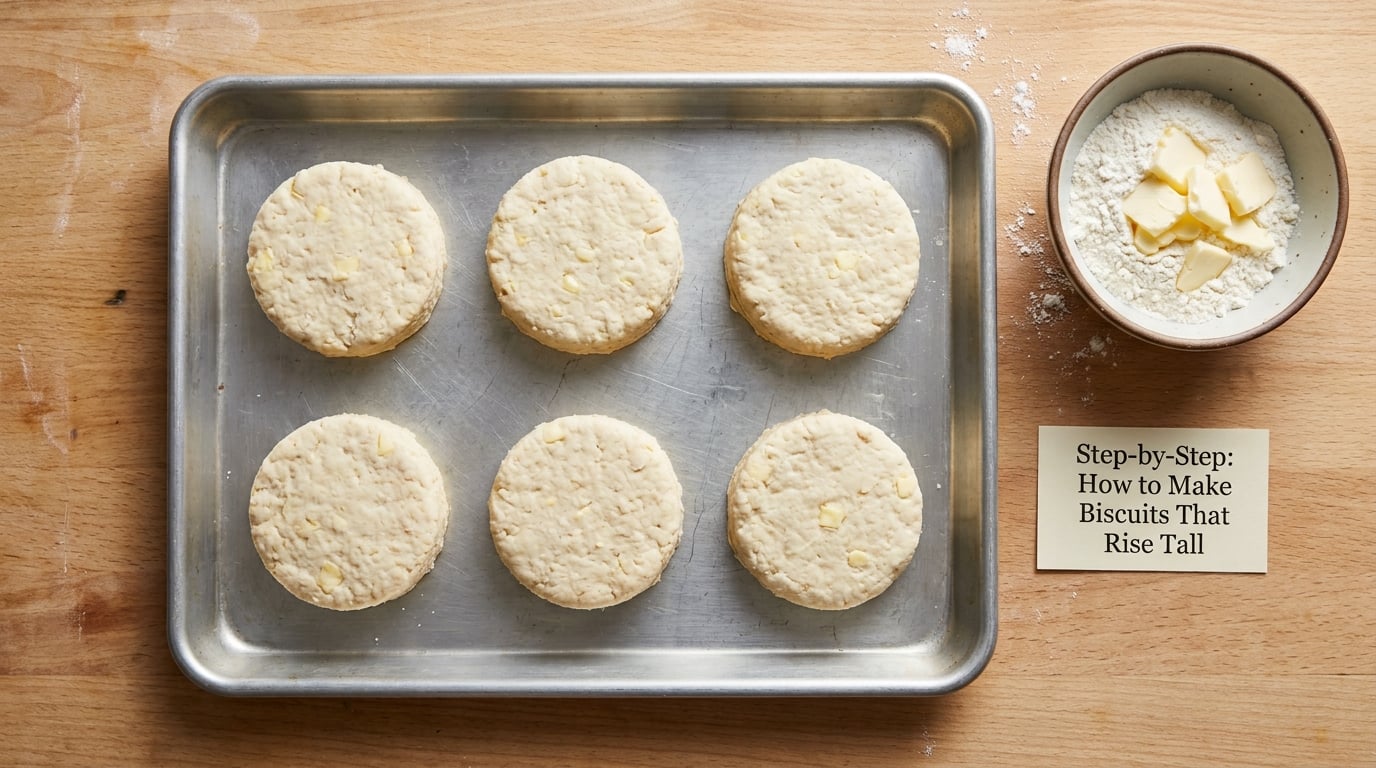
Whisk 2 cups all-purpose flour, 1 Tbsp baking powder, 1 tsp baking soda, 1 tsp salt, and 1 Tbsp sugar in a large bowl. That formula makes six to eight biscuits cut with a 2-inch cutter. Bake at 425°F for 12 to 15 minutes, or 450°F for 10 to 13.
Chill the Dough and Keep the Butter Cold
Rub the cold butter into the dry ingredients until the pieces are the size of small peas and the mix resembles coarse crumbs. A few larger shards are fine; a smooth paste is not. Cold butter turns to steam in the oven and pushes layers apart, and that is where both flake and vertical lift come from.
Pour in 3/4 cup cold buttermilk and stir with a fork just until the dough pulls into a shaggy lump. Do not add liquid by the tablespoon chasing a clean bowl. Cover the bowl and chill 15 to 30 minutes in the fridge, or about 10 minutes in the freezer, while the oven comes up to temperature.
Mix Until the Dough Just Comes Together
The finished dough should look shaggy, lumpy, and slightly sticky, with a few patches of loose flour still visible. That appearance is the checkpoint, and it is where most home bakers go wrong: messy dough feels unfinished, so people knead it smooth, and the gluten that develops makes biscuits tough, dense, and flat.
After the rest, turn the dough onto a floured surface and pat it about 3/4 inch thick. Fold it in thirds, rotate the whole thing 90 degrees, flatten again to 3/4 inch, and repeat twice. Those letter folds laminate the butter into sheets, which is the same reason croissant dough layers and the same reason a biscuit flakes. A freezer-cold block of dough also snaps rather than smears, which keeps the layers distinct.
Shape Tall Biscuits Without Pressing Them Flat
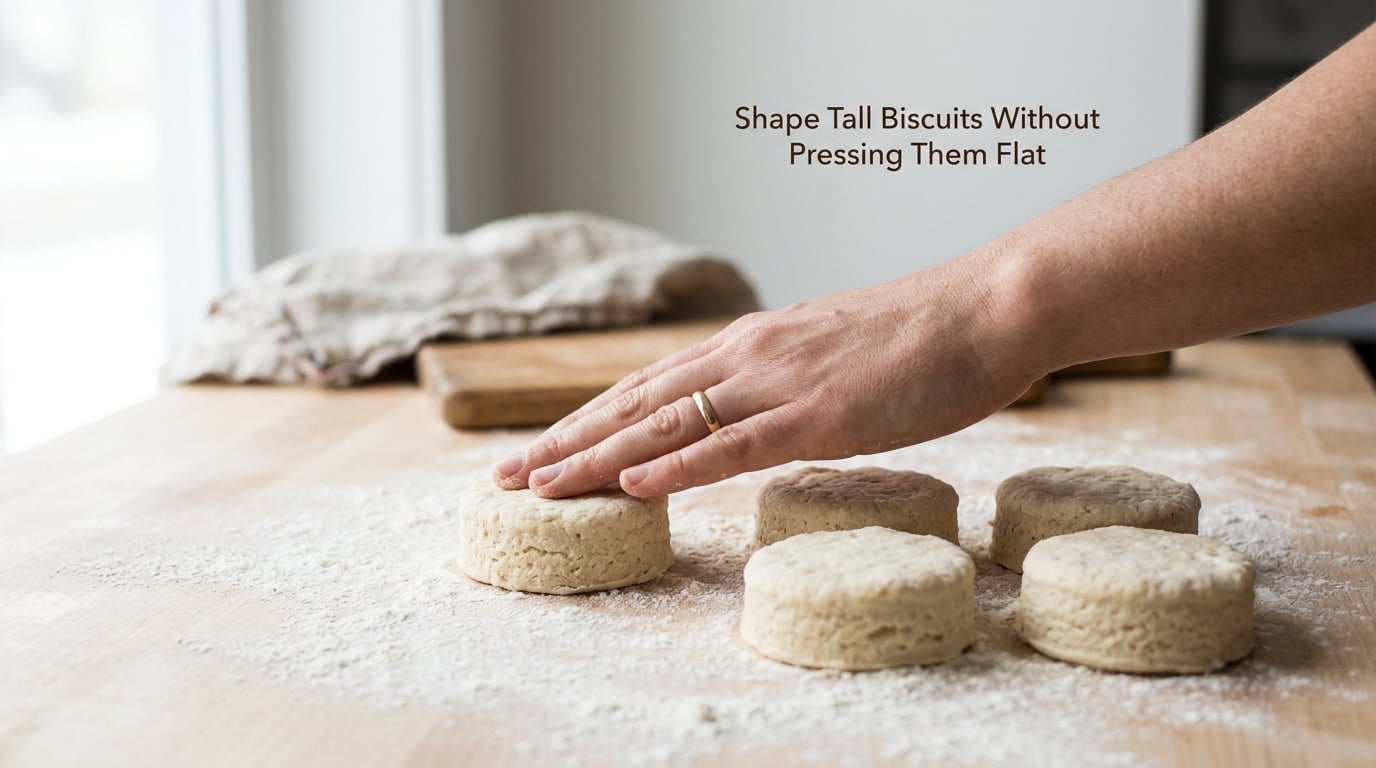
Roll or pat the dough to exactly 1 inch thick. The rule of thumb is simple: 1 inch of dough gives a biscuit around 2 inches tall, so rolling to a quarter inch guarantees a pancake. Go to 1 1/4 inches if you want them taller still, and accept that you will get fewer biscuits out of the batch.
Dip the cutter in flour and press straight down. Do not twist it. Twisting seals the cut edges and crimps the layers, and those biscuits come out shorter with rounded, compressed sides. A bench scraper squared against each round straightens the walls, which is how you get the tall straight sides that make a biscuit look like a restaurant one.
Set the rounds on the tray about 1 inch apart. Close spacing makes the sides climb instead of spreading outward, and if you want a pull-apart batch, set them touching deliberately and just know the edges will slump a little. A full tray of six is the right call; crowding two pans into one oven drops the temperature and squashes them.
Bake on the Right Temperature and Watch the Rise
Put the tray in only after the oven has held its temperature for about 10 minutes, longer if you have no thermometer. The first five minutes in the pan are oven spring, when the leavening gas expands and the dough makes most of its height, and opening the door during that window deflates it.
You can bake at 350°F, but add 3 to 5 minutes and expect roughly a third less height. Cool air gives the dough time to set before the gas has finished expanding, so it spreads instead of climbing. Doneness reads three ways: the biscuit is about double its raw height, the top and edges are golden brown, and the center springs back lightly when you touch it. If the bottom is dark but the middle still feels doughy, give it another 2 minutes rather than raising the heat.
Cool them on the tray for 5 minutes. Moving warm biscuits to a rack flattens the base, since the crumb is still soft enough to take the weight.
Common Mistakes
Almost every flat batch traces back to one of these. Work down the list in order, since temperature and mixing account for most of them.
- Biscuits are puffy but low and spread wide. The dough was too warm. Butter that has softened melts into the flour instead of staying in distinct pieces, so chill the fat, the buttermilk, and the finished dough.
- Biscuits are dense, tough, and short. You overmixed. Stop the moment the dough looks shaggy and leave visible loose flour; do not knead it smooth.
- Biscuits are tall but heavy, like little bread rolls. You packed the flour. Weigh it at 250 g, or spoon and level, never scoop and shake.
- Nothing rises at all. Stale baking powder, or dough going into a cold oven. Stir 1 tsp of baking powder into a third of a cup of hot water; strong bubbling means it still works.
- Biscuits slump sideways and merge together. They were crowded or the pan was too full. Give each round an inch of space and bake one tray at a time.
- Edges are rounded and compressed. You twisted the cutter. Press straight down and lift without turning, then square the sides with a bench scraper.
- Biscuits are hard and crunchy rather than tender. You rolled too thin or baked too long. Check the 1 inch thickness before cutting, and pull them the moment the center springs back.
- Second-batch biscuits are always worse. Re-rolled scraps are dry and overworked. Use them for a drop-biscuit or shortcake batch, and expect less height there.
Tips for Consistently Tall Biscuits
- Weigh the flour when you can. Volume measuring is the least reliable step in the whole recipe, and one extra tablespoon per cup is enough to change the texture.
- Test baking powder every few months. A teaspoon in a third of a cup of hot water should foam hard immediately. Weak fizzing means a dead leavener and a flat tray.
- Smaller cutters give taller biscuits. A 2-inch round from 1 inch of dough beats a 3-inch round from the same dough, because the same volume of dough has fewer sides to spread across. The trade is yield: six to eight biscuits instead of four.
- Prep the tray before you shape anything. Parchment lined and waiting, oven preheating, cutter floured. Shaping cold dough while everything else is still in progress gets the dough back above fridge temperature.
- Grate frozen butter when the room is warm. A box grater and a cold stick produce small, even shards that survive handling far better than hand-cut cubes.
- Change the mix-ins, not the method. Cheddar and chives, ham and cheese, or lemon and sugar all ride the same base formula. Once the height method works, the flavor variations are free.
- Freeze unbaked rounds on a sheet, then bag them. They keep for weeks, and you bake from frozen at 425°F with about 5 extra minutes. Perfect for a big breakfast table; our brunch for a crowd guide covers the rest of the timing.
Frequently Asked Questions
Why are my biscuits flat instead of tall?
Flat biscuits almost always mean one of three things: the butter was too warm to stay in pieces, the dough got overworked into a smooth ball, or the oven was not fully preheated when the tray went in. Chill the fat and the dough, stop mixing while the dough still looks shaggy, and give the oven a full 10 minutes past the preheat signal. Rolling the dough thin is a fourth common cause.
Should I use melted butter when making biscuits?
No, not if height is the goal. Melted butter coats the flour instead of sitting in it as cold shards, so there is nothing left to turn to steam and lift the layers. You end up with a flatter, denser, more crumbly biscuit that tastes of butter but bakes like a shortbread. Very cold cubed butter, frozen grated butter, lard, or shortening all give the same lift.
Can I make biscuits rise higher with baking powder?
You can nudge the rise, up to a point. A standard 2 cup flour dough wants about 1 Tbsp of double-acting baking powder, and going to 3 Tbsp is the version many home bakers use for extra height. Going much past that adds a soapy or bitter note without much additional lift, and it will not rescue overmixed dough or a cold oven.
Do biscuits need to rest before baking?
A rest helps, and it is short. Chilling the shaped or unshaped dough 15 to 30 minutes in the fridge, or about 10 minutes in the freezer, lets the butter firm back up and relaxes the gluten from mixing. That is also the time your oven needs to reach and hold full temperature. Skipping the rest is survivable, but the biscuits are shorter and less flaky.
How do I keep biscuit edges from spreading?
Three things help most: press the cutter straight down without twisting, keep the dough at 1 inch thick so there is enough structure to hold itself up, and set the rounds about an inch apart on the tray. A hot fully preheated oven sets the outside of the dough before the center can slump. Once they are golden, move them off the pan quickly so the base does not bake flat against the metal.
Can I use a cast-iron skillet to make biscuits?
You can, and a hot skillet gives excellent browning, but the cast iron is a heavy retainer of heat and tends to overbrown the bottoms before the centers cook through. Bake at 425°F rather than 450°F if you use one, and start checking two minutes early. Many bakers grease the skillet lightly and cut the rounds slightly smaller, since the sides are what set the final height.
For serving, a tall biscuit wants butter and jam, a fried egg, or a split with gravy at breakfast. Our guide to French toast with brioche and restaurant-style mashed potatoes at home both pair naturally with a big batch on a weekend table.
Change one thing on your next batch: keep the butter and buttermilk fridge cold, stop mixing while the dough still looks shaggy, and let the oven hold full temperature for ten minutes before the tray goes in. Do those three, and the biscuits will rise roughly double on their own.