
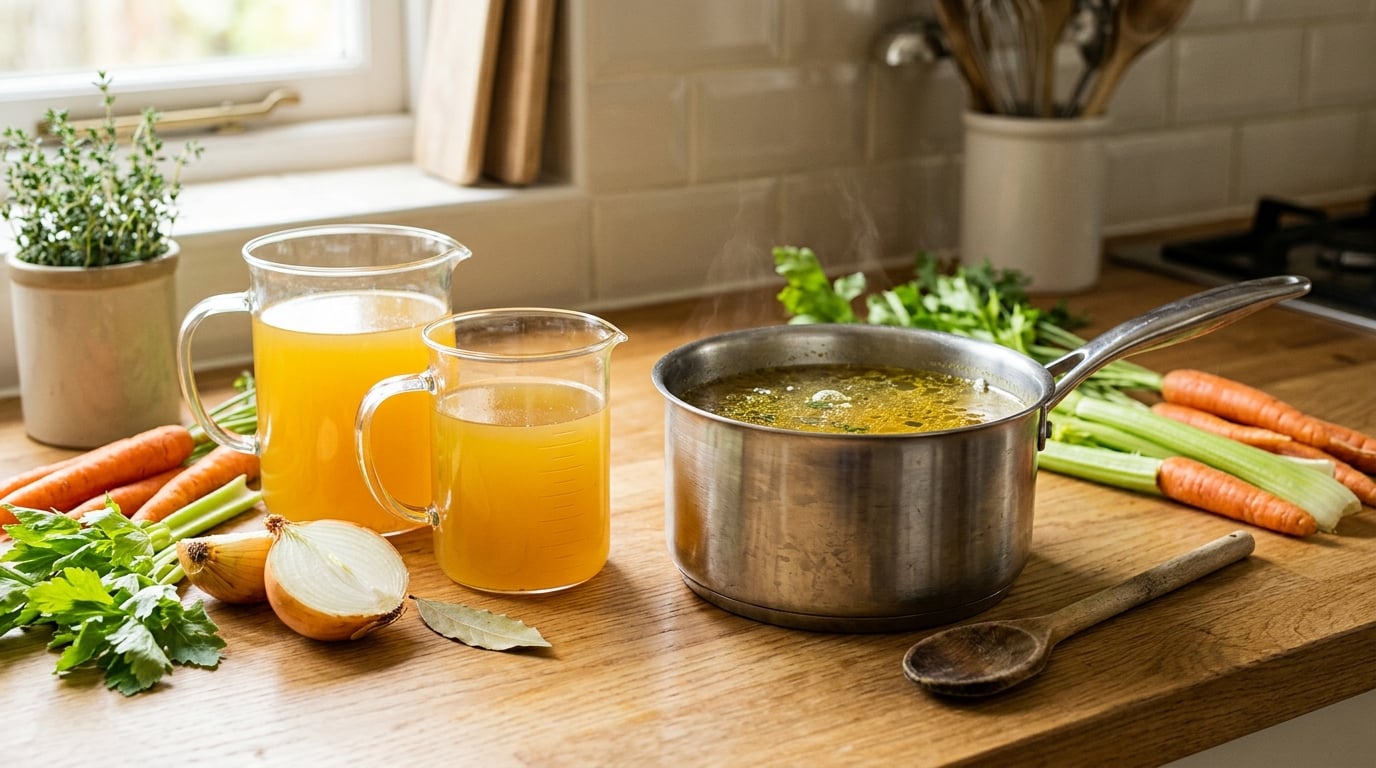
Homemade stock vs store-bought broth is not the contest most people think it is. Homemade stock tastes deeper, costs almost nothing when you start with a carcass or a bag of vegetable scraps, and lets you control every pinch of salt; store-bought broth takes thirty seconds, keeps for months in the pantry, and lands on the table with a mild, predictable flavor that works fine in most weeknight cooking. The right answer depends on the dish, your freezer space, and how much time you actually have on a Wednesday.
I keep both in rotation. A homemade batch goes in the freezer for soups and pan sauces, and a carton of unsalted broth sits in the pantry for the nights when I need liquid in a hurry. Here is where each one earns its place, and where the marketing on the carton does not.
Table of Contents
- Homemade Stock vs Store-Bought Broth at a Glance
- Flavor and Depth
- Nutrition and Sodium
- Cost and Value
- Convenience and Storage
- How Each Works in Recipes
- How to Make Homemade Stock Better
- Which Should You Choose?
- Frequently Asked Questions
- Is homemade stock better than store-bought broth?
- What is the difference between stock and broth?
- Can I substitute store-bought broth for homemade stock in a recipe?
- How long does homemade stock last, and can I freeze it?
- What is the trick to good homemade stock?
- How can I make store-bought broth taste more like homemade?
- Conclusion
Homemade Stock vs Store-Bought Broth at a Glance
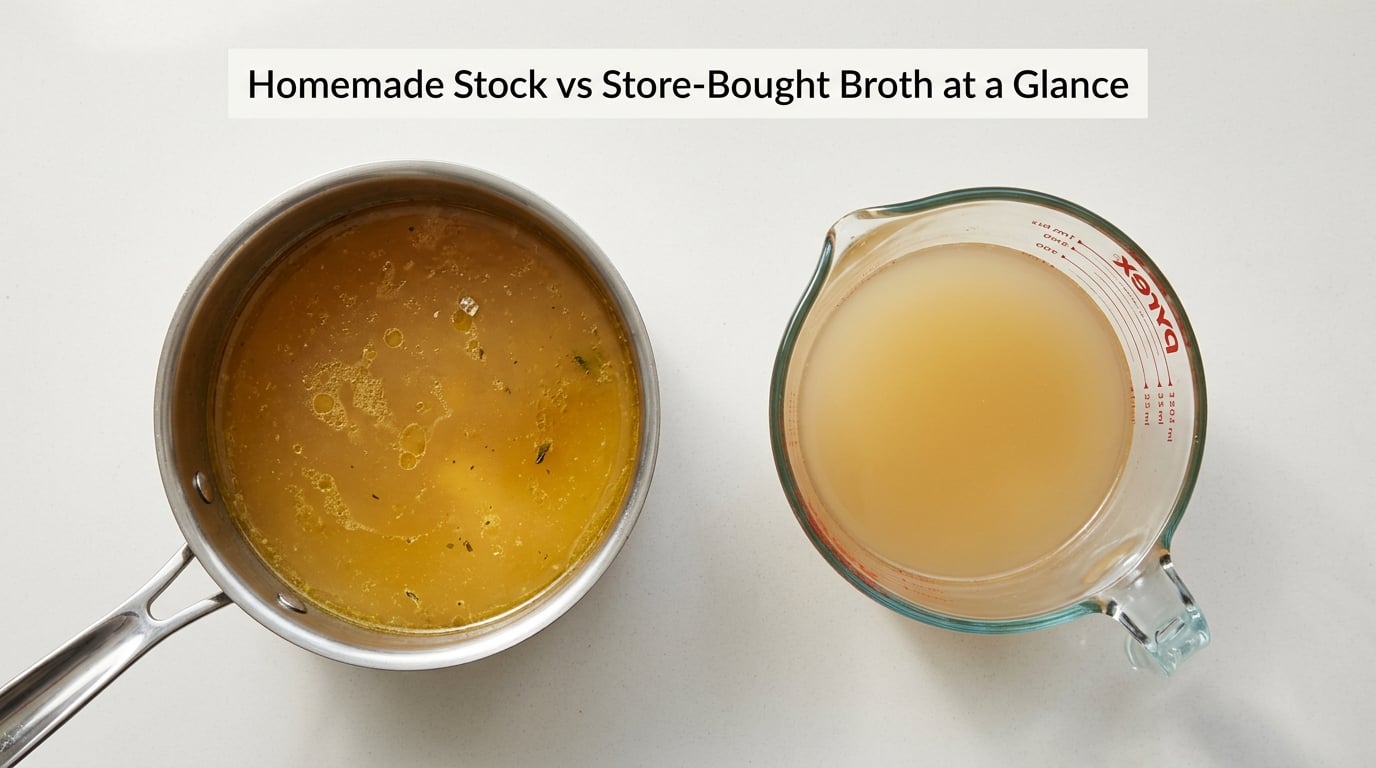
Short version: homemade stock wins on flavor, body, and control. Store-bought broth wins on speed, shelf life, and consistency. The rest of this guide breaks both down criterion by criterion.
| Criterion | Homemade Stock | Store-Bought Broth |
|---|---|---|
| Flavor depth | Layered and roasted, with roasted-bones depth if you bother | Mild, uniform, seasoned to taste the same every time |
| Body and texture | Full, silky, gelatinous when chilled if made from bones | Thin and clean, rarely sets in the fridge |
| Sodium | Whatever you add, often none until the end | Labeled, and often a large share of a daily intake in one cup |
| Other ingredients | Only what you put in: bones, mirepoix, aromatics | Often MSG, sugar, yeast extract, thickeners, and fish or shellfish |
| Cost per batch | Low if you have scraps, higher if you must buy bones | Paying per quart every single time |
| Time | Roughly 20 to 30 minutes of work spread over hours of simmering | Zero |
| Shelf life | Days in the fridge, months in the freezer | Months sealed, no freezing needed |
| Best used for | Pan sauces, gravies, soups, braises, risotto | Poaching, cooking grains, soups, quick weeknight liquid |
Flavor and Depth
Homemade stock tastes the way it does because you are extracting, not just heating. Long gentle simmering pulls collagen out of bones and connective tissue, caramelized vegetables add a roasted note, and the long cook time concentrates everything slowly. Roast the bones and vegetables in the oven first and you add a deeper, nuttier layer that straight-from-the-pot stock never reaches.
Store-bought broth is built for speed and consistency, not depth. It is a light, seasoned liquid, and that is not a defect. A carton of broth is a reliable, mildly savory base that tastes the same on a Tuesday in February as it does in July, which is a genuinely useful thing when you are cooking for other people.
So the flavor question depends on the dish. Clear soups, where you taste the liquid directly, show the biggest gap. A rich stew simmered for an hour can hide the difference, because the sauce and the other ingredients take over by the end.
Why Store-Bought Stock Rarely Delivers on the Label
Here is the part that confuses people most. Federal labeling rules in the US allow many products sold as stock to be made primarily from meat and poultry rather than bones, and most cartons labeled stock behave like broth in practice: thin, clear, and light on body. If you want the gelatinous, full-bodied experience the word stock suggests, read the ingredient list and look for bones, cartilage, or collagen among the first ingredients.
Bone broth is a third category, marketed as a health food and simmered for a day or more. It is closer to a rich homemade stock than to a carton of broth, but the collagen claims outrun the evidence, and a carton of it is mostly a flavored liquid with a long simmer behind it.
Nutrition and Sodium
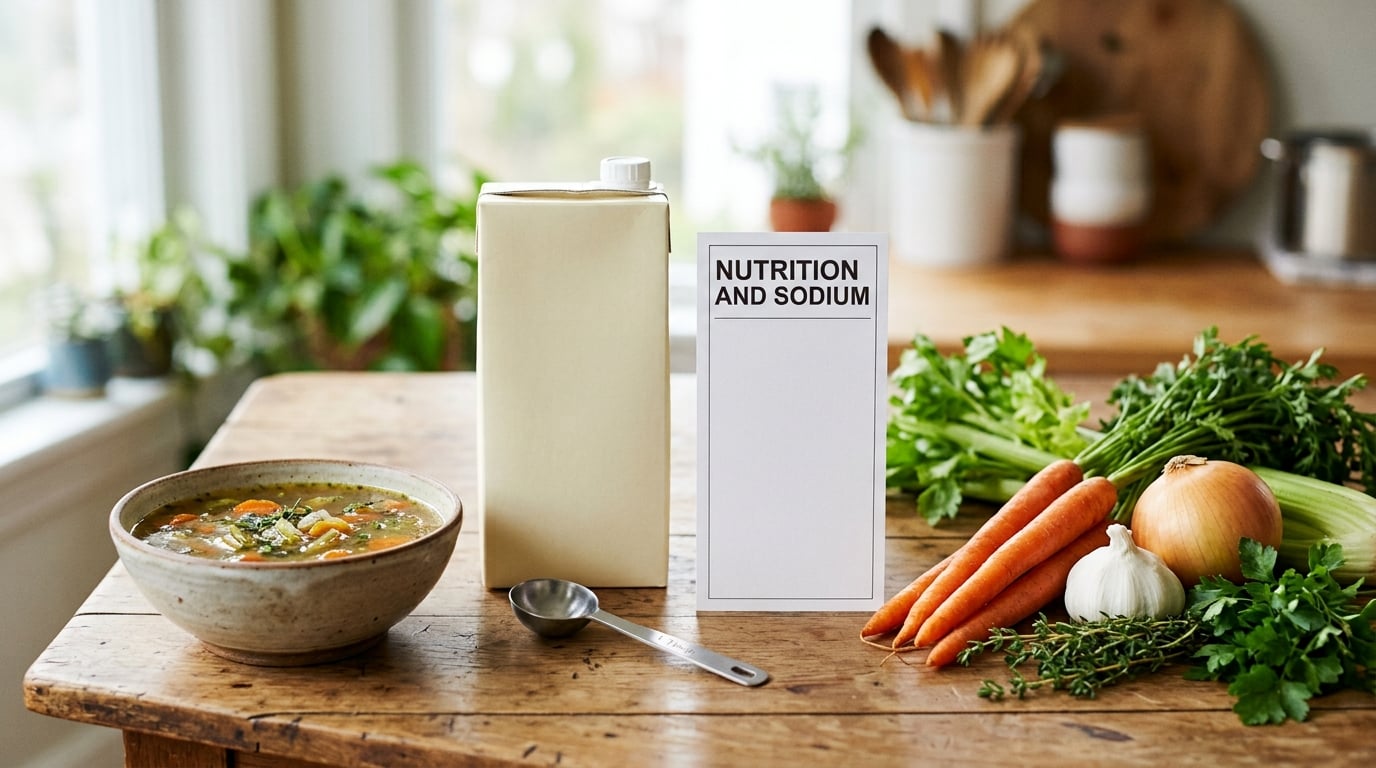
Homemade stock is not automatically the healthier option. What you skim off matters as much as what you simmer. A pot of chicken stock that has not been skimmed can carry a visible layer of fat and more saturated fat per cup than a carton of broth, and that layer is easy to remove but easy to forget. Skim it cold the next day and you keep the flavor while dropping the fat.
Where homemade genuinely wins is sodium, because you control it. Commercial broths vary enormously here, and the label tells you in seconds what a homemade batch will not. Look at two numbers on the nutrition panel: milligrams of sodium per cup, and whether the serving size is a cup or a half cup, which quietly doubles the real number. Low-sodium versions exist, but you can also dilute a regular carton and land in the same place with less effort.
Homemade stock does carry gelatin and collagen, plus whatever minerals come out of the bones. That is real, and it is a genuine difference. It is also not a treatment for anything, and if you are managing sodium intake for medical reasons, your doctor or a registered dietitian is the right person to ask, not a cooking blog.
Cost and Value
Homemade stock is cheapest when you already own the ingredients. A rotisserie chicken carcass, a bag of carrot and celery ends from the week, a handful of onion skins and a bay leaf cost you nothing beyond salt and water, and they usually yield several quarts. That is a genuine free dinner component, and it is why many home cooks save the carcass and freeze it until they have enough for a full pot.
Homemade stock gets more expensive the moment you buy bones and fresh mirepoix specifically for it. The savings narrow, though they rarely disappear, and you have to weigh the pot against your own time. Store-bought broth has no hidden yield problem: you pay per quart, and the carton tells you how many servings are in it.
The break-even points I see in my own kitchen are simple. If you have scraps, homemade wins on every batch. If you are buying a whole chicken to cook anyway, homemade wins again. If you would have to buy bones, a large mirepoix, and fresh herbs for one pot of stock, a carton is a defensible choice. Buy unsalted when you can, and buy a larger volume if the unit price drops, because you pay the same per quart either way once you have frozen it.
Convenience and Storage
Time is the real argument for store-bought broth, and it is a strong one. A homemade batch needs about 20 to 30 minutes of actual work, plus several hours of simmering on the stove or roughly one to two hours in a pressure cooker. Most of that is passive, but it still means a pot occupying a burner, a skimming duty in the first hour, and a plan.
Storage is where homemade pays back the effort. Cool the pot quickly, refrigerate within two days, and keep it about three to four days. Freeze it in flat zip-top bags or ice cube trays so portions thaw fast and lie flat in the freezer. Mason jars work, but leave a clear inch of headspace because liquid expands as it freezes. Frozen stock keeps for three months or longer, which turns one Sunday of cooking into a month of weeknight dinners.
Store-bought broth sits on a shelf indefinitely, and that is the whole convenience story. No freezer, no planning, no cleanup, and the carton is a backup when a recipe calls for stock and you have none.
How Each Works in Recipes
Stock adds body. Broth adds clean savory flavor. That single difference explains most cooking results, because gelatin gives a dish viscosity that liquid water and thin broth simply do not.
Pan sauces and gravies want stock. The gelatin coats the finished sauce, so it clings to the meat and turns glossy instead of running thin. Broth works in a pinch, but finish it with a little cornstarch slurry or a knob of cold butter and you get most of the way there.
Risotto and pasta water want light liquid. This is the case where a gelatinous homemade stock works against you. Starch granules need hot liquid to hydrate, and gelatin coats them, so a rich stock can turn a risotto gummy and glue pasta together. Broth, or stock loosened with water, is the right call here. This is the starch interference problem that almost nobody warns you about, and it is the fastest way to ruin a good pan of risotto.
Soups and stews accept either. A chicken noodle soup wants broth for clarity, a French onion or beef stew wants stock for weight, and a long-simmered soup forgives either choice because the pot evens things out.
Cooking grains, beans, and poaching want broth. It seasons rice, lentils, and poaching liquid for poached chicken without making the finished dish heavy.
Substitution runs one direction more safely than the other. Using broth where stock is called is nearly always fine, especially if you add a little body later. Using stock where broth is called works, but water it down first so you do not thicken a soup or a curry sauce by accident.
How to Make Homemade Stock Better
Most disappointing homemade stock fails on technique, not ingredients. These are the fixes that cost nothing.
Roast the bones and vegetables first. Thirty minutes in a hot oven until deeply browned is the single biggest upgrade. Scrape the browned bits into the pot, fond and all.
Never let it boil. A rolling boil clouds the liquid and cooks off clarity. You want a bare shiver, a bubble or two per second, and patience. Boiling hard is also not what extracts gelatin; a controlled simmer over hours does that.
Skim in the first hour. Foam and impurities rise early. Skim twice and the stock stays noticeably clearer. Skipping it costs you looks, not flavor, but the fat cap does need to come off.
Use the right bones. Joints, feet, and backs carry the most connective tissue. Breast bones and rib cages are lean and add flavor with less body, which is useful when you do not want thickness.
Hold the salt. Season at the end. Salt added at the start tightens muscle fibers in any meat left in the pot and leaves you no room to adjust.
Strain, chill fast, freeze flat. Do not boil the vegetables in mirepoix for the entire simmer; they turn muddy after the first couple of hours. Pull the solids out when the flavor is where you want it.
Which Should You Choose?
Choose homemade stock when the dish is the point. A pan sauce, a French onion soup, a braise, a risotto you want to be right, or a roast chicken dinner where the drippings and the sauce carry the meal. Also choose it when you have scraps and a spare hour, because that is the case where the cost argument disappears.
Choose store-bought broth when the liquid is a supporting player and you are cooking on a weeknight. It is the right call for soups with a long ingredient list, for cooking grains, for poaching, and for any recipe where you are about to reduce the liquid by half anyway. Buy unsalted versions, and buy larger cartons if the unit price is better.
Most cooks land on the hybrid, and it is not a compromise so much as a strategy. Keep a carton for the nights you cannot be bothered, and keep homemade frozen for the nights you can.
Frequently Asked Questions
Is homemade stock better than store-bought broth?
For flavor, body, and sodium control, yes. Homemade stock has more depth and a fuller mouthfeel because the collagen from bones turns into gelatin, and you decide how much salt goes in. Store-bought broth wins on speed and consistency, and it is a perfectly good choice in soups, grains, and weeknight cooking. Many home cooks use both, keeping a carton for quick nights and frozen homemade stock for sauces and braises.
What is the difference between stock and broth?
Stock is simmered primarily from bones, often with some meat attached, which releases collagen that becomes gelatin and gives the liquid body. Broth is simmered primarily from meat, and it is lighter and seasoned to be sipped or used in quick cooking. The labels on supermarket products blur this line heavily, so reading the ingredient list matters more than the word on the front of the carton.
Can I substitute store-bought broth for homemade stock in a recipe?
Usually yes, with one exception. Broth works in soups, stews, sauces, and braising liquid, though a thin broth may need a cornstarch slurry or cold butter to give a finished sauce the gloss that gelatin normally provides. Avoid stock in risotto or pasta water, where the extra body can coat starch granules and make things gummy. Water the stock down if the dish should stay light.
How long does homemade stock last, and can I freeze it?
Refrigerate homemade stock within two days of cooking and use it within about three to four days. For longer storage, freeze it in flat zip-top bags or ice cube trays so portions thaw quickly, or in mason jars with about an inch of headspace for expansion. Frozen stock keeps three months or longer in good quality and reheats fast on the stove. Many cooks freeze the whole batch flat and break off what they need.
What is the trick to good homemade stock?
Roast the bones and vegetables until deeply browned before they go in the pot, and never boil. Hold a bare simmer with just a bubble or two, skim the foam in the first hour, and give it hours rather than minutes. Add salt at the end so you can adjust it. Chunks with joints, feet, and backs carry the most connective tissue, which is what gives you the wiggly, gelatinous result when the stock chills.
How can I make store-bought broth taste more like homemade?
Build aromatics into the carton. Warm it gently with a halved onion, a few peppercorns, a bay leaf, and a strip of kombu for twenty minutes, then strain. Adding a splash of white wine and reducing it by a third deepens the flavor further. If you want body, whisk in a teaspoon of gelatin softened in cold water. Keeping the heat low and never boiling preserves the clean, meaty taste that boiling flattens.
Conclusion
Homemade stock is the better cooking liquid when flavor and control are the point, and store-bought broth is the better liquid when you need it in a hurry. Start by turning one carton around in your kitchen and reading the ingredient list and the sodium per cup, then make one small homemade batch from whatever scraps are in the freezer. Freeze it in portions, and the choice stops being a debate.