
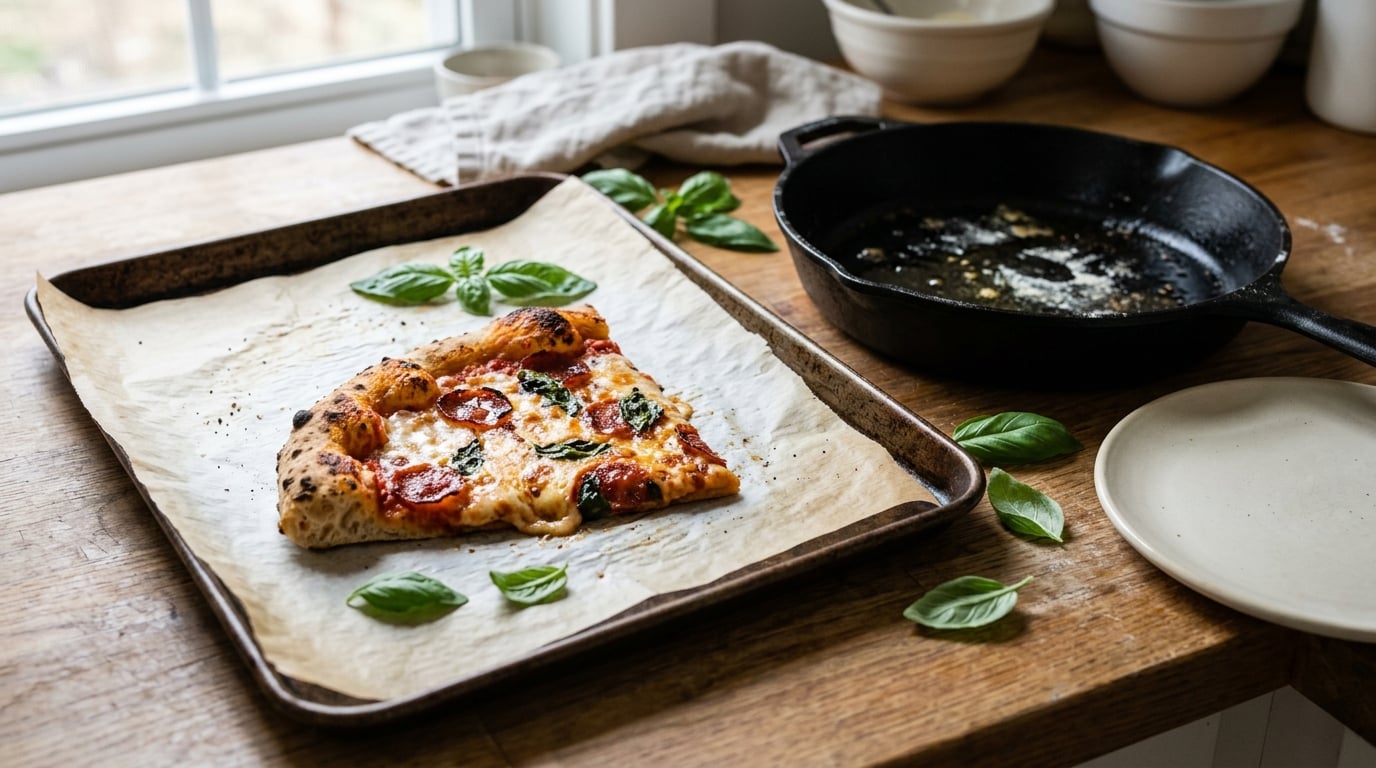
The best way to reheat pizza so the crust stays crisp is to put the slices on a baking sheet in a fully preheated oven at 375°F for 8 to 10 minutes, leaving a gap between them. If you want the crust to crackle again like it did fresh out of the box, give the pan a full 10 minutes at temperature first. A cold or barely warm sheet is the single biggest reason reheated pizza comes out pale and limp.
Heat in two stages. First, dry direct heat re-bakes the base and drives off surface moisture. Then a short burst of trapped steam re-melts the cheese without undoing the crust you just crisped. Skip the second stage and the cheese stays tacky; skip the first and you have a soggy slice no matter what you do next.
A skillet does both at once, which is why cooks keep ranking it above the oven. A full oven is easier for a whole pie, though, and an air fryer gets there in under five minutes without heating up the kitchen. Here is how to reheat pizza so the crust stays crisp, method by method.
Table of Contents
- What You Need
- Step-by-Step: How to Reheat Pizza So the Crust Stays Crisp
- Step-by-Step: Reheating Pizza in a Skillet
- Step-by-Step: Reheating Pizza in an Air Fryer
- Step-by-Step: Reheating a Whole Pizza
- Common Mistakes
- Frequently Asked Questions
- Is it better to reheat pizza in the oven or in a pan?
- How do I make leftover pizza crust crunchy again?
- How long do you reheat a slice of pizza in the oven?
- Should I cover pizza when reheating it?
- How do I keep the crust from getting hard when reheating?
- Can you reheat pizza in the microwave without it going soggy?
- Conclusion
What You Need
You do not need anything exotic. A metal baking sheet and a working oven handle the basic case; everything else is a shortcut.
- A baking sheet or pizza stone. Metal conducts heat better than glass, so it crisps the base faster. A stone works but needs a longer preheat.
- A heat-safe plate. For warming a single slice you do not want to bother with the oven.
- A skillet with a lid. Nonstick for an easy release, cast iron if you want heavier browning and the strongest crust.
- An air fryer. Optional, but the fastest route and no oven preheat.
- Parchment paper or aluminum foil. A barrier so cheese does not fuse to the pan, and foil for wrapping a slice before a microwave finish.
- Optional toppings. A few fresh shreds of mozzarella, a scatter of chopped basil or oregano, or a drizzle of olive oil added after heating. Cold toppings heat unevenly on their own.
Keep the pizza itself at room temperature, not straight from the fridge. A fridge-cold slice spends the first two minutes warming up instead of crisping, and thin crusts that go in cold tend to come out brittle rather than crunchy.
Step-by-Step: How to Reheat Pizza So the Crust Stays Crisp
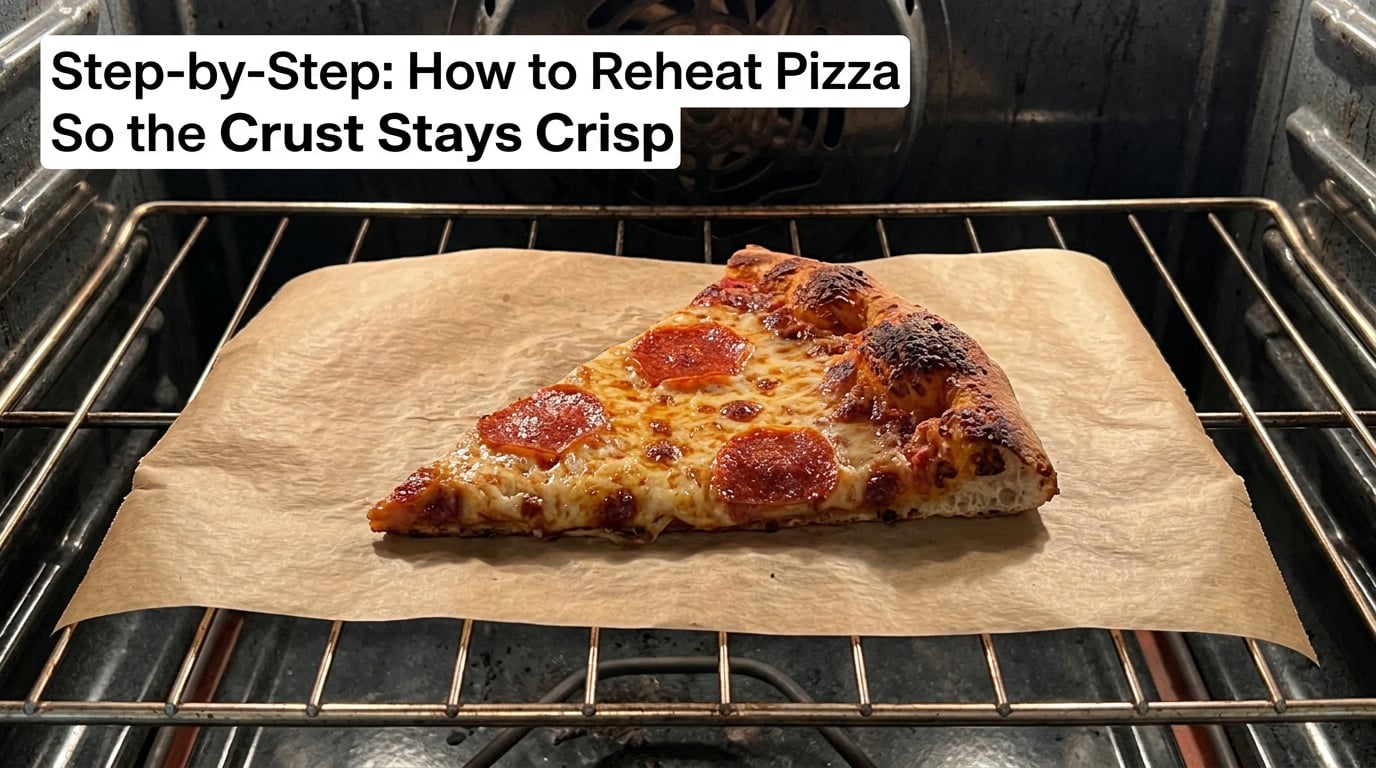
The oven is the most forgiving method and the best one for a whole pie. It reheats several slices evenly and dries the base out properly, so you get a bottom that crunches and a top that melts at the same time.
Preheat the oven and the pan together
Set the oven to 375°F (190°C). Put the empty baking sheet inside as it heats and give both a full 10 minutes. Pizza reheaters are a nice shortcut, but a preheated sheet does the same job for a fraction of the cost.
Lay the slices out with space between them
Arrange slices in a single layer with about half an inch of gap. If they touch, steam collects underneath and the base steams instead of browning, which is exactly how you get a soft center. Line the sheet with parchment if the cheese is already melted and fused to the pan.
Heat 8 to 10 minutes, then check the base
Slide the sheet onto a rack in the middle of the oven and set a timer for 8 minutes. At 8 minutes the cheese should be bubbling and the top edges of the crust lightly browned. If the base still feels soft, give it 2 more minutes. Lift one slice with a spatula and tap the underside; it should sound hollow and crackle rather than bend.
Do not cover the slices with foil. Foil traps the steam that was just escaping, and you end up softening the crust you spent eight minutes drying out.
Step-by-Step: Reheating Pizza in a Skillet
A skillet is the fastest and the crispest option because the crust touches hot metal directly. It is also the fussiest, because a pan that is not hot enough will steam the base rather than brown it.
- Heat the empty skillet on medium-low. Wait until you can feel heat radiating off the surface, about 3 to 4 minutes. Nonstick is more forgiving; cast iron gets a better crust but needs a hotter hand.
- Lay the slice in and cook 2 to 3 minutes with the lid off. The base should brown and the cheese should start to soften. The bottom should not color much at this stage.
- Add water and cover. Put two or three drops of water in the pan, away from the slice, then clap the lid on or wrap the top tightly in foil. The water turns to steam and re-melts the cheese in about 2 minutes while the underside stays crisp. The water goes in the pan, never on the pizza, or the base turns damp.
- Finish uncovered. Take the lid off and give the slice 30 seconds of dry heat so the base is dry to the touch. If the cheese is still stiff, add another drop of water and cover again for 1 minute.
Cook one slice at a time in a 10-inch skillet. Two slices in a home pan leave too little contact with the metal, and the steam has nowhere to go, so both come out pale.
Step-by-Step: Reheating Pizza in an Air Fryer
The air fryer is the best method when you want a crisp crust without waiting for an oven to heat. It is essentially a small fan-driven oven, so it browns the base faster than a conventional oven at the same temperature.
- Set it to 350°F (175°C) or 375°F (190°C). Let the basket preheat for 2 to 3 minutes if your model allows it. A cold basket is the same problem as a cold pan.
- Line the basket with parchment. Use the round or square sheets sold for air fryers, and leave a few holes in the middle so hot air can move. Never use a sheet that blocks the basket floor entirely.
- Cook 3 to 4 minutes at 350°F, or 4 to 5 minutes at 375°F. Thicker crusts and frozen pieces need the extra minute; a thin slice on a cold day can burn, so check at 3 minutes.
- Flip the slice halfway. Use tongs and turn it once so both sides brown. Pull it when the cheese bubbles and the crust edges look dry and golden, not brown.
If the crust comes out pale, add another minute. If it comes out dry and hard, drop the temperature by 25°F for next time and pull it a minute early. Air fryers dry out thin crust faster than an oven does.
Step-by-Step: Reheating a Whole Pizza
A whole pie takes longer than slices because the center holds heat and the edges lose it. Reheating it in one go mostly warms the middle and leaves the rim soft, so the trick is airflow and staggered cooking.
- Heat the oven to 375°F (190°C) with a baking sheet inside for 10 minutes.
- Put the whole pie or as many slices as fit on the hot sheet, leaving gaps. If nothing fits, do two batches rather than stacking.
- Cook 8 to 10 minutes, then rotate the sheet a quarter turn. The front of the oven runs hotter, so rotating evens out the browning.
- Pull the edge slices first. Move them to a rack on the counter while the center finishes, so the rim never sits cooking past done.
Do not put the pie back in a cardboard box to warm it. The box traps steam and the crust steams inside a soggy sleeve. If a whole pie has been sitting out longer than two hours, reheat it only until it is steaming hot throughout, which for pizza means about 165°F (74°C) in the thickest part of the crust, and then eat it right away.
How the pizza was stored decides how well any of this works. A slice in a loosely closed box, in the fridge, reheats well. A slice sealed airtight or frozen and thawed has lost some of the structure that makes crust crisp, and it will need a couple extra minutes of dry heat to come back.
Common Mistakes
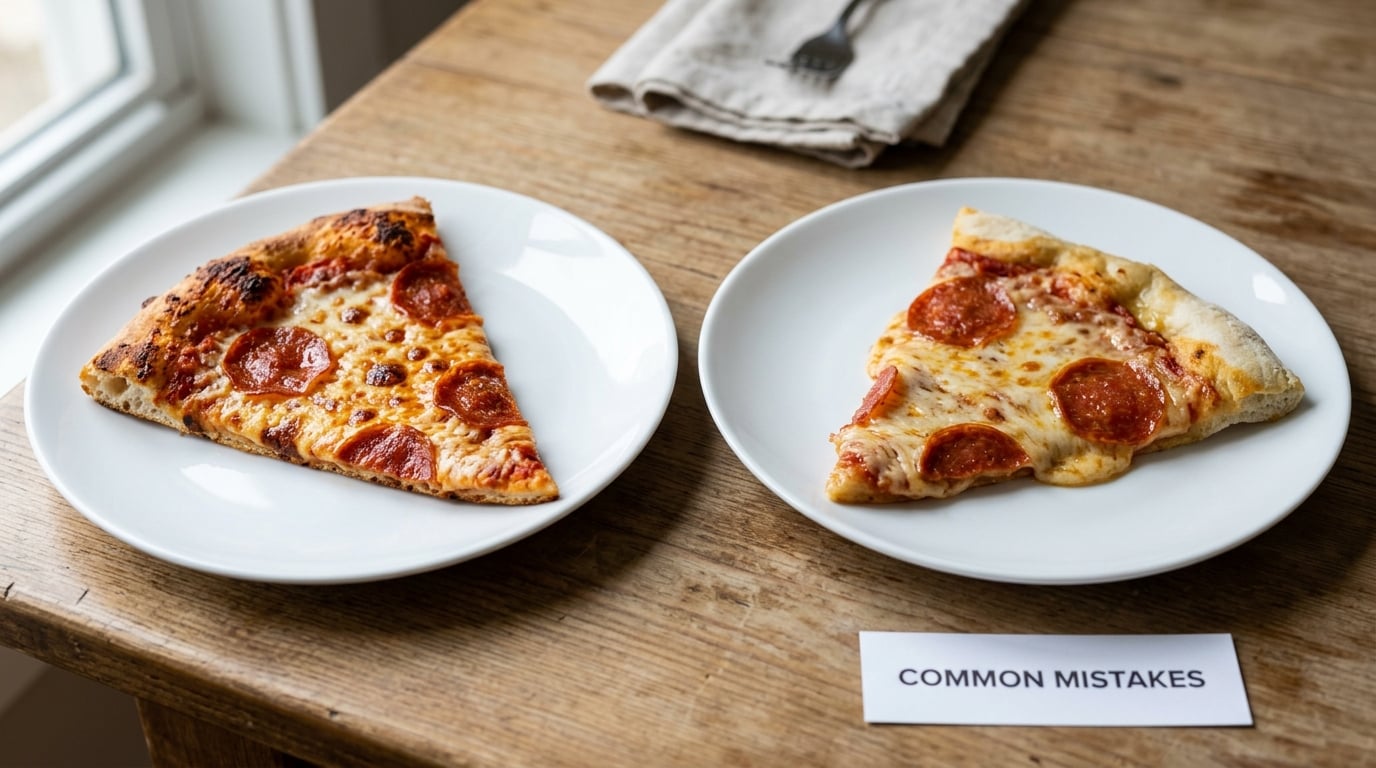
Most bad reheated pizza comes down to one of six things.
Using the microwave alone
A microwave heats water inside the slice evenly, which softens the crust and turns the cheese rubbery before anything can brown. The fix: 20 seconds in the microwave to warm the middle, then 4 minutes in the air fryer or toaster oven at 375°F to dry and crisp the outside. That combination is the only version of the microwave method worth using.
Putting the pizza on a cold pan
Cold metal means slow cooking, and slow cooking on a wet crust means steaming. Preheat the sheet, stone, or skillet first, and wait for the skillet until it radiates heat before the slice goes in.
Crowding the pan
Slices touching each other trap steam and the middle of the tray never dries. Space them out and cook in batches. It is faster than it sounds, because you are not waiting on a cold pan.
Burning the cheese to get a hot center
Many people crank the heat and walk away, which browns the top before the base has dried. Instead, go low and slow in the oven, or use the covered skillet stage where steam does the melting.
Leaving foil or a lid on the whole time
Covered heat re-melts the cheese but also softens the crust if you leave it on for the whole cook. Cover only for the last 2 minutes, then uncover to dry the base.
Reusing parchment with stuck-on cheese
Cheese fused to parchment comes off with a layer of crust attached. Use a fresh sheet each time, or skip the liner and rely on a lightly oiled pan.
One last note. There is a real camp that argues cold pizza, eaten straight from the box, tastes better than reheated. They are not wrong, and a slice that has been sitting since last night is perfectly good. This guide is for the case where you actually want it hot.
Frequently Asked Questions
Is it better to reheat pizza in the oven or in a pan?
For one or two slices, the skillet is better. Direct contact with preheated metal dries and browns the base faster than an oven can, and a lid with a few drops of water re-melts the cheese in about two minutes. Use the oven when you are reheating four slices or more or a whole pie, since the batch method is easier and more even. A preheated 375°F oven for 8 to 10 minutes is the safest default if you only own one appliance.
How do I make leftover pizza crust crunchy again?
Give the base direct, dry heat first. Skillet on medium-low for 2 to 3 minutes with the lid off, or a baking sheet in a fully preheated 375°F oven for 8 to 10 minutes, will dry the crust out. Then add two or three drops of water to the pan, cover, and steam for 2 minutes to re-melt the cheese. Order matters: crisp first, steam second.
How long do you reheat a slice of pizza in the oven?
Plan on 8 to 10 minutes at 375°F (190°C) on a preheated baking sheet. Thin crust is done closer to the 8-minute mark, while thick pan or deep dish slices need the full 10 and sometimes a minute more. Check by lifting a slice with a spatula: the base should feel firm and sound hollow when tapped. Add fresh cheese after it comes out if the topping looks thin.
Should I cover pizza when reheating it?
Only for the last couple of minutes. A lid or a foil cover traps steam and re-melts the cheese, but leaving it on for the entire cook softens the crust you just dried out. Skillet method: 2 to 3 minutes uncovered, then about 2 minutes covered. Oven method: leave the slices uncovered the whole time.
How do I keep the crust from getting hard when reheating?
Dry heat, applied in a short window, hardens crust. Too long at high temperature bakes the moisture out of the dough, and you get a brittle rim instead of a crunchy one. Use a moderate 375°F, keep an eye on the underside, and pull the slice the moment the base sounds hollow. Thick crusts tolerate more time than thin ones.
Can you reheat pizza in the microwave without it going soggy?
Not on its own. A microwave alone heats the water inside the slice evenly, which softens the crust and leaves the cheese rubbery. Use 20 seconds in the microwave to warm the center from the inside, then move the slice straight to an air fryer or toaster oven at 375°F for about 4 minutes. That split is the only microwave version worth the trouble.
Conclusion
For your first attempt, preheat the oven to 375°F with the baking sheet inside for a full 10 minutes, space the slices out, and give them 8 to 10 minutes. Watch for bubbling cheese and a browned rim, then lift a slice and tap the base: it should sound hollow and crackle under the spatula. If it bends, it needs another two minutes on the hot sheet, not more heat.
Once you have that down, the skillet is worth learning. It is the same principle in four minutes: dry direct heat first, a few drops of water and a tight lid second.