
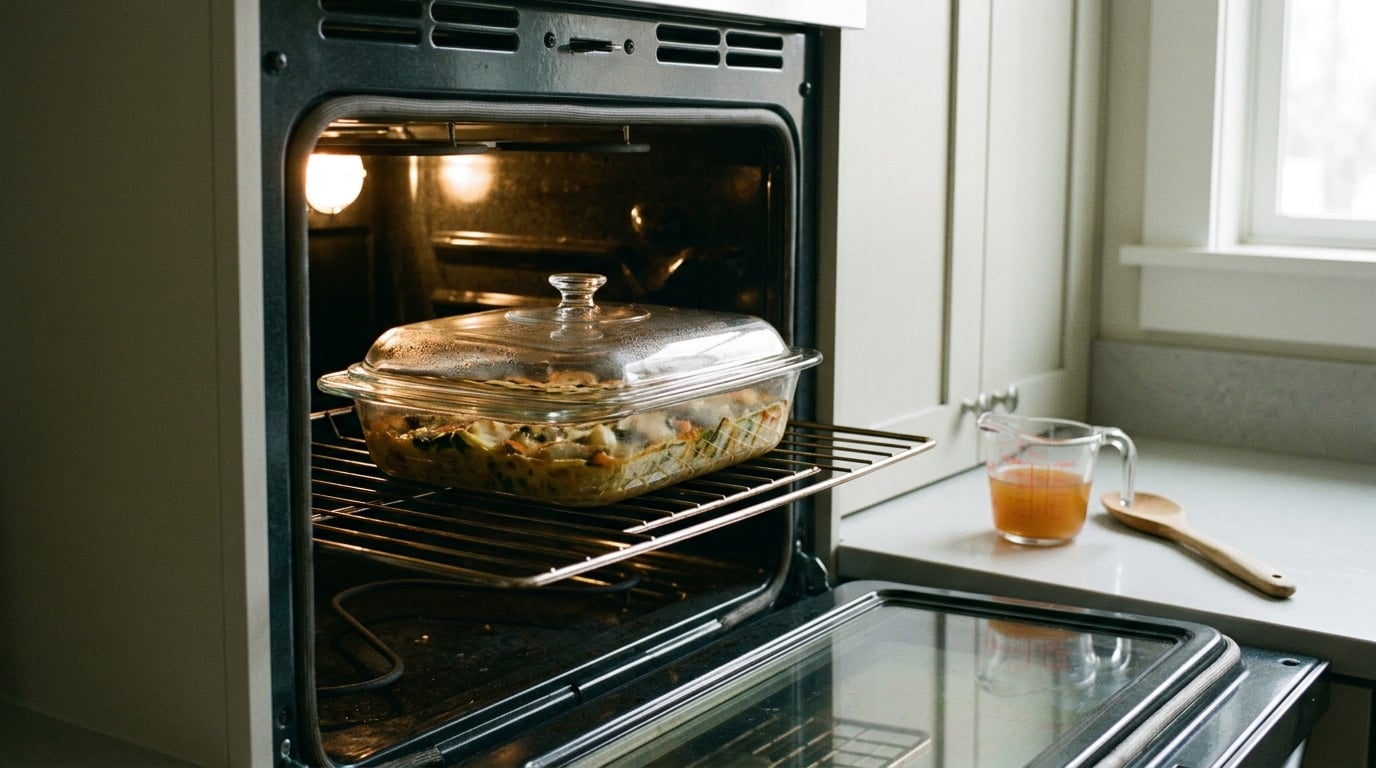
To reheat leftovers without drying them out, add a small splash of moisture, cover the dish so steam stays trapped, and use lower heat than you think you need. Match the method to the food: the microwave is fastest, the oven is gentler, and the stovetop gives you the most control.
Almost every reheating job takes under 20 minutes, and most take no skill at all. Once you learn the three levers, a bowl of Tuesday-night chicken or a pan of rice stops being a gamble.
Table of Contents
- What You Need
- Step-by-Step: How to Reheat Leftovers Without Drying Them Out
- Common Mistakes
- Frequently Asked Questions
- What is the best way to reheat leftovers without drying them out?
- Can I reheat leftovers in the microwave without drying them out?
- How do I reheat chicken leftovers so they stay juicy?
- How much water or broth should I add when reheating leftovers?
- Can I reheat the same leftovers more than once?
- How long should leftovers be reheated?
- What is the USDA-safe temperature for reheating leftovers?
- How do I keep a casserole or baked pasta moist when reheating?
- Conclusion
What You Need
You need very little to reheat food well, and most of it is already in your kitchen. The goal of each item below is the same: keep moisture in the food instead of letting it escape as steam.
- A microwave-safe plate or shallow dish with a microwave-safe lid or a damp paper towel
- An oven-safe dish with a tight-fitting lid, or heavy-duty aluminum foil for covering
- A skillet or small saucepan with a lid for stovetop reheating
- A silicone spatula or wooden spoon for turning and stirring
- A splash of liquid: water, broth, milk, cream, or the sauce the food came with
- An instant-read thermometer so you stop before the food is overcooked
- A wire rack for reheating things that need to stay crisp in the oven or air fryer
- A colander or steamer basket if you own one, for vegetables
Step-by-Step: How to Reheat Leftovers Without Drying Them Out
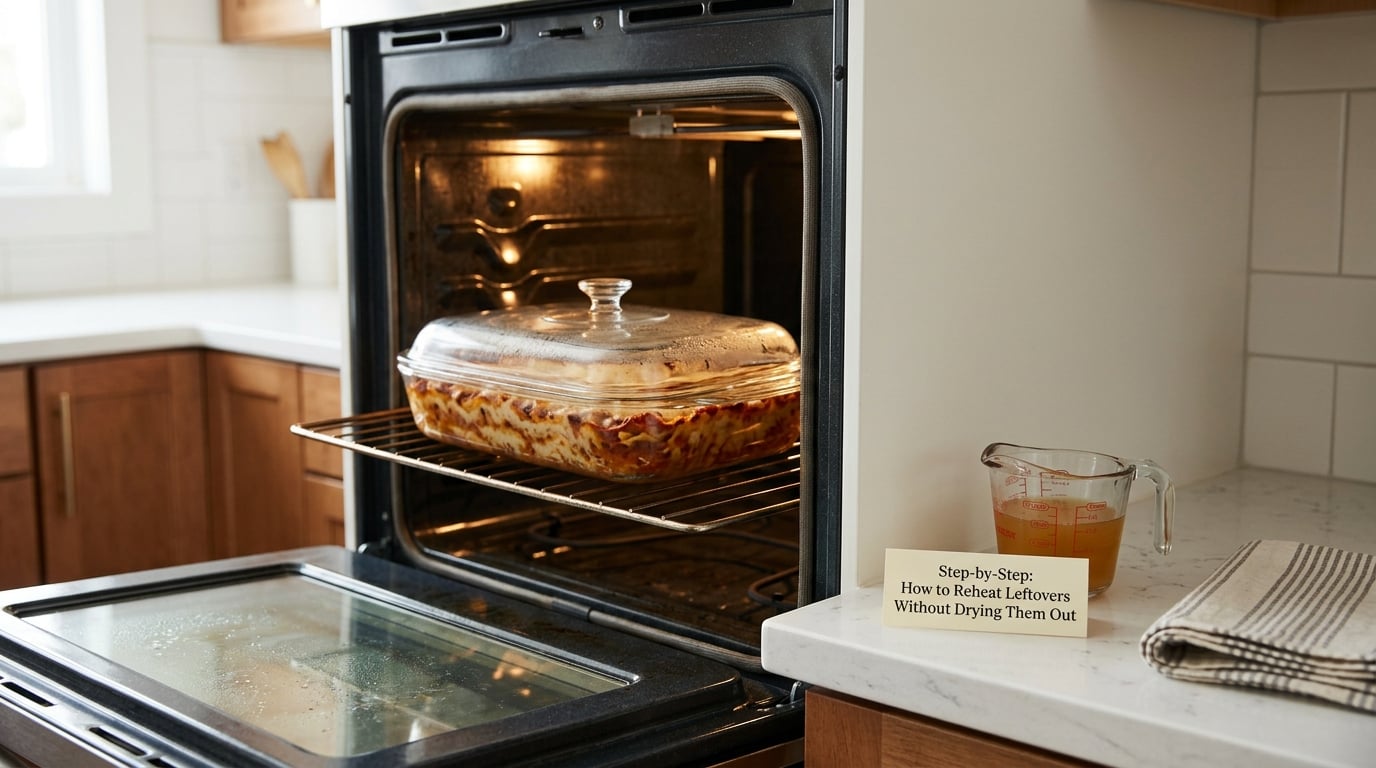
The process is the same for every food: reheat only the portion you will eat, spread it shallow, add a little liquid, cover it, heat in short bursts, then check the center and let it rest.
- Reheat only what you plan to eat. Every extra minute of heat pulls moisture out of the whole batch. Warming a single serving instead of the entire container is the single easiest way to stop leftovers from turning dry.
- Spread it in a shallow layer. Move the food out of its deep storage container if you can. Heat reaches the center of a thin layer faster and more evenly, so you spend less time steaming the edges while the middle stays cold.
- Add moisture where the food calls for it. A tablespoon or two of broth, water, or milk per serving is plenty. Dry, starch-heavy foods such as rice, chicken, and casseroles need it most; bread, pizza crust, and fried coatings need none.
- Cover tightly. Use a lid, a damp paper towel in the microwave, or foil sealed to the dish in the oven. The steam that collects under the cover is what rehydrates the food as it warms.
- Heat gently, in bursts. Use 50 to 70 percent power in the microwave, or 300 to 325°F in the oven. Pause every 30 to 60 seconds to stir, turn, or rotate, so cold spots do not turn into dry spots.
- Check the middle, then rest. The center should be steaming hot all the way through, not just warm on top. Let the food sit 30 to 60 seconds after microwaving, or two to five minutes after oven or stovetop reheating, and the heat finishes spreading on its own.
Reheat Poultry and Ground Meat Safely
Chicken and turkey must reach 165°F (74°C) in the thickest part, and ground meat must reach 160°F (71°C). Take the temperature first, then use the gentlest method that gets there, because those two numbers are safety minimums, not targets to exceed.
Put the meat in an oven-safe dish, add a splash of broth or water, seal it with foil, and heat at 300 to 325°F for 15 to 25 minutes depending on the portion. A lidded skillet over medium-low heat works too, and you can add a tablespoon of broth partway through.
In the microwave, cover the dish and use half power in 60 to 90 second bursts, stirring between each one. Shredded chicken reheats faster than a whole breast, so check after the first minute rather than trusting a fixed time.
Reheat Meat and Fish Without Drying Them Out
Whole cuts of beef, pork, lamb, and fish only need to reach 145°F (63°C), and they taste best when you stop there. Any hotter and the muscle fibers squeeze out the juice you saved all week.
Warm steaks, roasts, and salmon in a covered skillet or a foil-sealed dish at 300°F. A tablespoon of broth keeps the surface from glossing over, and a two to five minute rest after cooking lets the juices settle back into the meat instead of running onto the cutting board.
A low-temperature water bath is the gentlest method there is. Put the meat in a zip-top bag and hold it in 150°F water for 30 to 45 minutes, then lift it out and let it rest. The meat never gets hot enough for the fibers to squeeze, so turkey breast, brisket, and steak come back noticeably juicier.
Reheat Rice, Pasta, and Grain Bowls Gently
Day-old rice turns hard because the starch recrystallizes as it cools, and heat alone will not reverse that. A little water and steam will, so start with one to two tablespoons of water for every cup of rice.
Sprinkle the water over the rice, cover with a microwave-safe lid or damp paper towel, and heat at 50 percent power in 60 second bursts, stirring between each burst. The rice steams in its own moisture and comes back soft instead of rubbery.
A lidded skillet with a splash of water works just as well and takes three to five minutes on low heat. For pasta, keep it in its sauce if it has one, since sauce is already the moisture the noodles need, and reheat it gently with the lid on.
Reheat Vegetables, Potatoes, and Egg Dishes
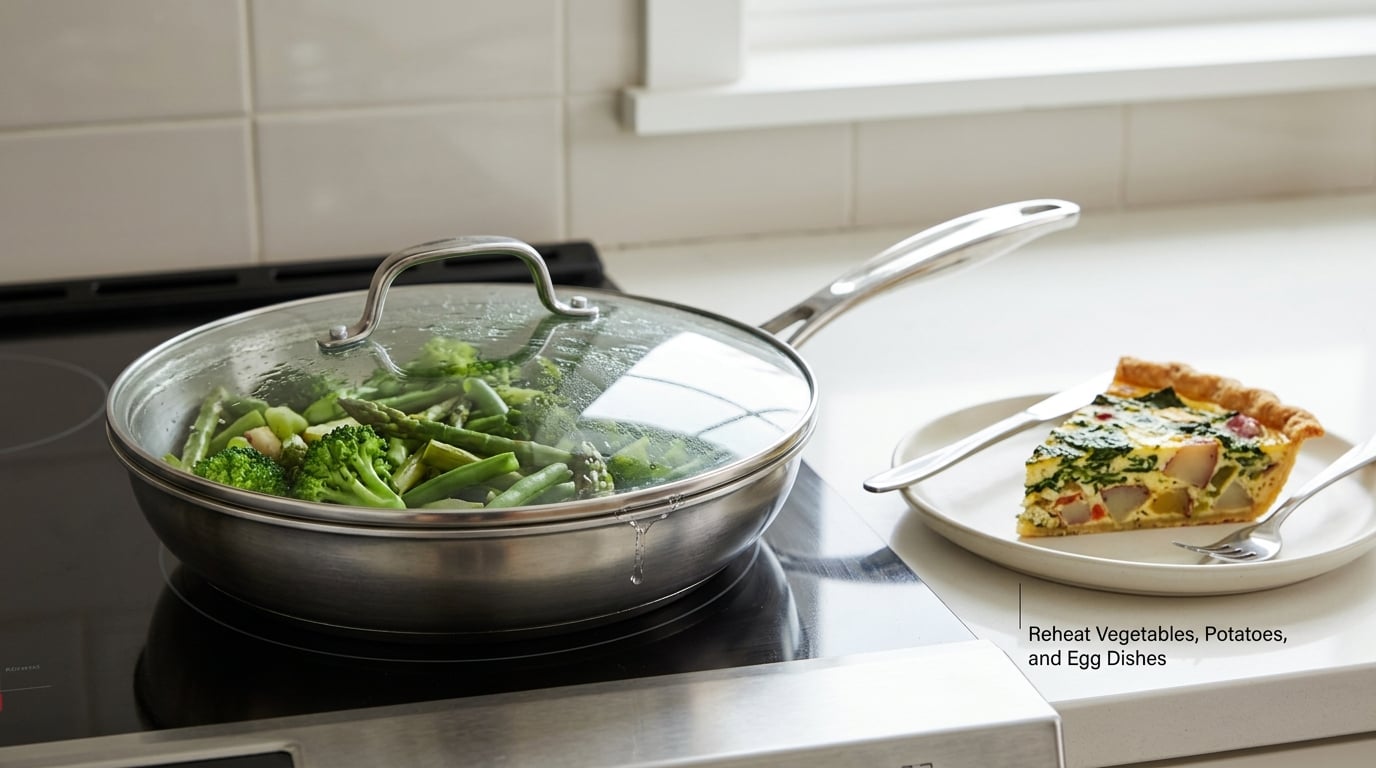
Vegetables need short covered intervals, not a long bake. Add a tablespoon of water per cup, cover the dish, and microwave in 30 to 60 second bursts, or steam them in a covered skillet or steamer basket for four to five minutes.
Potatoes, casseroles, quiche, and frittata go the other direction. They are dense enough to hold moisture, and what dries them out is a hot oven run too long at too high a temperature. Cover them with foil, use 300 to 325°F, and check early.
Eggs punish overheat more than almost anything else in the fridge. Reheat quiche and frittata in short covered intervals and pull them while the center still has a slight wobble.
Reheat Sauces, Soup, and Creamy Dishes
Soup, stew, gravy, and pasta sauce want low heat and constant movement. Warm them on the stovetop over medium-low, stirring every minute or two, and add a splash of broth, water, or stock whenever the sauce thickens up more than you like.
For the microwave, use half power and stir between every 60 second burst. Cover loosely rather than sealing it, because a sealed container of hot liquid can push its lid off the counter.
Creamy dishes such as macaroni and cheese or scalloped potatoes need less heat still, since dairy splits when it boils. A splash of milk and a few short covered bursts bring them back together.
How to Know Leftovers Are Properly Reheated
Properly reheated food is steaming hot throughout, not merely warm on the surface, and the middle is the part that matters. Push an instant-read thermometer into the thickest part without touching bone, and check the center of the dish rather than one edge.
Use 165°F (74°C) as the general safety line for reheating cooked food, 160°F (71°C) for ground meat, and 145°F (63°C) for whole cuts of beef, pork, lamb, and fish. Food that steams visibly when you lift the lid has usually reached that point already.
Be careful with the microwave, where the middle of a dish can stay cool while the rim boils and dries out. Stirring and rotating during reheating is what closes that gap, and so is the resting minute at the end.
Common Mistakes
Almost every disappointing plate of reheated leftovers traces back to one of a handful of habits. Each has a straightforward fix.
- Reheating uncovered. Moisture leaves as steam and never comes back. Fix: lid, damp paper towel, or foil sealed to the dish.
- Using full power or a 400°F oven. The outside cooks before the heat reaches the center, and the outside is what dries. Fix: 50 to 70 percent microwave power, or 300 to 325°F in the oven.
- Heating too long. Past steaming hot, extra heat only removes moisture. Fix: check every 30 to 60 seconds and stop as soon as the center is hot.
- Skipping liquid on dry foods. Rice, chicken, and casseroles have nothing to give once the steam is gone. Fix: a tablespoon or two of water or broth per serving.
- Crowding the container. A deep pile heats unevenly and the edges pay for it. Fix: one shallow layer, or two smaller batches.
- Adding liquid everywhere. Bread, pizza crust, and fried coatings go soft and pale with a damp towel. Fix: keep those dry and use a wire rack instead.
- Going straight from the fridge into a hot oven. Cold glass can crack from the shock. Fix: let the dish sit on the counter for 20 minutes first.
- Reheating the whole batch each time. Every reheat costs moisture, and the food you do not eat that day pays for tomorrow’s meal. Fix: portion out one serving at a time.
If your leftovers were frozen, you do not always need to thaw them first. Move the container to the fridge the night before, then reheat the next day. Reheating from frozen works too, as long as you add a little extra water and use half power so the outside does not dry before the center softens.
Dry is not the only complaint people have with day-old food. A squeeze of lemon or a splash of vinegar brings back the brightness that reheating dulls, fresh herbs cut through the flatness, and a spoonful of sauce, gravy, or oil returns some of what the oven drove off. A small pinch of salt at the end helps more than people expect.
Frequently Asked Questions
What is the best way to reheat leftovers without drying them out?
Cover the dish, add a splash of liquid, and use lower heat than feels right. The oven at 300 to 325°F with foil on top is the gentlest option and best for larger portions, while the stovetop gives you the most control. The microwave is fastest at 50 to 70 percent power in 30 to 60 second bursts. Reheat only the portion you plan to eat, and check the center before serving.
Can I reheat leftovers in the microwave without drying them out?
Yes. Set the microwave to 50 or 70 percent power instead of full, add a tablespoon or two of water or broth for dry foods like rice and chicken, and cover with a microwave-safe lid or damp paper towel. Heat in 30 to 60 second bursts, stirring or rotating between each one, then let the dish rest for a minute. Breaded and fried foods are the exception, since they turn pale and chewy in the microwave.
How do I reheat chicken leftovers so they stay juicy?
Add liquid and keep the heat low. Shredded chicken needs only a tablespoon of broth or water per serving, covered, at 50 percent microwave power in 60 second bursts, or in a lidded skillet on low. A whole breast does better in a foil-sealed dish at 300 to 325°F for about 15 to 25 minutes. Check for 165°F in the thickest part, then rest the meat two to five minutes so the juices settle back in.
How much water or broth should I add when reheating leftovers?
Start with one to two tablespoons for every cup of food, and add it right before heating. Rice, plain chicken, and casseroles are the ones that need it most, and broth or stock adds flavor as it rehydrates. Creamy dishes take a splash of milk instead. Dry, crisp foods need none at all, and a single ice cube works well on a small portion of sauced food as it melts during reheating.
Can I reheat the same leftovers more than once?
Reheating food more than once is not automatically dangerous. What matters is how long it sat at room temperature and how often it crossed back into the danger zone between 40°F and 140°F. A leftover reheated once, eaten promptly, and refrigerated correctly is fine to reheat again. A dish that has been warmed and returned to the fridge several times loses moisture each round, and the reason people repeat the rule is texture as much as safety.
How long should leftovers be reheated?
Most portions need 5 to 10 minutes on the stovetop, 15 to 25 minutes in a 300 to 325°F oven, or 2 to 4 minutes in the microwave at reduced power. Large pieces of meat and whole casseroles take longer than a plate of leftovers. Time is the least reliable measure, so check the center with a thermometer and stop once the food is steaming hot all the way through.
What is the USDA-safe temperature for reheating leftovers?
USDA guidance is to reheat leftovers to 165°F (74°C) throughout, and to bring sauces, soups, and gravies to a rolling boil. Many cooks use lower targets for foods that do not carry the same risk: 160°F (71°C) for ground meat and 145°F (63°C) for whole cuts of beef, pork, lamb, and fish. Check the thickest part with an instant-read thermometer, and remember food left out for more than two hours should be discarded rather than reheated.
How do I keep a casserole or baked pasta moist when reheating?
Cover it tightly with foil and use a low oven temperature, 300 to 325°F, for 15 to 25 minutes. A splash of broth, milk, or the sauce the dish was baked with along the top keeps the top layer from drying before the center heats. The microwave also works if you cover it and use half power in two or three minute bursts. Avoid the 375°F bake time printed on most packaging, which is why so many casseroles come back dry.
Conclusion
Start with the two habits that do most of the work: cover the food, and choose the method based on what the food is. Poultry and ground meat need a thermometer and a splash of broth, rice and pasta need water and steam, soups need a spoon and low heat, and pizza and fried food need no liquid at all.
Heat gently, check that the center is hot, and stop there. Reheat one serving at a time and you will keep more of the flavor and moisture from the original meal than almost anything else you change.